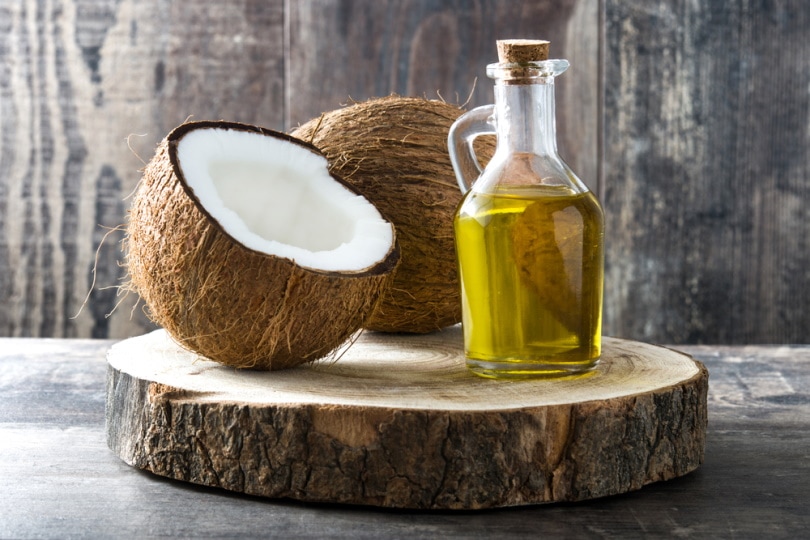
Coconut oil is extracted from the kernel of mature coconuts, harvested from the coconut palm. It has a high melting point, meaning it will solidify if you refrigerate it or put it in a cold place. Many people use coconut oil on their skin, and you may wonder if you could use it to soothe your dog’s paws.
The short answer is yes! Coconut oil is beneficial when used on dog paws.

What Are the Benefits?
Although there is no scientific research to prove the benefits of coconut oil on dog paws, anecdotally we can conclude that there can be benefits when it comes to putting coconut oil on a dog’s paws. The first and primary benefit is that it helps soothe dry paws. Dry paws for dogs can be highly uncomfortable and even cause tears in the paw pads. They can become flakey and sore, causing your dog to bite at them, and irritating them further. Coconut oil, however, can help solve this. Coconut oil is very hydrating and can give your dog some relief.
Another benefit is that it helps with your dog’s health. It is a natural antiseptic with antibiotic and antifungal properties1. It can keep your dog safe by keeping any scratches or small wounds on your dog’s paw clean and healthy. When it comes to healing, it helps speed it up due to the vitamin E and medium-chain fatty acids packed inside coconut oil. Coconut oil can help restore and repair the skin barrier thanks to its antioxidant, anti-inflammatory, and antimicrobial properties2.
Overall, it’s very healthy for your dog to have coconut oil on their paws occasionally. Also, it’s perfectly safe for them to lick! As long as they don’t consume a large amount of coconut oil, they won’t get unwell at all.
Are There Any Risks?
Coconut oil is not toxic to dogs, so if they lick a small amount off their pads, it’s unlikely to cause an issue. However, coconut oil smells and tastes good to many dogs, and if they ingest too much of it, they may experience gastrointestinal upset due to the fat content. It is also highly calorific. Another risk is a dog slipping and injuring themselves after having coconut oil applied to their paws, so you should supervise them on hard, slippery floors after application.
In general, it’s always best to check with your vet before using coconut oil on your dog to make sure it is suitable for them, especially if they have any medical issues.
If you need to speak with a vet but can't get to one, head over to PangoVet. It's our online service where you can talk to a vet online and get the advice you need for your dog — all at an affordable price!


Types of Coconut Oil
Not all types of coconut oil are the same. Look for unrefined or virgin coconut oil, preferably cold-pressed. These types have been obtained through mechanical or natural means, meaning they have undergone little processing and do not contain additives.
How Long to Leave Coconut Oil on Dog Paws?
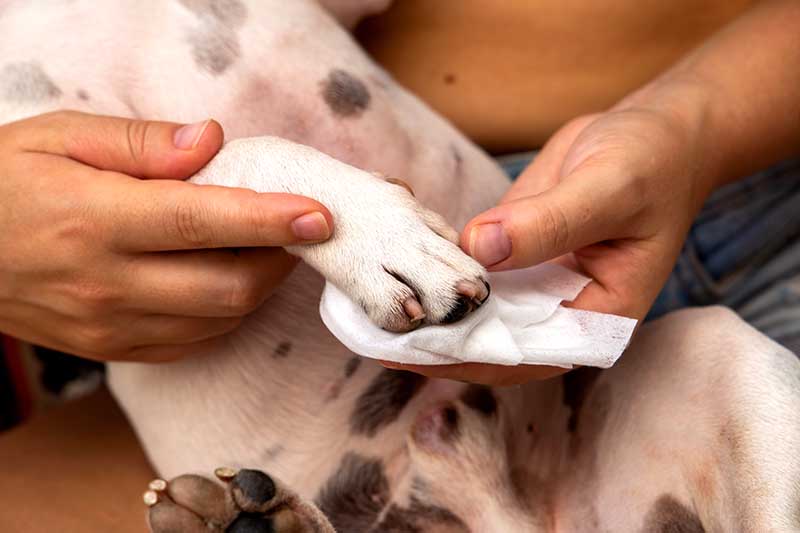
Coconut oil on your dog’s paws can be left there until it fully dries and soaks into your dog’s paws. Keeping it on there for long is desirable, as it’s perfectly healthy for your dog. Now, your dog may lick at it, but don’t fret. It’s entirely safe for your dog to do so. Although the goal is to rub it in the paw and let it stay there as long as possible, it’s nice to know it is safe if consumed.
You don’t need to wipe off excess oil or use it at specific intervals. Coconut oil is a safe alternative to lotions and other ointments or waxes made for paws, as your dog can lick it without any worries.
How Do I Apply Coconut Oil to My Dog’s Paws?
The application is straightforward. First, read the label to make sure you have plain virgin coconut oil without any other ingredients mixed in. Some coconut oils are more processed than others, and some even have other ingredients in the mix. Some refined coconut oils are even bleached, which is why we recommend virgin, unprocessed coconut oil.
The amount you will require is minimal, but it will depend on the size of your dog’s paw pads. The application is very simple. Just ensure your dog’s paw pads are clean and perfectly dry first. Take your dog’s paw and gently rub the coconut oil into the paw pad, making sure to get every nook and cranny.
When Should I Apply Coconut Oil to My Dog’s Paws?

Coconut oil can be applied to your dog’s paws at any time, but there are some moments when it will be extremely beneficial. The best time to apply coconut oil to your dog’s paws is right before bed, as it allows time for it to penetrate the dog’s paw pads. This will also help prevent your dog from walking around your home and leaving oily paw marks all over your floor.
Massaging on a thin layer of coconut oil before you take your dog for a walk on a frosty day can help protect their paws from the ice and snow. It will reduce the drying and cracking of the pads.
Letting the oil have direct contact with the paw pad allows the soothing nature of the coconut oil to shine, letting it soak in fully and be used to its full effect.
Conclusion
It is important to take care of your dog’s paws, as they are subject to a great deal of wear and tear. Coconut oil is a natural, nice-smelling option that can be applied topically to the pads to help protect them and soothe dry areas. It may also have antimicrobial action.
It is also safe if your dog licks a small amount, unlike with some other topical medications. While it can’t replace medical advice and medications assigned to your dog, it definitely can help.
See also:
- Why Is My Dog’s Paw Swollen? Our Vet Discusses Reasons, Signs & Treatment
- Can I Apply K9 Advantix II Twice in a Month? Our Vet Explains
Featured Image Credit: etorres, Shutterstock
 What Are the Benefits?