Get

In Your Inbox

Dogster is reader-supported. When you buy via links on our site, we may earn an affiliate commission at no cost to you. Learn more.

5 Benefits Dogs Get from Chewing Bones or Chews: Vet-Reviewed Facts

Share

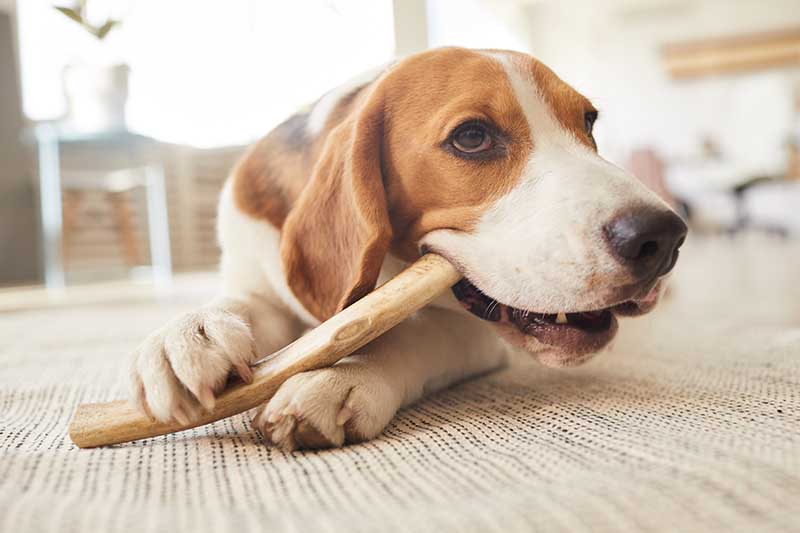
Warm toned close up portrait of cute beagle dog chewing on treats

Dogs love to chew on things, which you and your shoes may have learned the hard way. Purchasing toys can help minimize the destruction of your shoes, but toys will only last so long between your dog’s paws. Providing bones or chews for your dog to chew comes with several benefits.

If you are curious about the benefits of bones or chews for your dog, this article takes a deeper dive into the subject. To spare your shoes and maintain your dog’s dental health, keep reading below.

divider dog faces oct 2024

The 5 Benefits Dogs Get from Chewing Bones or Chews

1. Chewing Boosts Dental Health

Chewing is good for your dog’s dental health since it can help create saliva, which can clean out your dog’s mouth with various antimicrobial properties. It also removes tartar from your dog’s teeth. This is especially true if you give your dog dental chews designed to care for its teeth.

Of course, chews can never replace consistent toothbrushing. In addition to chews, be sure to routinely clean your dog’s teeth with a canine toothbrush and canine toothpaste.

black & white Australian Shepherd chewing on a dog bone
Image Credit: Thomas G.,Pixabay

2. It Can Be a Great Stress Relief for Your Dog

If you often come home to find that your dog has chewed up your cushions or other items, there is a good chance that your dog has separation anxiety. If you are wondering what the connection between those two things is, it is that dogs chew when they are stressed.

Chewing is a way that dogs can relieve their stress or anxiety. If there are stressors in your dog’s environment, such as your absence due to work, offering some chews may help manage their stress.


3. For Puppies, Chewing Can Help with Teething

Chewing is a big deal for puppies for many reasons, and one of the most prominent is teething. While your puppy is teething, they will experience some pain. They will likely try to manage this pain by chewing on things, so offering a chew is a great way to help them get through the teething phase.

Not to mention, chewing promotes the growth of teeth. By allowing your puppy to chew, you will be able to encourage it to develop strong adult teeth.
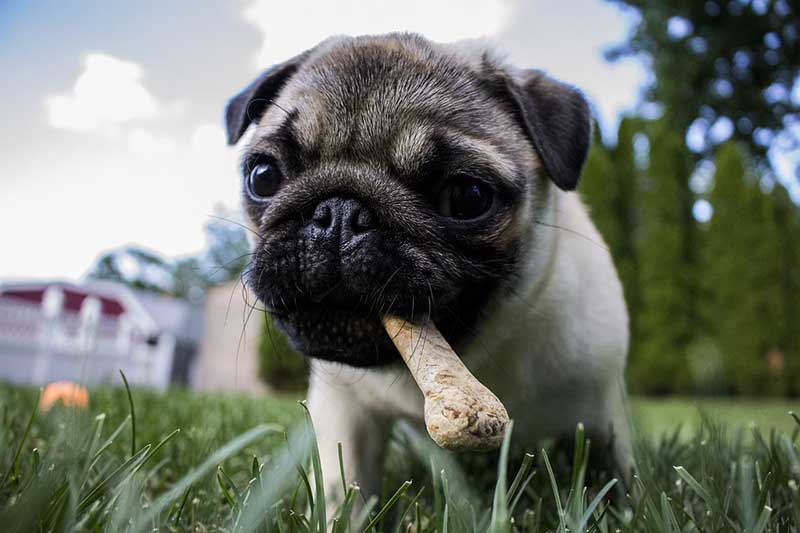
Pug chewing on bone chew
Image Credit By: Stefan Glazer, Pixabay

4. Chewing Can Keep Your Dog Entertained

As simple as it may sound, bones and chews can be great tools to keep your dog entertained. Dogs require physical activity to remain satisfied, but they also need mental exercises. Chewing is an excellent way for your dog to focus on an exciting task.

Bones and chews can also entertain your dog when you cannot. Whether you are cooking dinner, doing chores, or simply relaxing, chewing will be enough activity to keep your dog busy for a while.


5. Chews Can Curb Destructive Chewing Behavior

As mentioned, shoes, cushions, and other objects can quickly fall victim to your dog’s destructive chewing behavior. If you have bones and chews for your dog to chomp on, your more delicate household items may be spared.

Anytime you notice your dog chewing on something it shouldn’t, redirect its chewing behavior onto the chews. Soon, they will learn what they can chew on, and the objects in your house will be safe and sound.

If your dog is showing destructive chewing behavior, we suggest you speak to a vet.

If you need to speak with a vet but can't get to one, head over to PangoVet. It's our online service where you can talk to a vet online and get the advice you need for your pet — all at an affordable price!

PangoVet_Mention-in-Content Savings V1

divider dog faces oct 2024

How to Pick the Right Bone or Chew for Your Dog

Although bones and chews have significant benefits for your dog, picking the right kind is vital. Giving your dog something improper or unsafe to chew on could lead to an expensive veterinary visit.

Bones

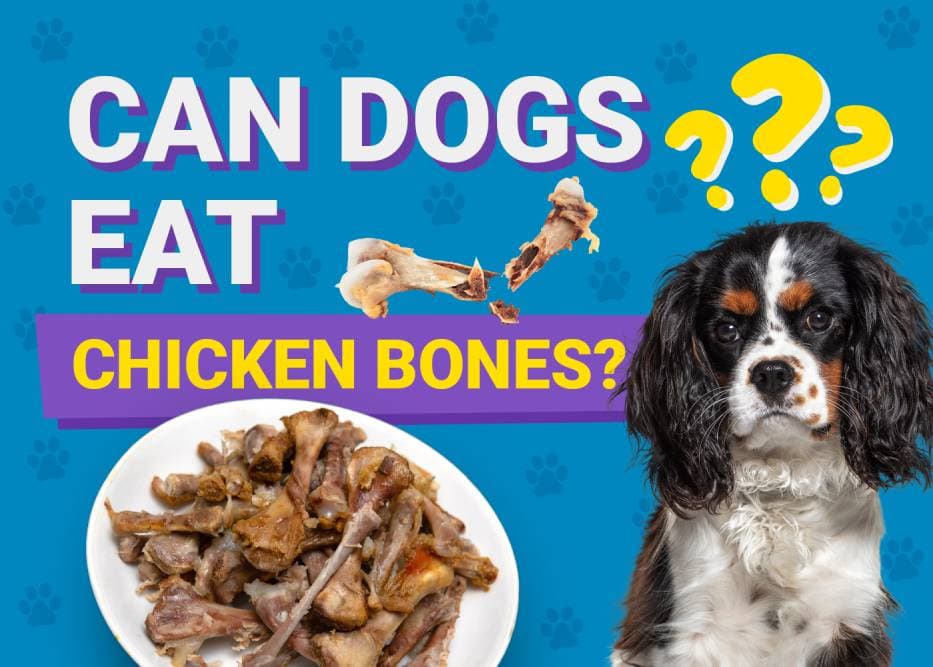
When picking a bone for your dog, you should avoid anything but raw bones. Cooked bones are too dangerous to give your dog because the cooking process makes them weak. When your dog chews on a cooked bone, it can snap and splinter into dangerous shards. If your dog accidentally swallows one, it could cause a dangerous obstruction.

Although raw bones are safer, you still need to be careful with which ones you offer your dog. Any bone you give your dog should be about the same size as your dog’s head. Raw bones this size will have a smaller chance of being snapped and swallowed by your dog.

However, you should never give your dog unsupervised access to bones. Even if the bones are raw and sized properly to suit your dog’s safety needs, there is always a chance that your dog may snap a small portion of the bone off and swallow it. This can lead to disastrous health complications. Chews are a great alternative if you are uncertain about offering your dog bones.

Close-up large raw bone
Image Credit: Lipa23, Shutterstock

Chews

When picking out a chew, you must consider what is safest for your dog. Some chews may be better for large-breed dogs, while others may be better for small canines. When you find a new chew for your dog, monitor their chewing to ensure it is a safe option.

These are some of the following areas that you can use to evaluate a chew:

  • How durable is it? Any chew must be strong enough to withstand intense chomping to guarantee that your dog will not accidentally swallow it. If it is too brittle, your dog may snap it and eat small, sharp pieces. However, a chew should not be so hard that it may crack your dog’s teeth.
  • What is the size? If a chew is too small for your dog, they may choke on it. Any chew you give your dog should be too big for them to fit entirely in their mouth.
  • What is it made of? Ingredients should play a vital role in your decision-making process. Natural, limited-ingredient chews are ideal. Anything with too many artificial flavors or colors may upset your dog’s tummy.

divider dog faces oct 2024

Conclusion

Bones and chews can promote dental health, relieve stress, and provide entertainment. Of course, some products are unsuitable for your dog, so it is vital to verify that anything your dog is chewing on is safe.

To pick the correct bone or chew for your dog, consider its durability, size, and how it is made. Once you have the perfect pick for your dog, keep a close eye on them as they chew and let the fun begin!


Featured Image Credit: SeventyFour, Shutterstock

Want content like this delivered to you?

Sign Up For Our Newsletter

News, insights, expert advice, and everything dog

* By submitting, you agree to our Terms & Conditions and Privacy & Cookies Policy.


How useful was this post?

Click on a star to rate (you can leave written feedback after clicking submit)

Help us improve Dogster for pet parents!

Your feedback really matters.

What did you like about this post? Also how can we improve it?

Join the conversation

Leave a Reply

You’re very welcome to leave a comment or question. Please know that all comments must meet our community guidelines, and your email address will NOT be published. Let’s have a positive and constructive conversation.


Talk With A Vet Online

Peace of mind,
anywhere, anytime

Affordable vet advice

National Fire Pup Day 2026: What It Is & When It’s Celebrated

Throughout history, dogs have proven to be loyal and devoted partners to humans—not in companionship, but also in service for various tasks. With...

Can You Walk Your Dog Too Much? Important Care Facts

While most dogs love going on walks, closely monitoring them during walks is important to ensure they’re not overexerting themselves. Dogs can definitely...

10 Best Dog Shampoos for Great Pyrenees in 2026: Reviews & Top Picks

Your Great Pyrenees has a beautiful white, thick coat that requires maintenance to keep clean and soft. The right shampoo will help you...

10 Dog Breeds Bigger Than Wolves (With Info & Pictures)

The grey wolf is the largest member of the wolf family. This endangered predator once roamed most of North America; however, due to...

More related

Pros & Cons of Grain-Free Dog Food: Benefits, Risks, & More

Grain-free dog food has been gaining in popularity over the past few years. And while grain-free diets may have some benefits, there are...

Nature’s Logic Dog Food Review 2026: Pros, Cons, Recalls, and FAQ

Review Summary Nature’s Logic was founded in 2006 by Scott Freeman. Freeman conjured up dog food that uses 100% natural ingredients without using...

Parson Russell Terrier Dog Breed: Info, Pictures, Traits & Care

Feisty and fun-loving, the Parson Russell Terrier is a unique little terrier that shares a lot of similarities with its cousins, the Jack...

How to Train a Bichon Frise: 7 Vet-Verified Tips (With Pictures)

Training a Bichon Frise can be a rewarding and enjoyable experience, but it also requires patience, consistency, and a good understanding of their...

Keep reading

Can Dogs Eat Capers? Vet-Reviewed Nutrition Facts & FAQ

You love your dog, so you want to give them treats every now and again, and sometimes those treats are your own food. A lot of the time, depending on the food, this is (mostly) fine for your pet. But...

Can Dogs Eat Capers

Can Dogs Be Vegetarian? Vet-Verified Nutrition & Health Facts

Dogs are considered omnivores, or facultative carnivores, meaning they can digest and utilize both animal and plant-based foods in their diet. However, did you know dogs can be fed a vegetarian diet and thrive? Dogs do not need meat in...

The dog sits near a bowl of food and licks his tongue, dry food and fresh vegetables and fruits

Can Dogs Eat Walnuts? Vet-Verified Facts & Safety Tips

Dogs can eat many foods that humans eat, and you can enjoy sharing a variety of snacks with your dog. However, in most cases, dogs should refrain from eating nuts and seeds, including walnuts. While walnuts in themselves aren’t toxic...

Can Dogs Eat Walnuts

Can Dogs Have Prunes? Vet-Verified Nutrition Facts & FAQ

Dogs can have a number of fruits and veggies, as they are omnivores just like us! However, our systems are a lot different. So, even though we can safely eat prunes, you may wonder if our pups are able to....

Dogster-Can-Dogs-Have-Prunes

10 Best Dog Foods for Shih Tzus in 2026 – Reviews & Top Picks

Shih Tzus don’t have their own specific dietary requirements, as such, but they are a very small dog breed so they need to get all of their nutritional requirements in a comparatively small amount of food and without too many...

shih tzu dog eating outdoors

Puppy vs Adult Dog Food: Vet-Verified Differences & When to Switch Diets

Whether we realize it or not, as dog owners, we have a significant influence over the health and wellbeing of our dog, with the food we choose playing one of the most important roles. Alongside exercise, training, and vet care,...

Dogster_Puppy vs Adult Dog Food

Diamond Naturals Dog Food Review 2026: Pros, Cons, Recalls & FAQ

Review Summary Diamond Naturals is one of the many pet food lines produced by Diamond Pet Company, a second-generation, family-owned manufacturer. Made entirely in the USA, Diamond Naturals is also sold in 100 countries around the world. With a commitment...

Dogster_Diamond Naturals Dog Food Review

9 Best High Fiber Dog Foods for Anal Gland Problems in 2026 – Reviews & Top Picks

Dealing with anal gland problems in your dog can be smelly, gross, and frustrating. Anal gland issues are uncomfortable for your dog, and some even develop abscesses and other serious infections related to anal gland problems. If you see your...

Ginger dog eating

Love Dogs? So Do We! Join the Dogster Community

Stay informed with expert pet care insights delivered straight to your inbox! Discover professional guidance on animal behavior, feeding tips, trusted product picks, and much more.


Sign up for the Dogster Email Newsletter