In this article
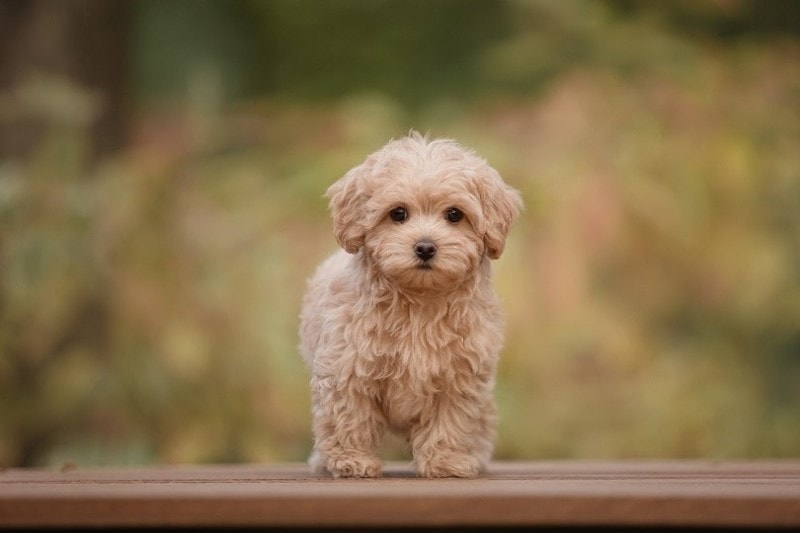
When you consider their heritage, it’s no surprise that Maltipoos are adorable and eager to please. The Maltipoo is the ultimate lap dog, a hybrid combination of the charming (and tiny) Maltese and the highly intelligent Miniature Poodle. Extroverted, affectionate, great with kids, and always looking for attention, Maltipoos make fantastic family dogs but are just as good for singles and seniors who long for companionship. While not 100% hypoallergenic, Maltipoos come close.
They shed very little and, because of the silkiness of their single-layer hair, trap a minimal amount of dander. That makes the Maltipoo breed an excellent choice for puppy parents who suffer from pet hair and dander allergies.
Now that you know that Maltipoos are nearly hypoallergenic, we’re sure you have more questions about this truly adorable hybrid. For example, are Maltipoos a high-maintenance dog breed, what is their average lifespan, and do Maltipoos bark a lot? Read on to discover the answers to these essential questions and several more, along with tips and advice about being a Maltipoo parent.

What Makes a Dog Hypoallergenic?
One of the biggest challenges for pet parents today is allergies, which is why many are searching for hypoallergenic dogs. Because they have only a single coat of fur, Maltipoos are very close to being hypoallergenic, but the truth is that no dog is 100% hypoallergenic. Regardless of the breed or whether they have single or double fur, all dogs produce dander, which is typically the cause of allergic reactions.

What Is Dander?
Dander is tiny particles of dead skin that slough off every dog. The dead skin is in minuscule pieces and is often mistaken for dust. If you have an allergy to dogs, your body will usually react more to dander than anything else. That’s because your body treats dander the same way it would treat a germ, bacteria, or virus; it attacks it because it sees the dander as an invader trying to cause your body harm.
Why Do Maltipoos Have Less Dander?
So what’s the difference between a dog that causes allergic reactions and a dog like the Maltipoo that (mostly) doesn’t? It’s the type of fur they have and how much dander gets trapped by it. A Maltipoo has very fine hair, so any dander their skin creates falls away and doesn’t build up to levels that will cause a reaction.
On the other hand, a German Shepherd has thick fur and excessively dry skin. Their skin creates much more dander, and, unfortunately, their fur traps the dander so that it doesn’t fall away. Making the problem worse is that dogs with thick fur typically shed profusely, and since their fur holds the dander, wherever fur falls off, it causes a problem for those with allergies. That’s why German Shepherds and other dogs with thick fur cause more allergic reactions than dogs like Maltipoos with fine hair.
Is Dander the Only Cause of Allergic Reactions From Dogs?
While dander is the leading cause of allergic reactions to dogs, some also react to the saliva a dog produces. More specifically, they respond to the proteins found in a dog’s saliva or urine. You could also react to touching a dog’s toys after they’ve been licking and chewing on them or from their water and food bowls.
What to Do if You Have an Allergic Reaction to a Maltipoo
As we’ve seen, Maltipoos cause fewer allergic reactions because they have fine hair that sheds lightly. However, since all dogs produce dander, and dander is the cause of most allergic reactions, it’s not unheard of for a Maltipoo to cause a person with allergies to have an allergic reaction.
If you’ve recently adopted a Maltipoo and, much to your alarm, are having an allergic reaction to them, don’t be dismayed. You can do several things to reduce or even eliminate your allergic response to your new puppy.

1. Test Your Allergies Before Adopting
If you’re worried that you might have an allergic reaction when you adopt a Maltipoo, one of the best things to do is to spend some time with them before making the final decision. Veterinarians recommend being in contact with the Maltipoo puppy in an enclosed area several times before adopting it.
An enclosed location is typically where most allergy sufferers will have the worst reaction. If you do react, you may need to consider adopting another Maltipoo puppy (all are unique) or possibly another breed of dog.
Still, you should know that some owners develop allergies long after living with their pets.
2. Brush and Groom Outside
For many pet parents, an allergic reaction is produced when they brush or groom their dog. To reduce or eliminate this reaction, you can brush your Maltipoo outside, where their fur and dander will be blown away by the wind and won’t be concentrated in a small area like your kitchen or living room.
3. Let Someone Else Groom and Brush Your Maltipoo
If you react when grooming your Maltipoo, a straightforward solution is to let someone else groom them. That can be another family member, neighbor, friend, or local groomer.
4. Don’t Handle Your Maltipoo’s Toys or Bowls
Your allergic reaction may be caused by your Maltipoo’s saliva and its proteins. Avoiding their toys and bowls might solve the problem if that’s the case. You can also wear gloves when cleaning up after your Maltipoo, gathering their toys, and cleaning their bowls.

5. Use a HEPA Filter
One way to solve your allergy problem connected to your Maltipoo is to run your HVAC system using a HEPA filter. HEPA stands for high-efficiency particulate arrestance and will trap fine particles, like dander, and remove them from the air. Look for a HEPA filter with the highest MERV (minimum efficiency reporting values) rating.
6. Consider Taking an OTC Antihistamine
If you adore your Maltipoo but are dismayed that it’s causing your allergies to flare up, consider taking an OTC (over-the-counter) antihistamine. Before taking any OTC drug, however, speak with your family physician.
7. See an Allergist
If you’ve tried everything but are still having an allergic reaction that you believe is caused by your Maltipoo, you might want to see an allergist. Allergy specialists can help determine the exact cause of your allergic reaction.
In some cases, you might find that your Maltipoo isn’t the cause of your allergies but is something else, including pollen, dust, and other small particles in the air you’re breathing.
What Are the Pros and Cons of Adopting a Maltipoo?
There’s no denying that Maltipoos are wonderful dogs and make fantastic pets. However, all dogs, even the adorable Maltipoo, have upsides and downsides.
- Almost hypoallergenic
- Low-shedding
- Have single-coat fur
- Very small and thus great for apartments
- Extremely friendly and outgoing (Maltipoos make excellent therapy dogs)
- Don’t need high levels of activity
- Long lifespan (average is 14 years)
- Separation anxiety is common
- Needs regular grooming, which can be expensive
- Maltipoos are expensive to purchase
- They bark more than many other breeds
- Potty training can be difficult
- Prone to obesity
- Have a tendency to smell bad
Are Maltipoos 100% Hypoallergenic?
No dog is 100% hypoallergenic, and that includes the Maltipoo. Every breed sheds its fur and dead skin cells, and this shedding causes dander. Dander is the cause of most allergic reactions, but saliva can cause it also.
The good news is that because they have fine hair that doesn’t shed heavily, Maltipoos cause far fewer allergic reactions than many other dog breeds.

Final Thoughts
While no dog breed is 100% hypoallergenic, Maltipoos come very close. That makes them an excellent choice for allergy sufferers, although veterinarians recommend spending time with any Maltipoo puppy you plan to adopt. That way, if a particular puppy does cause you to have an allergic reaction, you will know before you adopt and be able to change your mind and possibly adopt another puppy.
If you’ve just adopted a Maltipoo, we wish you the best for a long, beautiful, and life-enriching relationship with your new puppy pal.
- Related Read: How Good Will a Maltese Be With Kids
Featured Image Credit: OlgaOvcharenko, Shutterstock