Get

In Your Inbox

Dogster is reader-supported. When you buy via links on our site, we may earn an affiliate commission at no cost to you. Learn more.

Are All Tumors Cancerous in Dogs? Our Vet Explains the Differences

Share

dog in vet clinic

A tumor—in a dog or another animal—is a swelling due to the unregulated growth of tissue cells. While that may sound bad, it doesn’t necessarily mean cancer. Tumors can either be benign (noncancerous) or malignant (cancerous). Knowing which type your dog has will require a veterinary diagnosis. It’s nearly impossible to discern a cancerous tumor from a noncancerous tumor just by looking at it, so it’s best to always see your vet any time you notice a new growth on your dog.

divider single dog paw oct 2024

Tumors in Dogs

It is important to understand how different tumors form in the first place. The body is all about balance: If something goes in, something has to come out, and if you use up something, it has to be replaced, and so on.

The same principle goes for tissue growth. Normal tissue cells are actively dividing and reproducing to make new cells. Conversely, other tissue cells are dying and thus, need to be replaced. To maintain a healthy balance, bodily tissues need to reproduce a new cell to replace every dying cell. But sometimes, that balance gets out of whack, and the tissue cells start reproducing more rapidly than they are dying off. Therefore, you get an abundance of new tissue that creates a lump, mass, or tumor.

Depending on the type of cells that are overly multiplying, that tumor may keep to itself or look to relocate elsewhere in the body.

sick dog with veterinary assistant doing examination of his head tumor.
Image Credit: sarocha wangdee, Shutterstock

What Is the Difference Between Benign and Malignant Tumors?

Just because a group of cells gets overly excited and starts multiplying out of control doesn’t mean that they are cancerous. Different types of cells may simply multiply, creating tumors that stay put. These are benign tumors. They don’t spread to other parts of the body or even get into the healthy tissues around it. While they can grow large and displace surrounding tissue, they don’t actively invade it.

Conversely, malignant tumors tend to spread around. They will invade the surrounding tissues and disrupt their normalcy, often creating a great deal of damage. Certain ones also spread to other areas of the body, like the lymph nodes, liver, and lungs.

As you can imagine, a tumor that keeps to itself is less likely to destroy normal surrounding tissues than one that is more invasive. That’s the difference between noncancerous and cancerous tumors.

Malignant tumors need to be treated immediately to minimize their spread and resulting damage. That said, benign tumors will sometimes also need veterinary care.

If you are concerned about the health and well-being of your pet, seek veterinary advice for the best course of action.

If you need to speak with a vet but can't get to one, head over to PangoVet. It's our online service where you can talk to a vet online and get the advice you need for your pet — all at an affordable price!

PangoVet_Mention-in-Content Savings V1

Can a Dog Have a Non-cancerous Tumor?

It’s estimated that 25% of dogs will develop a tumor at some point in their lives and that malignant tumors are about twice as likely to develop as benign ones.1 Of course, this proportion depends on the type of tumor. For example, most skin tumors tend to be benign. So, it is completely possible for your dog to develop a tumor that isn’t cancerous.

Still, even noncancerous tumors may require treatment to prevent sometimes severe complications, so be sure to see your vet if you notice a new lump or bump on your dog.
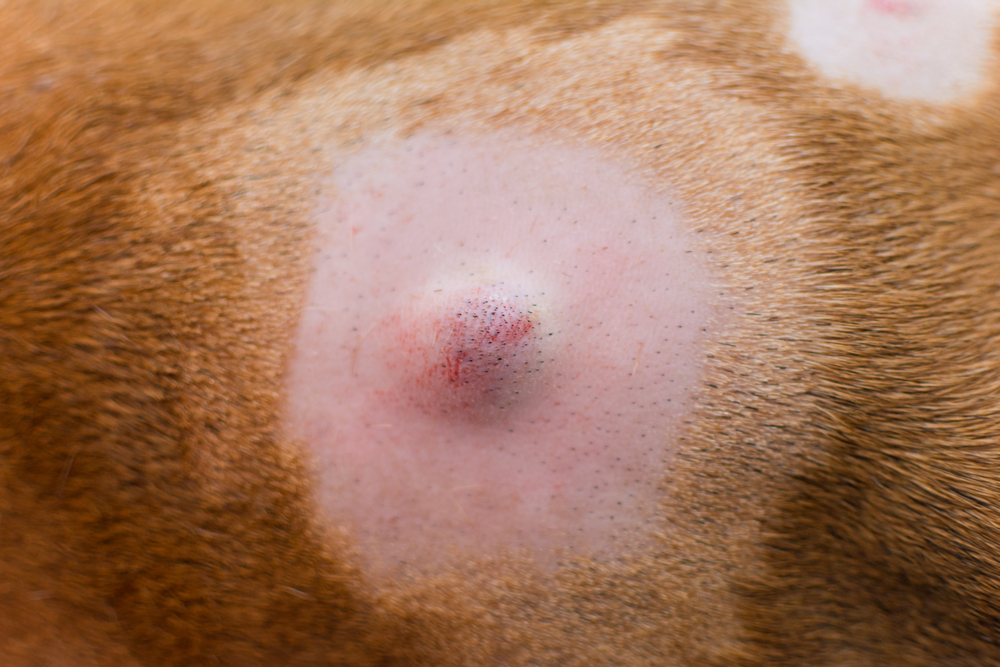
close-up photo of a dog with lumps on his skin before the surgery
Image Credit: Todorean-Gabriel, Shutterstock

How Do I Know If My Dog’s Tumor Is Cancerous?

Cancerous tumors can look similar to noncancerous tumors, so it’s suggested that you have your vet check out any new lump on your dog. While a veterinary diagnosis is needed to definitively determine whether a tumor is cancerous, there are a few telltale signs that you may recognize at home.

Malignant tumors tend to grow more quickly than benign ones. So, if you notice a small bump one day that turns into a large bump within a matter of days, it may be cancerous. They also tend to quickly change in color, shape, and texture. A skin-colored lump that suddenly turns black or purple may be a red flag for cancer. Discharge from the lump may be another possible indicator.

If you notice a new lump, particularly if it’s growing and changing rapidly, see your vet as soon as possible. They will be able to take a sample of the tumor to find out what cells are growing there and determine whether it’s cancerous. Sometimes this requires them to send a sample to a different lab for a second opinion.

divider single dog paw oct 2024

Conclusion

Finding a tumor on your dog is never a good time. That said, while no tumor is considered normal or good, you should know that tumors can be either cancerous or noncancerous, and there’s no way to tell without the help of a veterinarian. So, be sure to seek professional help whenever a new lump or bump pops up or if you start noticing changes in your dog’s appetite, behavior, or elimination habits.


Featured Image Credit: Pickadook, Shutterstock

Want content like this delivered to you?

Sign Up For Our Newsletter

News, insights, expert advice, and everything dog

* By submitting, you agree to our Terms & Conditions and Privacy & Cookies Policy.


How useful was this post?

Click on a star to rate (you can leave written feedback after clicking submit)

Help us improve Dogster for pet parents!

Your feedback really matters.

What did you like about this post? Also how can we improve it?

Join the conversation

Leave a Reply

You’re very welcome to leave a comment or question. Please know that all comments must meet our community guidelines, and your email address will NOT be published. Let’s have a positive and constructive conversation.


Talk With A Vet Online

Peace of mind,
anywhere, anytime

Affordable vet advice

A Major Breakthrough in Canine Anxiety Care: FDA Approves First Dual-Purpose Medication

Why This FDA Approval Is Such Important News For years, veterinarians and pet parents have struggled with a frustrating reality in canine behavioral...

Ask Dr. Paola- Help! Can Shock Collars Cause Seizures? (June 1, 2026)

Welcome to our “Ask Dr. Paola” series, where every Monday we bring expert advice straight from Dr. Paola Cuevas (MVZ) to help our...

Behind Most “Bad” Dog Behavior Is a Pretty Simple Problem (and Solution)

Dogs are supposed to be easygoing companions, and many seem to live up to it: sleeping on the couch for hours, watching the...

Justice For Pneuma and Melo

WARNING: THIS ARTICLE CONTAINS DISTRESSING CONTENT It’s every pet owner’s worst nightmare. You leave your dogs with people who are supposed to protect...

More related

15 Pet Food Delivery Service Trends & Statistics to Know in 2026

Pet food delivery is a vibrant and growing portion of the pet food market. More and more people are opting to buy their...

How Aggressive Are Belgian Malinois? Breed Facts & FAQ

If you have heard of the Belgian Malinois, you might know they are tireless workers that are strong, intelligent, and highly trainable. Another...

Do Dogs Get Periods? Vet-Approved Canine Heat Explained

As the owner of a female dog, the question of whether they experience a similar reproductive cycle to humans is valid. While it...

Why Is My Dog So Attached to Me? 5 Possible Reasons

Dogs didn’t get the nickname “Man’s Best Friend” for nothing. The domestic dog evolved as a pack animal, which includes their human companions,...

Keep reading

Can Dogs Eat Hearts of Palm? Vet-Verified Nutrition Facts & Considerations

Hearts of palm are literally exactly what they sound like—the very internal parts of certain species of palm tree. These tender veggies can serve in a variety of recipes and so many people can reap the long list of benefits...

Dogster-Can-Dogs-Eat-Hearts of Palm

10 Best Dog Foods for Dachshunds in 2026 – Reviews & Top Picks

With their short legs and long backs, Dachshunds are among the most recognizable breeds in the world. Their sausage shape gives them the adorable moniker “wiener dogs”, and they’re a popular small breed for pet owners of all kinds. Because...

dachshund dog eating from elevated bowl

Pedialyte for Dogs: Is It Safe? Vet-Approved Health & Safety Guide

The most common way to treat dehydration in children and adults is with Pedialyte. It’s an over-the-counter, drinkable electrolyte solution that replaces electrolytes and minerals lost by dehydration. In small quantities, unflavored Pedialyte is safe for most dogs, but it’s...

electrolyte beverage in bottles

Can Dogs Eat Hemp Seeds? Vet-Verified Facts & FAQ

There are many highly nutritious superfoods on the market that we add to our diets daily, and we may consider doing the same for our dogs. Hemp seeds are a popular human superfood, and hemp-based products are now thriving in...

Can Dogs Eat_Hemp Seeds

Can I Claim Dog Food on My Taxes in 2026? Pet-Related Deductions Guide

Tax season is never fun. We always hope there are things we can claim when filing. Surprisingly enough, there are several cases where the cost of your dog’s food may be tax-deductible. Usually, pet-related expenses are considered personal expenses, so...

woman computing taxes with her dog

Can Dogs Eat Loquats? Vet-Approved Nutrition Facts

Loquats—also known as Japanese plums—are the fruits of Eriobotrya japonica trees. These sweet orange fruits offer a host of health benefits for humans, but are they safe for dogs? The ASPCA does not list loquats in its toxic plant roundup,1...

Can Dogs Eat Loquats

Can Dogs Eat Chicken Skin? Vet-Verified Nutrition Facts & FAQ

It’s common knowledge that chicken is good for us, and dogs can absolutely reap the health benefits of chicken, too. However, not all parts of the bird are recommended for your canine companion, and chicken skin can be one of...

Dogster-Can-Dogs-Eat-Chicken Skin

Small Breed Dog Food vs Regular vs Large Breed: Main Differences, Pros & Cons

Each dog needs something different from their food, and it isn’t just about their size but also their age and breed. Their dietary needs go beyond how much kibble you put in the bowl. It sounds complicated, especially when you...

Small Breed vs Regular Breed vs Large Breed - ft

Love Dogs? So Do We! Join the Dogster Community

Stay informed with expert pet care insights delivered straight to your inbox! Discover professional guidance on animal behavior, feeding tips, trusted product picks, and much more.


Sign up for the Dogster Email Newsletter