Can I Treat My Dog’s Abscess at Home? Our Vet Explains
In this article
We all know that our vets are there for when our pets are injured, ill, or in need of a health check, but sometimes, there are minor issues we can manage at home. With the cost of living going up, we’re all looking for ways to keep our costs down, so if your dog has developed an abscess, you might want to know if you can treat it at home.
While there are some aspects of the treatment that can be managed at home, a dog's abscess should always be assessed by a vet. They will be able to work out an appropriate treatment plan, including medications such as antibiotics, and show you what you need to be doing at home.
We’re going to take a closer look at abscesses to learn why they occur, how they are treated, and how to recognize if your dog might have one.

What Is an Abscess?
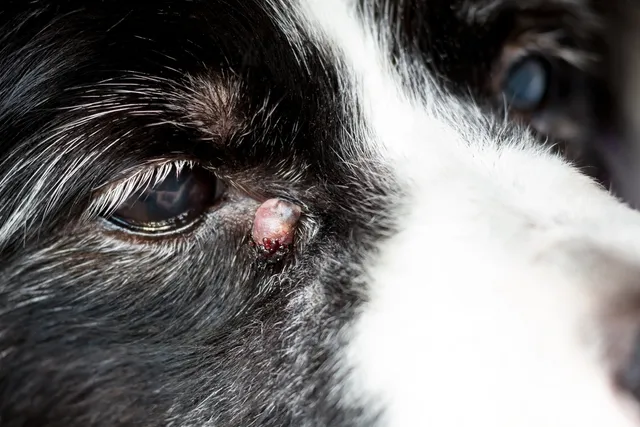
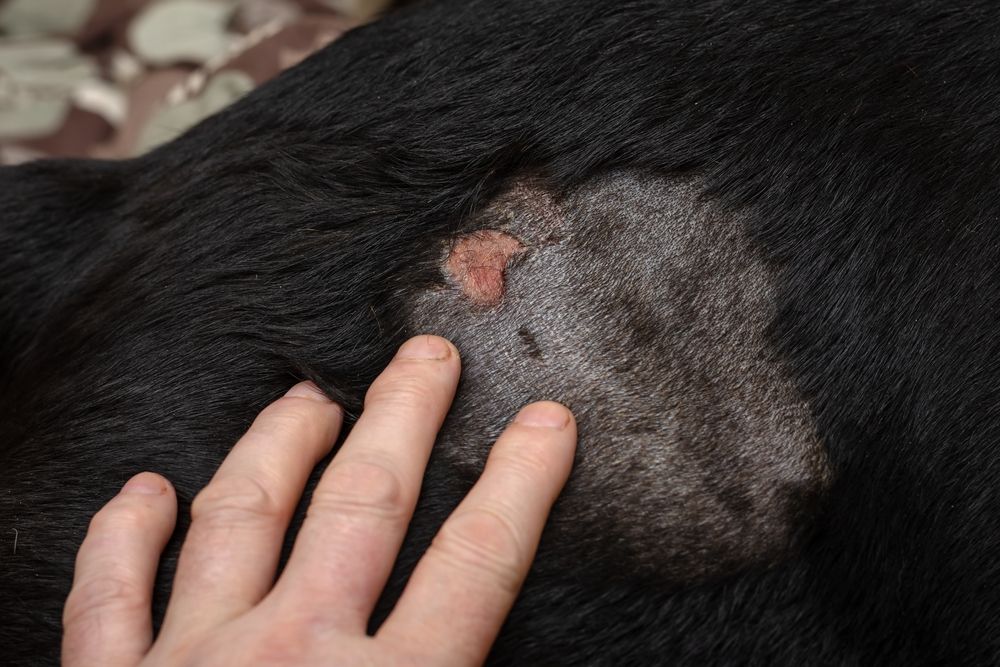
Put simply, an abscess is a pocket of pus beneath the skin. Although abscesses can occur in any part of the body (brain, spine, muscle, abdomen, etc.), we will only be talking about the subcutaneous, or superficial, variety.
Abscesses can form when something penetrates the skin, like a stick, foxtail/grass seed, claw, or tooth, introducing bacteria from the outside world into the body. They can also come from within, like a tooth or anal gland abscess. Knowing what the source of the dog's abscess is can be helpful in knowing how to treat it, as different sources of infection will have different types of bacteria.
If you are concerned about the health and well-being of your pet, seek veterinary advice for the best course of action.
Why Do Abscesses Form?
An abscess is the immune system’s method of containing an infection, allowing pathogen-fighting cells, like neutrophils and macrophages, to mop up the bacteria in one place, preventing the infection from spreading through the body. Small abscesses come and go without us ever knowing about them, but when the infection is more severe or the body is having trouble fighting the bacteria, the abscess gets larger and more painful, and antibiotics are usually needed to help the immune system eliminate the infection.

What Are the Signs of an Abscess?
Depending on the cause of the abscess, your dog might show signs of feeling unwell or painful for a few days or so before you notice anything externally, and the signs will depend on the location of the infection. In general, the signs of an abscess can include:
- Fever
- Soft or firm swelling that may feel fluid-filled, warm to the touch, or be painful
- Weeping wound (may be small or large)
- Pus or blood
You might notice the abscess forming, or you may not notice it until it has burst (ruptured). Quite often, your dog will feel a lot better once the abscess has ruptured, as the pressure that has been building up inside has been relieved, but this doesn’t mean that they don’t need treatment.
In dogs, there are some particular locations that are more common for abscess formation, including:
Anal Glands
Dogs have scent glands concentrated in a pair of sacs located on either side of the anus. These scent glands are usually expressed when the dog passes feces or is frightened, and they communicate a lot of information to other dogs via pheromones. The anal sacs can become blocked, inflamed, and infected, and this can lead to an anal gland abscess. Signs of an anal gland abscess include:
- Difficult or painful defecation
- Swelling below the anus on one side, although they can occur bilaterally
- Foul smell from the back end
- Excessive licking around the anus
- Dragging bottom along the ground (scooting)
- Blood or pus coming from the wound adjacent to the anus
Tooth Root
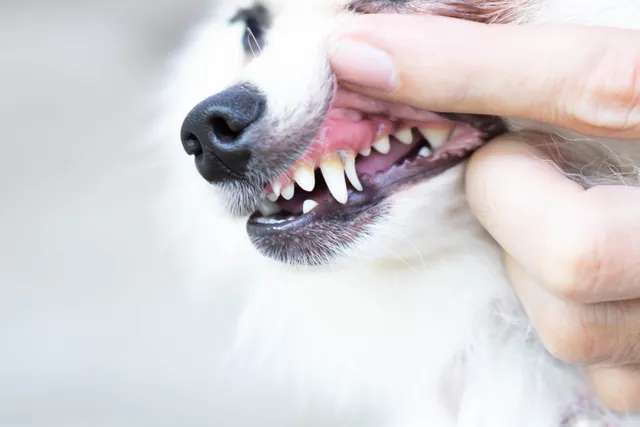
It’s common for our dogs to have severe dental problems without letting on, which is why it is important for them to have regular health checks with the vet. They can develop infections around the roots of their teeth, which can be painful and result in difficulty eating, but they may not always be obvious.
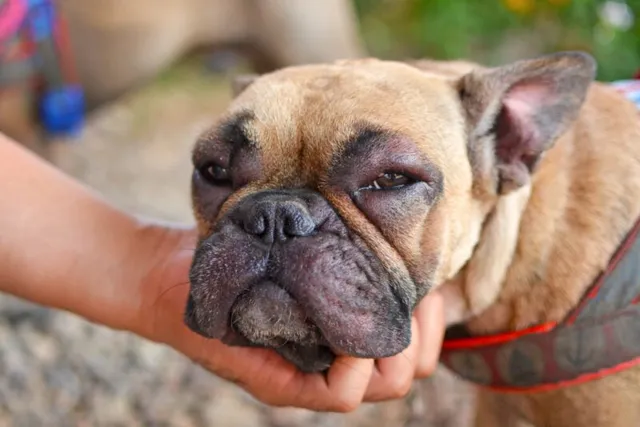
The roots of the larger premolars and molars on the maxilla (upper jaw) sit right up against the sinus passages, so a tooth root infection can cause chronic sinus infections or discharge, or the formation of an abscess, which appears under the eye.
Because of the location, people often don’t make the connection between a swelling or wound on the face and the teeth.
Signs of a tooth root abscess include:
- Swelling under the eye that may come and go
- Scab or wound on the face
- Pus or blood on the face
- Pawing at face
- Difficulty eating, chewing with one side of the mouth
Antibiotics will usually clear up the infection temporarily, but until the infected tooth is removed, it will keep coming back.
Paws
The soft skin between a dog’s toes (interdigital skin) can be damaged by sticks, stones, glass, metal, and grass seeds, and this can lead to infection. Abscesses on dog's paws don’t tend to get very big before they rupture, partly because there’s not much room to form, and partly because it is a very easy location for your dog to lick and chew.
During spring and summer, foxtails or grass seeds attach themselves to anything and everything, commonly burrowing into the feet. Signs of an interdigital abscess include:
- Excessive/frantic licking between the toes
- Red, moist skin
- Swelling of the toes/foot
- Pus or blood from a tiny hole (called a sinus) between, over, or underneath the toes
You may even be able to see the offending foxtail protruding from your dog's abscess, in which case, you may be able to grasp it carefully with some tweezers to pull it out, but do so carefully. It will be painful, and you don’t want to risk pushing it further in. If in doubt, wait until you get to the vet.
How Do You Treat an Abscess on a Dog?
In almost all cases, treatment will include a course of antibiotics to get rid of the bacterial infection and anti-inflammatory medication to treat pain and swelling. Depending on the underlying cause, severity, and location of the abscess, other treatment steps may include:
- Draining the abscess using a large needle or by making a small incision
- Flushing the abscess
- Taking a swab sample to send away for culture and sensitivity
- Placing a drain to prevent the abscess from refilling
- Dental treatment and tooth extractions
Treating a dog's abscess may be as straightforward as going home with medication, or your dog may need to have a local anesthetic, sedation, or general anesthesia to treat the problem, and they may need to come back for several checkups.

Can I Treat My Dog’s Abscess at Home?
If your dog has an abscess, that means there is an infection, so antibiotics are going to be needed to treat it quickly and effectively, which means a trip to the vet is required. Delaying treatment could not only prolong your dog’s pain and discomfort, but it can also lead to a much larger vet bill if the infection progresses further and requires more intensive treatment.
Once the vet has started your dog’s treatment, they may get you to take care of some of the management at home, which might include:
- Administering daily medications
- Flushing or bathing the wound
Can I Give My Dog Human Antibiotics or Pain Relief?
Definitely not, for several reasons. Although there are several antibiotics that are given to both humans and dogs, human doses are very different from dog doses, and there are certain medications that can have harmful side effects for canines.
Different types of infection need different types of antibiotics, and your dog needs to be on the right one for their infection. Using the wrong antibiotic, at the wrong dose, for the wrong length of time can be harmful to your pet and also contribute to the serious problem of antibiotic resistance.
Again, there are a couple of medications in the human medicine cabinet that can be safe for dogs, but others are extremely dangerous or may react badly with other treatments your dog might be taking, so you should never give your dog human medication without discussing it with a vet.
Can I Prevent My Dog From Getting an Abscess?
Unfortunately, most of the time, abscesses are virtually impossible to predict or prevent. However, there are a few things you can do at home to minimize their risks and get ahead of a potential problem before it turns into a painful abscess.
- Keep on top of dental hygiene with brushing, dental chews, and vet checkups.
- Watch for signs of anal gland problems, like scooting, licking, and a smelly bottom (more smelly than usual!).
- If you get grass seeds/foxtails in your area, keep on top of brushing your dog’s coat, paying particular attention to their ears and feet.
- Always check your dog’s paws after a walk.
- Keep a pet first aid kit, including tweezers and sterile saline to help clean any wounds or remove thorns, splinters, foxtails, etc.
- Any wounds that have penetrated through the skin, or wounds from a fight/bite, should be treated by a vet. Prompt antibacterial treatments may prevent an infection from taking hold.
When Is an Abscess Not an Abscess?
Another reason why it’s important to get your dog to the vet when they have an abscess is that, sometimes, it’s not an abscess.
Below are five examples of lumps, bumps, and swellings that might look like an abscess from the outside but need very different treatment. Some of these can become quite nasty if left for too long, which is why it’s always best to get a professional assessment.
Tumors
There are lots of different types of tumors that can masquerade as abscesses, some of which are benign, like lipomas, while others, such as mammary tumors, are cancerous and need to be removed surgically.
Hematoma
A hematoma is when blood from damaged vessels accumulates under the skin, also known as a bruise. In dogs, the most common form is an aural hematoma, where bloody fluid fills the space between the skin and cartilage of the ear flap, often after a fight or ear infection. Aural hematomas require drainage, and sometimes surgery, to stop them from refilling.
Hygroma
A hygroma is a fluid-filled pocket that develops on prominent bony points, most commonly the elbows, as the body’s response to friction and pressure on these areas.
Hernias
There are several different types of hernias that dogs can have, including umbilical hernias, which they are usually born with, and inguinal (groin) or perineal hernias, which occur at weak points in the muscle wall, often secondary to straining, and traumatic hernias, which can happen when a dog is hit by a car or attacked, causing a hole in the abdominal muscle wall without penetrating the skin.
Salivary Mucocele
A salivary mucocele is formed when the salivary duct is damaged or blocked, causing saliva to accumulate in the tissue around the salivary glands.
Summing Up
Abscesses are the body’s way of containing a bacterial infection in one place to allow the immune system to attack the bacteria and prevent the infection from spreading throughout the body. Although some abscesses will resolve on their own, most will need antibiotics to completely eliminate the infection. Abscesses are usually painful, so prompt treatment will be appreciated by your dog.
We don’t recommend treating your dog’s abscess at home without speaking to a vet, as they will likely need antibiotics, they may need more extensive treatment, and in some cases, it may not be an abscess at all.
Sources
Featured Image Credit: Dmitriev Mikhail, Shutterstock
Expert dog care, straight to your inbox
Vet-reviewed advice, training tips, and the best of Dogster. Free, and you can unsubscribe anytime.
By signing up, you agree to our Terms & Conditions and Privacy & Cookies Policy.
Dr. Karyn Kanowski, BVSc MRCVS (Vet)
Dr. Karyn is originally from Queensland, Australia, and has resided in the UK for the past 10 years. She graduated from The University of Queensland School of Veterinary Science in 2010, and also holds a Bachelor’s degree in Zoology. Karyn is passionate about using experience, evidence, and working with pet owners to provide the best solutions for pets. She also believes in making reliable information about animal health accessible to everyone. 5 cats and 4 dogs let her share their home with her and her husband, and when she is not practising as a veterinary surgeon, she spends her time writing, gardening, and cleaning up pet hair!
Join the conversation
Ask a question, share your story, or send private feedback.