What is Kibble Dog Food? Vet-Reviewed Facts & FAQ


In this article
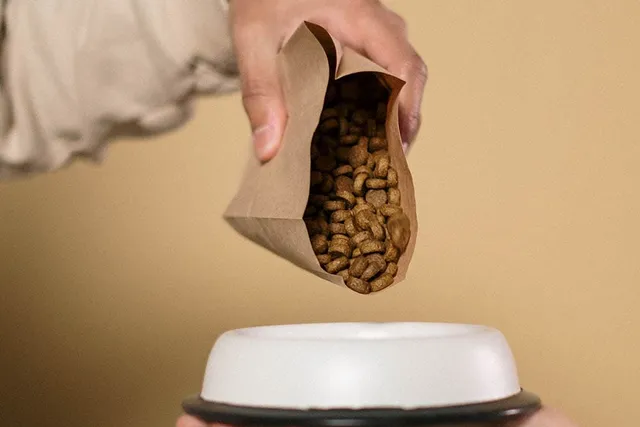
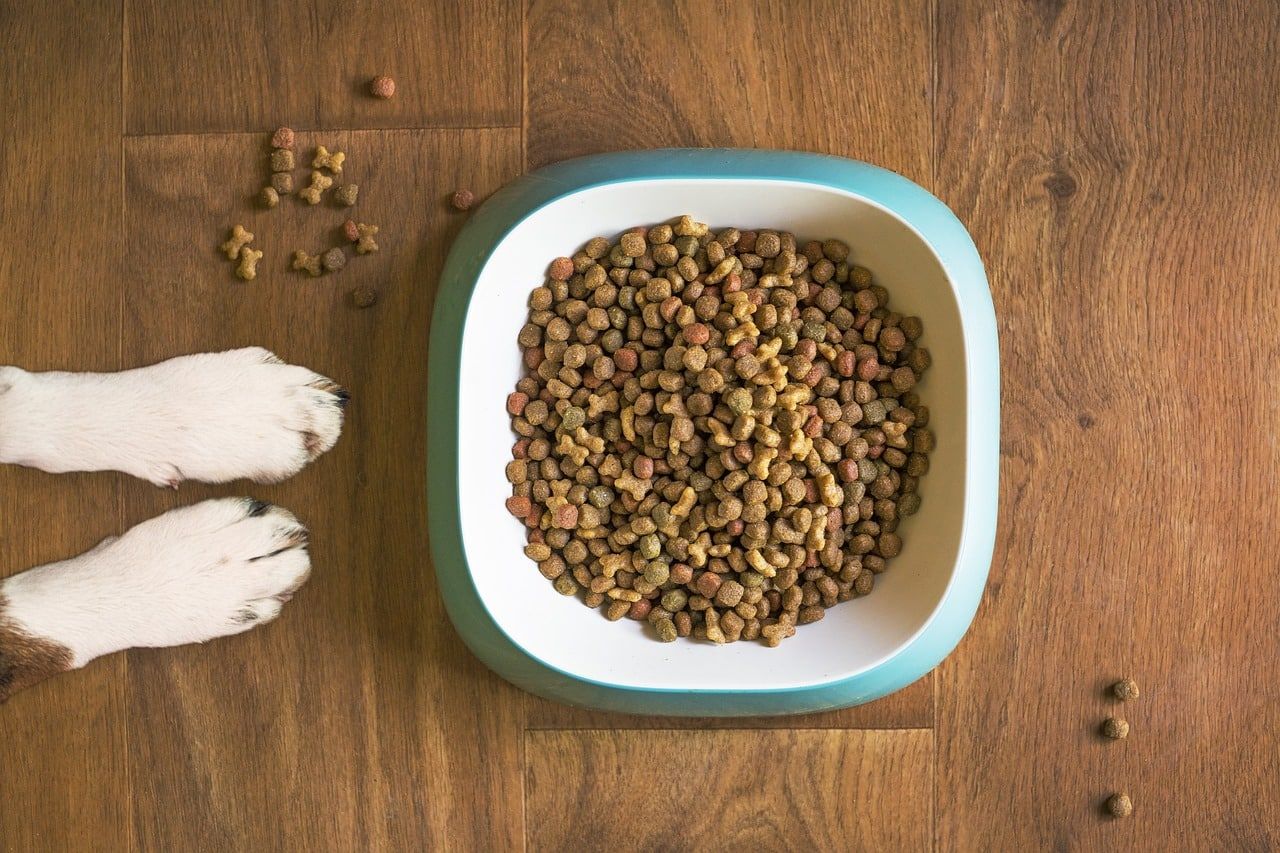
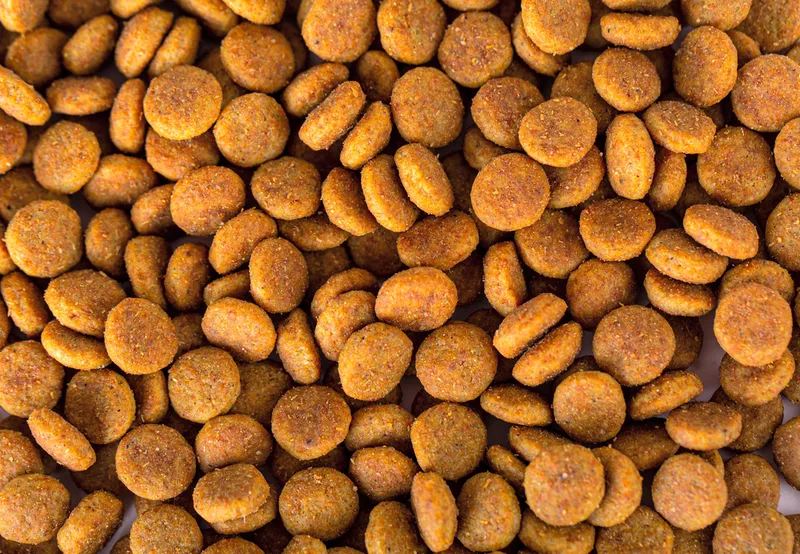
A quick glance at the dog food aisle in shops will show you just how many different types of dog foods there are. There are foods with different flavors, nutritional profiles, breed-specific options, and even ones in fancy cans. However, bags of kibble will likely be the most common dog food you see on the shelves. Kibble is another term for commercially prepared dry pet food or pellets. It is the most popular and readily available dog food worldwide.
If you are interested in learning more about what kibble dog food is and why it is so popular, then this article is for you.

How Is It Made?
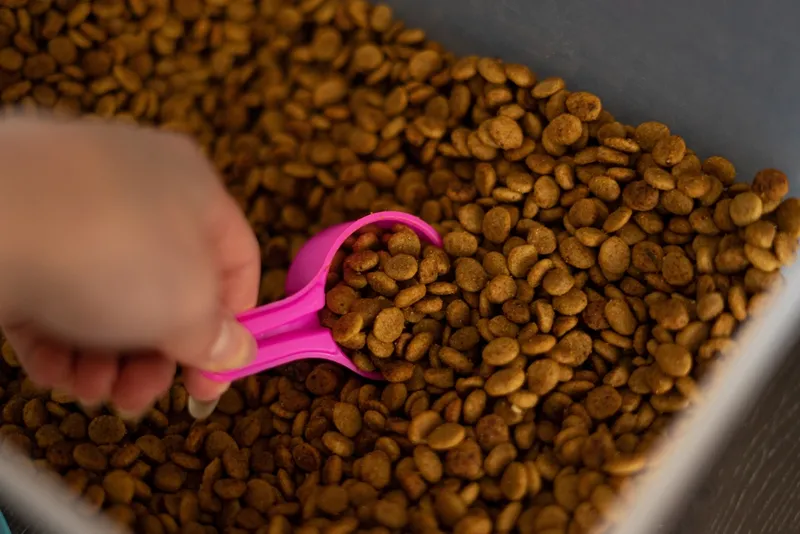
Kibble dog food is composed of ingredients compressed into a dry form. It contains a blend of macronutrients, vitamins, and minerals in a uniform dry biscuit. Kibble can vary in shape, color, and taste to appeal to most dogs regardless of their breed or size.
There are two main ways kibble is made; excursion or baking.
Excursion
Excursion is the more common method used to make kibble and involves cooking the ingredients at high temperatures.
Raw ingredients, such as meats, vegetables, grains, vitamins, and minerals are ground into a coarse flour. The dry ingredients are then mixed with wet ingredients, such as oils and water. This creates a dough which is then placed into an extruder machine and cooked under pressure. When the dough exits the extruder through the die plate, it is cut into a desired shape. The kibble is later air-dried in an oven to preserve its freshness.
Baking
The baking process to make kibble is much simpler, but not commonly used. Baking the kibble involves mixing the wet and dry ingredients to create a dough, similar to the excursion method. The dough is first cut into specific shapes before it is cooked. Rather than being cooked under pressure, the kibble is baked in an oven.

What Are the Different Types of Dog Foods?
Let’s look at the six different types of dog foods below and how they compare to kibble.
1. Dry Dog Food
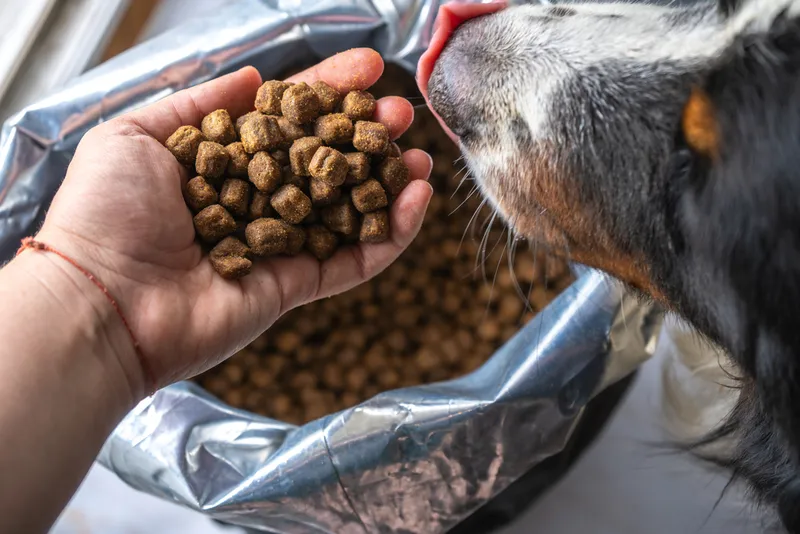
Dry dog food or kibble is a popular and cost-effective way to feed dogs. It contains the ingredients and nutrients a dog needs in a dry form with a similar appearance to biscuits. Dry dog food has to be free from moisture as it could cause spoilage and be unsafe for dogs to eat. You can easily find dry dog food populating the dog food aisle and many owners choose to feed it.
2. Wet Dog Food
Wet dog food has a high moisture content and is usually sold in cans. It can consist of meat chunks in a canine-friendly gravy that is highly palatable and aromatic, or more of a paste. Wet dog food can be fed alone or alongside dry dog food. Dogs with dental issues or difficulty chewing can benefit from wet dog food. Dogs that are picky eaters might prefer wet dog food because the smell and taste are more enticing than dry dog food.
Generally, wet dog food is not as cost-effective as dry dog food and tends to cost more when purchased in bulk.
3. Raw Dog Food
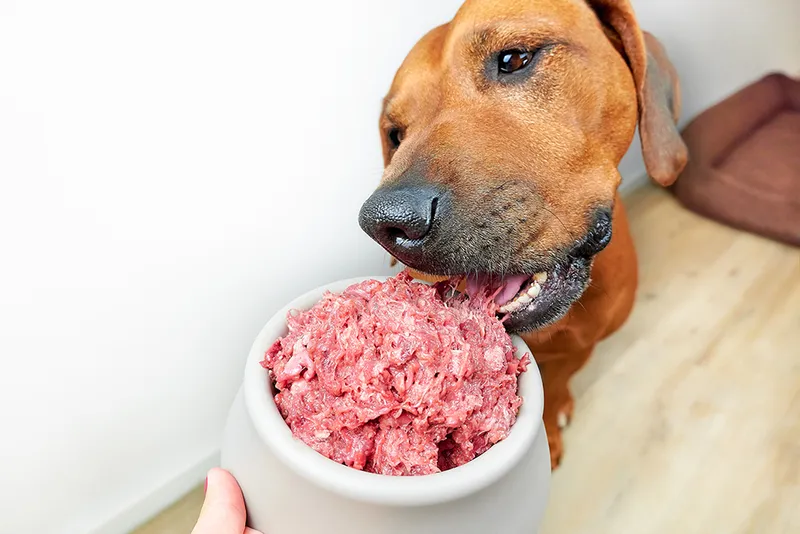
Raw dog food consists of raw ingredients, like uncooked meats, bones, organs, vegetables, and fruits. It aims to replicate a domesticated dog's diet if they lived in the wild. Some dog owners believe raw dog food is more nutritious and natural for their canines, although this feeding method does carry some risks. It’s important to understand the risks and ensure that the raw dog food is balanced and complete before choosing to feed it to your dog.
4. Air-dried Dog Food
Air-dried dog food is made from raw ingredients and supplements and dehydrated at low temperatures. The dehydration process removes most of the moisture from the ingredients but leaves enough for the food to be palatable. Air-dried dog food is similar to raw dog food but with a reduced risk of pathogens and a longer shelf-life.
5. Freeze-dried Dog Food
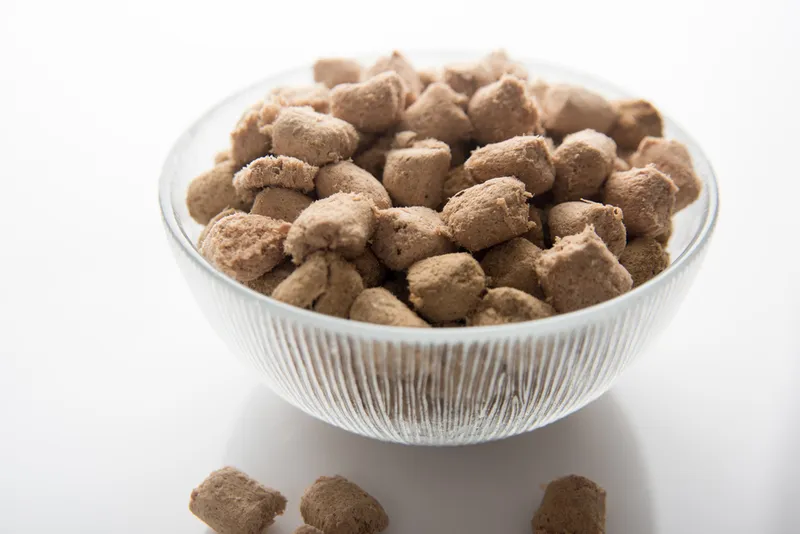
Freeze-dried dog food is made from raw ingredients that are frozen to protect the food's nutritional value. The moisture is removed from the food using a two-stage drying process. The raw ingredients are frozen at very low temperatures to preserve their flavor and nutrients. The frozen food is then placed into a vacuum chamber to remove the food's moisture.
The food is still relatively raw, but the freeze-drying process removes all the moisture.
6. Homemade Dog Food
Homemade dog food is an alternative to commercial dog foods and is made at home. Making your homemade dog food can be tricky, as you want to ensure that it is complete and balanced before feeding it to your dog, therefore we recommend consulting a veterinary nutritionist if you want to pursue this option. Homemade dog food usually consists of raw or cooked ingredients along with supplements.
When Is Kibble Used?
Kibble is commonly used as a complete dog food that provides dogs with all the nutrients they need in a crunchy biscuit. Dog owners usually choose kibble because it is cost-effective and easily accessible. It is one of the easiest dog foods to purchase in bulk and can be stored to last for months before you need to purchase more.
Kibble is sometimes preferred for dogs that are picky eaters as they cannot pick out the ingredients they like and leave the rest. There are various types of kibble dog food available to meet the nutritional requirements of most dogs, even those with sensitive stomachs or allergies. Kibble can also range in quality, as some kibble contains more nutritious and wholesome ingredients than others.
Advantages of Kibble Dog Food
- Longer shelf-life than many other commercial dog foods.
- Cost-effective option for those on a tight budget.
- Complete diet, usually AAFCO-approved.
- The crunchy texture could help prevent plaque buildup.
- The cooking process removes harmful pathogens.
- Easier to store than wet or raw dog foods.
Disadvantages of Kibble Dog Food
- Some may contain fillers and artificial ingredients some dog owners choose to avoid.
- It’s easy to overfeed kibble and put your dog at risk of excessive weight gain.
- Senior dogs or those with dental issues may struggle to chew the hard kibble.
- Contains a low moisture content so dogs do not get much hydration from their food.
- The ingredients in kibble may aggravate certain allergies in dogs.
- Recalls exist due to errors in the manufacturing process.
Frequently Asked Questions (FAQ)
Is kibble healthy for dogs?
There is a lot of controversy over whether kibble is truly healthy for dogs or not. A high-quality kibble that is complete and balanced is not necessarily bad for dogs. It provides them with all the nutrients they need to be healthy, which is important when selecting suitable dog food. However, some dog owners might prefer a less processed diet for their dogs.
Is kibble enough for dogs?
Most commercial kibble is a complete diet for dogs, meaning it contains all the essential nutrients dogs need to be healthy. You won't need to feed additional food or supplements if your dog is eating complete kibble. If the label of the kibble suggests it is a complementary diet, it should not be fed alone but rather alongside a complete dog food.

When was kibble dog food invented?
Kibble was first invented by James Spratt in 1860. The kibble consisted of dry biscuits made from various vegetables and beef blood and created with the baking method. However, Purina was the first company to manufacture kibble using the excursion method in 1956.
Conclusion
Kibble is a form of dry dog food that is easily accessible and affordable for many dog owners. It's made through an extrusion or baking process to create uniform biscuits. There are just as many pros to kibble as there are cons.
It is important to carefully research the kibble you are feeding your dog to ensure that it contains all the nutrients they need. Different kibble formulas might be more suitable for your dog than others depending on their breed, weight, and health issues.
If you are unsure if kibble is the right food for your dog, you can consult with a veterinary nutritionist for advice.
You might also want to check out:
Sources
https://europeanpetfood.org/pet-food-facts/fact-sheets/quality-and-safety/how-dry-pet-food-is-made/
https://www.petmd.com/dog/nutrition/dry-dog-food-vs-wet-dog-food-which-better
https://www.akc.org/expert-advice/nutrition/fresh-raw-kibble-dog-food/
https://www.petcircle.com.au/discover/freeze-dried-vs-air-dried-dog-food
https://onlinelibrary.wiley.com/doi/abs/10.1111/j.1751-0813.1994.tb00905.x
Featured Image Credit: mattycoulton, Pixabay
Expert dog care, straight to your inbox
News, insights, expert advice, and everything dog.

No spam — unsubscribe anytime.
By signing up, you agree to our Terms & Conditions and Privacy & Cookies Policy.
How useful was this post?
Click a star to rate. You can leave written feedback afterwards. (We read all feedback.)
Sarah lives in South Africa with her partner and pets. She is currently interested in veterinary science and ichthyology, which she wants to study alongside her main passion: pet content writing. Sarah has over 60 fish including: goldfish, tropicals, shrimp, and snails. She also keeps hamsters and a tarantula. Sarah wishes to provide quality content to readers and allow others to learn from her experience and knowledge. Sarah has much experience in all aspects of pet care. Providing the world with the knowledge on ethical pet ownership is her lifelong dream.