Get

In Your Inbox

Dogster is reader-supported. When you buy via links on our site, we may earn an affiliate commission at no cost to you. Learn more.

What Were Bernese Mountain Dogs Bred For? History & Facts

Share

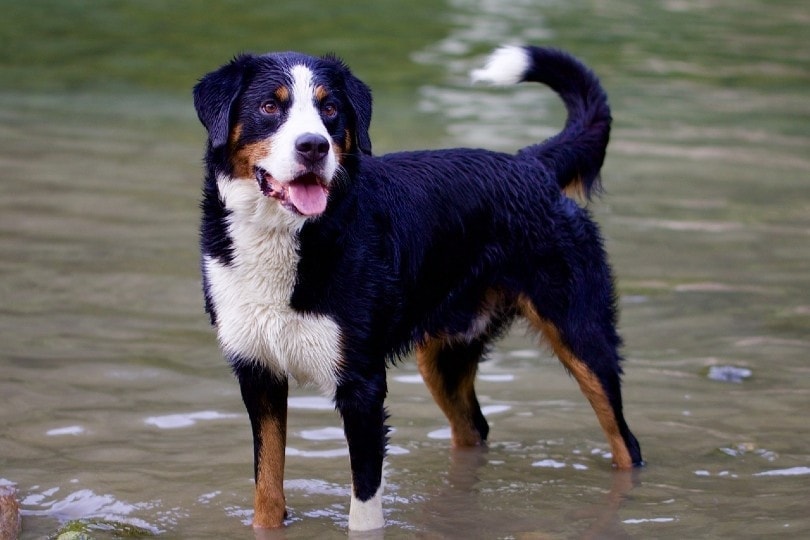
Bernese Mountain Dog mix standing on water

Bernese Mountain Dogs are large, gentle dogs that make loving companions. Today, this dog is a popular choice for a family dog because they are good with children and other pets in the home. This laidback dog has a sweet demeanor, a playful personality, and an affinity for affection.

It’s natural for people to wonder about the origin of this breed and what these dogs were originally bred to do. They’re good-natured family dogs today, but where did they come from?

The Bernese Mountain Dog is one of four types of Swiss Mountain Dog. They get their name from Berne in Switzerland, where they originated and were bred as working farm dogs.

divider dog faces oct 2024

Bernese Mountain Dog History

The Bernese Mountain Dog breed evolved from mixes of Roman Mastiffs and guard dog breeds. The Romans brought the Bernese Mountain Dog to Switzerland 2,000 years ago. Other Swiss Mountain Dogs at the time included the Appenzeller Sennenhund, the Greater Swiss Mountain Dog, and the Entlebucher Sennenhund. All these dogs closely resemble each other in coloring and body type. The Bernese Mountain Dog is easily distinguished from the others because they have a longer, silkier coat.

The dogs were originally bred to be working farm dogs. From the early to mid-1800s, Bernese Mountain Dogs pulled carts, herded cattle, and served as guard dogs on farms. Swiss farmers didn’t have enough money to own horses, so the large and strong Bernese Mountain Dogs were used instead. Farmers had them working as delivery dogs, transporting milk, cheese, and produce. Because of this, they were known as the “cheese dogs” during the 1850s.

Bernese Mountain Dog lying on sand
Image By: ArtTower, Pixabay

The Breed Faced Possible Extinction

In the mid-1800s, other working dog breeds were being imported to Switzerland. This, combined with the introduction of machines to do the farm work instead, led to a decline in the breeding of the Bernese Mountain Dog.

With the breed not being actively produced, it nearly faced extinction. In 1892, a Swiss innkeeper took an interest in preserving the dogs and searched for the best dogs in the country to revive the population. This renewed the dogs’ popularity, and in 1907, a breed club for the dogs was officially founded in Switzerland.

Since their need for work on farms was no longer necessary, the dogs became companion animals and show dogs.

Popularity in the United States

Bernese Mountain Dogs started to gain popularity throughout the world. The breed was known to be a companion, helper, worker, and protector. There is varying information on when the dogs first arrived in America. Some say it was in 1926, but a photo of a Bernese Mountain Dog was taken in Michigan in 1905.

In 1936, Bernese Mountain Dogs were imported to England, and the country welcomed its first litter of dogs. World War II temporarily halted interest in breeding and preserving the dogs, but after 1945, the interest renewed.

The American Kennel Club (AKC) officially recognized the breed in 1937. In 1968, the Bernese Mountain Dog Club of America was formed. This club became a member of the AKC in 1981. The breed standard for the dog was officially stated in 1990.

Bernese Mountain Dog lying on the ground
Image By: PublicDomainPictures, Pixabay

The Bernese Mountain Dog Today

Bernese Mountain Dogs are valued family companions today. They enjoy plenty of space to run and play. Their working dog roots keep their energy levels high despite being such large dogs. This breed needs a minimum of 30 minutes of exercise each day.

This dog does not do well in the heat. They prefer cold weather and playing in the snow. They should not exercise excessively when it’s hot outside. Keep them as cool as you can during the day. Their long coats and dark coloring make them susceptible to heatstroke if they get too hot.

Breeding Today

Since the Bernese Mountain Dog is a popular choice for a family pet, some people have started breeding the dogs just to sell puppies. This means that unsuspecting buyers are getting puppies with hereditary health issues because the dogs were not bred responsibly.

The breed is prone to certain health issues that are made worse by improper breeding practices. If you’re interested in a Bernese Mountain Dog puppy, make sure to either adopt a dog from a local rescue group or shelter or research breeders to find one who is responsible and has a good reputation for producing healthy dogs.

divider dog faces oct 2024

Conclusion

The Bernese Mountain Dog was originally bred to be a working farm dog, and it’s easy to see why. Their size, obedient nature, and intelligence make them ideal candidates for the job.

Today, the dogs are loving, affectionate family companions that fit in well in homes with children and other animals. If you’re interested in welcoming this dog into your home, be sure to only purchase a puppy from a responsible breeder.

Related Reads:


Featured Image Credit: Hebi B., Pixabay

Want content like this delivered to you?

Sign Up For Our Newsletter

News, insights, expert advice, and everything dog

* By submitting, you agree to our Terms & Conditions and Privacy & Cookies Policy.


How useful was this post?

Click on a star to rate (you can leave written feedback after clicking submit)

Help us improve Dogster for pet parents!

Your feedback really matters.

What did you like about this post? Also how can we improve it?

Join the conversation

Leave a Reply

You’re very welcome to leave a comment or question. Please know that all comments must meet our community guidelines, and your email address will NOT be published. Let’s have a positive and constructive conversation.


Talk With A Vet Online

Peace of mind,
anywhere, anytime

Affordable vet advice

Dogster’s Weekly Photo Contest Winners: I’m a Messy Eater (March 26, 2026)

Every week our team gets the privilege of sorting through our readers photos to choose what dogs will win this weeks contest! See...

The Itchy Dog Survival Guide: Home Remedies That Help

Allergies in dogs are more common than most people realize, and they’re genuinely hard to pin down. The immune system overreacts to something...

Another Winner, Another Controversy

Still recovering from the disappointment of seeing a docked & cropped dog awarded Westminster Kennel Club’s “Best in Show,” only to be kicked...

Dogster’s Weekly Photo Contest Winners: My Favorite Toy (March 19, 2026)

Every week our team gets the privilege of sorting through our readers photos to choose what dogs will win this weeks contest! See...

More related

Chorkie (Chihuahua & Yorkshire Terrier Mix): Info, Pictures, Care & More

As designer breeds have taken off, one that has become increasingly popular is the Chorkie dog. A mix between a Chihuahua and a...

How To Prevent Obesity In Dogs: 9 Vet-Approved Tips

Obesity in dogs is a bigger problem than you might think. In 2022, 59% of all dogs in the U.S. were considered obese...

Can Dogs Eat Eggs With Cheese? Vet-Reviewed Health & Nutrition Guide

Feeding your dog tasty treats is one of the simple joys in life, and as many dog owners will attest, it’s even more...

13 Cairn Terrier Mixes (With Info & Pictures)

The shaggy, spirited, and somewhat scrappy Cairn Terrier is one of the earliest Scottish dog breeds. The loving and lively pup makes a...

Keep reading

How Long Will Dog Food Last? Vet-Approved Facts & FAQ

This is an important question, particularly if you have multiple dogs or a giant breed or buy in bulk. Of course, how you answer this question also depends on the kind of food that you purchase. First, look at the...

woman feeding dog with dry food

Can Dogs Have Food Coloring? Vet-Approved Facts

Food coloring is an ingredient used to make pet food more appealing by visually recreating the look of meats like beef (red), chicken (golden yellow), and vegetables (green), but is it actually safe? The general and basic consensus is that...

Food Coloring pump bottles

Can Dogs Eat Slim Jims? Vet-Verified Nutrition Info & Risks

Dogs are known to love snack foods for humans, but can they indulge in a Slim Jim? The short answer is no, Slim Jims are not good for dogs. Read on to find out why this snack lacks benefits for...

Can Dogs Eat_Slim Jims

10 Best Dog Foods for Border Collies in 2026 – Reviews & Top Picks

The food that you, as a pet owner, feed your dog is one of the most important aspects of keeping your pet healthy. If you own a Border Collie, then you know how high their energy and activity levels can...

Border collie holding food bowl

Where Is Wellness Dog Food Made? Manufacturing Location & Facts

Wellness pet foods are among the most popular trendy health foods on the market right now that you can get for your dog. Their foods are well-loved by dog parents who find their affordable foods perfect for their pets’ needs....

Wellness CORE Senior Dry Dog Food

Can Dogs Eat Waffles? Vet-Verified Nutrition Facts & Risks

It’s nice to spend time with your pet in the morning and share a good breakfast with them, which has many people wondering if it is safe to feed waffles to dogs. It might be fine for your dog to...

Can Dogs Eat_waffles

PetPlate Dog Food & Supplement Subscription Review 2026: Door Delivery For Your Pup Made Fresh

Are you considering switching your dog to a dog food delivery service but struggling to find one that includes enough variety to suit your dog’s needs? If that’s the case, PetPlate might be the best choice for you. This subscription...

DOG_SAPR_PetPlate Human-Grade Dog Food

Can Dogs Eat Gingerbread? Vet-Verified Nutrition Facts & Safety Guide

Gingerbread is a holiday staple many people enjoy for the flavor and nostalgia. While dogs can eat certain holiday foods safely, it’s not recommended for dogs to eat gingerbread or gingerbread cookies. Small amounts of ginger may be okay for...


Can Dogs Eat Gingerbread

Love Dogs? So Do We! Join the Dogster Community

Stay informed with expert pet care insights delivered straight to your inbox! Discover professional guidance on animal behavior, feeding tips, trusted product picks, and much more.


Sign up for the Dogster Email Newsletter