In this article
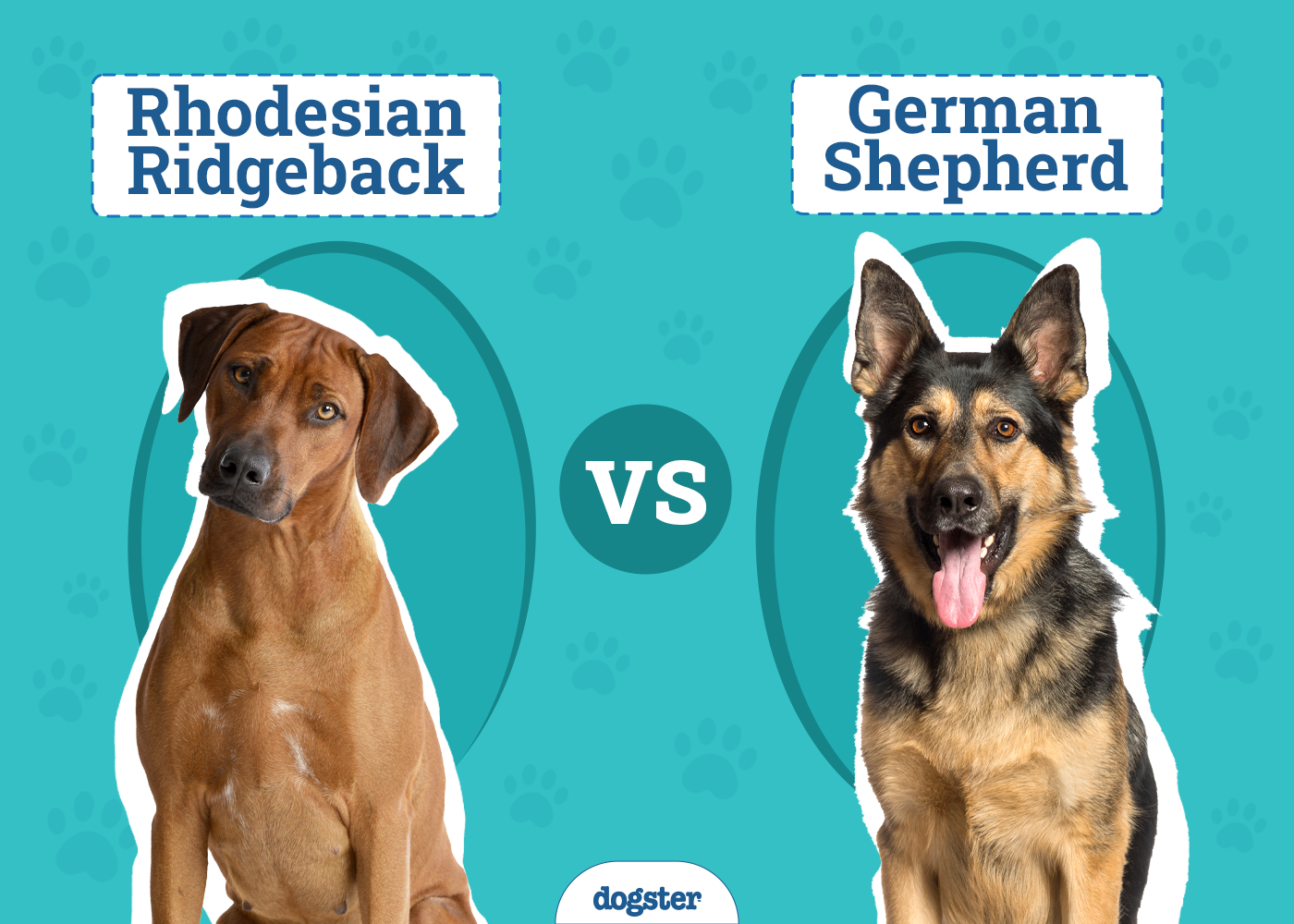
Rhodesian Ridgebacks and German Shepherds are both large dogs with some similar temperament traits. However, they have some big differences too and are thus uniquely suitable for different purposes.
Choosing which one is best for you can be challenging. You’ll need to look at each dog in-depth and then compare them. Lucky for you, that’s exactly what we do below.

Rhodesian Ridgeback vs German Shepherd: Visual Differences
At a Glance
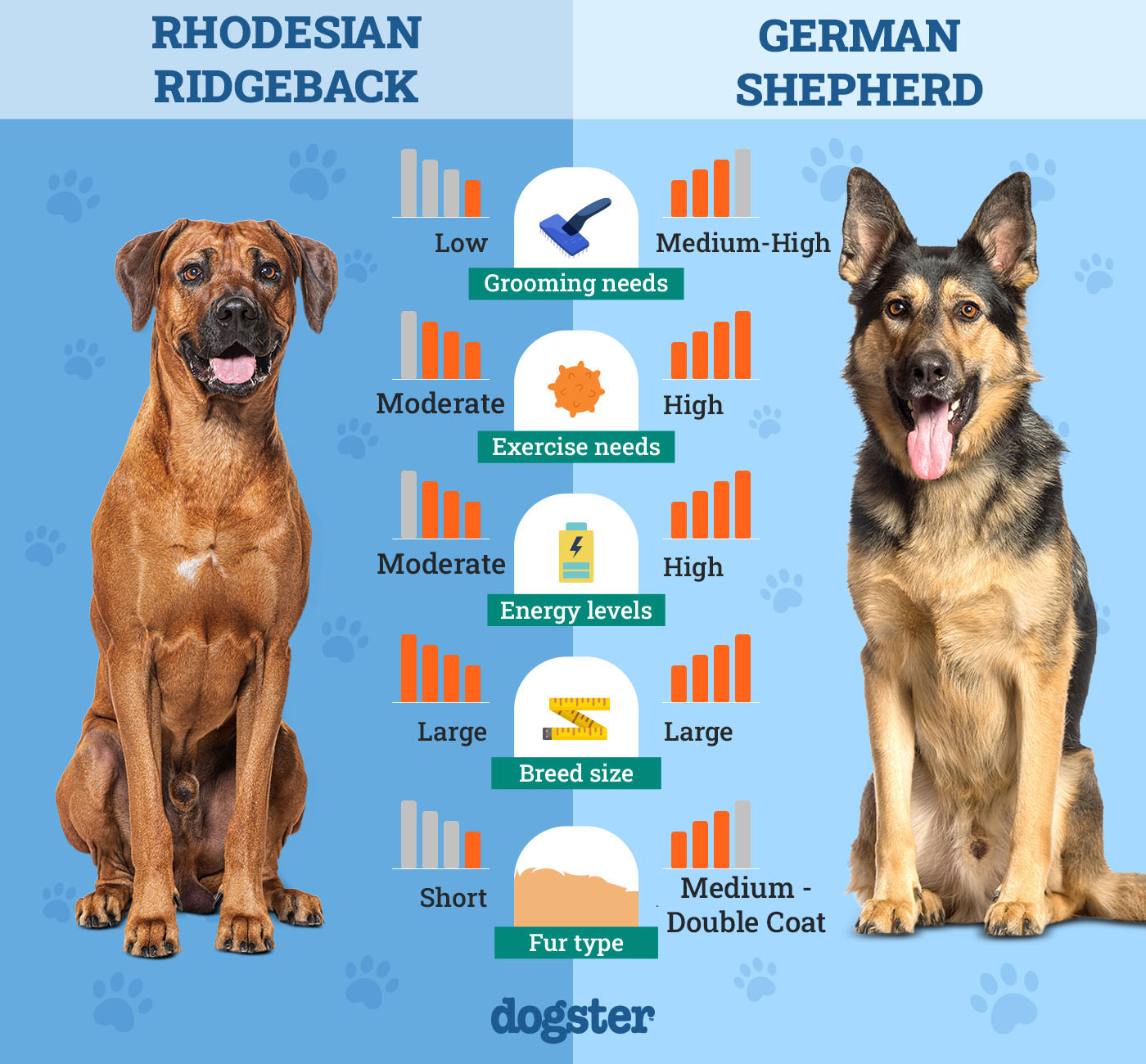
- Average height (adult): 24–27 inches
- Average weight (adult): 75–85 pounds
- Lifespan: 10–12 years
- Exercise: About 1-2 hours
- Grooming needs: Minimal
- Family-friendly: Yes
- Other pet-friendly: Yes
- Trainability: Moderate
- Average height (adult): 22–26 inches
- Average weight (adult): 50–90 pounds
- Lifespan: 9–13 years
- Exercise: At least 2 hours
- Grooming needs: Moderate
- Family-friendly: Yes
- Other pet-friendly: Yes
- Trainability: High

Rhodesian Ridgeback Overview

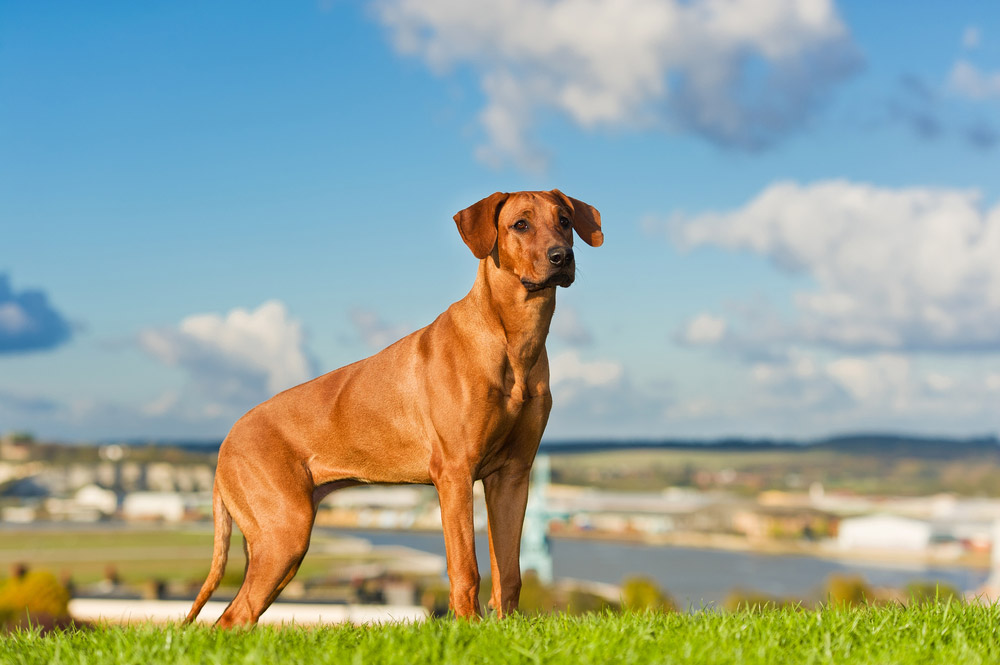
The Rhodesian Ridgeback is a large, powerful, loyal dog originating in Southern Africa. This breed has a ridge of fur moving in the opposite direction down the center of its back, which gives the breed its name. Originally, these dogs were used for hunting large game, including tracking and baying lions, so they are renowned for their courage.
Personality
The Rhodesian Ridgeback is an independent, confident dog. They’re naturally protective of their family and can be aloof with strangers. They need early training and socialization to prevent fear-based or territorial aggression.
This breed is also very active and athletic, requiring about 1–2 hours of daily exercise. They are not suitable for apartment living or novice owners for this reason. They do best in active families.
That said, the Rhodesian Ridgeback is an excellent family guardian and a devoted companion that is affectionate with those it trusts. However, it can be too much to handle for some owners, as it has a strong prey drive and may chase smaller animals. They aren’t good with small animals, including cats (even when socialized).
This dog also tends to be stubborn and independent. Therefore, training can be a challenge. You should get your puppy in puppy classes at a very early age and continue training well into adulthood.
Care
This breed was purpose-bred, so health issues are less common than in many breeds, but they are not absent. However, some common problems that may affect this breed are hip dysplasia, elbow dysplasia, thyroid disorders, eye abnormalities, bloat, and dermoid sinus, in particular has a known inherited component, though there isn’t always a clear genetic link.
The Rhodesian Ridgeback has minimal grooming needs, requiring only weekly brushing and occasional bathing. The nails should be trimmed regularly, and the ears checked for infections. However, many owners get away with not grooming them at all, especially outside of shedding season.
These dogs require a lot of mental stimulation, as they are extremely intelligent. They will try to entertain themselves if they aren’t properly entertained, which can lead to destructive behaviors. We highly recommend a large, secure, fenced-in yard for these dogs, as they like running.
Suitable for:
These dogs are most suitable for active families looking for a loyal companion. They aren’t the most trainable dogs and this makes them challenging for first-time owners, so we only recommend them for experienced dog owners.

German Shepherd Overview
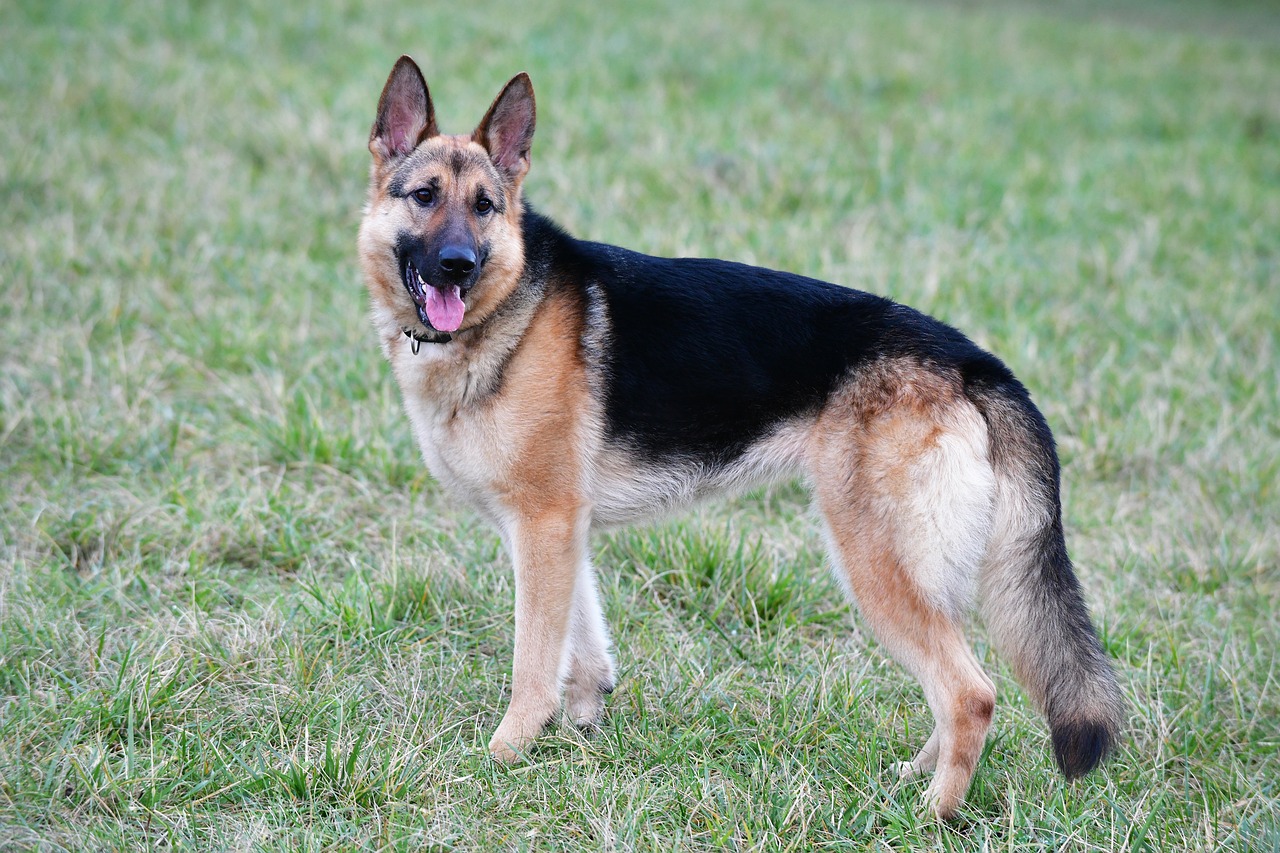
German Shepherds are one of the most popular dog breeds in the world. They’re known for being extremely loyal, powerful dogs with high intelligence. They’re extremely trainable, too, but that doesn’t necessarily make them a good choice for new, inexperienced dog owners.
Personality
The German Shepherd is very intelligent and loyal. Their eager-to-please personality makes them able to excel at tasks with ease. They’re also extremely alert and watchful, making them excellent guard and working dogs. They were originally bred to guard livestock.
These dogs need regular mental and physical stimulation to prevent boredom or destructive behavior. They can adapt to different living situations as long as they get enough attention and exercise. However, they do best with enough room to roam; apartment living isn’t typically ideal for them.
This breed is known for being incredibly devoted and loyal. They’re very protective, which can be a good thing and a bad thing. They require consistent socialization and training, otherwise, they may become overly suspicious or reactive toward unfamiliar people, including visitors.

Care
The German Shepherd is prone to several health issues affecting its quality and length of life. Some of the most common problems that may affect this breed are hip dysplasia, elbow dysplasia, degenerative myelopathy, hemophilia, bloat, allergies, ear infections, and cancer.
This breed was continuously inbred early in its history, making it one of today’s less healthy breeds.
These dogs tend to shed a lot, requiring at least moderate brushing. They can shed tons during the shedding season, usually when the seasons change. Of course, you’ll also have to trim their nails and clean their ears as necessary.
The German Shepherd needs daily physical activity and mental stimulation to be happy and healthy. They’re intelligent, active dogs. Therefore, they do best with active families that have plenty of time to devote to them. They enjoy romping around in large, fenced-in yards and going for long walks.
Suitable for:
German Shepherds are suitable for active families interested in a hands-on dog. They require a lot of training and socialization , so we only recommend them to experienced dog owners.

Rhodesian Ridgeback vs German Shepherd: Which Breed Is Right for You?
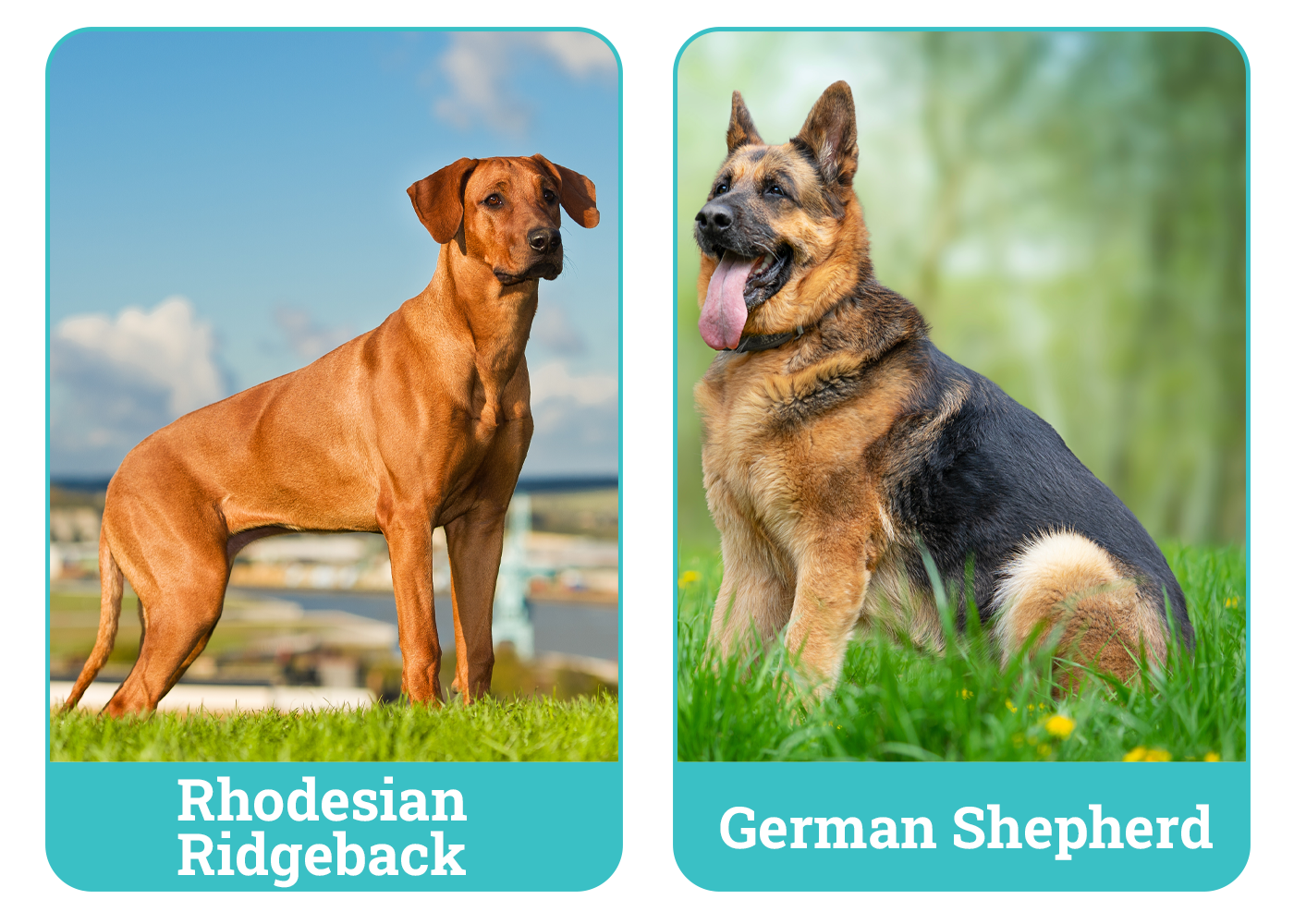
Choosing which breed is right for you can be challenging, especially because both of these dogs have some overlapping care needs. Both breeds do require space, and they are active and athletic. They’re both intelligent, but the German Shepherd is more trainable than the Rhodesian Ridgeback. The Rhodesian Ridgeback is also a hound-type breed, which means they will follow their nose and chase things.
Both breeds need routine grooming, but the German Shepherd requires more frequent brushing due to its dense double coat. As a result, German Shepherds shed more than Rhodesian Ridgebacks, so you should be prepared to deal with more hair around your house. Those who don’t want as much hair floating around should consider the Rhodesian Ridgeback.
These dogs can both be wary of strangers, so it’s important to socialize and train them from a young age.
Related Reads:
- Rhodesian Ridgeback vs Black Mouth Cur: Differences Explained (With Pictures)
- Rottweiler vs Mastiff: The Differences (With Pictures)
Featured Image Credit: Top – Nina Quka, Pexels | Bottom – Anna Dudkova, Unsplash