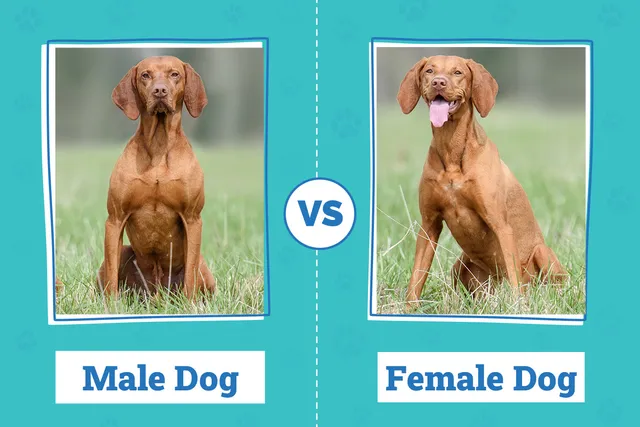
Male vs Female Chihuahuas: The Differences, With Pictures (Vet-Reviewed)


In this article
Chihuahuas are among the most popular dog breeds on the planet, and it’s not hard to see why: They become deeply attached to their owners, they’re adorable, and for some strange reason, they often display confident, “big-dog” personalities despite their small size.
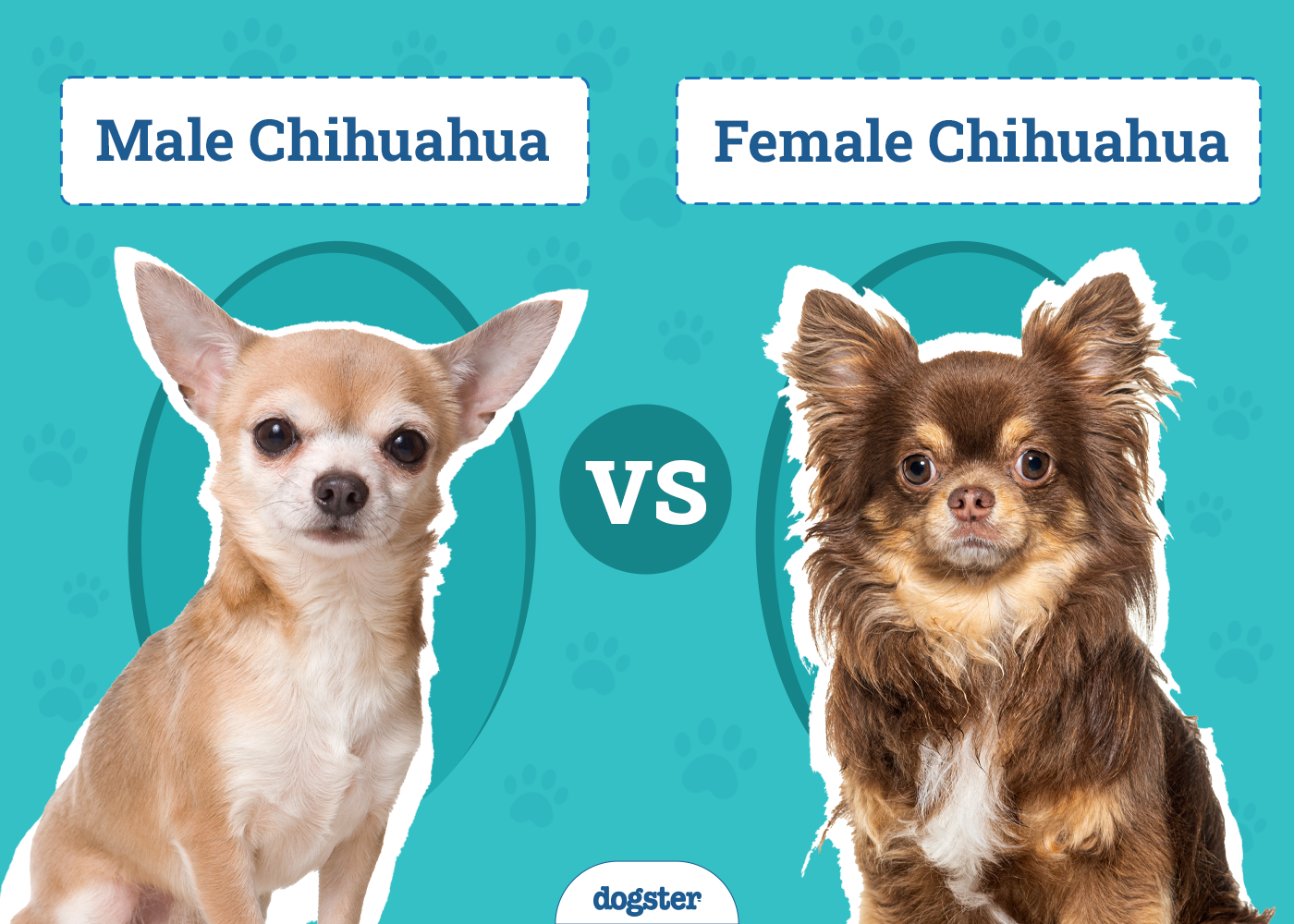
If you’re thinking about adopting a Chihuahua, you likely won’t regret it, but you have one last decision to make. Should you get a male or a female? As it turns out, there are a few key differences between the two sexes, so this guide should help ensure that you bring home the right dog for you.
Make no mistake, though — male and female Chihuahuas have more in common than they have differences. Many of the things listed here are slight variations, and you’ll be lucky to have any Chihuahua for a pet, regardless of sex.

Visual Differences

At a Glance

Chihuahua 101

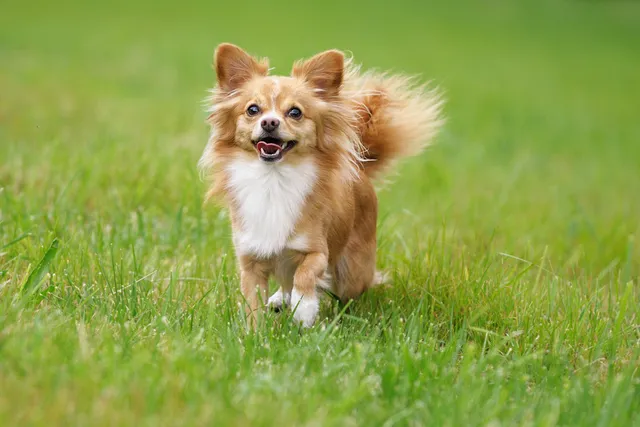
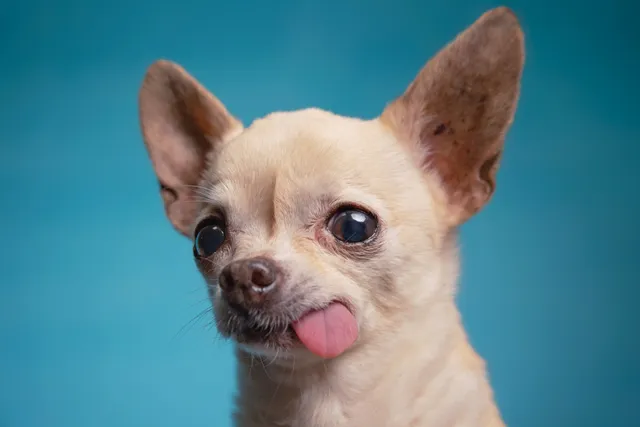
Chihuahuas may be small, but those tiny bodies house oversized personalities. These dogs can be quite feisty and actually make surprisingly good guard dogs, given that they’re roughly the size of a loaf of bread. They may not be able to run an intruder off, but at the very least, they’ll let you know if someone’s there.
That feistiness can get them in trouble, as they often forget that they’re not as big as, say, a Great Dane. Their Napoleon complex—confident, sometimes reactive behavior relative to size—can get them in arguments that they can’t win, so you should always keep an eye on them around other dogs.
Named after the Mexican state of Chihuahua, the breed’s origins trace back to small companion dogs kept by pre-Columbian civilizations in Mexico, with ancestral types such as the Techichi dating back centuries before European contact. Early Spanish explorers, including Hernán Cortés, described small dogs kept by indigenous peoples, but there is no definitive evidence that these accounts specifically referred to the modern Chihuahua breed or that they represent the earliest direct mention of it.
It’s not known what, if any, other purposes that these dogs may have served in olden times, but today, they make excellent and affectionate companions. However, they tend to bond closely with a single person, so they may not be the best family pets, as they’ll choose one person at the expense of all the others.
That said, Chihuahuas aren’t for everyone. If you want the “traditional” dog experience—playing fetch in the yard, happily greeting every person they see, etc.—then a Chihuahua may not be the best fit. They are companion dogs that tend to form close bonds and often prefer being near their owners, which is part of what many people enjoy about them.
You’ll either love them or hate them, but if you love them, chances are that you’ll really love them.

Male Chihuahua Overview

Personality / Character
Compared to females, males can sometimes be somewhat clingier and insecure, but big differences in clinginess between males and females are not consistently supported. They’ll hate to be away from their owners, and while they’re with you, they’ll want near-constant reassurances that you still love them. This can be incredibly endearing, but it also gets old after a while.
Differences in physical or emotional maturity between males and females are not reliably documented. Behavior such as “puppy-like” energy or calmness varies more by individual temperament, neuter status, and training than by sex.
Trainability is also not meaningfully different between males and females. Success in training depends on consistency, reinforcement, and early socialization rather than gender.
Attachment style and sociability with family members vary widely among individuals. Neither males nor females are inherently more protective or more suitable as “guard dog” types, though Chihuahuas in general may be alert and vocal. Compatibility with other dogs also depends more on socialization than sex.
Training 🎾
Males are not necessarily harder to train than females, as trainability depends more on individual temperament, early socialization, and consistency in training than on sex.
Any time with you is time that they’ll expect to be spent petting them or playing with them, and they’re not likely to want to get down to business.
That’s no reason to ignore their training, however. If training and socialization are not provided early and consistently, some individuals may develop unwanted behaviors such as fearfulness or reactivity, but this is not inevitable and is not linked specifically to being male.
Keeping them focused will require consistency, though, and many people make the mistake of trying to bribe them with treats to keep their eyes on the prize. That’s a mistake because it doesn’t take much to fatten these pups up, and obesity is terrible for them.
A better strategy is to use that affection that they crave to entice them to behave and focus on positive reinforcement. Don’t punish them or use other punitive measures, but instead, use attention as positive reinforcement. Every time they behave, lavish them with praise and pets, and they’ll be happy to cooperate soon enough.

Health & Care
For the most part, males and females have similar health risks. The biggest differences are sex-based — meaning, males may suffer from conditions like undescended testicles or prostatic hyperplasia.
Beyond those issues, behavioral traits are not reliable predictors of medical risk, and health problems are more strongly influenced by environment, training, and individual temperament rather than sex.
Risk of injuries or conflicts with other dogs is primarily related to socialization, supervision, and individual behavior rather than being male or female.
Many of these health issues can be mitigated by having your dog fixed or teaching them proper manners. If they eat a healthy diet and stay out of fights that they can’t win, they’re much more likely to reach their full lifespan.
Breeding
If you’re looking to breed a Chihuahua, you can start somewhat earlier with a male. Males typically reach sexual maturity around 6–12 months of age, but responsible breeding should only occur once a dog is fully physically and mentally mature, which is often closer to 12–18 months or later depending on the individual.
Fertility in males does not follow a strict prime period, and while age can influence reproductive quality over time, there is no fixed age range where fertility sharply improves or declines.
That’s not to say that older males can’t be used as breeders, but they won’t have the same odds of creating a pregnancy as using a younger stud will. Temperament traits such as clinginess, sociability, or aggression are not reliably determined by sex, and instead depend on individual personality, socialization, and training.
Pros
- Playful and affectionate
- May be less attached to a single person
Cons
- Can sometimes be clingy
Female Chihuahua Overview

Personality / Character
Chihuahua temperament is highly individual, and there is no reliable evidence that females are less warm and fuzzy than males or more standoffish with everyone except their favorite human. Personality depends far more on socialization, training, and environment than sex. They don’t consistently demand less attention or show greater comfort being left to their own devices.
Female dogs generally reach physical and sexual maturity around 6–10 months of age, while full behavioral maturity can take until about 12–18 months or sometimes longer depending on the individual. Both sexes go through similar developmental phases, and differences between males and females are not that significant.
That doesn’t make them any less warm and fuzzy, however. They’ll likely recoil from attempts at affection offered from strangers, and they may be happier being the only dog in the household. Even within your own family, don’t be surprised if they turn their noses up at your spouse and kids in order to spend time with you.
If you want a dog that is capable of keeping to themselves without needing a constant supply of attention, it is better to focus on the individual dog’s temperament and upbringing rather than assuming this based on whether the dog is female.
Training 🎾
Female Chihuahuas are not reliably easier or harder to train than males, and there is no strong evidence that they are less distractible. Trainability varies far more between individual dogs based on personality, socialization, and consistency of training than on sex.
Similarly, there is no consistent basis for saying females mature faster in a way that improves focus or learning. Emotional and behavioral maturity develops individually and is influenced more by environment and upbringing than sex.
Motivation for rewards such as treats, praise, or play varies widely from dog to dog regardless of sex. As a result, training success and session length are not significantly different between males and females. Some dogs focus longer than others, but this is an individual trait rather than a sex-based one. Keeping sessions short, clear, and engaging is good practice for all dogs.
Like males, females need extensive socialization, and you should only train them using positive reinforcement methods.

Health & Care
If you have your female Chihuahua spayed in a timely fashion, she’s not likely to suffer from any specific reproductive health issues. They may be less likely to suffer from trauma, although females have also been known to get themselves in trouble with bigger dogs.
If you don’t have your female pup spayed, however, you’ll leave her at higher risk of suffering from things like mammary cancer, pyometra, or other reproductive disorders
Keep in mind that if you don’t have your dog fixed, they’re much more likely to have behavioral problems, suffer from all sorts of health ailments, and run away from home.
Breeding
Breeding a female Chihuahua can be surprisingly challenging. Due to their small bodies and large heads, C-sections are often required, so breeding can be expensive and difficult.
Females should not be bred until they have reached full physical and behavioral maturity, which is typically around 18–24 months, though some veterinarians recommend waiting longer depending on the individual dog’s development. The key factor is maturity and health, not a fixed age or a consistent difference between males and females.
The idea that males should be smaller than females to reduce birthing complications is not always a reliable rule, but rather a recommendation. Puppy size and birth difficulty depend on multiple factors, including both parents’ genetics and litter size, and cannot be safely managed through size pairing alone.
Decisions about ending breeding should be based on the individual dog’s health, reproductive history, and veterinary advice.
Pros
- Sometimes less clingy and attention-seeking than males, but depending on individual personality
- Generally easy to train
Cons
- Can zero in on one particular human at the expense of all others
Which Sex Is Right for You?
Chihuahuas are fantastic dogs, and you can’t really go wrong with one, regardless of whether you bring home a boy or a girl. The dog's sex is not necessarily a major predictor of behavior compared with factors like individual personality, socialization, training, and whether the dog is neutered or spayed.
Some Chihuahuas can be very clingy and people-focused, while others are more independent, regardless of sex. Similarly, claims that males are inherently more clingy, more prone to aggression, or harder to train are not supported consistently. These behaviors vary widely between individual dogs.
On the other hand, females are not reliably calmer or more independent. Both sexes can be calm, energetic, affectionate, or reserved depending on temperament and upbringing. Trainability also depends more on motivation, consistency, and the training approach than on sex.
At the end of the day, though, you’ll almost certainly be happy with whichever sex you bring home. If you’re not, too bad — that Chihuahua is already attached to you at the hip.
See also:
Featured Image Credit: (L) Utekhina Anna, Shutterstock | (R) Eric Isselee, Shutterstock
Expert dog care, straight to your inbox
News, insights, expert advice, and everything dog.

No spam — unsubscribe anytime.
By signing up, you agree to our Terms & Conditions and Privacy & Cookies Policy.
How useful was this post?
Click a star to rate. You can leave written feedback afterwards. (We read all feedback.)
Quincy has been around mutts his entire life and has been writing about them for the past nine years and now consists of sharing a house with three spoiled pups who couldn’t hold down a job to save their lives. Quincy never intended to be a cat person. When his wife brought home a kitten one day, he told her she had one week to find it a new home. That week turned into 10 years (his wife moves very slowly), and that kitten turned into three (they got two more, the kitten didn't self-replicate). After a decade of sharing his home with the dogs and three cats, one horrifying realization finally set in: oh God, he's a cat person now too, isn't he???