Glaucoma is a serious eye disease affecting both animals and humans. It can be extremely painful, and even if it’s correctly treated, it can cause blindness. Glaucoma occurs when the small amount of fluid that is normally found inside the eye can’t drain as it should and begins to build up. This excess fluid causes a dangerous increase in eye pressure, which may damage the optic nerve and cause vision loss.
If your dog is exhibiting signs of glaucoma, time is of the essence. The sooner you seek veterinary care, the better the chances of preserving your dog’s vision. Keep reading to learn more about this condition and its signs, causes, and the treatment options available to you.

What Is Glaucoma in Dogs?
Glaucoma occurs when there’s an imbalance in the production and drainage of fluid (aqueous humor) in the eye. This imbalance causes a fluid build-up that increases the eye pressure to unhealthy levels, potentially damaging the optic nerve.
Aqueous humor holds oxygen and nutrients necessary for the eye to function properly. In healthy dogs, the fluid replenishes itself constantly, and the used fluid will drain out of the eye without a problem. However, when the fluid gets trapped in the eye, it puts extreme pressure on the other eye structures, which can damage them.
Most dogs that suffer from primary glaucoma will have both eyes affected by the condition. However, it is often initially only evident in one eye, though the second eye will be affected eventually. If glaucoma is found in one eye only, your veterinary team will recommend taking steps to protect the unaffected eye.
There are two kinds of glaucoma—primary and secondary—but both types result in an increase in the affected dog’s intraocular pressure (IOP).
Primary glaucoma is most often due to genetic or inherited abnormalities relating to the eye’s drainage angle.
Secondary glaucoma occurs when the eye’s drainage angle is normal anatomically, but there is an increase in eye pressure due to a medical eye condition or injury.
What Are the Signs of Glaucoma in Dogs?
- Dilated pupils that respond slowly to light
- Bumping into things
- Behavioral changes
- Redness in the eye whites
- Cloudiness of the eye
- Rubbing at the eye
- Scratching at the eye
- Squinting
- Increased watery eye discharge
- Avoiding being touched near the eye
- Sleeping more
- Acting quieter than usual
- Eating less than usual
- Blindness
- Enlargement of the eye
- Dryness of the front of the eye (cornea)
If your dog is showing any of these signs and you are seeking the best possible treatment for your pup, we recommend speaking with a vet.
If you need to speak with a vet but can't get to one, head over to PangoVet. It's our online service where you can talk to a vet online and get the advice you need for your pet — all at an affordable price!
What Are the Causes of Glaucoma in Dogs?
There are different potential causes of glaucoma in dogs, and the progression of the disease will also partially depend on the reason behind it.
Primary Glaucoma Causes
Dogs with primary glaucoma experience an increase in IOP due to an abnormality in their drainage angle, the area where the fluid exits the eye. It is more common in certain breeds and occurs due to genetic abnormalities.
- Primary closed-angle glaucoma. This is an inherited abnormality in the iridocorneal angle that results in the inability of fluid to access its exit tract.
- Primary open-angle glaucoma (POAG). This is an inherited autosomal recessive disorder resulting from a mutation in a specific gene. Genetic testing in Beagles can be done to test for this condition.
Secondary Glaucoma Causes
Dogs with secondary glaucoma develop the condition after experiencing an injury or developing certain eye conditions.
- Tumors. Tumors can cause inflammation, which may cause physical obstructions or may block the drainage area due to their location and size, leading to fluid accumulation and improper drainage.
- Uveitis. This is a condition that occurs when the eye’s interior becomes inflamed. It can cause inflammatory cell and debris build-up, which may block the drainage angle.
- Cataracts affect the eye lens, which can cause inflammation and debris build-up that can block the drainage angle.
- Lens luxation happens when the lens dislocates itself and relocates from behind the iris to in front of it, blocking the drainage angle.

How Do I Care for a Dog With Glaucoma
Glaucoma is an emergency, so if your dog exhibits any of the signs mentioned above or if you see changes in their eyes, call your veterinary office as soon as possible. The intraocular pressure must be checked and reduced quickly to minimize the risk of your dog suffering from irreversible eye damage or even blindness.
Your veterinary team may prescribe eye drops to help drain the fluid from behind the eye and pain management medication to help control the discomfort associated with glaucoma. They’ll also want to treat any underlying conditions or diseases causing your pup’s condition. These treatments will look different depending on the cause.
In severe or advanced cases, surgery may be necessary to drain excess fluid from the eye. A veterinary ophthalmologist can use several techniques to reduce your dog’s intraocular pressure. However, if your pup does not respond to medical treatment (or has gone blind from the condition), eye removal (called enucleation) may be recommended to reduce pain and discomfort.
Unfortunately, most cases of glaucoma will require treatment for life. You should expect to take your dog to the vet ophthalmologist for intraocular pressure monitoring and medication adjustments regularly, though visits may be more frequent when you initially begin treatment.
Many dogs that develop glaucoma will be affected in both eyes

Frequently Asked Questions
How Will the Vet Diagnose Glaucoma?
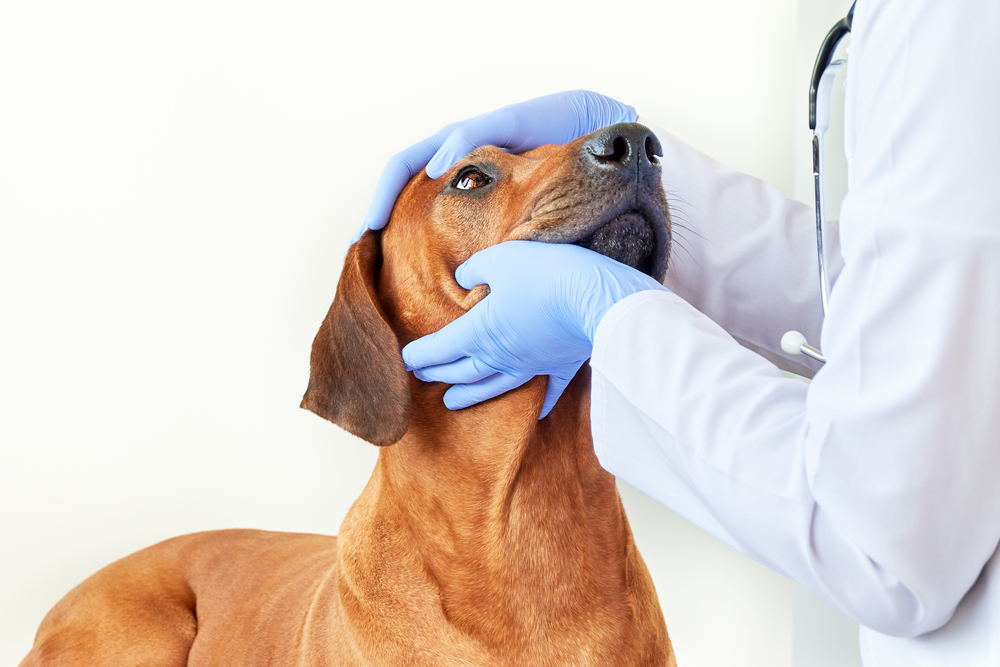
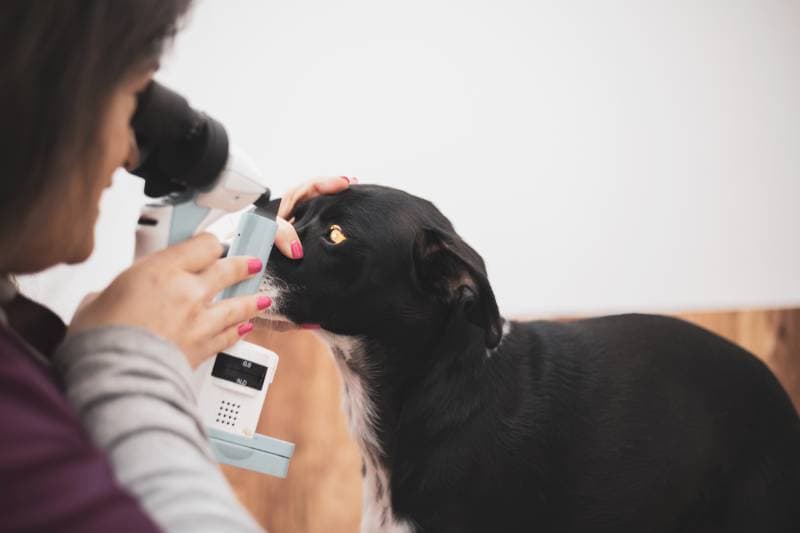
A glaucoma diagnosis is made by measuring the pressure in the eye with a special tool known as a tonometer. This is a relatively simple procedure in which your vet will hold the device to your dog’s eye to monitor the pressure. The tonometer has a small probe that’ll make contact with your dog’s cornea. It is so gentle, in fact, that it doesn’t cause a response in most dogs. The vet may deem an anesthetic eye drop necessary prior to the test to numb the eyeball and further reduce sensation.
Are Some Dog Breeds More Likely to Develop Glaucoma?
Yes. Researchers found that breeds like American Cocker Spaniels, Basset Hounds, Chow Chows, Shari-Peis, and Boston Terriers, among others, may be more likely to develop this condition.
What Is the Prognosis of Glaucoma?
Prognosis is dependent on numerous factors.
The sooner you seek treatment, the higher the likelihood your pup can have their glaucoma managed with minimal long-lasting damage, provided they also respond well to the medication. However, they may still require ongoing treatment to prevent their IOP from increasing again.
However, if treatment is delayed or ineffective, glaucoma can cause vision loss. This isn’t a death sentence, though. Dogs with vision loss can still live happy, healthy, and long lives.
If it’s a serious health condition, such as cancer, causing glaucoma, the prognosis may be much different, but it’ll vary from case to case. Your vet will have a discussion with you about your dog’s condition, including treatment options.

Conclusion
While glaucoma is a progressive disease that most often causes blindness, treatment options are available, depending on the underlying cause of the condition. However, early diagnosis is essential, so if you notice any abnormalities with your pup’s eyes, take them to the vet as soon as possible. If it is determined that glaucoma is the cause of their eye issues, remember that it isn’t a death sentence. Dogs can live long and healthy lives with this condition, even if they become blind because of it!
Featured Image Credit: Zontica, Shutterstock