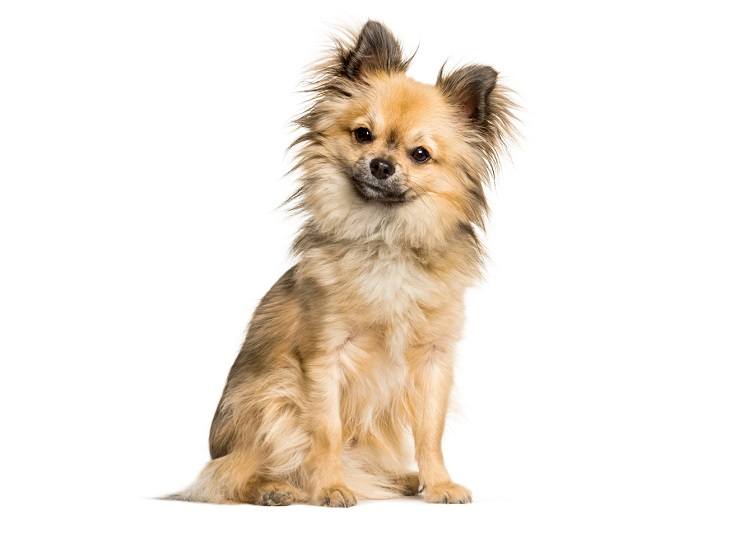
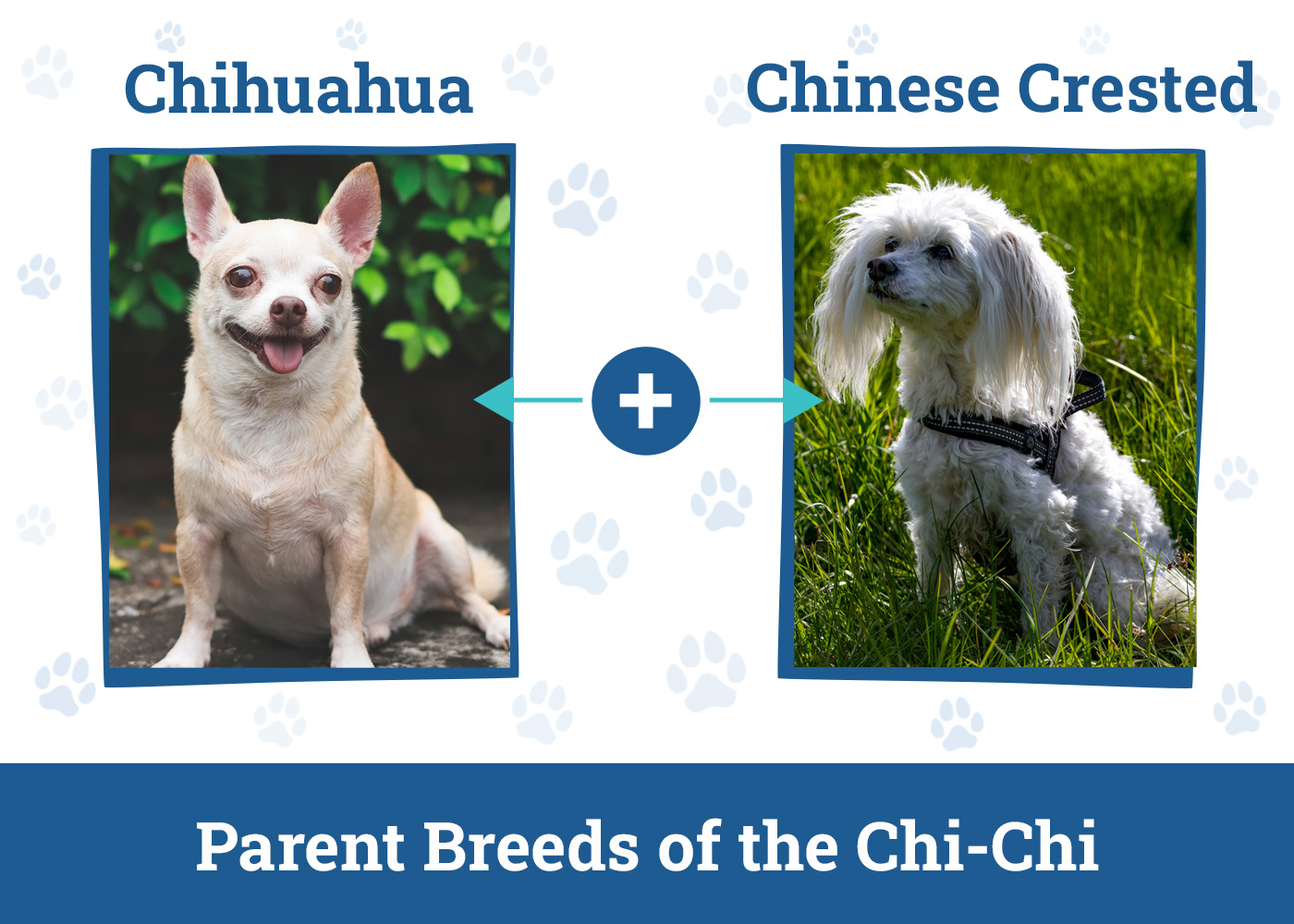
While the Chi-Chi might not be the best-known puppy on the street, there’s a reason that they’ve entered the designer breed dog mix. They’re outgoing and energetic, and if you’re lucky, you’ll get the hypoallergenic traits from their Chinese Crested lineage and their spunky attitude from the Chihuahua.
Breed Overview
Height:
12 inches
Weight:
4–10 pounds
Lifespan:
12–15 years
Colors:
Brown, black, fawn, cream, and white
Suitable for:
Apartment living, families with older children, and previous pet owners
Temperament:
A bit yappy and nervous but fun, playful, and energetic
What else can you expect from this hybrid pup, and why is there such a drastic difference in the size and appearance from dog to dog? We answer all those questions and more here!
Chi Chi Dog Characteristics
Energy
+
High-energy dogs will need a lot of mental and physical stimulation to stay happy and healthy, while low-energy dogs require minimal physical activity. It’s important when choosing a dog to make sure their energy levels match your lifestyle or vice versa.
Trainability
+
Easy-to-train dogs are more skilled at learning prompts and actions quickly with minimal training. Dogs that are harder to train will require a bit more patience and practice.
Health
+
Some breeds, due to their size or their breeds potential genetic health issues, have shorter lifespans than others. Proper exercise, nutrition, and hygiene also play an important role in the lifespan of your pet.
Lifespan
+
Some dog breeds are prone to certain genetic health problems, and some more than others. This doesn’t mean that every dog will have these issues, but they have an increased risk, so it’s important to understand and prepare for any additional needs they may require.
Sociability
+
Some dog breeds are more social than others, both towards humans and other dogs. More social dogs have a tendency to run up to strangers for pets and scratches, while less social dogs shy away and are more cautious, even potentially aggressive. No matter the breed, it’s important to socialize your dog and expose them to lots of different situations.
Just because these dogs are small doesn’t mean they aren’t a handful. On the contrary, they have an extremely playful temperament and energy to spare. Still, their smaller size makes them great for apartments and is a big reason their average lifespan can reach 15 years.
However, they are notoriously difficult to train, especially if they take after their Chihuahua parent. The Chinese Crested and the Chihuahua are also vulnerable to a few health conditions that can be passed down.
Finally, while Chi-Chi Dogs are great around other pets and kids, their smaller size can make them a bit timid, and they can nip when they feel threatened. Early socialization and training are vital to keeping this in check.
While a Chi-Chi is often stubborn, don’t mistake that for a lack of intelligence. Chi-Chi dogs are incredibly smart and loyal; they just have a strong will and like to do whatever they want. This is especially true if they take after the Chihuahua, but this also means they’re more likely to have a spunky and outgoing attitude that makes them a joy to own.
However, if they take after the Chinese Crested, they’ll be extremely smart but easy to train. The tradeoff is that they’ll also be lazier and less free-spirited throughout the day.
Are These Dogs Good for Families? 👪
While a Chi-Chi is affectionate, you must be especially careful if you have small kids. Chi Chis are tiny, and stumbling children and wandering hands can quickly lead to an injured dog or a nipped child.
We recommend only getting a Chi-Chi if you have older children.
Does This Breed Get Along With Other Pets?
In the same way that a Chi-Chi is good with kids, they’re good with other pets, too. But you must be careful around larger dogs and other big pets because a Chi-Chi Dog is so small. While a Chi-Chi is unlikely to start any problems, clumsiness and accidents can quickly lead to an injured pet.
Just remember that socialization is key with any dog, so if you’re looking to keep your pup happy around other animals, it’s best to train and socialize them early.
Before you head out and adopt a Chi-Chi, it’s best to understand what you’re getting into. From how much they eat to common health conditions to keep an eye out for, we’ll cover everything that you need to know here.
Food & Diet Requirements
A Chi Chi doesn’t have any special dietary requirements, but they need a high-quality kibble to keep them healthy. The good thing about such a small dog is that high-quality food will last a long time, so you don’t have to worry about spending much money to feed them. It’s best to look for small-breed formulas and speak to your vet to help you develop a healthy diet plan.
Exercise
A Chi Chi is a high-energy dog, so you must take them for daily walks to prevent destructive behavior. Since a Chi-Chi is smaller, the walks don’t need nearly as long as you would need with a larger pup.
Just shoot for an hour of activity for your Chi Chi Dog daily, including indoor and outdoor activities.
If your Chi Chi takes after a Chihuahua, training them will require a bit more work. Still, training them early and often is critical, as is persistence. With their Chinese Crested lineage, you must stick exclusively with positive reinforcement.
Otherwise, you’ll end up with a timid dog that doesn’t want to be around you, which is the last thing you want to happen.
Grooming ✂️
Grooming is a bit of a mixed bag with a Chi Chi. If you get a hairless pup, you only need to brush out the tufts of hair about once a week. However, you need to brush a fluffy Chi-Chi daily and take them to a groomer for a monthly trimming.
While most Chi-Chis are healthy, they can inherit a few genetic issues from their parents. The best thing you can do is watch for these potential concerns while keeping your Chi-Chi Dog on a strict diet and brushing their teeth daily.
If you do your research when selecting a breeder, the chances of getting a Chi-Chi with any of these issues are slim.
Minor Conditions
Dental problems
Legg-Calve-Perthes disease
Patellar luxation
Heart problems
Serious Conditions
Progressive retinal atrophy
Dry eye
Obesity
Male vs Female
There are a few differences between a male and female Chi Chi Dog. First, males are larger than females, but that depends on which parent they take after. Second, males tend to need more human interaction than females. So, if you’re looking for a dog to follow you around all day and be a lap dog, a male might be a better choice. However, a female might fit your home better if you spend long hours away.
Finally, neutering is cheaper than spaying, and a male can be a little more affordable up front.
3 Little-Known Facts About the Chi Chi Dog
1. Chi Chi Dogs Have Highly Varied Physical Traits
All mixed-breeds take different parts of their appearance from each of their parents, but few dogs have two parents that vary as much in appearance as the Chi-Chi Dog. That’s why you can have hairless and fluffy Chi-Chis and everything in between.
2. Chi Chi Dogs Are Prone to Separation Anxiety
The Chi-Chis can suffer from separation anxiety, and this problem only worsens if you don’t train them early on. Get your Chi-Chi puppy used to the fact that you will leave and return, even if you don’t plan to be gone that often.
3. Some Chi-Chi Dogs Are Hypoallergenic
Even though breeders tried to capture the Chinese Crested’s hypoallergenic traits, they were only partially successful. Not every Chi-Chi is hypoallergenic, but it’s a little easier to tell than other crossbreeds.
If they have the Chinese Crested’s hairless appearance, there’s a good chance that you have a hypoallergenic dog. But on the other hand, if they look more like a Chihuahua, they’re likely still producing dander.
Final Thoughts
While there’s no guarantee of what you’re getting from each parent breed, the appeal of a Chi-Chi is undeniable. You could get a playful pup that’s hypoallergenic or a non-hypoallergenic dog that just wants to laze around all day.
Nicole has loved animals of all sizes her whole life so it's no wonder she has dedicated her career to helping them through what she loves best: learning, writing, and sharing knowledge with others. She’s the proud mom of two dogs, a cat, and a human. With a degree in Education and 15+ years of writing experience, Nicole wants to help pet parents and pets around the planet to live happy, safe, and healthy lives.
If your dog has eaten moldy food—perhaps you didn’t store the food properly, or your dog ate the moldy food from the garbage—it is a cause for concern. Mold can make your dog sick, which is why you should take...
Chances are, if you are reading this review, your dog has recently been diagnosed with a heart murmur, and you need to put him on a proper heart-healthy diet. Well, you’ve come to the right place. Along with the suggestions...
With so many pet foods on the market, it can be daunting to choose the right one for your dog. Naturally, we want the best for our pups, but the sheer number of brands, ingredients, options, and more can lead...
When we think of wild canids, we imagine a wolf hunting in a pack and chasing down deer, elk, or moose. Our canine companions are a long way from this lifestyle. Domestication has profoundly impacted dogs. You can make a...
There are many pieces of misinformation floating around the web on what is and is not safe for your canine companions. One of these very topics might have to do with pine nuts. Are pine nuts toxic to dogs? No,...
While there are so many fun summer activities that we can do with our dogs, hot summer days often bring additional challenges to dog care. Dehydration and heatstroke are serious risks that increase in the summer, and it’s the owner’s...
Congrats on your Aussiedoodle! They’re very intelligent dogs with an eye for detail and a passion for people. If you’re wondering about what kind of food to feed your special dog, you’ve come to the right place. While there aren’t...
Protein is an important part of a healthy dog’s diet, and there are few protein sources that are as beneficial as meat. Whether you feed your dog chicken, beef, salmon, or other animal-based protein, you can keep your dog healthy...
Stay informed with expert pet care insights delivered straight to your inbox! Discover professional guidance on animal behavior, feeding tips, trusted product picks, and much more.
You may opt-out at any time. View our Privacy Policy for more information.
Sign up for the Dogster Email Newsletter
You may opt-out at any time. View our Privacy Policy for more information.
You may opt-out at any time. View our Privacy Policy for more information.