
In this article
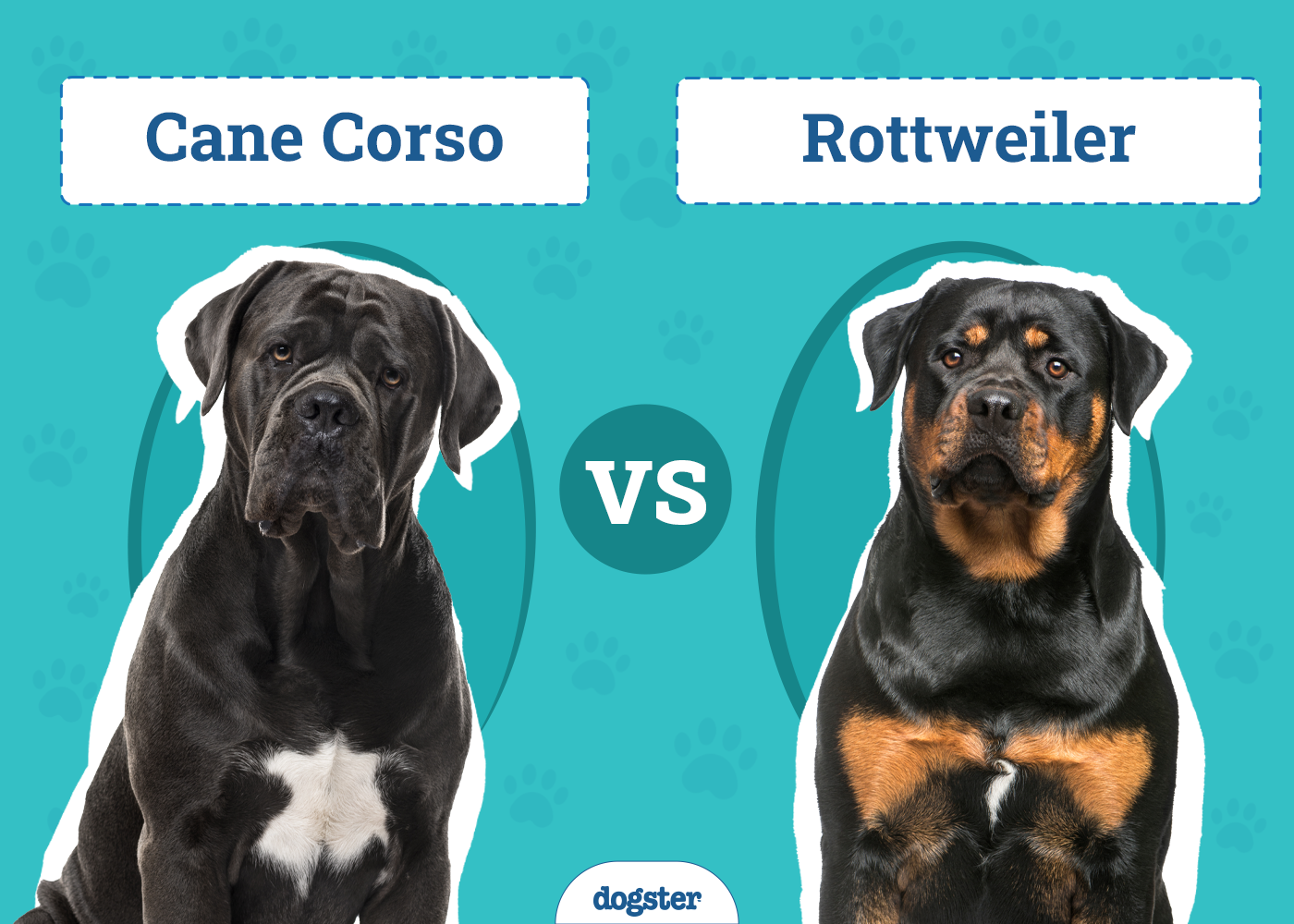
View 3 More +The Cane Corso and Rottweiler are both bulky dogs with a history of guarding. Although both dogs look a bit scary, they are super loving to their owners and thrive on attention and socialization. With great training, both dogs are unlikely to be aggressive or mischievous.
Because both dogs are so big, neither are suited for apt living. Instead, Cane Corsos and Rottweilers need a lot of space to play and roam. Both even need a minimum of one hour of exercise a day to run off all their energy.
If you have young children or other pets in the household, the Rottweiler is the best dog to choose. Although they will still act like a watchdog, Rottweilers are very cuddly and bubbly with low prey drive, making them the perfect family dog in homes with children and other pets.
In comparison, Cane Corsos do best as the sole pet because of their high prey drive. More so, they have a much more reserved personality than the Rottweiler, which makes them less suited for young children. Although they are unlikely to be aggressive towards the child, the Cane Corso will not enjoy children as much as the Rottweiler.
To learn more about both dogs and to determine which you should choose, read on.

Visual Differences
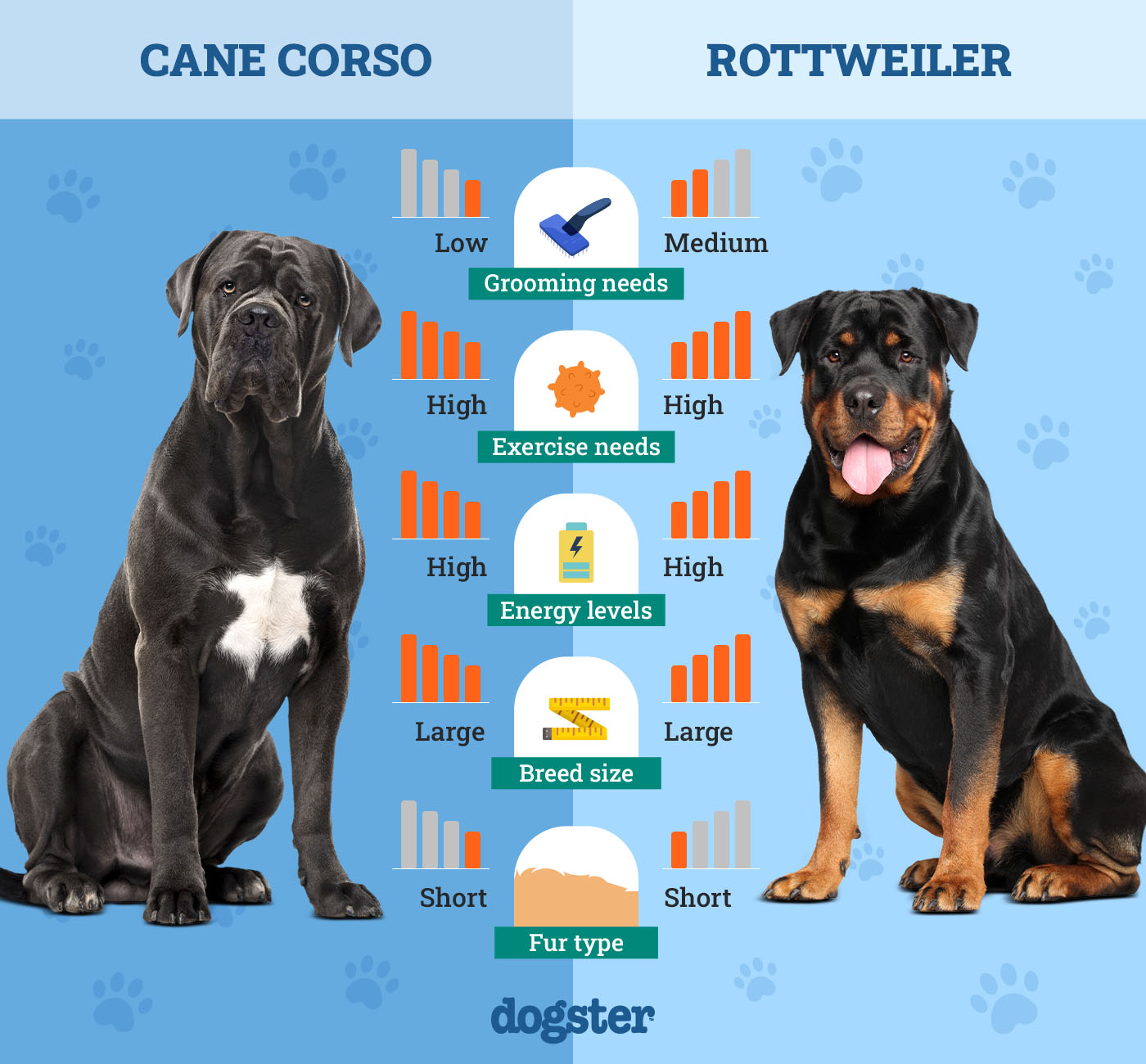
At a Glance
- Average height (adult): 22–27 inches
- Average weight (adult): 90–120 pounds
- Lifespan: 10–12 years
- Exercise: 1+ hours a day
- Grooming needs: Moderate
- Family-friendly: Yes, with training
- Other pet-friendly: No
- Trainability: Intelligent, but stubborn
- Average height (adult): 22–27 inches
- Average weight (adult): 85–130 pounds
- Lifespan: 8–11 years
- Exercise: 1+ hours a day
- Grooming needs: Moderate
- Family-friendly: Yes, with training
- Other pet-friendly: Yes, with training
- Trainability: Highly intelligent, but stubborn
Cane Corso Overview

The Cane Corso is a working dog that originated from Italy. It was bred as a working dog that could also get along well with families. Unsurprisingly, Cane Corsos are large, energetic, and loyal to the ones they love. At the same time, these dogs have high prey drive and can become aggressive if they deem someone a threat.
Personality
Cane Corsos have temperaments that are loved by many and hated by others. These dogs are known to be brave, confident, and willing to take on any challenge if needed. As a result, these dogs are sometimes associated with aggression, but that aggression is almost always warranted when the dog is trained and treated properly.
As a result, most Cane Corsos in the hands of the right owner are very well-mannered, though they still act like guard dogs when needed. Most people enjoy Cane Corsos for this reason the dog is loyal and kind to the family, but it will also bark and defend you if needed.
In comparison to other guard dogs, Cane Corsos are surprisingly quiet. They are not quite as cuddly as other companion dogs, but that’s not out of lack of interest. On the contrary, Cane Corsos are notoriously dependent on socialization, but they demonstrate their affections differently.
Family Ties
Cane Corsos has long been a great family dog. They are especially best for active adults and young people who look forward to a dog that is a great companion and guard dog.
Although Cane Corsos are not outright aggressive towards children, they don’t make the best dogs in a household with young kids simply because of their reserved nature. With the right training and supervision, you can have a Cane Corso and young children.
It’s not a great idea to have a Cane Corso if you have other pets in the household. These dogs have high prey drives and will chase cats and small animals.
Training
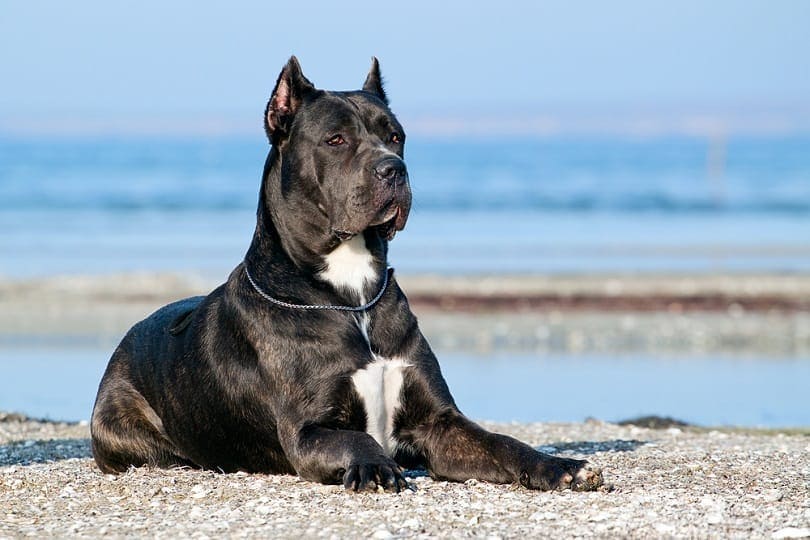
Because Cane Corsos can be aggressive, it’s important to train them properly. With proper training, these dogs will not act aggressively unless outright provoked or put in danger. Regular obedience training and socialization are required for these dogs.
Luckily, training Cane Corsos is not notoriously difficult. Even though these dogs are a bit stubborn at times, they are intelligent and loyal to their owners. They respond to training much faster than other breeds. Because of their independent streak, Cane Corsos are best for those who have experience training big dogs, though.
When training Cane Corsos, it’s important not to be aggressive or negative. Because these dogs were bred for guarding purposes, they will stand up for themselves if they feel they must. So, use positive reinforcement and training to get your Cane Corso to listen. Consistency is key.
Health & Care
Cane Corsos are relatively healthy dogs that require minimum care. The most difficult part of caring for your Cane Corso is meeting its required exercise needs. Because these are working dogs, they need at least one hour of exercise a day, if not more.
Still, be gentle with your dog when playing. Although Cane Corsos have high exercise needs, they are highly prone to dysplasia. Selecting light but frequent exercise is the best way to get your dog’s energy out without jeopardizing its joints.
In addition to an hour of exercise, make sure to provide Cane Corsos with mental stimulation. Because Cane Corsos are intelligent, they can get bored, especially when left alone. Mental stimulation prevents them from being destructive on your property.
Grooming your Cane Corso is relatively easy. You shouldn’t do much to the coat, but you will need to brush the dog’s teeth, trim its nails, and check its ears weekly.

Suitable For:
Cane Corsos are suitable for active families that expect to be home quite a lot. These families can have children, but make sure that the dog is trained and socialized well first due to their reserved nature.
This breed is not suitable for people who live in apartments, expect to be away from the home frequently, or have other pets. Likewise, do not get a Cane Corso if you are not willing to spend the time and money necessary to train this big dog.
Rottweiler Overview

In many ways, the Rottweiler is similar to the Cane Corso. The main difference is that Rottweilers have more energy and more bubbly personalities. Rottweilers are best for people who have tons of time and energy to dedicate to their dog, as well as young children in the household.
Even though Rottweilers tend to be slightly less aggressive than Cane Corsos, training is still a must. Rottweilers were also bred as guard dogs, which means they can be aggressive if not trained properly. If you take the time to socialize your Rottweiler, it will make a compassionate addition to your home.
Personality
The Rottweiler is often deemed the “Gentle Giant” because it’s a mean looking dog that is as sweet as candy. The dog is often very courageous and confident, but it is also aloof and calm. Though the dog is quick to act in an emergency, Rottweilers often follow your lead to determine if a newcomer is welcomed.
In fact, Rottweilers are very social and bubbly. They like being around other people and animals. Unlike the Cane Corso that acts reserved, you can expect your Rottweiler to sit in your lap, cuddle, and want to play frequently, even around newcomers.
Family Ties
Rottweilers make great family dogs if you want a compassionate watchdog. The dog will let you know if anyone comes on the property, but it is unlikely to attack or act aggressive unless prompted by the person. Especially if you seem relaxed by the newcomer, the Rottweiler will likely be lovey-dovey.
Despite their large size, Rottweilers are surprisingly good with children. Even around young children, Rottweilers tend to be very loving and often act like a nanny dog. It’s important to train the Rottweiler well if you have young children, though. Because of their strength, they may accidentally hurt the child while playing.
Rottweilers do not have that high of a prey drive either. They even love to play with other dogs. So, Rottweilers can fit into homes with other pets. Once again, training and socialization is required.

Training
Rottweilers are considered one of the easiest dogs to train. Although they can be stubborn at times, they are consistently listed as being one of the top 10 smartest dogs. Most of these dogs will learn new commands in as little as five repetitions.
Because Rottweilers are so big and potentially aggressive, training is a must. At least the job is easy. Just make sure to be consistent and positive when training the dog. Most likely, the Rottweiler will respond quickly, especially if you train it when it is a puppy.
Health & Care
Caring for your Rottweiler is much like caring for a Cane Corso. The most difficult aspect of care is providing the dog all the exercise it needs.
If you thought the Cane Corso required a lot of exercise, the Rottweiler needs even more. Make sure that you have a lot of outside time and mental stimulation for your Rottweiler. Obedience training may be a great way to get the dog into tip-top shape while expending its energy.
As far as grooming goes, Rottweilers are relatively easy to care for. They have a short coat that sheds, but the coat isn’t too dense. You will need to brush the dog’s teeth several times throughout the week and trim its nails when necessary.

Suitable For:
Rottweilers are suitable for people with a lot of energy and time to dedicate to the dog’s exercise and training. You will need a lot of space for this dog, but you can easily add it to a home with other pets and children with the right socialization.
Do not get a Rottweiler if you live in an apartment or expect to be away from home quite a bit. More so, don’t get a Rottweiler if you don’t want to play with your dog for at least one hour a day.
Which Breed Is Right for You?
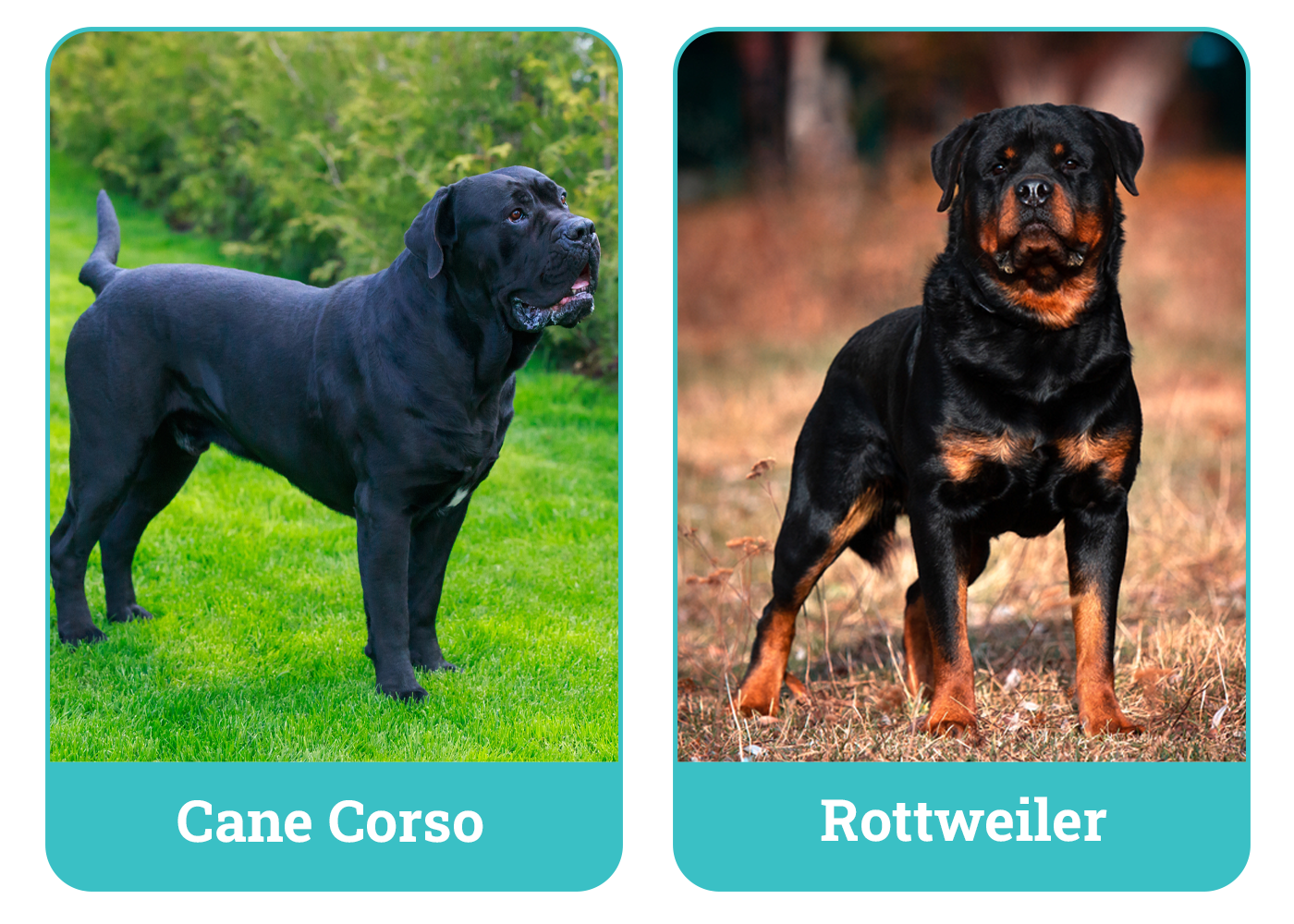
Whether you should get the Cane Corso or Rottweiler largely depends on the members of your household. If you have other pets and children, it’s best to go with the Rottweiler. Because of its low prey drive and bubbly personality, the Rottweiler is not only going to get along with other members of the family but will enjoy them.
In contrast, Cane Corsos are best for active families with older children or no children at all. Because they are so reserved, they simply respond better to more mature family members, though they aren’t outright aggressive to young ones. They don’t do well with other pets either due to their prey drive.
Regardless of which breed you select, make sure to train and socialize it properly. Only through successful training can you rely on the Cane Corso and Rottweiler to be gentle and protective over your home.
You may also be interested in:


































2 Responses
This was interesting , however I have Cane Corso and a Rottweiler , I think they are not just the same , my Cane Corso doesn't live with children yet she becomes protective over children , yet my rottweiler doesn't really like children , my cane Corso is very protective and because I experienced a home invasion and my rottweiler failed me she barked but didn't go into protection mode . so this is why I got a cane Corso and she is showing more aggression to protect me and she is not quite 12 mths old yet .
Hello Lisa,
thank you for sharing your personal experience with both of these breeds. We love it!