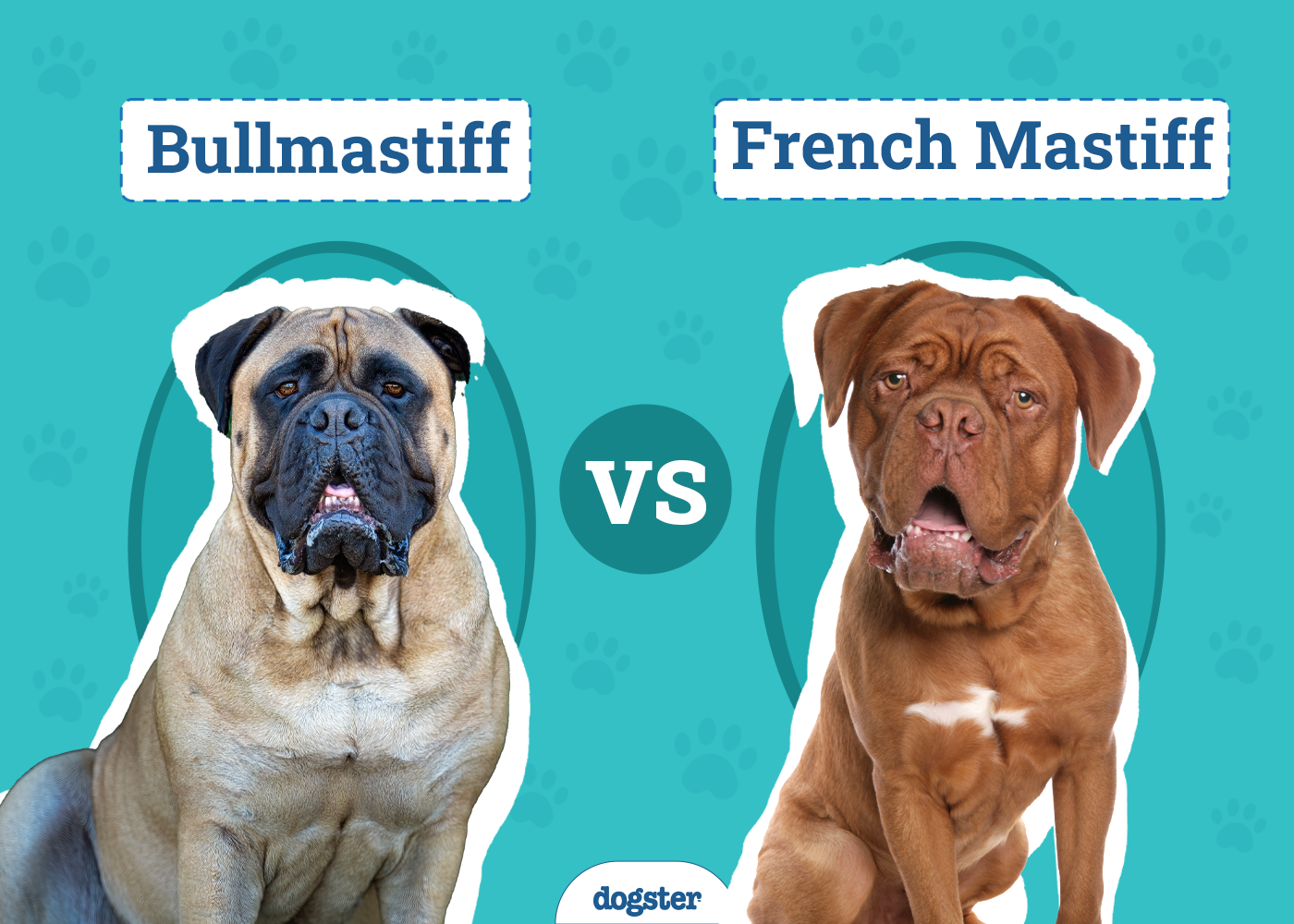
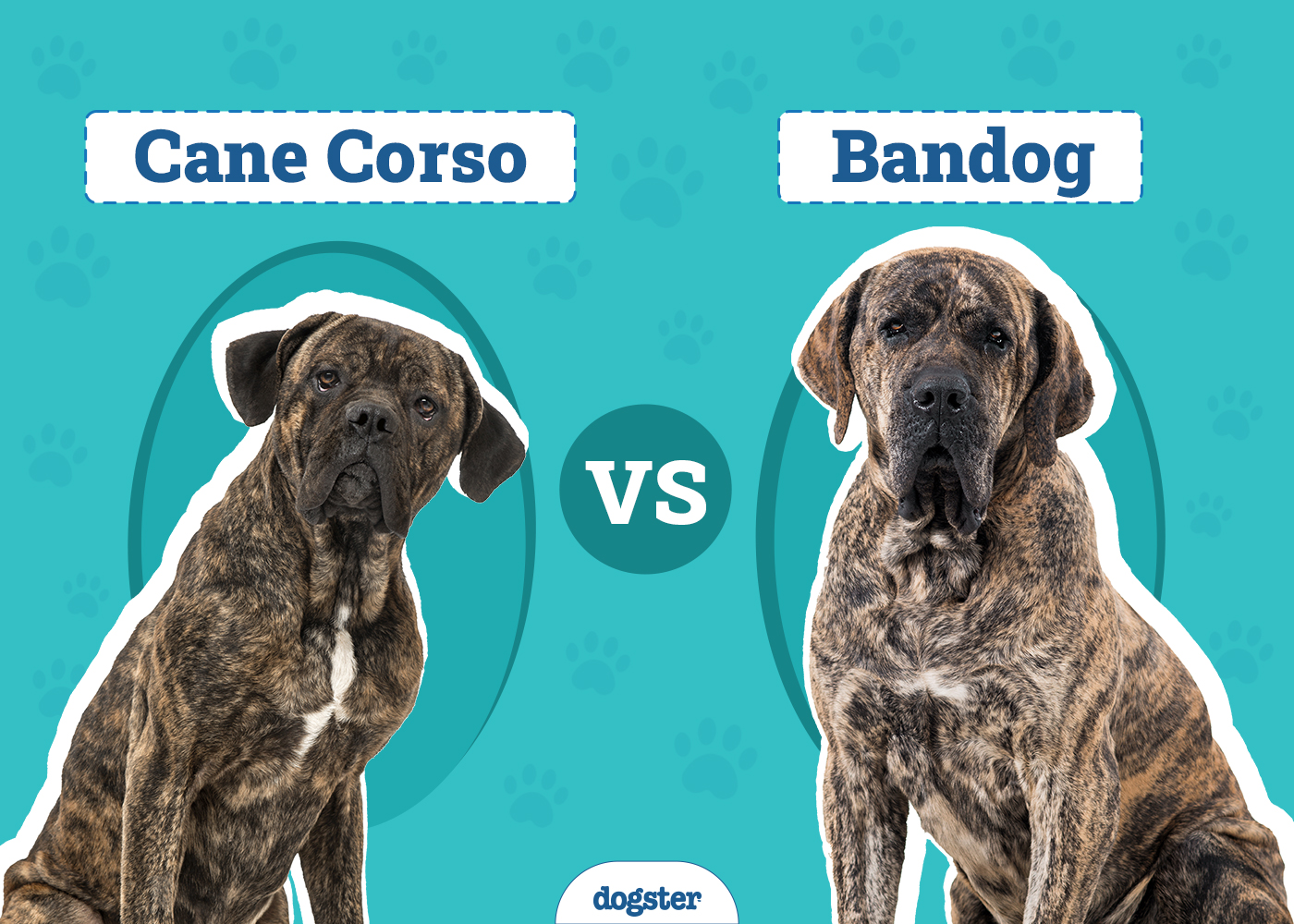
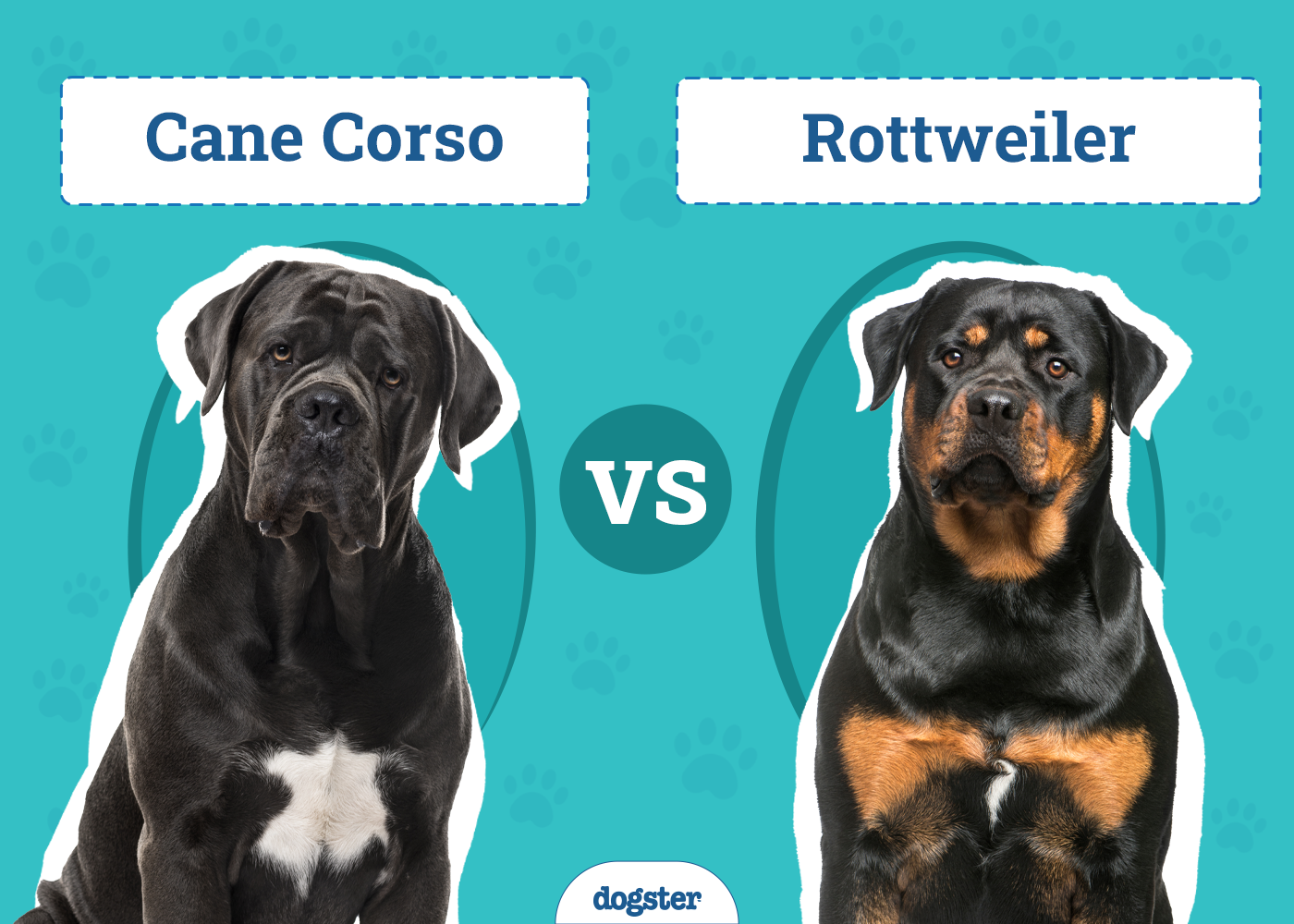
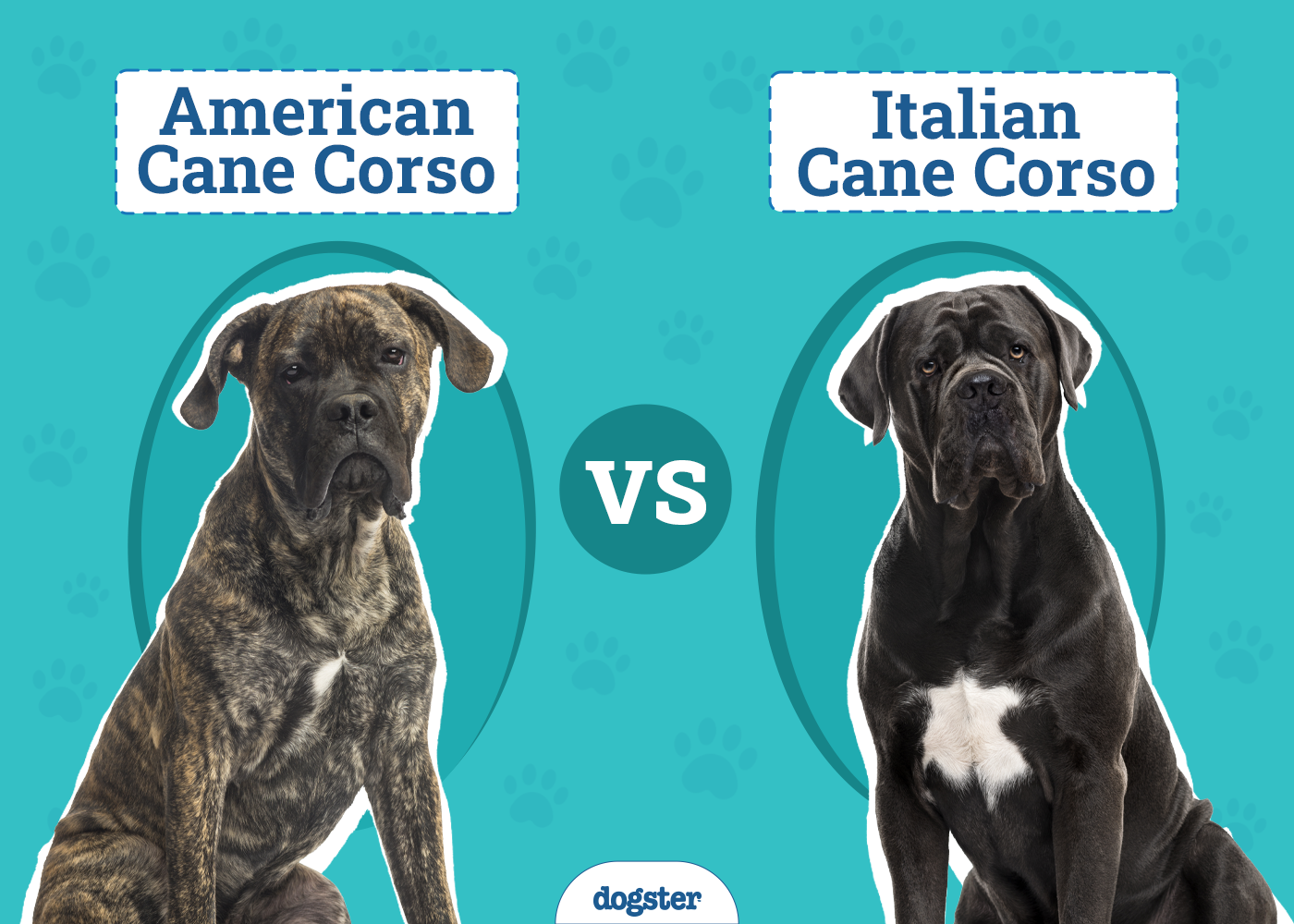
Bullmastiff vs Cane Corso: Vet-Reviewed Key Differences (With Pictures)


In this article
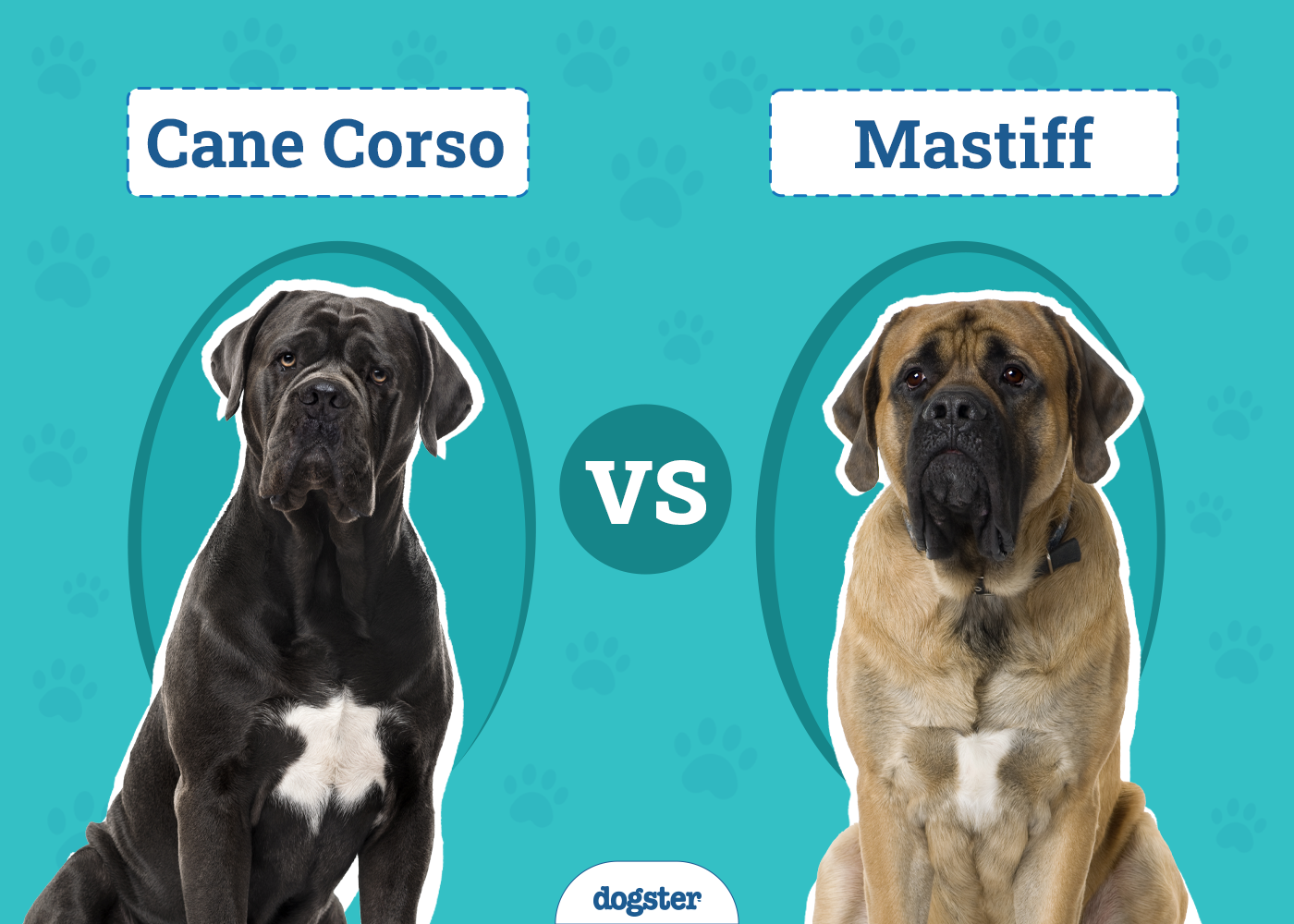
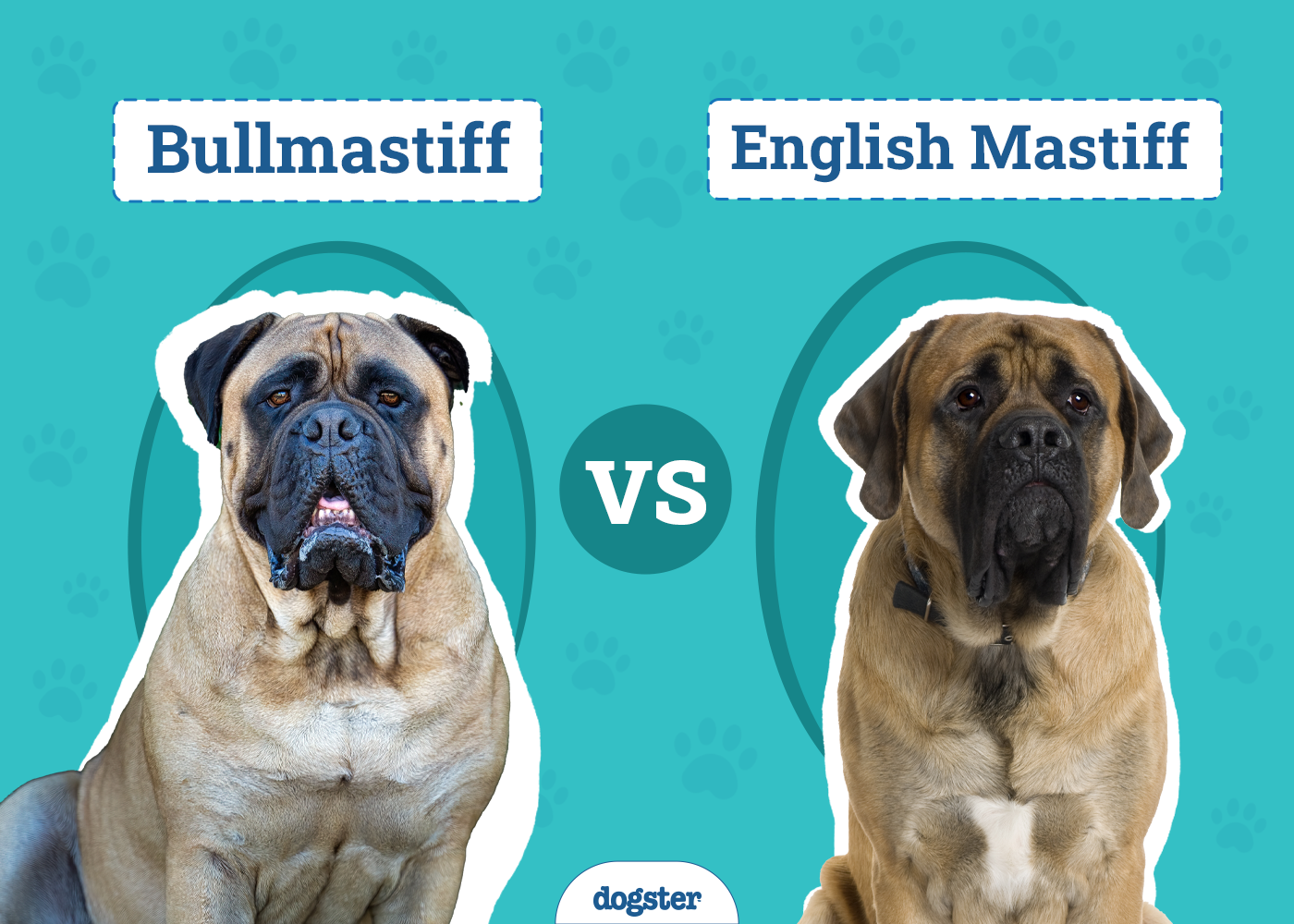
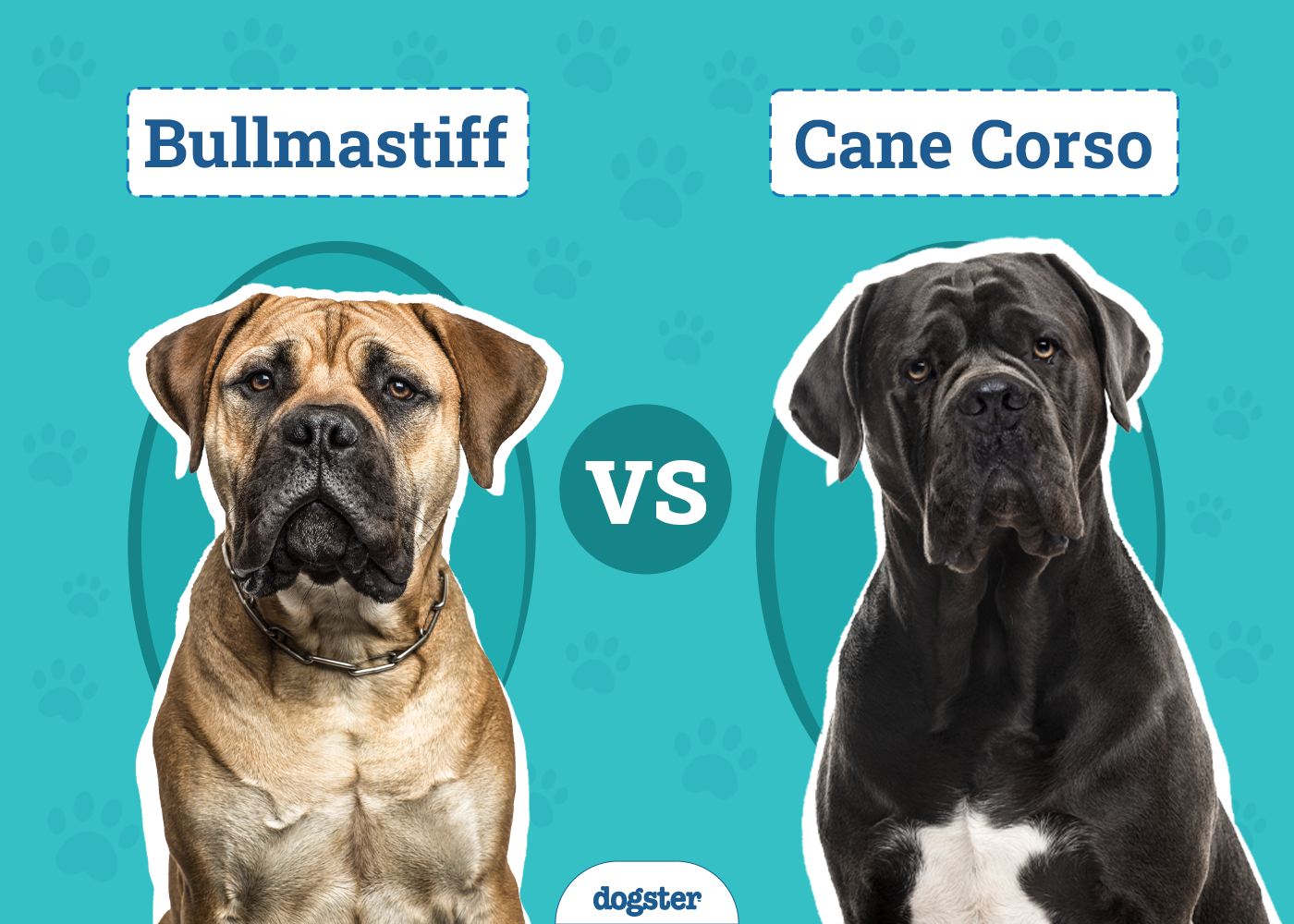
The Cane Corso and Bullmastiff are gentle giants and one cannot help but compare both their appearance and personalities. Other attributes that you might find yourself focusing on include loyalty, reliability, health, as well as their exercise needs. While some of these are very similar, there are some differences worth noting, too.
Keep on reading to learn more about their distinguishing traits and the main differences between the two giant breeds.

Visual Differences

At a Glance

Cane Corso Overview

The Cane Corso, also known as the Italian Mastiff, is a large dog that must be properly trained if you are looking for a loving, protective, and loyal pet. They're not recommended for first-time owners since they need an experienced leader who’s already learned the ropes. You will have a hard time training or socializing them if you lack the requisite level of experience.
Personality
The Cane Corso's temperament depends on the level of training that they’ve been subjected to and the amount of care provided. You will know you’ve done a good job if your furry friend is always reserved, confident, and assertive. Although they love getting attention from their owners, they rarely seek it out.
It's also worth mentioning that Cane Corsos have a pack mentality. They’ll typically be wary of strangers since they may view them as threats to the pack. To be clear, the owners, together with all their family members, are normally considered part of the pack.

Exercise 🐕
The Cane Corso was originally bred for action. Your typical dog might not have an issue with you scheduling a few casual walks per week, but the Corso will. To feel like they’ve been productive on any given day, they have to cover at least one mile in the morning and one in the evening. Typically, they need around 2 hours of exercise daily.
In addition to the physical activities, they’ll also require mental stimulation. If they feel bored, they might develop undesired behaviors, like being destructive, barking excessively, or digging holes in the yard.
Health & Care
Generally speaking, Cane Corsos tend to be quite healthy. However, regular vet checkups are compulsory, especially if you’d like to catch any medical condition before it develops. Some of the health issues to watch out for include:
- Ectropion (lower eyelid rolls outwards)
- Entropion (eyelid folds inwards)
- Third eyelid gland prolapse (cherry eye)
- Hip dysplasia
- Gastric dilatation volvulus or GDV
- Certain tumors

Suitable For:
As mentioned before, the Cane Corso is a working breed. They are suited for experienced owners who can put in the time for training and socializing. They will thrive in active households and are always ready for new adventures. Their agility is also the reason they usually excel at canine sports and are recruited by law enforcement to help them track suspects. They aren't suitable for inexperienced owners with young children but are loyal pets for active owners.
Bullmastiff Overview

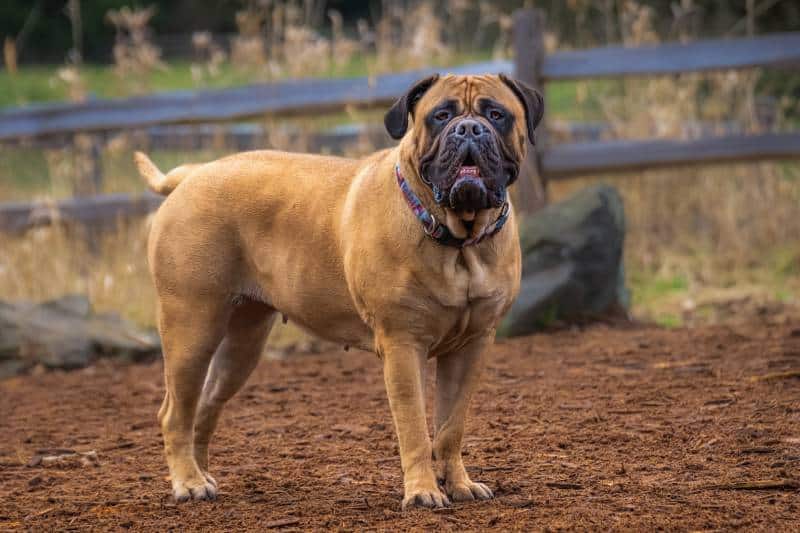
The Bullmastiff is the result of Bulldog and Mastiff crosses. They're big dogs and are much heavier than the English Bulldog. If you’re looking for a dog that will never back down from any challenge, even if it means putting their life in danger, the Bullmastiff is ideal. They are known to be very courageous in the face of adversity, especially if they feel the need to protect their parents or property.
Bullmastiffs are generally quiet, and some people find them too quiet for their liking. They never get too excited, even when happy, and are often wary of strangers. You’ll have to train and socialize them so that they learn to get along with other pets and people.
Personality
There’s no denying that the Bullmastiff is incredibly loyal. However, that doesn’t mean that they are pushovers. Should they feel mistreated or threatened, they won’t think twice about defending themselves. When properly trained, they're calm and relatively affectionate.
Their ability to accurately decipher various situations is also a sign that they are highly intelligent and intuitive. They are independent to some degree, but that isn't surprising since the Mastiff is known for the same trait. Due to their stubbornness, they can be difficult to train, but an experienced owner shouldn't have much trouble handling them.

Exercise 🐕
When it comes to exercise, the Bullmastiff is just as demanding as the Cane Corso. They also need at least a couple of hours of daily exercise. As adults, they can join you on brisk walks and hikes, but they shouldn't engage in intensive activities until their bodies are fully developed. They enjoy playing fetch and other games in the yard and will benefit from having access to a large, fenced-in yard.
Health & Care
Hip and elbow dysplasia are the most common health issues associated with the Bullmastiff. Those conditions can be genetically passed down from one generation to the next, but they're also more vulnerable to them because they are so large. Other not-so-common issues that they might grapple with in their lifetime include:
- Elbow dysplasia
- Hip dysplasia
- Entropion (eyelid folds inwards)
- Progressive retinal atrophy (PRA)
- Gastric dilatation volvulus or GDV
- Urinary stones (cystine)
- Pyometra (uterine infection)
- Cancer (lymphoma)
Remember, taking your Bullmastiff to an experienced vet for regular checkups is the only way that you’ll be able to guarantee that they’ll live a long and healthy life. Only a professional can catch a developing condition in time before issues start to manifest.

Suitable For:
The Bullmastiff can make an incredible family pet. They’ll guard your kids as though they are their own and protect your property while you’re away. They're not as challenging to train as a Cane Corso, but they also need an experienced owner to guide them. Although they might not be as energetic as the Cane Corso, the Bullmastiff is more suitable for active owners with large backyards.
Which Breed Is Right for You?

We can’t say the Cane Corso is better than the Bullmastiff, or vice versa, because both come with a long list of pros and cons. However, you must consider that these two breeds are massive and will, therefore, require adequate space. Living in a small apartment is not really an option, especially if you adopt a Cane Corso.
In addition, you have to think about all the other pets living with you. The Cane Corso and Bullmastiff both have a strong prey drive, and smaller pets may be seen as prey rather than friends. Both breeds are incredible as guard dogs, and older kids will love them too, but you have to expose them to strangers from an early age to socialize them adequately.
Related Reads:
Cane Corso vs German Shepherd: Key Differences (With Pictures)
Bullmastiff vs French Mastiff: Visual Differences & Overview (With Pictures)
Sources
Featured Image Credit: Dogster/Shutterstock
Expert dog care, straight to your inbox
Vet-reviewed advice, training tips, and the best of Dogster. Free, and you can unsubscribe anytime.
By signing up, you agree to our Terms & Conditions and Privacy & Cookies Policy.
Nicole has loved animals of all sizes her whole life so it's no wonder she has dedicated her career to helping them through what she loves best: learning, writing, and sharing knowledge with others. She’s the proud mom of two dogs, a cat, and a human. With a degree in Education and 15+ years of writing experience, Nicole wants to help pet parents and pets around the planet to live happy, safe, and healthy lives.
Join the conversation
Ask a question, share your story, or send private feedback.