In this article
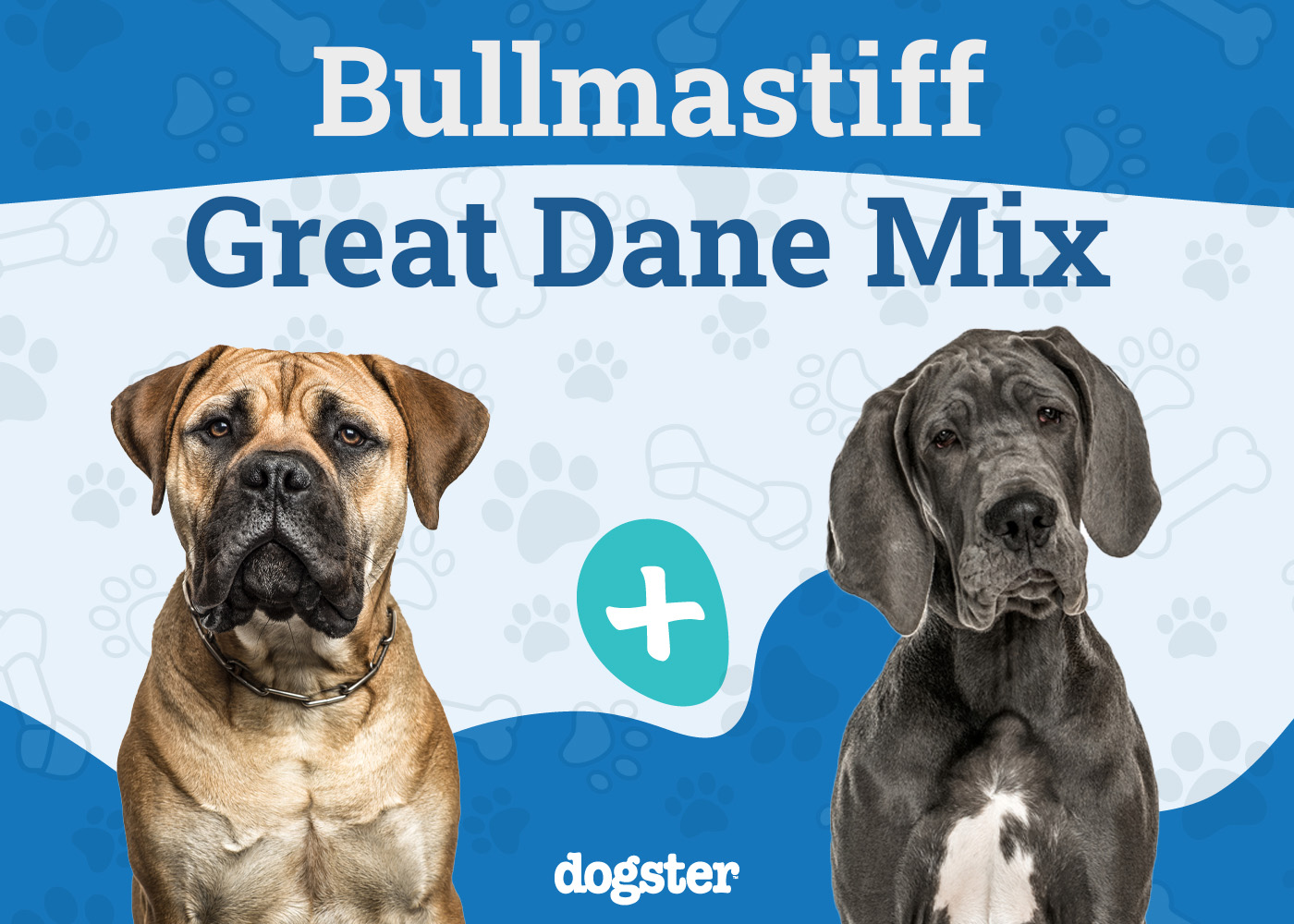
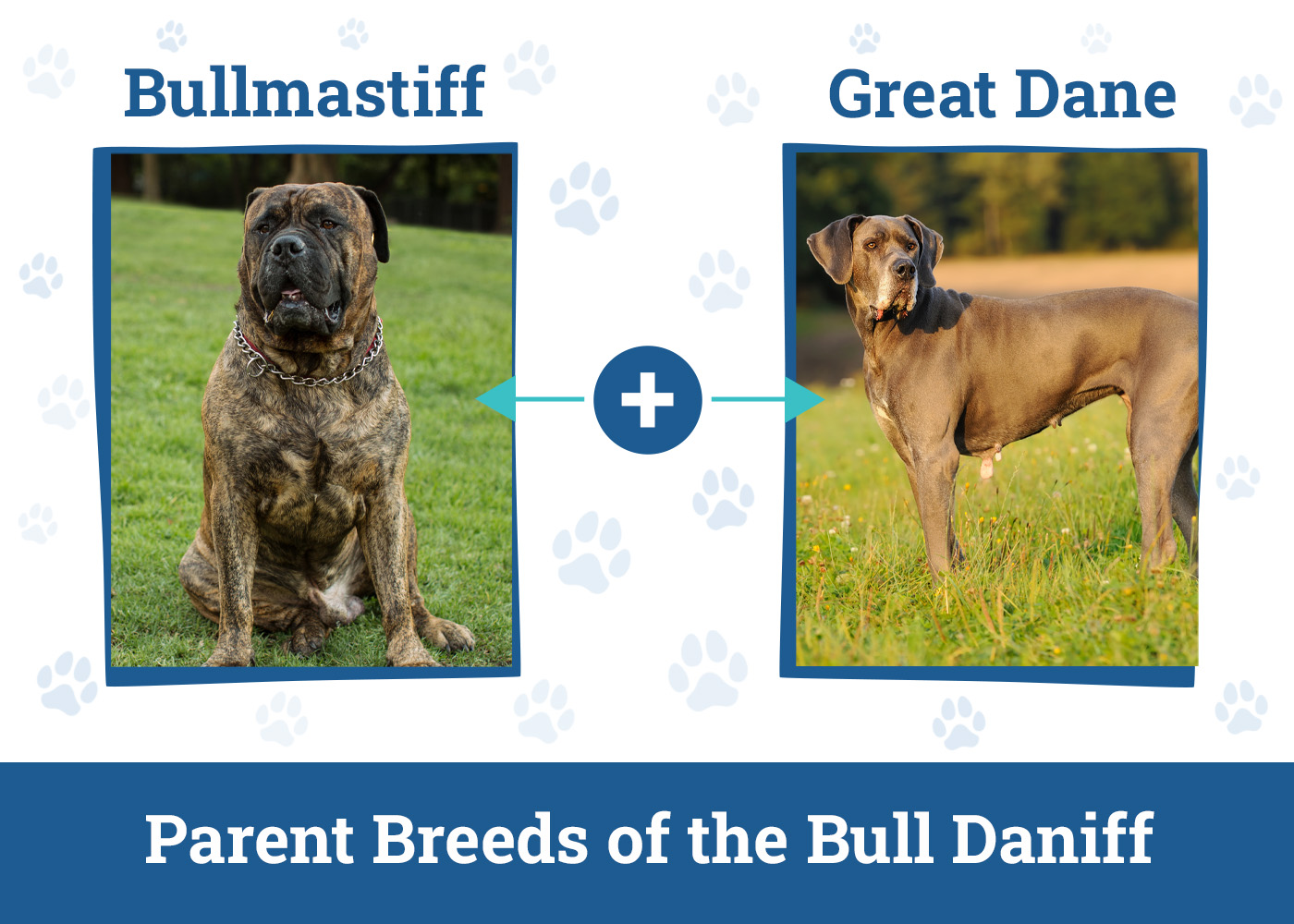
View 8 More +Bull Daniffs are a hybrid dog breed that results from pairing a Bullmastiff with a Great Dane. Some might think mixing these two giant parent breeds would result in a fearless and aggressive dog, but this couldn’t be further from the truth (provided the dog is properly socialized, of course!). The Bull Daniff is a gentle giant who forms tight bonds with their humans. Their size and imposing appearance make them great protectors, but they’d much rather love on you than fight.
Breed Overview
Height:
27.5–32 inches
Weight:
110–175 pounds
Lifespan:
6–10 years
Colors:
Red, brindle, fawn, black, harlequin, merle, white, silver, etc.
Suitable for:
Families with older children, experienced dog owners, apartment life, families who spend a lot of time at home
Temperament:
Loving, loyal, affectionate, courageous, gentle
The Bull Daniff is an interesting combination of both parent breeds. They offer the gentle, playful, and affectionate disposition of the Great Dane and the calm, protective, and loyal nature of the Bullmastiff. Both parent breeds were born and bred as working dogs, but the Bull Daniff is happy to play the role of “gentle giant” and family dog.
Bull Daniff Characteristics

Bull Daniff Puppies
The Bull Daniff puppy can be pretty rambunctious as they learn to navigate the world around them. They’ll benefit from training classes beginning at a young age. When exposed to proper training and socialization, these pups will grow to be calm and well-mannered adults. You can read more about training this breed in the Training section below.
We were able to find a few Bull Daniff breeders online, so this might actually be an easier hybrid breed to find than some of the other large designer dogs. If you choose to buy from a breeder versus a rescue or shelter, you must do your due diligence to ensure they are breeding responsibly.
Bull Daniff Breed Origin & History
Not much is known about the origin or history of the Bull Daniff. What we do know is that it’s a relatively new crossbreed believed to have originated somewhere in North America during the late 20th century.
What’s clearer, however, is the origin of the parent breeds.
Bullmastiffs are English mastiff-type dogs that were developed in the nineteenth century. Their imposing stature helped them find work as guard dogs.
Great Danes are a German breed of mastiff-sighthounds initially bred to hunt boar and protect their owners’ estates.

Temperament & Intelligence of the Bull Daniff 🧠
Don’t let the imposing size of the Bull Daniff put you off; these pups are incredibly loyal, happy-go-lucky, and courageous. They bond very closely with their humans and thrive in households where they can always be near their favorite people. These dogs are incredibly loyal and prefer to keep you in their sight at all times. Bull Daniffs may be giant dogs, but they don’t seem to know, understand, or care. If given the opportunity, they’ll happily fill the role of lapdog.
Because they bond so tightly and form such strong attachments with their humans, these dogs can be prone to separation anxiety. For this reason, they’re best suited for households where someone will be around almost all the time to keep them company. A dog this size with severe separation anxiety can inflict some real damage to your home.
These big softies are faithful companions, but they can sometimes come off as shy or reserved. Training and socialization should begin when they’re puppies to ensure they become comfortable around new people and other pets.
Are These Dogs Good for Families? 🏡
Bull Daniffs’ imposing stature and gentle, affectionate nature make them great family dogs. Their size is excellent for intimidating potential intruders, but their loyal, loving, and social disposition truly makes them gentle giants.
However, this breed’s laidback attitude is likely to shift if a stranger enters the picture. These pups can be very wary of people outside of their immediate family. They won’t be afraid to alert you of strangers approaching, making them fantastic guard dogs.
The sheer size of the Bull Daniff may make them inappropriate for homes with smaller children, however. Even the sweetest and most gentle dog can inflict severe damage on young kids who don’t know how to give these pups space.
Does This Breed Get Along With Other Pets? 🐶 😽
Bull Daniffs may get along well with other household pets, but this isn’t always the case. Both parent breeds have very strong prey drives, which can make living alongside smaller dogs, cats, and pocket pets a challenge. However, Bull Daniffs raised alongside other pets may be able to adapt better to living in a multi-pet and multi-species household.
Male Bullmastiffs and Great Danes can sometimes be aggressive with dogs of the same sex, so if you decide to bring another dog into the home, you may want to opt for dogs of different genders.
Things to Know When Owning a Bull Daniff:
Food & Diet Requirements 🦴
Like all dogs, Bull Daniffs do best when fed high-quality dog food appropriate for their life stage. We recommend considering a large-breed specific dog food as these are formulated with the right balance of minerals and vitamins big dogs need to thrive.
Owners should feed large-breed specific puppy food until their dog is around 12 to 18 months. Diets labeled for “all life stages” are not appropriate for puppies this size, as Bull Daniffs will grow at a much different rate than other sized breeds.
It’s essential to feed a Bull Daniff appropriately to reduce the risk of developing a potentially life-threatening condition known as gastric dilatation-volvulus (GDV). To protect your pup, we recommend feeding them two smaller meals a day versus one large meal. Don’t allow your dog to exercise one to two hours after eating, and skip out on the elevated food bowls, which can increase the likelihood of your pup developing GDV.
As for how much to feed your Bull Daniff, we recommend speaking to your veterinarian. They will take your dog’s size, age, and lifestyle into account when providing you with customized feeding recommendations. Overfeeding should be avoided at all costs as these pups are already prone to degenerative joint diseases, which excess weight can exacerbate.
If you need to speak with a vet but can't get to one, head over to PangoVet. It's our online service where you can talk to a vet online and get the personalized advice you need for your pet — all at an affordable price!

Exercise 🐕
The Bull Daniff may not require as much physical activity as you might think, though their exact exercise needs can vary depending on which parent they take after more.
Bullmastiffs need only around 30 to 50 minutes of exercise daily to maintain their physique and to promote their mental well-being. They’re happy with a moderate walk, though they can also excel at activities like agility, rally, and tracking.
Great Danes have a bit more energy, however, and are happiest with around two hours of activity. They’re happy tagging along for two or three brisk daily walks. Many Great Danes enjoy activities like obedience, tracking, weight pulls, and flyball.
Due to their large size, these dogs don’t make the best running buddies. They can be prone to developing joint issues and muscle strain, so it’s best to stick with lower-impact activities.
Training 🦮
Early training and socialization are critical for Bull Daniff puppies. These dogs are large and powerful, so the sooner you can get started with obedience training, the better.
Both parent breeds are known for being strong-willed, which can make training a challenge for new or inexperienced dog owners. However, these are brilliant dogs that can learn quickly under the right circumstances. The Bull Daniff responds well to firm and consistent training, but it doesn’t hurt to have some extra yummy high-value treats on hand to reward a job well done.
Grooming ✂️
Grooming a Bull Daniff shouldn’t be too time-consuming or costly. These dogs don’t shed excessively, but seasonal sheds should be expected. Weekly brushing can reduce how much hair is floating around your space. Baths should only be given on an as-needed basis when they get dirty, making sure to use a dog-friendly shampoo. Professional grooming is generally not necessary for this breed as their short fur isn’t prone to matting.
As with any other dog breed, regular nail trims are necessary to keep their nails healthy and prevent injuries if the nails break or split. Cleaning out their ears with an ear cleanser once a week can help keep their ears dry and prevent infections.
Health and Conditions ❤️
The Bull Daniff may inherit some of the health conditions their parent breeds are particularly prone to.
Bullmastiffs are prone to heart conditions like dilated cardiomyopathy (DCM) and subaortic valvular stenosis (SAS). DCM is a heart disease that develops when the heart gets dilated and cannot function as necessary, while SAS occurs when fibrous tissues form in the heart, obstructing blood flow. They can also develop eye conditions like entropion or progressive retinal atrophy and joint conditions like hip and elbow dysplasia.
Great Danes are prone to several spinal cord conditions. Wobbler syndrome, a disease that causes a wobbly gait and neck pain, is often seen in this breed. They can also develop degenerative myelopathy, a spinal condition resulting in low back pain and weakness. The Great Danes’ tail length and general happy disposition can put them at risk for an adorably named condition known as happy tail syndrome. Dogs with this condition can experience repeat injuries to their tip due to wagging.
As a deep-chested breed, Bull Daniffs may be at risk of developing bloat and gastric dilatation-volvulus (GDV). GDV is a life-threatening condition that occurs when the stomach fills with gas or fluid, twists upon itself, and cuts off blood circulation to organs.
- Minor eye conditions
- Happy tail syndrome
- Wobbler syndrome
- Dilated cardiomyopathy
- Subaortic valvular stenosis
- Joint conditions
- Degenerative myelopathy
- Bloat
- Gastric dilatation-volvulus
Male vs Female
As with most dog breeds, the most significant difference between male and female Bull Daniffs is their size. Males typically weigh between 110 and 175 pounds, compared to a female’s 100 to 140-pound frame. Height-wise, males can measure between 25 and 32 inches tall, while females are slightly shorter at 24 to 30 inches. The Bull Daniff’s final size will depend upon which parent they favor. Great Danes are taller and heavier than their Bullmastiff counterparts.
3 Little-Known Facts About the Bull Daniff
1. Bull Daniffs can be drool machines.
The Bull Daniff’s Bullmastiff parent is known for drooling, so drool clean-ups from your floor and furniture will become part of your regular cleaning routine.
2. Bull Daniffs can thrive in apartments.
While we don’t often recommend extra-large dog breeds for apartments, the Bull Daniff’s laid-back attitude actually makes them perfect for apartment life. These pups are peaceful and relatively low-energy, making them pretty quiet neighbors.
3. Bull Daniffs are relatively quiet dogs.
Bull Daniffs aren’t known for barking often. Their parent breeds were not trained to bark or bite, so they typically only bark when they feel they need to alert their owners to incoming intruders or threats. Their barks are, therefore, purposeful and not a frequent occurrence, further adding to their suitability as apartment dogs. However, while they are not frequent barkers, they certainly are loud barkers. Their bark is deep, intimidating, and rumbly.
Final Thoughts
The Bull Daniff is an extra-large dog whose size and stature make them look much more imposing than they are. Truthfully, this hybrid is exceptionally loyal, affectionate, and friendly, making them perfectly suitable for family life.
Their size may make them less than ideal for homes with particularly young children. Though they are sweet and loving, their size means they can inflict real damage, even inadvertently. However, this massive size and intimidating appearance, coupled with their parents’ history as working dogs, makes the Bull Daniff a great home and family protector. Potential owners should wait until their kids are a little bit older and better equipped to understand boundaries before bringing a dog this size into the home.
If you’re searching for a loving family companion who can also double as a guard and lap dog, the Bull Daniff will certainly not disappoint.