
In this article
Dachshunds, also known as Doxies, are popular dogs that have been around for centuries. Frequently referred to as weiner dogs or sausage dogs, these elongated canines have friendly temperaments and love being around humans.
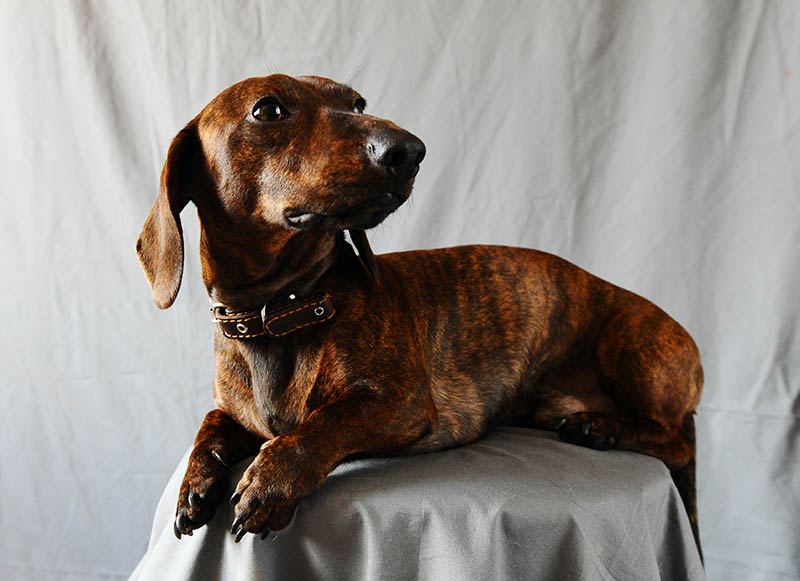
While they come in various colors, from black, red, and tan to beige and blue, one of the Dachshund colors that stands out is brindle. Brindle Dachshunds have “striped” markings that are typically dark in color. They are not a separate breed of Doxie, but rather just a coat variation.
Read on to learn more about Brindle Dachshunds, their origin, and history.

The Earliest Records of Brindle Dachshunds in History
Dachshunds have German origin, and most believe that they have been around since between the 15th and 17th centuries. These dogs were primarily bred to hunt badgers, rabbits, and other small animals. Their name in German even means “badger dog,” which explains their primary purpose.
These dogs appeared in the U.K. around the 1840s and were first introduced to the U.S. in the 1880s. Their popularity in the States eventually increased in the 1930s and 1940s, but in the U.K., they became instantly popular because the queen was fond of this breed.
After World War I, their popularity decreased because they were connected with Germany. In many people’s minds, these dogs became a representation of that country, which affected their reputation. However, faith in the breed changed in 1972, when Germany held its first Olympic Games in Munich. These dogs became the official mascot of the games, which made people fall back in love with them.
This breed also became popular in Australia during the 1970s, as they were introduced as racing dogs. Dachshund races quickly spread across the world. One of the most popular races is the Wienerschnitzel Wiener Nationals, which has taken place in Southern California every year since 1995.

Dachshund Appearances Through History
In the past, there were two sizes of these dogs, but that has transformed into three current sizes:
- Standard
- Miniature
- Kaninchen
The standard and miniature sizes are universally accepted worldwide. However, the kaninchen size is not accepted by the U.S.A. and U.K. kennel clubs.
These dogs have further developed throughout the years, and their appearance has changed. They have developed multi-colored coats and different coat types. When categorizing Dachshunds per coat type, we can divide them into:
- Short-haired
- Long-haired
- Wire-haired
Short-haired and long-haired Dachshunds are the most common in the U.S.A., while wire-haired Dachshunds are rare. These dogs also come in a variety of colors, including:
- Red
- Black
- Tan
- Beige
- Blue
How Brindle Dachshunds Gained Popularity
Brindle Dachshunds were popular because of their unusual color. They gained extreme popularity before World War I, after which their popularity decreased due to connections with Germany. However, people became fond of these dogs again when they were introduced at the Munich Olympic Games. Their popularity also spread when people started to use them as racing dogs.
Nowadays, Dachshund are still popular and ranks the sixth most popular breed in the U.S.A. per AKC registrations.
Formal Recognition of Brindle Dachshunds
The American Kennel Club recognized Dachshunds, including the Brindle Dachshund, in 1885. The Fédération Cynologique Internationale (International Canine Federation) also recognizes Dachshunds, though the year of their recognition is unknown.


Top 7 Unique Facts About Dachshunds
Dachshunds are unique dogs, and there are a lot of things that set them apart from other breeds. Check out interesting facts about these pups here:
- This breed was first bred for hunting small animals like badgers and rabbits.
- These dogs have three different coat types.
- They come in three different sizes; however, most clubs and organizations don’t recognize the “kaninchen” size.
- The Dachshund was the mascot of the 1972 Olympic Games in Munich.
- Since the 1970s, there have been Dachshund races held worldwide.
- Two Dachshunds gained the title of the world’s oldest dog and got their place in the Guinness Book of World Records.
- The first dog ever cloned in Britain was a Dachshund.

Does a Brindle Dachshund Make a Good Pet?
The Brindle Dachshund makes a great pet, and they’re perfect for indoor conditions due to their smaller size. These canines are great around people, making them excellent for families with kids.
They are playful, loyal, and active, so you should provide them with enough activities throughout the day and allow them to run around. While these dogs love company, that can occasionally represent a problem, as they can suffer from separation anxiety. Therefore, you’ll need to hire a dog sitter or keep your Brindle Doxie in a kennel when you’re not home for extended periods.
While many may think that their brindle color affects their health, that’s not quite true. Brindle Dachshunds are commonly healthy as long as their parents don’t have records of hereditary diseases. All Doxies are lovable and communicative and enjoy being around people, so if you’re looking for a cuddly yet active dog, consider this breed.


Conclusion
Dachshunds are among the most popular dogs in the U.S.A., and many people decide on a Doxie with a brindle coat. If you choose a Brindle Dachshund as your pet, you can ensure that you’ll have a healthy, fun-loving dog ready to follow every step of your daily activities.
Featured Image Credit: Sapozhnikov -Shoes Georgy, Shutterstock


































2 Responses
Can I breed a brindle with a piebald? Or a dapple?
Hello Betty,
thank you for your question. Breeding a brindle Dachshund with a piebald is generally considered safe, but breeding with a dapple requires extreme caution. The primary concern is "double dappling." If the brindle dog also carries a hidden dapple gene (which is possible), breeding them with another dapple can produce "double dapple" puppies. These puppies often suffer from severe health issues, including blindness, deafness, and microphthalmia (abnormally small eyes).
In short, if you are not a breeder and you don't know exactly what are you doing, we strongly discourage from breeding these dogs, as the results may be very dangerous.
Hope this helps.