In this article
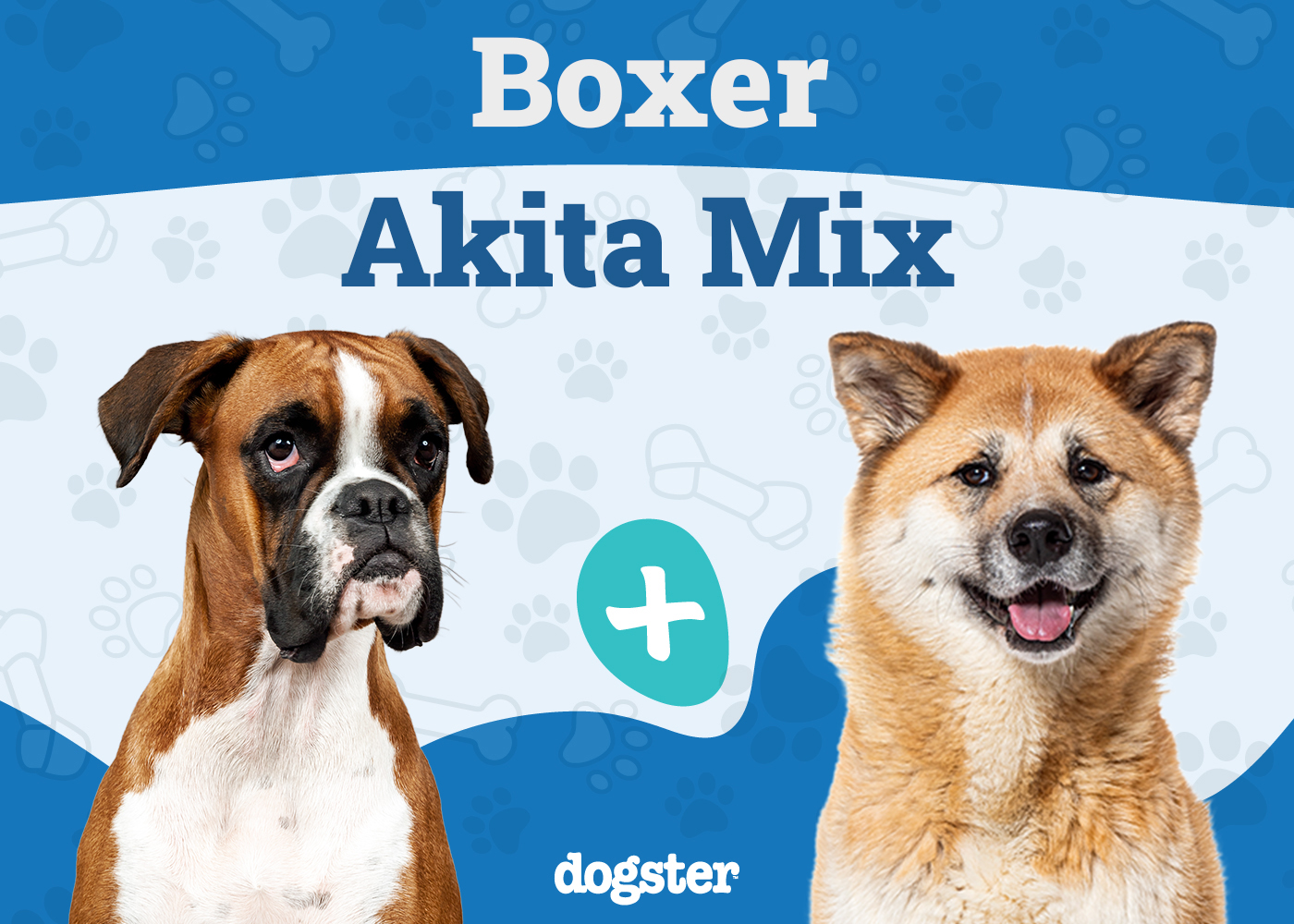
View 8 More +Hybrid breeds are everywhere—whether accidental or intentional. The Boxita is among these breeds, taking the traits of both the Boxer and Akita to make a strong, protective, and loyal result. Both the Boxer and Akita are very different in their own rights, but they share enough common ground to make a terrific specimen.
Breed Overview
Height:
21–28 inches
Weight:
65–110 pounds
Lifespan:
10–15 years
Colors:
Tricolor, brindle, fawn, sesame, white
Suitable for:
Active families, guard duties
Temperament:
Protective, aloof, affectionate, adventurous
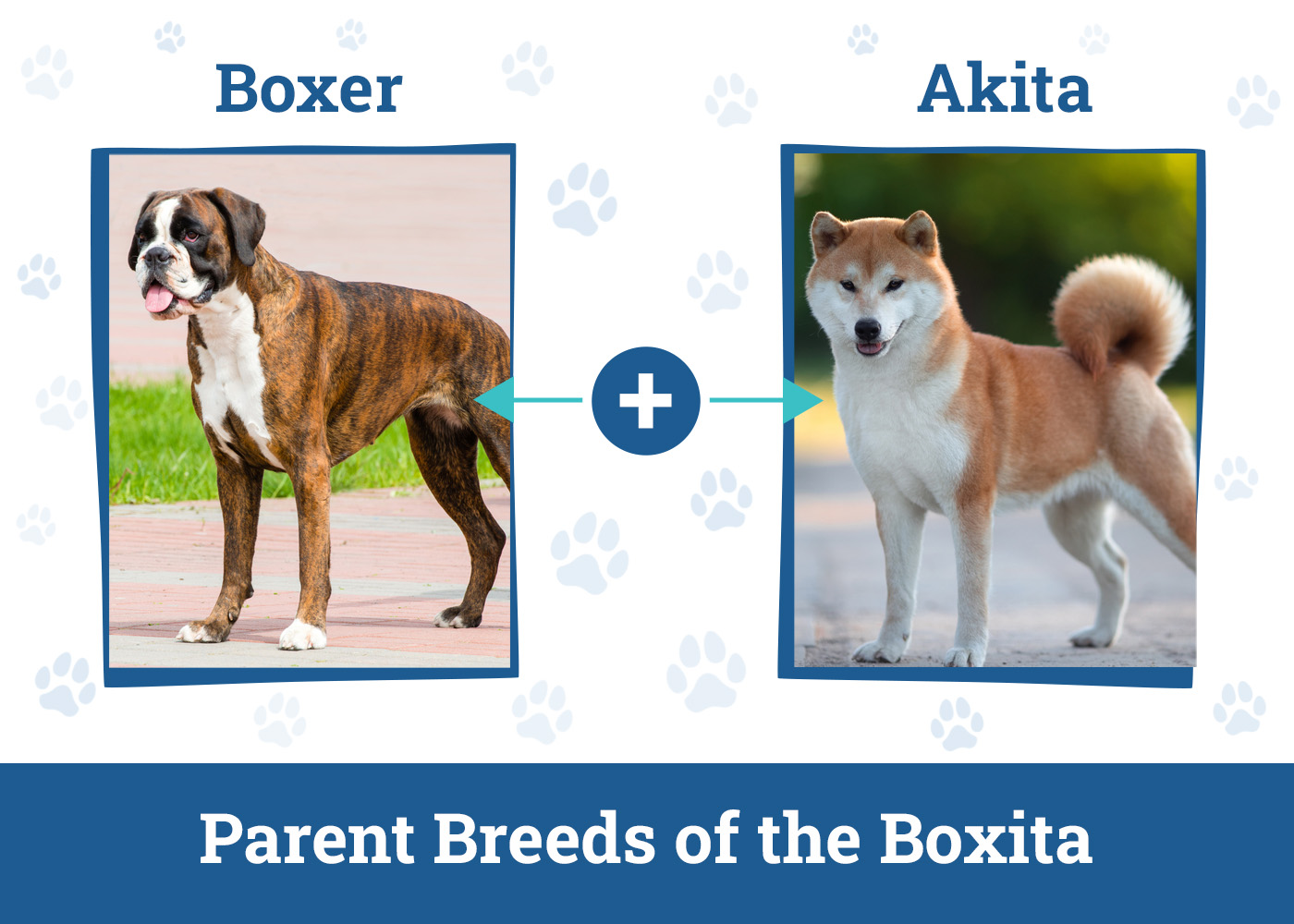
A Boxer is a brachycephalic large dog with protective yet goofy temperaments. Akitas are double-coated, highly intelligent dogs built for cold weather. When you combine the two, you can get a myriad of different physical and temperamental possibilities.
It is important to stress that both breeds are very different and can create various outcomes in a single litter. Getting to know both of the parent breeds will help you decipher what you can expect.
Boxita Characteristics

Boxita Puppies
The Boxita is a mixed breed, combining two purebred dogs to get a hybrid puppy. These dogs are not regulated, meaning that most litters are likely accidental. If the litter is intentional and the breeder continues to breed these two pups together, you might be dealing with a backyard breeder.
Backyard breeders breed dogs together without acknowledging the welfare of the parents or puppies. They aim to turn out as many puppies as possible for the most financial gain. They don’t show a lot of pictures of the living quarters. They might also not offer necessary vetting or make you put down a deposit or sign any contract. Many seem very eager just to get rid of the pups.
We highly recommend that you use your own judgment. Some people might’ve had their dog go into heat before they were able to get her fixed and wound up with an oopsie litter. In this case, they are probably looking for the most suitable owners possible to take the puppies off their hands.
Both the Boxer and Akita are similarly priced when they are purebred. For a purebred pup, you can pay in the ballpark of $700–$2,000. The ultimate cost would depend on the quality, particular breeder rates, and the area you live. However, a Boxita should be significantly less expensive, especially if it came from an accidental litter.
You might also find the Boxer Akita mix in a rescue or shelter nearby. Often, these dogs are fully grown, though sometimes you can get juveniles and puppies. To adopt a dog, you likely have to go through an application process and extensive steps to see if both the Boxita and your family are compatible.
If you get a pup from a rescue or shelter, all vet costs, including a span neuter, are included in the total adoption fee. Generally, you can expect to pay between $150 and $350.
Temperament & Intelligence of the Boxita 🧠
The Boxita will be a very energetic, fast-growing puppy with a thirst for knowledge. This dog is curious, and sometimes goofy puppies will surely keep you on your toes. Due to their intelligence, they can learn very quickly, even when you don’t necessarily want them to.
So, make sure you are keeping up with routine, regular training, such as basic commands and potty training. They will be terrific candidates for advanced learning, too, but require experienced and patient owners.
The Boxita will impress you with their intelligence and sometimes frustrate you. The Akita is notorious for being very dominant and stubborn. Boxers can also carry a few of these characteristics but tend to be the more agreeable of the pair.
So, keep in mind that you will have to keep a firm hand and have a strong understanding of both breeds to raise your Boxita correctly.
Are These Dogs Good for Families? 👪
If you are interested in having a family dog that is instinctually willing to protect and stay loyal to the pack, this is likely a very good hybrid to consider. Both the Boxer and Akita are incredibly affectionate and connected with their owners.
While they can be social with others, it does take early exposure, constantly introducing them to various faces and situations. Boxitas are known for being slightly aloof with strangers. Boxers can even be aggressive with people they aren’t familiar with if they feel threatened. When you put these two together, you could create a suspicious dog who might not enjoy the company of others. You may have to put them in another room when company visits.
Even though the chances aren’t necessarily high that you will get a territorial Boxita, it is something to consider if your family is very social. Granted, many personality traits come from their lifestyle.
So, if you acclimate a puppy very early in life, the chances of them rising to the occasion are pretty high. But naturally, you need to know the incompatibility factors as well. Some people want nothing more than to have a guard dog that is loyal only to the family. If that’s the case, these traits should not deter you from getting one of these dogs.
Since these are very large dogs with high energy levels, they might not do as well in homes with very young or old household members.
Does This Breed Get Along With Other Pets? 🐶 😽
The Boxita can get along with other dogs. However, you want to make sure that you raise them together to ensure ultimate compatibility. Both parent breeds can be a little territorially aggressive sometimes, so if you plan on welcoming new dogs into your home in the future, socialize them right up front.
Due to the prey drive of this potential parent, these dogs might not make the best candidates for homes with chickens and other barnyard life. While they can generally get along with cats if they are raised with them, they might still want to chase or play too rough. As the pet parent, you can discern the difference and respond accordingly.
Things to Know When Owning the Boxita
Let’s get down to the specifics. Here are some general care guidelines for the breed mix.
Food & Diet Requirements 🦴
Because this will be a large breed of dog with high energy, you need a high-quality, protein-rich diet to support their muscles and overall health.
The type of diet you choose is at the discretion of you and your veterinarian. Dry kibble is still one of the most prevalent options on the market. Wet canned food makes a fantastic topper for many meals and some use it for a standalone diet. Although, it can lead to weight gain and not be suitable for larger breeds since it does get expensive.
Some families are relying on subscription-based food brands that deliver fresh food right to your door. These options are generally hassle-free and specially tailored to match the needs of your particular pooch. However, the service tends to be more expensive than traditional feeding.
It is imperative to feed your Boxita according to their life stage. In the puppy stage, your dog needs a diet that fully supports their growing muscles, bones, tendons, and organs. When they are seniors, they also need some additional support to avoid potential health issues.
Exercise 🐕
Exercise is an essential component in taking care of this particular breed combination. Both parent breeds require an extensive amount of exercise per day. Your Boxita will require approximately 60 to 90 minutes of intense exercise per day.
You can make the exercise fun and try out various interactive games. They will certainly need walks or a huge fenced-in backyard to burn off all of their steam.
Due to their inclination to wander thanks to the Akita parent, they might never be suitable for open spaces with no secure borders. So, if you live in the country, you might always find a runoff, and you might have a little trouble locating them.
Training 🎾
Regarding training, it’s not that these pups can’t learn. On the contrary, this is an incredibly intelligent combination. However, Akitas are notorious for their stubborn nature. Boxers might have a little bit of this tendency as well.
When you combine the two, you might find that training is a challenge. That is why these dogs are often best for homes with a lot of canine experience. First-time dog owners might need to learn how to handle the unique challenges of this pairing.
Grooming ✂️
If you want to know what to expect regarding grooming, you need to understand that it is up in the air. The Akita and Boxer have very different coats that require varying maintenance levels.
Boxers might need a few passes of a brush per week to make sure their fur stays shiny and reduces shedding. On the other hand, Akitas are heavy shedders with long, bulky hair. They also have double coats, which means they have blowouts twice a year. As the seasons change, they will ultimately lose their old coats to make way for new growth. During these times, household maintenance and grooming your pup are very important.
- You might also be interested in: 11 Best Dog Shampoos: Reviews & Top Picks
Health and Conditions ❤️
Often when there is a purebred dog, they come with a line of specific genetic health conditions. However, mixed breeds tend to be a little healthier than their purebred parents. They are just as capable of carrying any genetic disorders that plague the breed or genetic line, so it’s best to know what to expect in terms of health.
Regularly taking your pup in for vet visits is a great way to avoid problems. They will get to know their vet well in their first year of life. You’ll go for visits to monitor growth, spay or neuter your pet, and get proper vaccinations.
Since there is no true way to know for sure what ailments your Boxita might have, here are some health issues that can crop up in both parent breeds.
- Eye problems
- Skin allergies
- Hormone disorders
- Hip dysplasia
- Brachycephalic obstructive airway syndrome
- Cruciate ligament disease
- Certain cancers
- Epilepsy

Male vs. Female
Physical differences between male and female Boxitas can differ greatly depending on the individual dog. Akitas tend to be a little bit more substantial than their boxer cousins. When it comes to ultimate size, females can actually be larger than males in some instances.
Akita females are pretty notorious for same-sex dog aggression. This may or may not be a problem with your particular pooch. Akitas are also more prone to stranger suspicion and sometimes aggression—Boxers can sometimes be that way, also.
However, females tend to be more territorial with other females, and males are more dominant and unfriendly toward outsiders. Since it is a hybrid breed, it is hard to pinpoint precise temperament.
3 Little-Known Facts About the Boxita
1. The Akita and Boxer are from separate continents.
The Akita is from Asia, while the Boxer hails from Europe. The Akita is a Japanese dog breed, although Americans have taken their spin on this breed. Boxers come from Germany.
2. Boxita puppies may or may not be brachycephalic.
Since Boxers are brachycephalic, meaning they have short muzzles and bulging eyes, puppies may or may not be born with this trait. They might have the extended snouts of their Akita parents, so you can get quite a few visual combinations!
3. Boxita puppies will likely have curly tails.
At birth, Boxers typically have their tails docked. If a Boxer’s tail were to grow naturally, it would be slightly curved upward. The likelihood of your Boxita having a curved tail is inevitable! The Akita has a natural curl just like other beloved breeds, such as Huskies, Pugs, and so on.
Final Thoughts
The Boxita can make a great addition to the family, permitting you have the right lifestyle to keep up with their particular needs. If you find someone selling Boxita puppies, ensure they are well cared for and healthy.
Remember that with mixed-breed dogs, it can sometimes be challenging to ensure the person selling is not a backyard breeder.
You might also find this combination in a rescue or shelter. If you find a full-grown dog, always take any furry or human family members to meet and greet before committing to ensure everyone is compatible.
See also:
- Aki-Poo (Akita Poodle Mix): Care, Pictures, Info & More
- Labrakita (Akita Lab Mix): Care Guide, Pictures, Info & Traits