Dog Licking the Air? 12 Possible Reasons & Vet Advice on What to Do

In this article
Dogs licking air can be caused by several reasons, and some of them are normal or safe behavioral displays, while others might indicate a more serious behavioral or medical problem.
Keep reading to learn about the most common reasons why dogs lick the air.

The 12 Possible Reasons Why Dogs Lick the Air
1. In Anticipation of Food
Dogs can start licking air when they anticipate food is coming or as a sign of hunger. This might be one of the more obvious reasons, as we know our dogs love to eat!

2. Submissive Behavior
Air licking and licking of their own lips has been overserved as a display behavior for submission in dogs in scenarios such as when a more dominant dog approaches. It is a way of expressing their gentleness and signaling to others that they are timid and not interested in competition or fight.
3. Itchy Skin
When dogs have irritation of the skin or feel itchy in areas where they can’t reach, some dogs will lick air to mimic the scratching of these areas. If your dog is air licking and you can see their skin looks irritated or that they have been scratching different areas, it is advised to visit the clinic for a veterinary check. The veterinarian will address the many possible causes of skin irritation and give advice on appropriate treatments.
4. A Foreign Object in the Mouth
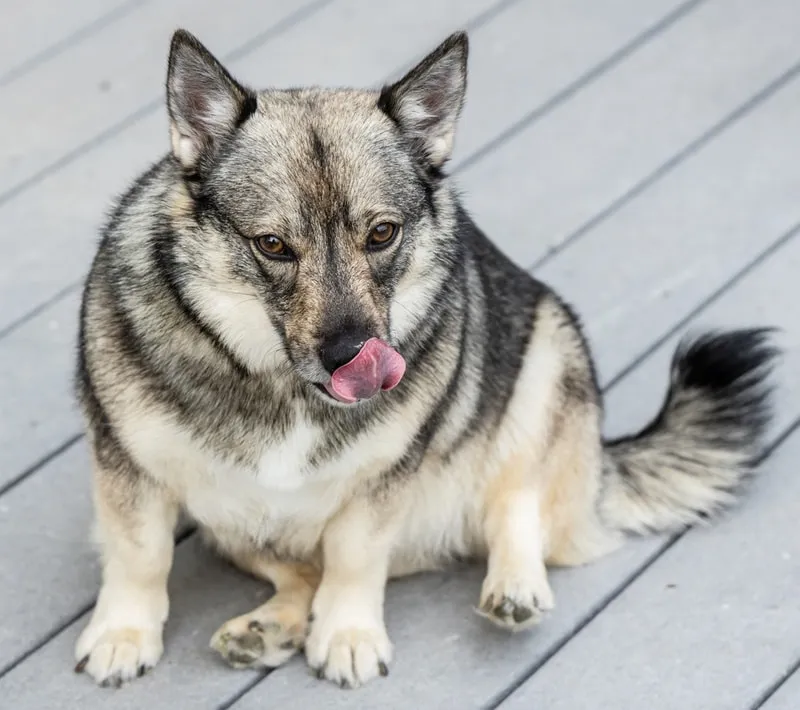
If the dog has suddenly started licking the air, chances are there is something stuck between the teeth, in the plate, or around the lower jaw. Whether it's a piece of food or a foreign object, the behavior might be an attempt to remove it or dealing with the pain and discomfort. Visually inspect the mouth and carefully try to remove any obvious foreign object. If you spot something difficult to reach or don't spot anything at all, it is best to take your dog to the veterinarian to aid with the foreign object removal or make a more detailed inspection of the mouth.
5. Anxiety or Stress
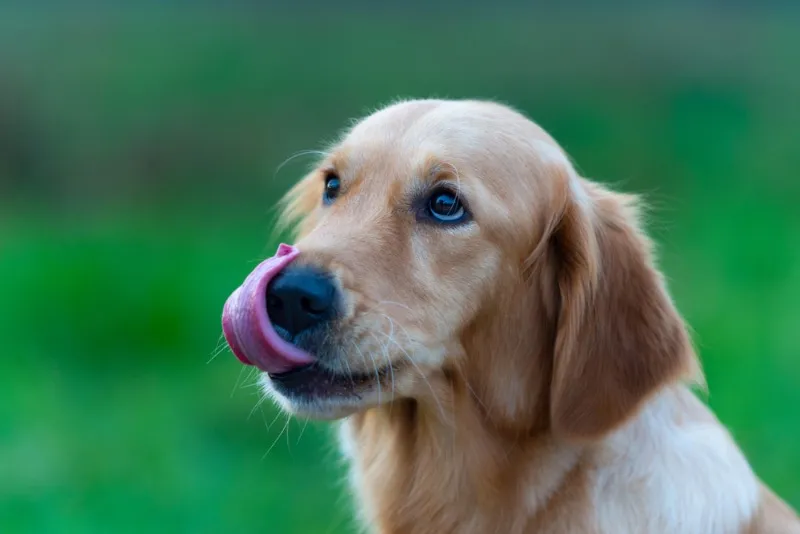
Animals suffering from stress or anxiety, such as when suddenly moved into a new environment, can lick the air and their lips as a way of self-soothing.
6. Aberrant Behavior
Behaviors that develop as a way of dealing with stress can develop until turning into aberrant behavior. Compulsive or aberrant behaviors are constantly repeated beyond what would be a normal behavioral response to a stimulus in the environment. There is a great number of possible aberrant behaviors, and air licking is one possibility.
An aberrant behavior develops when the anxiety or stress is not addressed in earlier stages. Aberrant behaviors are difficult to eradicate. To successfully deal with this kind of problem, a specific case and environment study from a professional dog trainer or behaviorist is needed. Consistency is the key to fixing behavioral problems.
7. Nausea
Sometimes dogs lick air when they feel nauseous; this is a common behavior to observe in a dog just a few moments just before vomiting. It could be something as simple as a bad meal or something more complex. Renal disease or endocrine diseases such as adrenal glands-related diseases, like Addison’s disease and Cushing’s syndrome, can lead to electrolyte imbalances and nausea. To diagnose endocrine diseases, the veterinarian will need to analyze a series of blood samples before and after administering specific substances.
8. Injury or Trauma
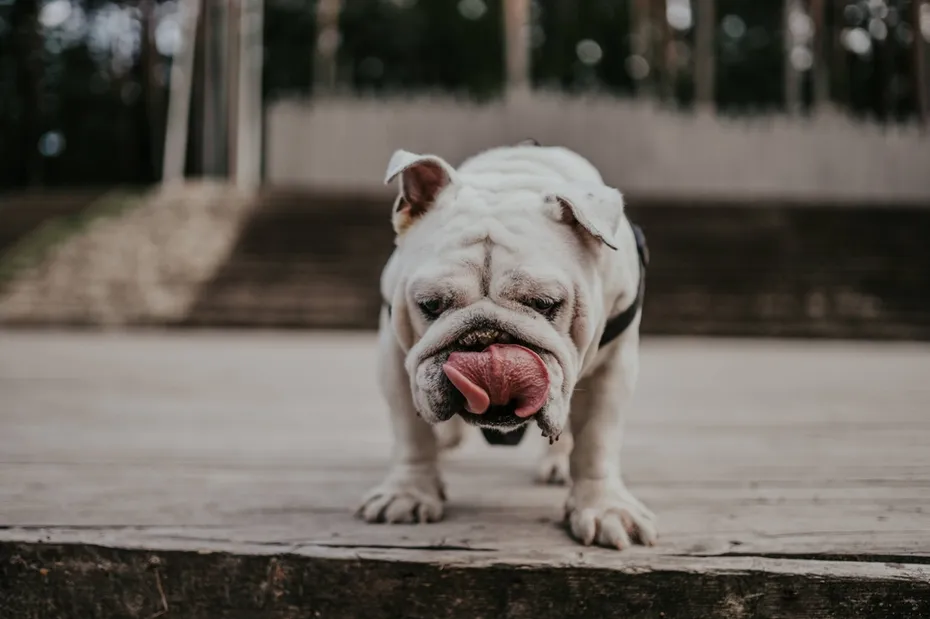
Small cuts, punctures, abrasions, and other small injuries of the nose, face, or mouth might cause dogs to lick air as a way of dealing with the pain. In these cases, the behavior might be accompanied by other displays, such as rubbing their face or even some vocalizations. It is important to visually inspect the dog and try to identify the source of discomfort. If the injury is considerable or looks infected, a vet visit is in order.
9. Dental Disease or Tooth Pain
Air licking can indicate a loose tooth, periodontal disease, or any tooth-related cause of infection or pain. Just as we humans do, dogs need regular cleaning to avoid bacteria accumulation and dental plaque formation. Occasional visits to the veterinary dentist for teeth cleaning should be a part of their care.
Infections in the teeth or gums are dangerous due to the risk of developing a root abscess and the risk of oral bacteria spreading to the heart, liver, or kidneys. Other signs of mouth or tooth infections are halitosis or bad breath, drooling, trouble chewing, and licking of their own teeth, lips, or the air. In this case, take your dog to the veterinarian for an oral exam. The vet will advise on treatment or refer your dog to a specialized veterinary dentist.
10. Gastrointestinal Issues
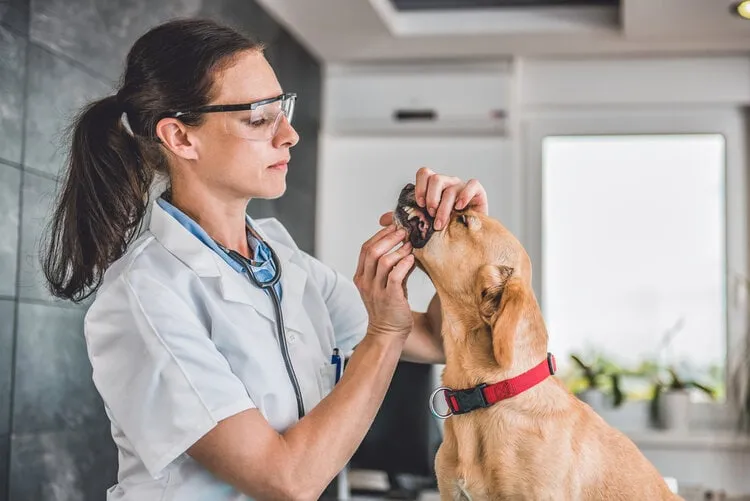
Irritable bowel syndrome, foreign objects in the stomach, pancreatitis, giardiasis, and other gastrointestinal pathologies could be the cause of a dog licking air excessively. Other signs that indicate gastrointestinal problems are vomit, diarrhea, bloating or excessive gas passing, and reduced appetite. A veterinarian needs to perform a good examination and probably collect blood and fecal samples, and even perform diagnostic imaging tests, such as ultrasounds and X-rays to appropriately diagnose and treat gastrointestinal issues.
11. Canine Cognitive Dysfunction
Canine cognitive dysfunction is a degenerative disease of dogs where the brain cells die as the dog ages. This brain atrophy can cause different signs; one of them is the possibility of repetitive behaviors such as chewing or licking, including air licking. If your senior dog suddenly starts licking air repetitively, speak to the veterinarian about the possibility of canine cognitive dysfunction for advice.
12. Focal or Partial Seizures
Partial seizures are caused by abnormal electrical activity in one or just a few areas of the brain. Dogs experiencing partial seizures may exhibit unusual and repetitive movements involving a specific part of their body. Sudden and repetitive air licking might be a sign that your dog is having a partial seizure.

What to Do if You Notice Your Dog Is Licking Air?
Firstly, you should consider if your dog licking air is just a normal behavioral response to a stimulus such as food anticipation, or if they are showing submission or experiencing anxiety or fear. In these scenarios, the behavior should be just sporadic and as a response to the environmental or social stimulus.
If the behavior has suddenly presented and you notice its frequency and duration are abnormal, check the mouth to help your dog in case there is an easy to remove a foreign object or a small injury. In both cases, the behavior should stop once the object is removed or the injury healed. In the case of small injuries, you will have to regularly check it to make sure it is not infected; otherwise, you must take the dog to the veterinarian.
For anything other than these situations you should bring your dog to the veterinarian for an examination to try to find out the cause of the air licking behavior. Because it is very likely the dog might not display the behavior at the clinic, it is a bit of good advice to try recording videos of the dog licking air for future reference to the vet or behaviorist. If the vet rules out any medical issue of concern but your dog continues presenting the behavior, refer to a dog trainer for advice on the best ways to handle this specific case.
Conclusion
As you’ve learned, there are quite a few reasons why your dog might be licking the air. They could simply be hungry, or it could be something more serious, like dental disease or trauma. Regardless, if you’re ever concerned about your dog’s behavior, it is always best to have them checked out by a professional, just to be safe.
Related Read: Why Do Dogs Lick the Couch? Reasons for This Behavior
Featured Image Credit: Huong Nguyen, Pixabay
Expert dog care, straight to your inbox
News, insights, expert advice, and everything dog.

No spam — unsubscribe anytime.
By signing up, you agree to our Terms & Conditions and Privacy & Cookies Policy.
How useful was this post?
Click a star to rate. You can leave written feedback afterwards. (We read all feedback.)
Dr. Paola Cuevas is our Senior In-House Veterinarian at Dogster and Pangolia. She has over 19 years of experience working with an array of species and loves sharing her knowledge and experience with our readers and aims to provide assistance with any issue presented by your non-human family members. She received her degree from the University of Guadalajara, Mexico.
Her passions are animal welfare and preventive medicine, and has skills in the fields of nutrition, microscopy, clinical pathology, diagnostic imaging, and endoscopy. Paola frequently contributes pet care insight to various media outlets like PetMD, The Daily Record, Parents.com, etc.
Paola is also an animal behaviorist with extensive experience in positive reinforcement animal training.