

In this article
View 2 More +For a pet owner, one of the greatest fears is having your pet die under anesthetic, and as a vet, I can tell you that it is our greatest fear as well. Why do we fear it? Because it does happen.
For a dog owner, this scary possibility is fortunately quite rare and certainly not as common as it was 20 or 30 years ago. The anesthetic drugs and monitoring have improved significantly over the last few decades, and the rate of canine deaths resulting from general anesthesia has reduced ten-fold over the last 25 years from around 0.5% to less than 0.05% (even lower for routine surgeries like spay/castration).1, 2, 3 But if your dog has died under anesthetic, statistics are of little comfort and can even make this time feel worse.
If you have received the devastating news that your dog did not survive, you are going to want to know: Why did my dog die under anesthesia?

The 8 Possible Reasons Why Your Dog Died Under Anesthesia
If your dog died under anesthesia, there is little comfort in knowing how rare it is; what you need to know is why. Why did they die? Should we have done something differently? Could it have been prevented? Did we miss something? Did someone make a mistake?
These are all completely normal and understandable questions, and it may be several days before you feel ready to ask them. Your vet will want to help you as much as they can, and helping you to understand what happened is part of that process.
There are many different factors that could cause death under anesthesia, and every single case will be different. Although we may not be able to tell you why your dog died under anesthesia, we can talk about some of the more common reasons this tragic outcome can happen and what we can do to minimize the risks.
1. Surgery
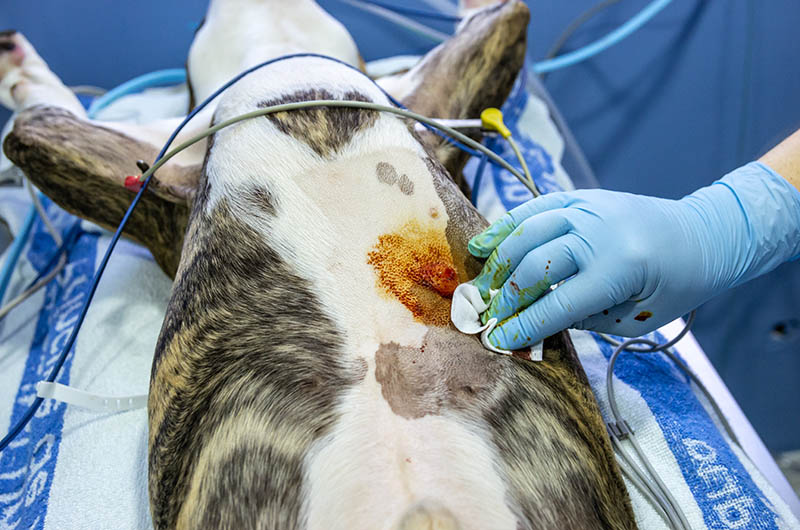
Oftentimes, anesthesia wasn’t the cause of death; it was the procedure itself. If a dog is having a complex surgery, is undergoing emergency treatment, or has suffered trauma, blood loss, shock, or organ failure, this can result in sudden death under anesthetic.
A complication during a routine surgery, such as an unexpected hemorrhage, can also result in death under or after anesthetic.
2. Hypotension (Low Blood Pressure)
The drugs used to induce anesthesia can cause a drop in blood pressure. If a dog already has low blood pressure, has been bleeding, has a heart problem, or is very elderly, this drop in blood pressure could mean that the brain and other organs aren’t getting enough oxygen, which can be fatal.
3. Respiratory or Cardiac Arrest
Sometimes, when a dog is anesthetized, they will stop breathing or their heart will stop beating purely due to the shock on the system from the drugs used. Most of the time, this effect is quickly corrected by manually stimulating the heart and/or lungs, but sometimes, often for reasons unknown, we are unable to get them going again. This can also occur at any point during an anesthetic; however, monitoring will usually detect any changes as they occur.
4. Embolism (Stroke)
Air, fat, or a blood clot can travel through the bloodstream and into the heart or brain, causing death. This can result from an intravenous injection, trauma, wounds, surgery, or bone fractures.
5. Hypothermia
When a dog is anesthetized, they are unable to control their body temperature. In most cases, this will cause their temperature to drop. Any temperature below 99.5oF is considered hypothermic for a patient under anesthetic, and if the temperature continues to drop, it can be fatal.
Although much less common, hyperthermia can occur if the ambient temperature is extremely high or if warming methods are used overzealously.
6. Subclinical Heart Defect
Every dog that undergoes a general anesthetic or sedation will have a complete physical exam, including cardiac auscultation. Some dogs can have a subclinical heart problem, meaning that they have shown no clinical signs of heart disease and no abnormalities that can be detected with a stethoscope. It is not until they are anesthetized that the defect causes problems. Sometimes, this can result in the dog developing clinical signs of heart disease after an anesthetic, but sometimes, it results in death.
7. Human Error
Unfortunately, vets and vet nurses are human, and humans can make mistakes. The wrong drug dose or incorrect medication could be given, or a sign of trouble could be missed; accidents do occur. However, in most veterinary practices, medications are double-checked, and there is usually more than one person monitoring the patient, meaning mistakes are usually picked up before they happen.
8. Unknown Cause
As a vet, one of the most frustrating answers to give is, “I don’t know.” Unfortunately, it is the situation often faced when we lose a patient under anesthesia. When a patient dies, despite all the precautions and monitoring in place, and we can’t find a reason, it is devastating. We want to be able to give you an answer, and we want to be able to learn from what went wrong. But sometimes, there is simply no answer.

Can Deaths Under Anesthetic Be Avoided?
Anesthesia will always come with a risk, particularly in older patients or those with pre-existing health conditions. There is simply no way to be able to predict and prevent every possible complication. However, veterinary medicine is always improving, and those risks get lower with every advancement made.
- Pre-anesthetic blood tests: A basic panel to check liver and kidney function, red and white blood cell counts, and platelet number and function.
- Intravenous fluid therapy: Helps offset the drop in blood pressure caused by anesthetic agents, improving cardiovascular function and the metabolism of drugs through the organs.
- Pre-medication (pre-med): Dogs are given a combination of a sedative or tranquilizer and a powerful analgesic, usually an opioid (e.g., methadone) or ketamine. Giving this combination of drugs prior to anesthesia reduces the dose of the anesthetic induction agent and gas anesthetic needed.
- Anesthetic monitoring: Your dog is monitored constantly by a qualified veterinary nurse, vet technician, or vet throughout and after the anesthetic until they are alert and standing.
- Monitoring equipment: In addition to being closely monitored by humans, there are machines that monitor blood oxygen levels, heart rate and rhythm, blood pressure, respiratory CO2 and O2 levels, and body temperature.
- Warming equipment: There is a wide variety of equipment available to make sure your dog stays warm, from the time they receive their pre-med to when they are ready to go home.
- Cardiac work-up: For dogs with pre-existing heart conditions or heart murmur, a work-up including cardiac-specific blood tests and ultrasound should be recommended before an anesthetic.
As a result of all these advancements, it is far less common for a dog to die under anesthetic just because they were under anesthetic. It is much more likely that there was a surgical complication, undetected abnormality, or cardiovascular event.
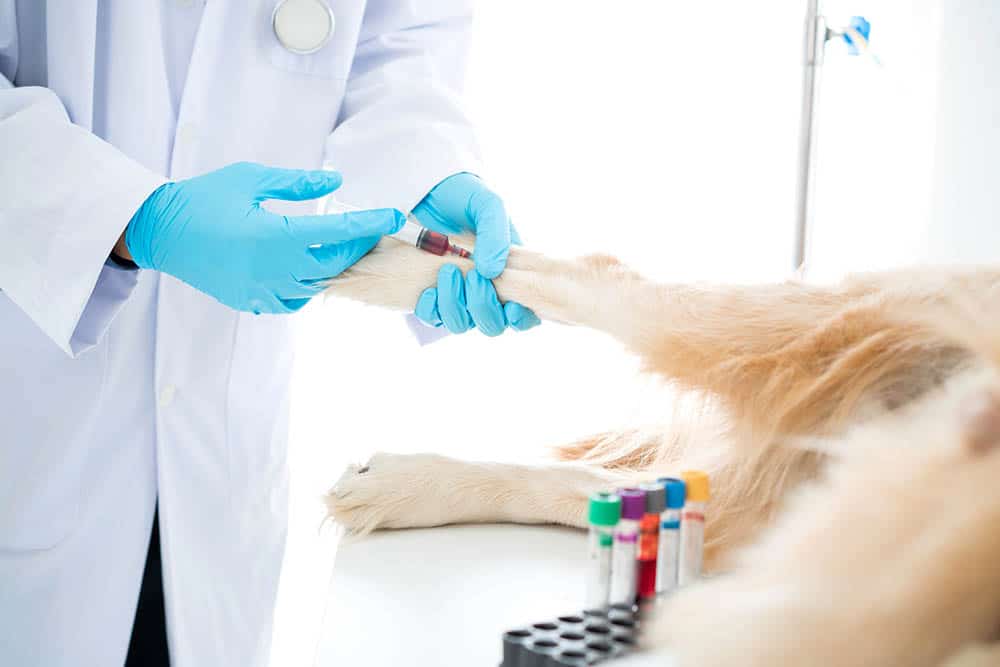
Why Are Deaths Under Anesthesia Less Common Now?
In the past, dogs were usually anesthetized with a drug called Thiopentone, a fast-acting barbiturate closely related to anti-seizure medications, as well as the drugs used for euthanasia. The benefit of this medication was that it worked fast and wore off quickly, but it also had a higher risk of causing cardiac and respiratory arrest, particularly in sighthounds.4
Pre-medication was not commonly used, which meant that the dose of thiopentone needed to be high, particularly when dealing with a lively, powerful, or aggressive dog. Because thiopentone wore off quickly, higher volumes of gas anesthetic were needed to keep the patient anesthetized. Additionally, the type of inhalation anesthetic and gas machine used were not as safe as those used today.
Pre-anesthetic blood tests were not routinely carried out, and intravenous fluid therapy was usually only given to patients having major surgery. The monitoring of patients under anesthetic was usually based on observation of respiratory rate, mucous membrane color, and chest auscultation. Machines measuring blood pressure, heart rhythm, CO2, and O2 levels were rarely, if ever, used at a general practice level.
The impact of post-anesthetic hypothermia may have been underestimated, and deaths after anesthesia considerably contributed to mortality rates.

The 4 Ways You Can Help Make Anesthetic Safer for Your Dog
As a pet owner, you are always going to feel quite powerless once your dog goes through those doors and into the hospital, but there are a few things you can do to make sure you have done everything you can to maximize your dog’s chances of coming home safely.
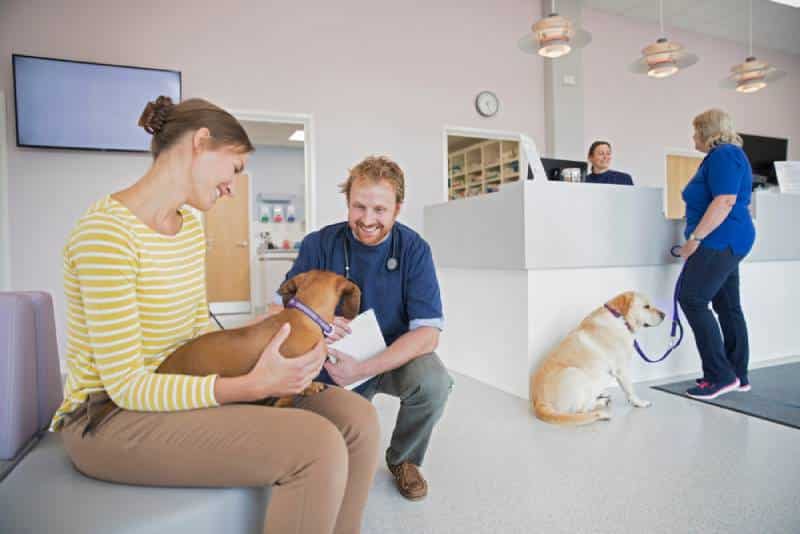
1. Ask Questions
Many people feel like they are being annoying by asking questions, or they forget what they want to ask when they get to the vet’s office. If your dog is scheduled to have a procedure under sedation or anesthetic, write down any questions you might have and ask them beforehand. Make sure you check when to take away food and water and when to give any regular medications.
Ask what sort of monitoring equipment will be used, what sort of pre-anesthetic tests will be run, and what the recovery process will be.
If you are not happy with the answers, or if your vet team is not answering your questions adequately, it is your right to ask for someone else. It is imperative that you feel comfortable with your vet and confident in their advice and decisions. If you don’t feel comfortable asking questions in person, find out if you can send an email instead.
2. Bring Notes and Medications
When your dog is coming in for a procedure, bring in any notes or information you have that might be relevant, and also bring any medications they are currently taking. Although vets keep good records, it never hurts to remind the vet or nurse on the day about any allergies, reactions, or strange episodes that your dog may have had in the past.
3. Follow Advice
If your vet recommends running blood tests or giving your dog intravenous fluids, do it. It might seem like a way to reduce costs, but if something were to go wrong, you’d always wonder if those were the things that could have made a difference.

4. Watch Their Weight
Just like in humans, being overweight or obese can significantly increase anesthetic risk, as well as increase the chances of surgical complications. Also, dogs that are underweight can also have an increased risk of hypothermia and heart complications under anesthetic. For so many reasons, making sure your dog maintains a healthy body condition throughout their life is one of the simplest and best ways you can improve their health and longevity.
Things to Remember
- The chances of death under anesthetic are less than 0.05%.
- In many cases, not having the procedure would have caused pain, difficulty, or reduced quality of life, in which case, it is always better to have given them a chance.
- Ask questions, follow advice, and feel prepared.
- Your vet and vet nurses are there to help and support you; they love animals too.
- If your dog died under anesthetic, they weren’t scared or in pain, and they weren’t alone.
Final Thoughts
It is heartbreaking to lose a pet under anesthetic, especially if you don’t know why. While there are many different reasons a dog may die under anesthetic, there are just as many cases where we never know the answer for sure. While human error can play a role, in most cases, there is no one at fault, and you shouldn’t blame yourself either.
Losing a dog under anesthesia is a devastating experience. Although knowing why it happened won’t make the loss any easier to bear, it can help to understand what could have gone wrong. The chances of it happening to another of your dogs is extremely unlikely, especially armed with this knowledge.
Related Read:
- Can Anesthesia Cause Seizures in Dogs? Our Vet Explains
- Why Do Dogs Need Anesthesia for Teeth Cleaning? Vet-Verified Facts & FAQ
- Are There Side Effects of Anesthesia in Dogs? Our Vet Explains Care Tips & FAQ
Featured Image Credit: thirawatana phaisalratana, Shutterstock





























2 Responses
Banfield Pet Hospital put my 9 year old PUG on anesthesia for a routine dental cleaning and he never woke up again. I am beyond words and they are going to pay. Do not use the Banfield pet Hospital in Monroe, NC Highway 74 Location.
Hi Joshua,
I’m so sorry for your loss, that’s truly heartbreaking, and it’s completely understandable that you’re feeling angry and devastated. Losing a beloved dog, especially during what should have been a routine procedure, is incredibly painful.
While anesthesia is generally safe, there are always risks, and when something goes wrong, it can feel impossible to process. You did the best you could by getting your Pug proper care. If you haven’t already, you might consider requesting a full explanation or report from the hospital so you can better understand what happened. Most importantly, please take care of yourself as you grieve.