In this article
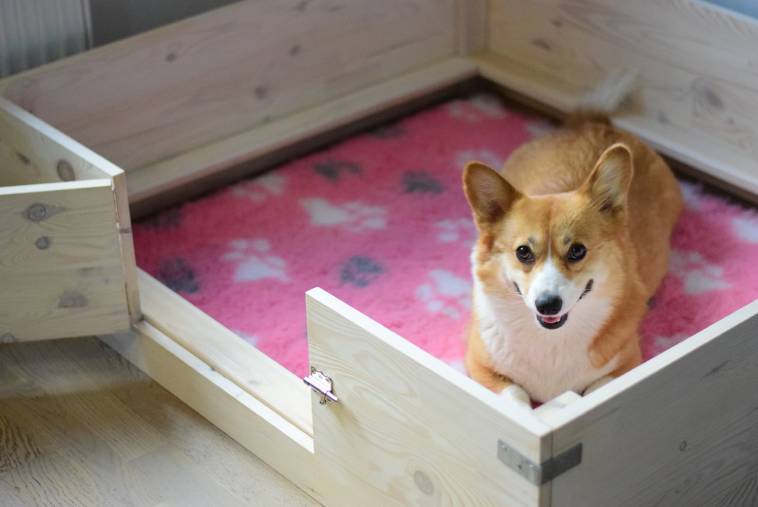
If you’re about to become a “dog mother” or “dog father,” the chances are that you want to be prepared for anything. Part of that preparation is ensuring you have all the right equipment: blankets, towels, and a whelping box. However, the other crucial part is knowing what to expect when the time comes for the puppies to arrive.
If you see green discharge coming from your pregnant dog, you might assume there is something wrong, but actually, green discharge is quite normal and a sign that puppies should be arriving soon.
In the following article, we’re going to take a closer look at the ins and outs of whelping, what is and isn’t normal, and whether you need to call a vet.

What Are the Stages of Whelping?
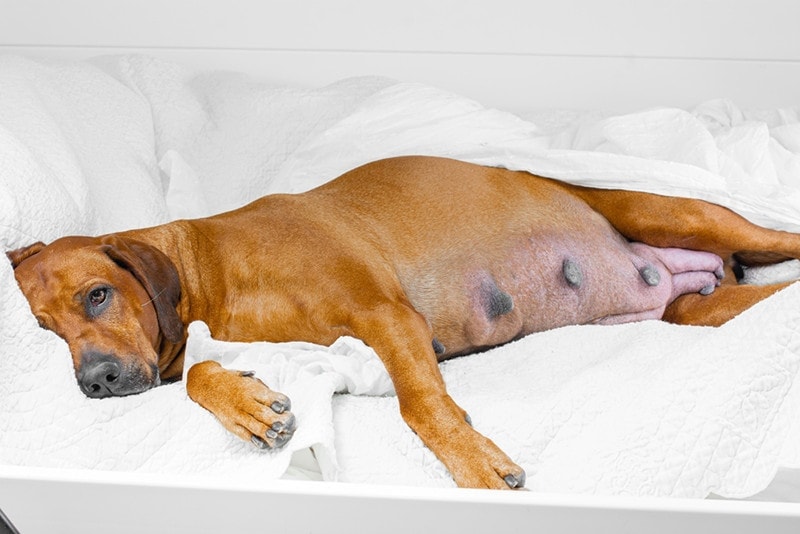
The length of pregnancy in dogs is around 63 days, give or take a day or two. Two weeks before the estimated due date is a good time to book a check-up with a vet to ensure you are on track with her weight, diet, worming, and any other concerns. It’s a good idea to start introducing puppy food to the expectant mother to build up her protein, fat, and calcium levels in preparation for delivering her pups (whelping) and feeding hungry mouths.
As the day gets close, there are some things to be watching out for, including vaginal discharge, which can be an indicator of which stage of whelping your dog is in.
- Stage 1: This often coincides with the loss of the cervical mucus plug, which you may or may not notice. It appears as a clear-whitish mucus discharge and is often cleaned up by your dog. At this stage, she will seem restless and spend more time in her bed or your prepared whelping box. She may become clingy, or she might want to be left alone. This stage can last a few hours or several days.
- Stage 2: This is active labor. Expect lots of panting, possibly some vocalizing, along with abdominal contractions, straining, and licking at her vulva. You may notice a thick vaginal discharge, which might be clear or green.
- You should see your first puppy within 2 hours of the start of stage two. If that isn’t the case, it’s time to call a vet.
- Stage 3: This involves the time of the delivery of puppies and placentas. Most of the time, pups still emerge inside the placental sac. New mothers might need help breaking the sac, but be careful not to pull on the umbilical cord. Your dog will lick the pup vigorously to get them breathing and often chew the cord to crush and break it.
- There will usually be less than 1 hour between pups; however, with lengthy or difficult whelping, it is not unusual for your dog to return to stage one for a break. Provided she is not actively straining, keep an eye on her and encourage her to drink and eat.
- If she is straining and it has been more than 1 hour since the last pup was delivered, phone a vet.
Seek veterinary advice if you’re concerned about your pet’s well-being.
Did you know you can speak to a veterinarian without having to travel? Just head over to PangoVet. It's our online service where you can talk to a vet online and get the advice you need for your pet — all at an affordable price!

Why Is the Discharge Green?
Each puppy is wrapped in its own placenta, which provides nutrients, removes waste, and protects the puppy before delivery. A green pigment is released as the puppy’s placenta separates from the mother’s. This pigment mixes with the other fluids and exits the mother’s body as a green discharge.
This is quite normal, and you should see a puppy within 10–15 minutes. If there is a small tear in the placenta, the puppy should still receive oxygen through the umbilical cord, but if it has completely detached, the pup will need to start breathing on their own, so they need to exit the mother’s body in time to do that.
If you see green discharge but have no puppies after 15 minutes, call a vet.
What Sort of Discharge Is Not Normal?
Although green-colored vaginal discharge is normal during whelping, there are a number of discharge types that can indicate that there is a problem with the delivery (dystocia) and that you must call a vet immediately.
- Blood: Although a small amount of blood is normal, if there is a lot of fresh-looking blood, it may be a sign of damage to the uterus.
- Dark brown/black: A small amount can be normal, but if you see a lot of this color discharge rather than green, it can, unfortunately, mean that there is dead or dying tissue inside and that one or more puppies may have died.
- Foul-smelling discharge or pus: This is a sign of infection, which can happen alongside a pregnancy but needs to be dealt with quickly, as it can pose a risk to both the puppies and their mother.
- If this sort of discharge is seen 2–3 weeks after your dog has mated (or just after a season), it may be a sign of a uterine infection, known as pyometra. This needs urgent veterinary attention.
- Early discharge: If your dog has a vaginal discharge more than 1 week before she is due to whelp, it may not be a problem, but you should schedule an urgent appointment with the vet to be sure.
What if I Don’t See Any Discharge?
Now that we know what sort of discharge is normal and what isn’t, you might wonder what to do if you don’t see any discharge. Here are a few reasons why a dog due to give birth has no discharge:
She’s Not Pregnant
Dogs can have something called a phantom or false pregnancy, even if they haven’t mated. The changing hormone levels trick the body into thinking it is pregnant, and you might see abdominal enlargement and mammary development, and your dog may start nesting and collecting toys.
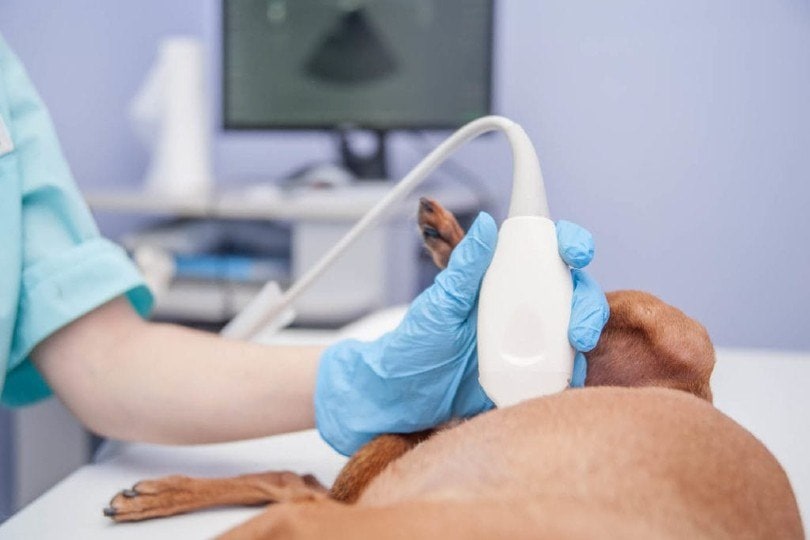
A pregnancy scan around week five will usually be able to tell you if she is pregnant or not.
She Hasn’t Started Whelping
If you have been crossing days off the calendar, waiting for day 63, you might just have to wait a bit longer! Fertilization of the egg can happen up to nearly a week after mating, so it’s not unusual for whelping to occur a few days after the 63 mark. If she isn’t showing signs of labor, it might not be time yet.
She’s Clean
Many dogs are very particular about cleanliness and will lick up any discharge before you spot it.
She Is Having a Problem Delivering Her Pups
If your dog is straining and having contractions but there is definitely no discharge, you need to call a vet, preferably on your way out the door. It may be that she is having difficulty delivering.

Final Thoughts
Vaginal discharge around the time of whelping is very normal, and a green discharge is not necessarily a cause for concern. However, if you don’t see puppies appearing soon after seeing a green discharge, you should call a vet for advice.
As you have probably gathered, it is a good idea to have a vet’s number close at hand when your dog is due to deliver her pups, and it is even better to advise a vet when whelping begins. That way, they are prepared in case you need to come in.
Be prepared, have a checklist, and talk to a vet to ensure you have everything ready for whelping day. Then, you can relax and enjoy the magic!
See also:
- Vaginal Discharge In Dogs: Causes, Signs & Treatment Options
- Dystocia In Dogs: Causes, Signs & Diagnosis
- Vaginal Discharge in Dogs: Our Vet Discusses Signs, Causes & Treatment
Featured Image Credit: Hanna Dymytrova-kaihila, Shutterstock