Get

In Your Inbox

Dogster is reader-supported. When you buy via links on our site, we may earn an affiliate commission at no cost to you. Learn more.

Are There Risks Cleaning Older Dogs’ Teeth? Our Vet Explains

Share

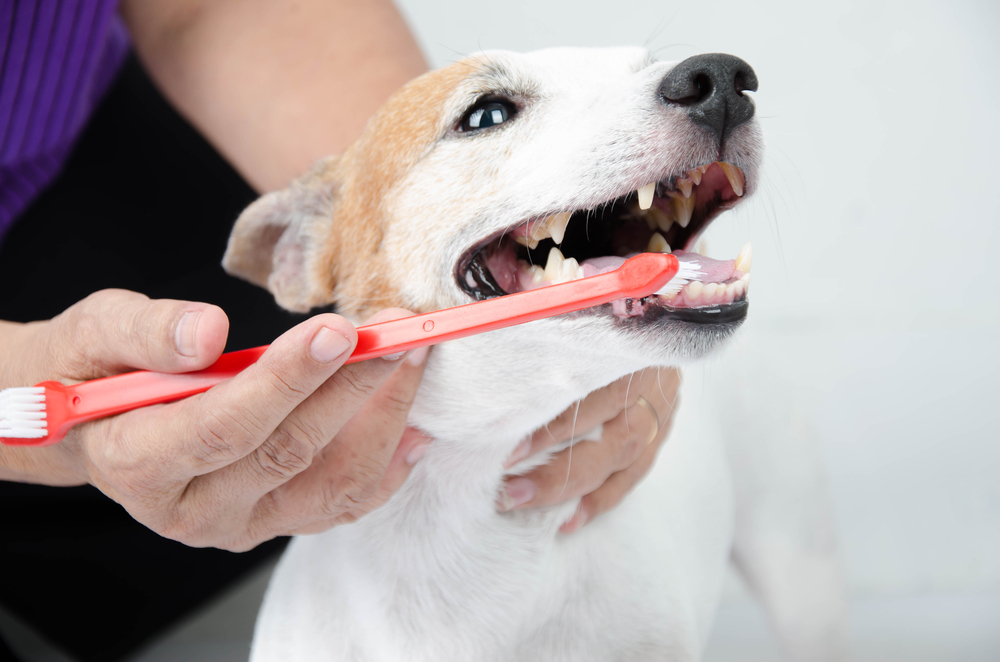
hand brushing dog's teeth

Should older dogs receive dental care? The short answer is absolutely! It’s just as important in older dogs as in younger dogs. While older dogs may be more susceptible to anesthetic risks, your veterinarian can access and monitor your pet closely to determine whether they can safely be placed under anesthesia.

Quality dental care is essential for dogs of all ages and breeds because it can improve and positively impact their quality of life.

Dogster divider_v2_NEW_MAY_24_

Why Is Dental Care Important?

Routine professional dental care is important because periodontal disease is common in canines. In fact, by 2 years of age, approximately 80% of dogs already have periodontal disease.1 This form occurs when food material and bacteria collect along the gum line, which forms plaque that eventually hardens into tartar. This irritates the gums, causing inflammation called gingivitis, which can progress if untreated.

Dogs can hide their pain well, and many adapt to the chronic degenerative and inflammatory changes in their mouths. As periodontal disease progresses, it can lead to pain, difficulty eating, tooth loss, and bone reabsorption and can negatively affect other organ systems within the body as the bacteria spread throughout the bloodstream.

Performing a dental evaluation under anesthesia is essential because it provides a stress- and pain-free dental experience for your dog, which includes a complete oral exam, full mouth dental X-rays, teeth cleaning, and any necessary extractions or other oral surgical procedures. Approximately 60% of the tooth lies below the gum line, so a thorough dental evaluation with anesthesia is required to identify any diseased teeth.
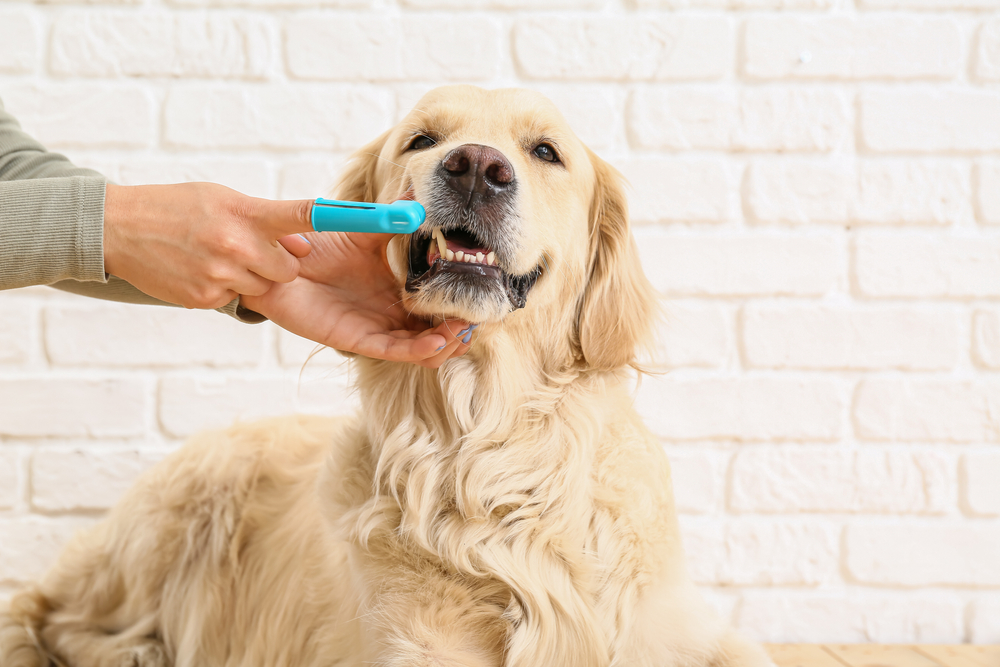
Owner brushing Golden Retriever teeth at home
Image Credit: Pixel Shot, Shutterstock

The 5 Anesthetic Risks for Senior Dogs

Dog owners often worry about the anesthetic risks associated with older pets. However, thorough planning by your veterinarian can help minimize complications and risks for your senior dog if they’re undergoing anesthesia for a dental cleaning. A complete physical examination, comprehensive medical history, blood work, chest radiographs, heart ultrasound, and personalized anesthetic drug protocols can be customized for each individual pet. Dedicated anesthesia technicians also often closely monitor seniors. Monitoring equipment is used to identify any cardiac, respiratory, or body temperature changes that may occur while your dog is under anesthesia.

That said, it’s true that older dogs can be more sensitive to the effects of anesthesia because of the normal deterioration of body functions as a dog ages and underlying diseases that may complicate a good anesthetic outcome. It is estimated that the risk of anesthetic death can increase as much as seven times for dogs older than 12 years of age.

Anesthetic complications of older dogs include the following risk factors.

1. Cardiovascular System Issues

Complications include low blood pressure (hypotension), decreased heart contractility, low heart rate (bradycardia), arrhythmias, higher resting heart rate, longer circulation time, vasoconstriction, and congestive heart failure.


2. Respiratory System Issues

Complications include low blood oxygen levels (hypoxemia), hypoventilation, hypercapnia, and pulmonary edema.


3. Kidneys and Liver Issues

Older animals can have slower drug metabolism and clearance from their system, and vasoconstriction can further reduce blood flow to the kidneys and liver.

Senior Golden Retriever feeeling sick resting on a dog bed
Image Credit: Yobab, Shutterstock

4. Neurologic Issues

Older animals can be at risk for a drug overdose, excessive anesthetic depth, and prolonged recoveries. Geriatric dogs require a lower anesthetic dose.


5. Issues Related to Body Fat

Anesthetic drugs may take longer to be effective in overweight senior dogs due to the increased volume of distribution and lower dosage requirements. Similarly, underweight geriatric dogs have less body fat and reduced muscle mass, which increases hypothermia risks. Hypothermia can impair heart function, decrease the drug required for anesthesia, increase recovery time, and cause shivering, which in turn, can worsen pain and increase oxygen demand.

If you are concerned about the health and well-being of your pet, seek veterinary advice for the best course of action.

If you need to speak with a vet but can't get to one, head over to PangoVet. It's our online service where you can talk to a vet online and get the advice you need for your dog — all at an affordable price!

PangoVet_Mention-in-Content Savings V1

Dogster divider_v2_NEW_MAY_24_

Conclusion

Dental care is vital for maintaining a happy and healthy quality of life for your dog. However, older canines can be susceptible to anesthesia risks due to the physiological changes of aging and underlying health risks. Your veterinarian can best prepare your pet by developing a specific pre-anesthetic plan for them, identifying and correcting any underlying health issues, and diligently monitoring your dog during anesthesia and in recovery.

While procedures requiring anesthesia can be risky for any dog, it is especially important to pay special attention to older dogs in order to provide the best outcomes. Remember, though, age by itself is not a disease, nor is it the sole reason to avoid anesthesia for necessary procedures.


Featured Image Credit: Littlekidmoment, Shutterstock

Want content like this delivered to you?

Sign Up For Our Newsletter

News, insights, expert advice, and everything dog

* By submitting, you agree to our Terms & Conditions and Privacy & Cookies Policy.


How useful was this post?

Click on a star to rate (you can leave written feedback after clicking submit)

Help us improve Dogster for pet parents!

Your feedback really matters.

What did you like about this post? Also how can we improve it?

Join the conversation

2 Responses

  1. I have a little dorkie she is 5year old .the last to day all she does is sleep on the 30 of December she is having her teeth clean .i do not know why she lay a lot. She got to the vet .she had all her shot .

    1. Hello Dixie,

      thank you for reaching out to us and sorry for a bit of a late reply. First of all, we hope that your Dorkie is alright and healthy!
      Usually, when your dog is supposed to undergo medical procedure that may include anesthesia, it is best to confirm with a veterinarian, if they are fit for it.
      We hope that everything went well with your Dorkie!

Leave a Reply

You’re very welcome to leave a comment or question. Please know that all comments must meet our community guidelines, and your email address will NOT be published. Let’s have a positive and constructive conversation.


Talk With A Vet Online

Peace of mind,
anywhere, anytime

Affordable vet advice

The Crate Setup Most Dog Owners Get Wrong (And How To Fix It!)

Most people assume that if their dog hates the crate, the crate is the problem. So they try a bigger one, a different...

1,500 Beagles Rescued from Wisconsin Lab Farm – Here’s Where They’re Going

You may remember that a few weeks ago, we reported on a tense situation at Ridglan Farms, Wisconsin, a facility infamous for housing...

Dogster’s Weekly Photo Contest Winners: Window Watchers (May 11, 2026)

Every week our team gets the privilege of sorting through our readers photos to choose what dogs will win this weeks contest! See...

Can a Relationship Work When One Person Doesn’t Like Dogs? Tips & When to Walk Away

For dog owners, a partner who doesn’t like dogs isn’t a minor quirk to overlook. Dogs aren’t a hobby you can scale back...

More related

11 Best Dog Foods for Miniature Schnauzers in 2026 – Reviews & Top Picks

No two dog breeds are exactly the same. That’s why the market is ever-expanding with products that cater more to specific categories of...

Ask Dr. Paola- Drama, Bed Hogs & Begging (November 25, 2024)

Welcome to our “Ask Dr. Paola” series, where every Monday we bring expert advice straight from Dr. Paola Cuevas (MVZ) to help our...

Why Do Dogs Lick the Couch? 9 Reasons for This Behavior

Dogs, our loyal and quirky companions, often engage in peculiar behaviors that leave us both amused and perplexed. One such puzzling habit is...

Australian Labradoodle vs Goldendoodle: The Differences (With Pictures)

Australian Labradoodles are a mixed breed from Australia. They’re a mix of several dogs, including Labradors, Cocker Spaniels, Curly Coated Retrievers, Poodles, and...

Keep reading

Top 10 Most Popular Dog Treat Brands in 2026 – Reviews & Top Picks

Dog owners know how much their pets love treats. What could be better than a delicious treat to reward your dog for a job well done? There are many different flavors, textures, and sizes of dog treats, as well as...

jack russell terrier having treats

10 Best Foods for Pregnant Dogs in 2026 – Reviews & Top Picks

Congratulations, you have a pregnant dog! Now, this is where the hard work really starts, which includes making sure she’s getting the right nutritionally balanced diet. After all, she is eating for six or maybe even seven puppies! She needs...

Pregnant dog eating food from the floor

10 Best Dog Treats for Small Dogs in 2026 – Reviews & Top Picks

Don’t bother expecting a small dog to act their size. Whether they’re stirring up trouble against a dog twice their weight or consuming enough food to feed a Saint Bernard, small dogs will find a way to make their presence...

woman feeding her dog a treat seated in stone stairs

Can Dogs With Pancreatitis Eat Eggs? Vet-Approved Facts & FAQ

Pancreatitis is one illness you want to take seriously, as mismanaging this disease can quickly become fatal. Pancreatitis is the inflammation of the pancreas, the part of your dog’s body that creates hormones such as insulin and digestive enzymes. The...

Can Dogs With Pancreatitis Eat Eggs

Lean Meats for Dogs in Fresh Food Diets: Vet Approved Facts, Pros, Cons & FAQ

Protein is an essential part of your dog’s diet, and can be found in meat, eggs, and certain vegetables. It plays a vital role in your dog’s body, such as building and sustaining muscles, tissues, and cells. Without protein, your...

fresh raw meat on old wooden table

Can High-Protein Dog Food Cause Diarrhea? Vet-Verified Nutrition Facts

Some dogs are more sensitive to the protein in their food than others. For some with sensitive stomachs, high protein can lead to digestion issues, including diarrhea. These canines often need a food lower in protein, though an extremely low-protein...

labrador-retriever-dog-eating

Authority Puppy Food Review 2026: Recalls, Pros & Cons

Review Summary A new puppy can bring a lot of excitement into your life! Along with the adorable pictures and play, there are some tough questions, like what you will be feeding your new bundle of fur. If you are...

Dogster_Authority Puppy Food Review

What to Feed a Pregnant Dog: First, Second & Third Trimesters (Vet-Approved Guide)

Good news! Your dog is expecting puppies! This is an exciting time in any pet parent’s life. But it can also be overwhelming if this is your dog’s first litter. You want to make sure you are giving your dog...

Sausage dog pregnant laydown at the bed Dauchand

Love Dogs? So Do We! Join the Dogster Community

Stay informed with expert pet care insights delivered straight to your inbox! Discover professional guidance on animal behavior, feeding tips, trusted product picks, and much more.


Sign up for the Dogster Email Newsletter