Since there are so many commercial dog foods, confusing labels, and differing opinions about what you should feed, wouldn’t it be simpler to make your dog’s food at home? The truth is that it is difficult to prepare balanced homemade dog food, and while a one-off healthy homecooked meal won’t hurt your dog, feeding the wrong formula for too long can lead to nutritional deficiencies, especially in puppies.
Despite that, it is possible to feed homemade dog food with the help of a board-certified veterinary nutritionist who will formulate diets meeting all your dog’s nutritional requirements. Some dogs can even benefit from homemade dog food.

What Are Homemade Diets?
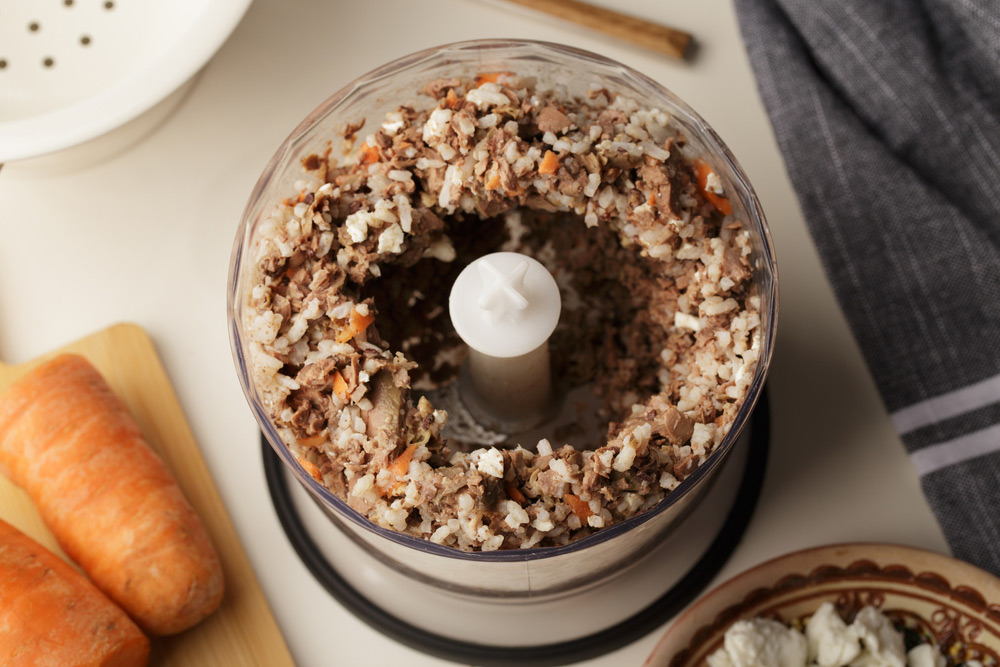
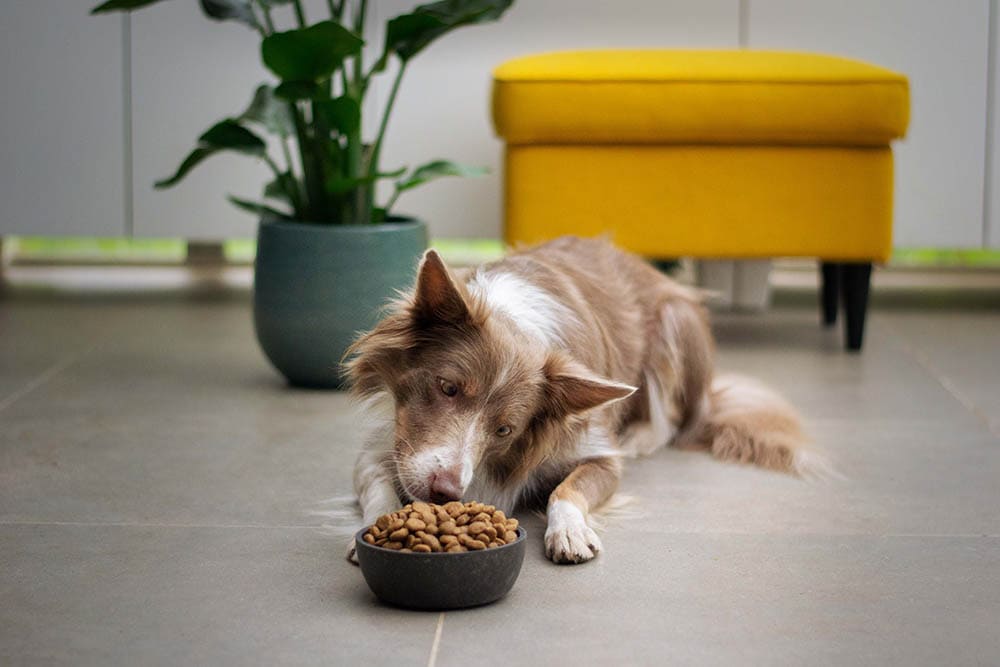
Homemade diets are meals prepared at home for your dog, as opposed to commercial diets, which require you to buy products already made and packaged for your dog. Both homemade and commercial diets can adhere to feeding strategies like raw feeding or grain-free diets.
Two separate organizations have established recommendations regarding the amount of nutrients in dog food. The Association of Americal Feed Control Officers (AAFCO) has published the most commonly used guidelines, and most commercial foods formulate food based on these recommendations. The National Research Council (NRC) has also published nutrient requirements for dogs.
Your dog’s diet needs to supply them with all the macro and micronutrients they need without oversupplying anything. The diet must have the correct ratio of calories to nutrients so your dog doesn’t over or under-consume calories. On top of that, the nutritional requirements are different for dogs in different stages of life.
AAFCO recognizes four life stages: growth (for puppies), pregnancy and lactation, adult maintenance, and all life stages. In addition, individual needs will arise for pets with different illnesses, food intolerances, and lifestyles.
- Protein, including 10 essential amino acids
- Fat
- Carbohydrates and fiber
- Vitamin A
- Vitamin D
- Vitamin E
- Vitamin K
- Vitamin B1 (Thiamin)
- Vitamin B2 (Riboflavin)
- Vitamin B6 (Pyridoxine)
- Vitamin B3 (Niacin)
- Vitamin B5 (Pantothenic Acid)
- Vitamin B12 (Cobalamin)
- Vitamin B9 (Folic Acid)
- Vitamin B7 (Biotin)
- Choline
- Calcium
- Phosphorus
- Magnesium
- Potassium
- Sodium
- Chloride
- Iron
- Copper
- Zinc
- Manganese
- Selenium
- Iodine
Finding ingredients that provide all these nutrients in the correct ratios is no easy task. Deficiency or excess of any of the vitamins or minerals can lead to health problems. Providing nutrients isn’t as simple as it may appear since you have to consider the ingredients’ digestibility and bioavailability, as well as other components that the ingredient has.
Spinach, for example, is high in calcium but also high in oxalates, which can lead to urinary stones. Thus, it is not a great source of calcium in dog food. To avoid nutritional deficiencies, all homemade diets should be formulated by board-certified veterinary nutritionists and will require vitamin and mineral supplements.
If you need to speak with a vet but can't get to one, head over to PangoVet. It's our online service where you can talk to a vet online and get the personalized advice you need for your pet — all at an affordable price!

You should adhere strictly to their instructions regarding ingredients, quantities, and cooking methods. For example, there is a nutritional difference between chicken breasts and thighs, and you can’t swap corn oil for coconut oil even if you think it’s healthier. Coconut oil and olive oil lack essential fatty acids that are good for your dog. Additionally, boiling rather than baking retains more moisture, which can reduce the nutritional value per gram. Your recipe mustn’t drift away from what was formulated by the board-certified nutritionist.
A study in the Journal of the American Veterinary Medical Association showed that recipes written by non-veterinarians tended to have a greater number and severity of nutrient deficiencies.1 Veterinarian-written recipes had at least one nutrient deficiency, and those written by board-certified veterinary nutritionists alone satisfied the AAFCO recommendations.
“Board-certified veterinary nutritionist” is a registered trademark, but be wary of people with minimal qualifications calling themselves pet nutritionists. You can search for a board-certified veterinary nutritionist on the American College of Veterinary Internal Medicine (ACVIM) website.

The 5 Pros of Homemade Diets
1. Quality Ingredients
Since you control what is going into your home-cooked diet, you can ensure no poor-quality, contaminated, or filler ingredients are used. Most people source their ingredients from the supermarket, so they know the food is human-grade. Owners can also use organic ingredients to feed their dogs.
2. Treatment of Food Allergies
Food allergies and intolerances can lead to chronic signs like itchy skin, vomiting, diarrhea, and repeat ear infections. Homecooked diets are frequently used to treat food sensitivities. However, the key is knowing what your dog is allergic to.
A common misconception is that all the artificial ingredients in commercial food cause food sensitivities. While this can be true, it is more common for your dog to be allergic to one or more specific protein sources. You can talk to a veterinarian if you are concerned your pet has a food allergy.
3. Other Health Conditions
Homemade diets can help with other health problems. In kidney disease, for example, the diet is the mainstay of veterinary treatment, and protein and phosphorus usually need to be restricted. The problem with these diets is that some pets don’t enjoy eating them.
Owners can instead prepare a homecooked diet that meets their nutritional needs. In some cases, pets have multiple diseases that need nutritional management, but there may be no commercial food available that meets their needs. Homemade diets could help without compromising any of their needs.
4. Palatability
Pets that are fussy eaters may dislike commercial foods, but homecooked diets will usually satisfy them. You can also consult a board-certified veterinary nutritionist to include some of their favorite foods as part of the diet plan.
5. Digestibility
Most dogs find homemade diets very digestible, leading to improved stool quality and reduced volume. This generally means that fewer of the ingredients go to waste since they are absorbed and used by the body.

The 8 Cons of Homemade Diets
1. Nutritional Imbalance
One study of homemade diets showed that all formulas published online were deficient in at least one nutrient.2 Iron, vitamin E, zinc, calcium, copper, choline, riboflavin, thiamine, and B12 were commonly deficient. Another study examined 67 home-prepared diets and found that 95% of recipes resulted in at least one essential nutrient deficiency, and 83.5% had multiple deficiencies.3
Zinc, choline, copper, and calcium were the most common deficiencies. The study found that protein and amino acid requirements were met in almost all recipes, showing that most people generally understand the importance of protein in canine diets.
Over time, dogs on these diets may show signs of nutritional deficiencies. Choline deficiency can cause weight loss and fatty liver, while Vitamin D deficiency can cause skeletal problems. There are case reports of dogs suffering from severe clinical malnutrition while being fed unbalanced homemade diets.
Vitamin D deficiency occurred in a 6-month-old Giant Schnauzer.4 A 7-month-old Bulldog puppy who had been eating a homecooked diet for 3 months was euthanized due to Vitamin D deficiency, low calcium, Vitamin A deficiency, and life-threatening complications.5
An 8-month-old Saint Bernard developed Vitamin D deficiency, taurine deficiency, electrolyte imbalances, and seizures.6 These cases emphasize the importance of balanced diets, especially during growth.

2. Use of Human Databases
The databases used for formulating homemade dog food diets are actually made with humans in mind. The nutrient profiles of certain ingredients are theoretical and may not be what is present in reality. The digestibility, bioavailability, and energy content listed are the value for humans, not dogs. Nutritionists usually keep this in mind and provide a safety window or margin of error with their diets.
3. Lack of Guidance
Sometimes, homemade dog food recipes online lack specific guidance regarding the exact kinds of ingredients to use, cooking methods, and how much to feed your dog. When things are left open to interpretation, this can lead to errors. You might underfeed or overfeed your dog or accidentally make an unbalanced food.
4. Picky Eating
If your pet dislikes some ingredients in your homemade dog food, they can eat around them and pick only parts they enjoy. This, of course, will invariably lead to a poorly balanced diet. You can get around this by blending the food into a homogenous mixture.
5. Storage
While commercial foods usually have a long shelf life and are easy to store, cooking your dog fresh foods will mean storing them in the fridge for a maximum of 3 days and around 4 weeks in the freezer.

6. Ethics
Pet food contains meat “meals,” which are animal parts that humans are unable or unwilling to eat. This provides the environmental benefits of using the whole animal and reducing wastage. Some people also think that pets shouldn’t be prioritized over cuts of meat made for humans.
7. Toxic Ingredients
Some online published diets contain toxic ingredients like garlic. This might be because there is misinformation about garlic and parasite prevention. However, garlic is harmful to dogs because it contains sulfur compounds that damage the red blood cells.
Depending on how much garlic is ingested, this can lead to anemia. The toxic effects can build up over time, so eating a little bit frequently is also dangerous. Other foods to avoid include leeks, onions, grapes, raisins, and other ingredients listed by the ASPCA.
8. Expense and Inconvenience
Buying ingredients and preparing them for your dog is less convenient than purchasing commercial diets. You will spend more money on fresh human-grade ingredients and must take the time to prepare them.
There is also the expense of regular consultations with veterinary nutritionists and checkups to ensure your dog remains healthy while eating a homemade diet.

Conclusion
The most important aspect of your dog’s food is that it provides all the nutrients they need to live a healthy life. Commercial foods that meet the AAFCO guidelines are the most cost-effective and convenient ways to provide their meals.
However, it is possible to formulate a suitable homemade diet in consultation with a board-certified veterinary nutritionist. If your dog is a fussy eater or has special dietary requirements, they can benefit from a homemade diet. You might also choose to go down this route so you can control the quality of the ingredients your dog is eating.
Featured Image Credit: chaossart, Shutterstock