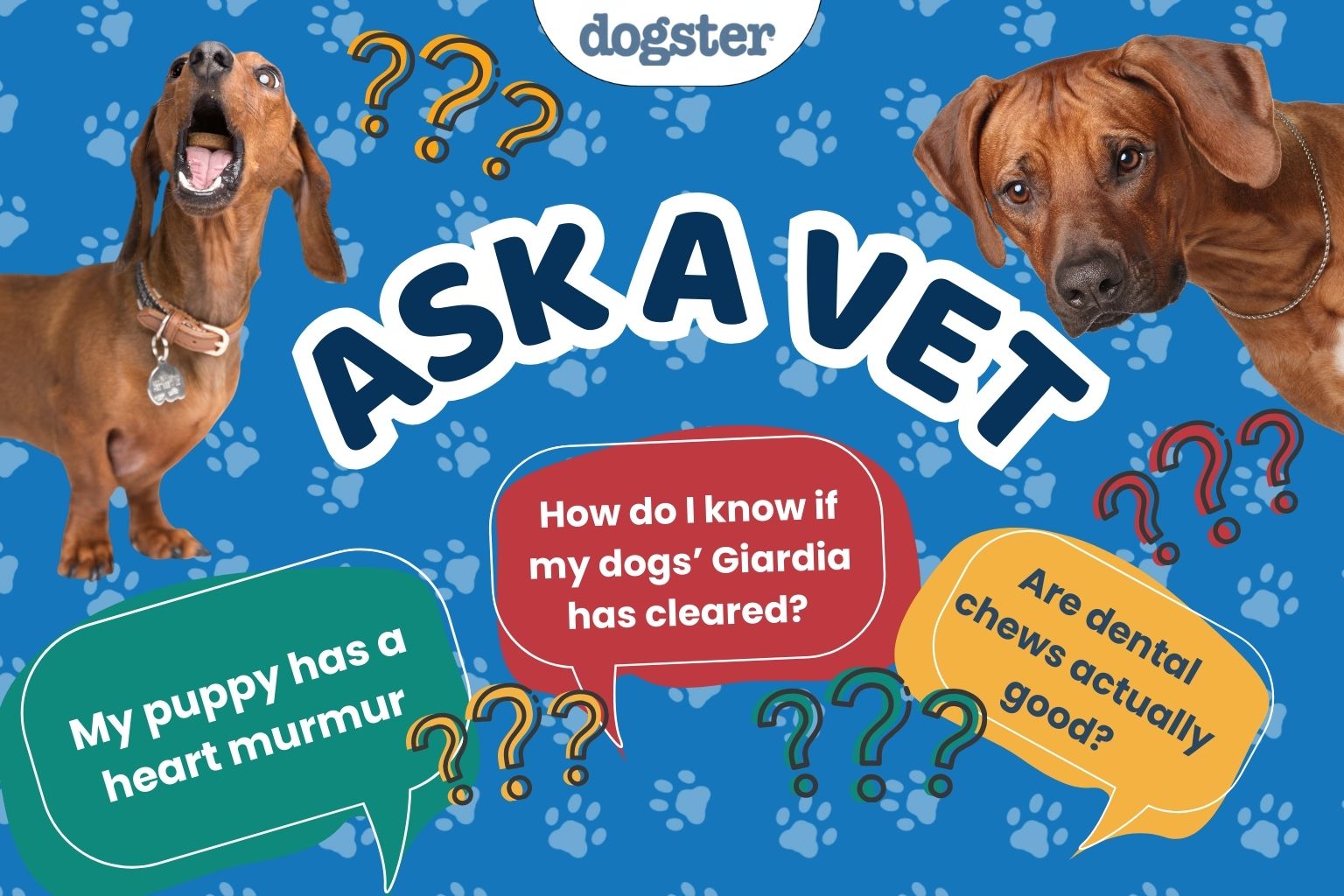
Welcome to our “Ask Dr. Paola” series, where every Monday we bring expert advice straight from Dr. Paola Cuevas (MVZ) to help our readers better understand their dog’s health and well-being.
Whether you’re a new pet parent or a seasoned dog lover, Dr. Paola is here to provide answers to your most pressing questions. From nutrition tips and preventive care to troubleshooting common behavioral issues, Dr. Paola is ready to offer insights that will keep your furry friend happy and healthy. Stay tuned for expert guidance on a range of topics that matter most to you and your dog, so you can make informed decisions and provide the best possible care for your canine companion. Have a question? Send it in here! 
Help! My Puppy Has a Heart Murmur!
“Hi Dr. Paola,
My new 9-week-old Sheltie puppy was just diagnosed with a heart murmur with a grade of 5/6. On our vet’s recommendation, we are trying to get an appointment with a cardiologist at Auburn University, whom she knows. In the meantime, how can we help Blondie to be her best? She loves rough house playing with our other two sheltie puppies. She’s a tough little cookie and usually starts it. Is this dangerous for her with the murmur? Nobody has ever hurt anybody. I watch to make sure she’s not panting or passing out. And she hasn’t. What do I do if she did? I feed them a good dog food, dry, freeze-dried with only good ingredients, including ginger and chicory. Fresh water all day. What else can I do? Do I need to be aware that this condition may be fatal? How
likely? Thank you.” – Becky
Dear Becky,
This is understandably frightening news, especially with such a young puppy, and you are doing exactly the right thing by pursuing a cardiology evaluation promptly. A grade 5 out of 6 heart murmur in a 9-week-old puppy is considered loud and clinically significant, which means it is very likely associated with an underlying structural heart condition rather than a benign puppy murmur. That does not automatically mean it is fatal, but it does mean Blondie’s heart is working under different rules, much like an engine with a loud knock that needs a specialist to determine whether it is fixable, manageable, or progressive.
Until she is evaluated by a cardiologist, activity should be moderated rather than eliminated. Short, calm play is usually acceptable, but intense roughhousing that leads to sustained excitement, heavy exertion, or prolonged chasing is best limited for now, even if she initiates it. Puppies do not self-regulate well, especially confident ones. Watching for signs like excessive panting at rest, weakness, coughing, pale gums, or sudden collapse is important. If she were to collapse or appear faint, she should be kept calm and cool and seen by a veterinarian or emergency clinic immediately, as those signs suggest her heart may not be keeping up with her body’s demands.
Nutrition and hydration sound appropriate, and at this stage, there is no evidence-based supplement or ingredient that will correct a congenital heart defect, so avoiding unnecessary additions is wise. The most helpful things you can do right now are protecting her from overexertion, minimizing stress, and keeping that cardiology appointment a priority. Once a definitive diagnosis is made, you will have a much clearer picture of prognosis and options, and many dogs with early-detected heart disease can still enjoy a good quality of life with proper management.
Best wishes,
Dr. Paola
If you want real time answers to your questions, you can talk to one of our veterinarians online. Click on the image or button below:


Help! How Do I Know if Giardia Has Cleared?
“Since tests for Giardia are unreliable and diarrhea can persist for weeks following elimination of the Giardia, how do I determine if a 3-day treatment with fenbendazole has cleared it? Is a repeat 3-day treatment in 7-10 days needed?“ – Karen
Hi Karen,
You are correct that Giardia can be frustrating to assess, because both testing and stool quality can lag behind what is actually happening in the gut. It can help to understand what fenbendazole is actually doing to the parasite, because that explains why follow-up decisions are rarely straightforward. Fenbendazole interferes with the parasite’s ability to form microtubules, which are essential structures Giardia needs to absorb nutrients and divide. In simple terms, it starves and disables the organism rather than killing it instantly, which means clearance is gradual and depends on repeated exposure over time. This is why a short course can be effective, but also why lingering intestinal irritation does not necessarily mean live parasites are still present.
Because fenbendazole acts on the parasite’s biology rather than flushing it out, the intestine still has to recover after treatment. Giardia damages the surface of the gut that absorbs water and nutrients, so even once the organisms are gone, diarrhea can persist while that lining heals. That delayed recovery is what makes post-treatment testing and stool appearance difficult to interpret. For this reason, many veterinarians repeat a three-day course seven to ten days later, not because fenbendazole is weak, but because Giardia cysts can survive in the environment and reinfect the dog before the intestine has fully recovered.
The decision to repeat treatment is usually based on risk factors such as age, exposure to other dogs, and environmental contamination rather than stool quality alone. Careful hygiene, bathing at the end of treatment, and prompt feces removal are just as important as the medication itself. If signs persist beyond the expected healing window, it is important to widen the lens and consider other gastrointestinal contributors instead of assuming treatment failure. I hope this helps!
Dr. Paola

Help! I Struggle to Brush My Dogs Teeth!
“Are dental chews helpful? I find it hard to brush my Sammi’s teeth.“ – Henry
Hi Henry,
Dental chews can be helpful, but it is important to think of them the same way we think about chewing sugar-free gum for people. They can support oral health, but they do not replace brushing. The primary benefit of dental chews comes from gentle mechanical abrasion against the tooth surface, which can help slow plaque accumulation and reduce the bacterial load in the mouth. Products that have been evaluated by independent veterinary dental organizations are the most reliable choice because they have demonstrated measurable reductions in plaque or calculus under controlled conditions. That said, chews mainly contact the chewing surfaces and the outer sides of the teeth, while periodontal disease often begins below the gumline, where chews cannot reach.
If brushing Sammi’s teeth feels challenging, you are not alone. Many dogs need time and gradual training to accept toothbrushing, much like children learning to tolerate it. Using positive reinforcement, starting with very brief sessions, and focusing on consistency rather than perfection can make brushing feel more achievable over time. Dr. Karyn’s step-by-step tips may be helpful. Even brushing just a few times a week provides significantly more protection than relying on chews alone.
For dogs that truly cannot tolerate brushing despite careful, patient training, a combination approach works best. This may include approved dental chews, appropriate dental diets when indicated, and regular veterinary oral examinations to monitor progression. Many dogs will also benefit from professional dental cleanings as part of a long-term oral health plan.
Kind regards,
Dr. Paola
- View past week’s questions here: February 9, 2026
- See our full list of past articles here
- Click here to submit a question
- Get Dr. Paola’s weekly advice sent straight to your inbox. Sign up below!
 Help! My Puppy Has a Heart Murmur!