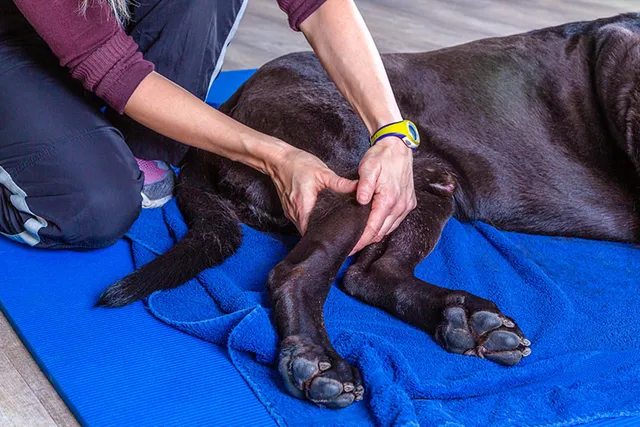
Arthritis in Dogs: Our Vet Explains The Causes, Signs & Treatment


In this article
Arthritis is a condition that commonly affects our dogs. Arthritis is progressive and can cause significant discomfort for our furry family members. If your veterinarian tells you that your dog has arthritis, what does that mean for your dog? Are there treatments available for arthritis in dogs?

What Is Arthritis in Dogs?
Arthritis, also known as degenerative joint disease, can affect just one joint or multiple joints. Its hallmark is the breakdown of joint cartilage, which reduces the shock-absorbing capabilities. Unfortunately, once the cartilage starts to break down, inflammatory cells are released, worsening the problem.
Your dog can experience arthritis in any joint, but the most common joints you'll see involved tend to be:
While we're looking mainly at osteoarthritis, there are other forms of arthritis, including:
What Are the Signs of Arthritis in Dogs?
You might think of arthritis as just achy joints. It is a painful condition that can be easily exacerbated, so you might notice a variety of changes associated with the discomfort.
- Lameness
- Gait changes, such as shifting weight when your dog walks
- Slower speed
- Tiring easily
- Stiffness
- Difficulty standing up
- Legs collapsing
- Decreased activity
- Trouble with stairs or hopping onto couches
- Painful when one or more joints are touched
- Muscle atrophy
- Licking at a joint repetitively
It's essential to recognize that the pain associated with arthritis can alter your dog's behavior. You might notice your furry family member acting more withdrawn. They might be irritable or even aggressive.
Your dog's decreased activity may also lead to weight gain.
If you are concerned about the health and well-being of your pet, we recommend getting in touch with a vet for guidance.
What Are the Causes of Arthritis in Dogs?
Each of your dog's joints contains joint fluid, also known as synovial fluid. There is also cartilage, both of which help cushion the bones from repetitive stress or trauma.
In cases of arthritis, there is less synovial fluid in the joint. The cartilage also starts to wear down and thin out. A vicious cycle develops, where inflammation occurs and triggers more inflammation. Rather than preserving the cartilage, this inflammatory cycle can accelerate cartilage degradation.
Factors That Predispose Your Dog to Arthritis
Several factors are associated with arthritis development, such as:
One of the main risk factors for arthritis formation is your dog's weight. Overweight or obese dogs are more likely to develop arthritis.
At What Age Do Dogs Get Arthritis?
Your dog could develop arthritis at any age. It tends to be more common in older dogs than younger ones, usually over 6 or 7 years of age. Septic arthritis from infections may be a bit more likely in younger dogs than degenerative joint disease, which generally takes time to develop.

How Do I Care for a Dog With Arthritis?
The vital thing to remember about helping a dog with arthritis is that the goal is managing the disease. We can't cure it.
The most effective treatment plan utilizes multimodal therapy. We want to examine the condition from several angles to maximize your dog's comfort and mobility.

Weight Management
It is imperative to get your dog to an ideal body weight. If your pup is heavier than perfect, the extra body weight puts more stress and strain on the joints. In addition, fat cells (or adipocytes) can trigger more inflammation that worsens the conditions in the joint.
Nutrition
What your dog eats is important because we want to get their weight down to an ideal body condition score. Some diets include components to promote joint health, such as glucosamine. Prescription diets like Hill's Metabolic + Mobility combine a weight loss diet with joint health, so your dog gets the best of both worlds.
Medications for Arthritis Management
Your veterinarian will likely prescribe pain medication for your dog's arthritis. The type of medication will depend on your dog's clinical signs and underlying health conditions.
NSAIDs
Non-steroidal anti-inflammatory drugs are the frontline in the battle against arthritis. These medications help decrease inflammation and control pain. Commonly used medications include:
- Carprofen (Rimadyl)
- Grapiprant (Galliprant)
- Meloxicam (Metacam)
NSAIDs cannot be used in combination with steroids and may affect the liver and kidneys with long-term use. Frequent monitoring and veterinary visits are often recommended for long-term use of NSAIDs or steroids.
Other Medications
Your veterinarian might use other medications in place of or in addition to NSAIDs, such as:
Rarely, your vet might use a corticosteroid like prednisone. Due to the risk of side effects like GI bleeds, you should never give a steroid with an NSAID.
Adequan
Adequan is an injection typically administered twice weekly for four weeks. It can be very effective for arthritic dogs and is the only FDA-approved disease-modifying osteoarthritis drug. While it can't rebuild cartilage, it does help reduce inflammation within the joint and protect the present cartilage.
Librela
Librela is the new kid on the block, but it is an effective way to control arthritis pain. It is a monthly injection administered by your veterinarian.

Supplements
A variety of supplemental products are available to help combat arthritis in dogs. However, be wary about using any old product, as these aren't regulated like other medications.
Omega-3 Fatty Acids
Fish oils are a great source of omega-3 fatty acids. These products have anti-inflammatory properties and may reduce the amount of pain medications needed. They can decrease joint pain and swelling and boost synovial fluid production, increasing the joint's mobility.
Glucosamine and Chondroitin
Joint supplements that contain glucosamine are often used to prevent or slow the progression of arthritis. It's important to note that a lot of the support for these types of products is anecdotal rather than based on solid research. Popular brands include:
- Dasuquin
- Cosequin
- Glyco-flex
- Greenies Hip and Joint
- YuMOVE

Surgery
Surgery is mainly used to fix issues contributing to joint disorders. Cruciate tears lead to stifle (knee) instability, and joint incongruity, such as hip or elbow dysplasia, can exacerbate arthritis and discomfort.
Surgery can also be a salvage procedure, such as a femoral head osteotomy, where the head of the femur is removed. Joint arthrodesis, or fusion, is less commonly used but still possible to stabilize the joint.
Complementary Medicine
Rehabilitation therapy is highly effective for many dogs. Check with your veterinarian to see any rehab facilities in your area. Some options include:
- Acupuncture
- Chiropractic care
- Hydrotherapy
- Laser therapies
- Massage
- Shockwave therapy
Joint Therapy
Your vet might suggest certain intra-articular injections to help your dog with arthritis. These treatments are less commonly used in dogs. Some options are:
- Stem cells
- Platelet-rich plasma
- Hyaluronic acid
- Steroids

Things to Do at Home
In addition to working on a treatment plan with your veterinarian, there are a few things you can do to make your dog more comfortable:
- Use soft bedding with support, such as a canine orthopedic bed.
- Utilize runners and carpets to reduce the chance of skidding.
- Consider toe grips to help your dog maintain traction.
- Stairs or a ramp to help your dog get into the car or on furniture like the bed
- Continue to engage with your dog, which may mean modifying your activities, such as slow walks rather than tossing a Frisbee in the backyard.
Preventing Arthritis in Dogs
While many dogs will develop arthritis due to body conformation abnormalities, you can prevent some cases.
- Keep your dog at an ideal weight.
- Feed your dog an appropriate diet, particularly as a puppy, to minimize the chance of growth disturbances.
- Work with your veterinarian to determine the best time to spay or neuter your dog. Large breed dogs should often be over one and fully grown before being altered due to the risk of developmental abnormalities.
- Minimize the chances of injury.

Frequently Asked Questions (FAQ)
Will arthritis affect my dog's lifespan?
Generally, arthritis can be managed to give your dog a good quality of life. However, if discomfort is not managed, it could shorten their life expectancy. The good news is that new medications like Librela give us more tools to help with arthritic pain.
Can I exercise my arthritic dog?
You should still exercise your dog with arthritis but choose low-impact activities. Slow walks are okay for most dogs. Swimming is also a low-impact activity, and if you have a small dog, you can work with them on swimming in a tub rather than needing a pool.
Conclusion
Arthritis is a complicated condition in dogs, typically requiring a multi-pronged approach for management. Your veterinarian can help create a robust treatment plan that could utilize pain medication, supplements, and physical therapy to decrease inflammation, to name a few possibilities.
See Also:
Sources
Featured Image Credit: Annette Shaff, Shutterstock
Expert dog care, straight to your inbox
News, insights, expert advice, and everything dog.

No spam — unsubscribe anytime.
By signing up, you agree to our Terms & Conditions and Privacy & Cookies Policy.
How useful was this post?
Click a star to rate. You can leave written feedback afterwards. (We read all feedback.)
Dr. Samantha Devine DVM (Veterinarian)
Dr. Samantha Devine is a practicing veterinarian who enjoys caring for animals and sharing her knowledge with pet owners. Preventative care, ranging from nutrition to vaccination, is her specialty and passion!
With over 12 years of veterinary experience, Dr. Devine has extensive knowledge to share about small animal medicine, horses, aquatic species, and even zoo animals. She has also been writing for online pet sites for most of that time.