The pads on a dog’s paw play an important role in a dog’s life. These rubbery pads provide protection and act as shock absorbers for the bones and joints when running, as well as traction to keep a dog from slipping.
Dog pads also protect against harsh climates and help a dog navigate rough terrain. Keeping your dog’s paw pads healthy is vital, but sometimes, the pads can become injured under certain circumstances.
Come with us to explore foot pad injuries in dogs. We’ll discuss what can cause injuries and how to recognize and treat them should your dog’s pads need medical treatment.

What Are Foot Pad Injuries?
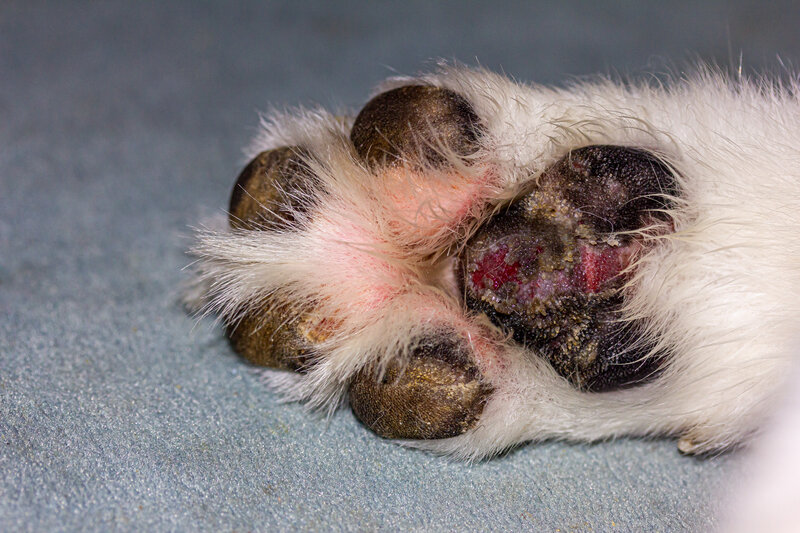
Foot pad injuries in dogs can happen quickly. Your dog may tear the pads from stepping on a sharp object, or they may get burned on hot asphalt.1 It doesn’t take long for a dog’s foot pads to get burned walking on hot pavements, and you should check the pavement before venturing out for a walk with your dog. A good way to test the pavement is by placing your hand against it. If it’s hot on your hand, it will be equally hot on your dog’s foot pads.
When walking your dog, it’s important to ensure your dog is not walking on broken glass or any other sharp objects to avoid cuts on the pads. We’ve mentioned not walking your dog on hot pavements, and you should avoid extreme cold surfaces, too, such as ice, to avoid frostbite.
For those who live in harsh climates and sometimes have no choice but to walk their dogs in extreme conditions, dog boots are available that provide excellent protection against the conditions to prevent burns or cuts. Dogs don’t typically care for things on their paws, but with patience and time, your dog will get acclimated to wearing them. Most have a non-slip sole to keep your dog from sliding, and they are easy to put on, provided your dog doesn’t give you too much trouble.

What Are the Signs of Foot Pad Injuries in Dogs?
It’s vital to know the signs of a foot pad injury to prevent further complications. You certainly should avoid walking your dog and keep him from running around with an injured pad, as the foot pad injury can worsen, which will take a longer time to heal.
Common signs include limping, licking the paws, whimpering when walking, and blood trails left behind. Most times, you won’t know your dog’s pad is injured unless he shows such signs, and if you notice any of these, you should inspect the pads.
Seek veterinary advice if you’re concerned about your pet’s well-being.
Did you know you can speak to a veterinarian without having to travel? Just head over to PangoVet. It's our online service where you can talk to a vet online and get the advice you need for your pet — all at an affordable price!

What Are the Causes of Foot Pad Injuries?
As we’ve mentioned, your dog walking on hot or cold surfaces and walking on broken glass or sharp objects can easily cause foot pad injuries. A sharp object can penetrate the pad, and such injuries are extremely painful for your doggie.
It’s best to walk on flat surfaces with no debris and avoid walking in extreme conditions. In the summertime, walk your dog either in the early morning before the pavement gets too hot or in the evening when things have cooled down.
Walking your dog on grass is an excellent option if it’s already hot, but be careful to avoid sharp objects or anything else that could cut, tear, or penetrate the pads. Tennis courts should be avoided, as these types of pavements get really hot and can quickly burn your dog’s foot pads.
Other causes of foot pad injuries are fungal infections, which will make your dog lick and chew at the pads. In this case, the pads can become itchy, red, and irritated. Yeast infections can occur between the pads, and if you notice a brown discharge, your dog more than likely has an infection, and a trip to the vet is necessary for treatment.
A broken nail can also cause a foot pad injury. It’s important to keep your dog’s nails trimmed to prevent the nail from growing into the pad, which can cause abrasion or irritation. Bug bites and stings can also wreak havoc on your dog’s foot pads. Though something of the sort cannot always be prevented, you can do your part by avoiding ant hills on walks and especially not letting your dog stand on one.

How Do I Care for a Dog With a Foot Pad Injury?
Caring for a footpad injury is essential in preventing infections. Foot pad injuries are also painful for your dog, and you may need to administer first aid as soon as possible before contacting a veterinarian.
The first thing you’ll need to do is inspect the pad in question. It may be where your dog stepped on something sharp, such as a shard of glass or some other object capable of penetrating the pad. Gently pull the object out with tweezers if you can. You can soak the paw in cool water to help loosen any particles that may be in the pad.
Please note that if the object is deeply embedded, leave it and contact your vet for treatment. If the injury is minor and you’re able to remove the object, wash it with soap to prevent infection and apply an ointment to the wound.
If the pad is bleeding, you will want to control it by applying pressure with a clean cloth or towel. If you cannot control the bleeding within 10–15 minutes, contact a vet immediately for treatment. If you can stop the bleeding, apply gauze and a bandage to the wound after it’s cleaned and dressed with ointment. Gauze will help minimize pain when your dog walks on the pad. Take note, however, to not wrap the gauze and bandage too tight; you should be able to slide two fingers in between the paw and the bandage. Change the bandage daily, and if you notice an odor or discharge, contact a vet ASAP.
For minor burns, soak the paw in room-temperature water. If tissue is exposed, you’ll need a trip to the vet for treatment. Our best advice is to contact a vet if you suspect the pads are burned. Chemicals can also burn your dog’s pads. Run the paw under water for several minutes if your dog steps in a chemical substance as soon as possible. You can then wash the paw with mild soap and rinse thoroughly. We recommend using gloves to avoid burning your skin with the chemical.

Frequently Asked Questions (FAQ)
How Long Does an Injured Foot Pad Take to Heal?
The time it takes to heal depends on the type of injury and is difficult to predict. Minor injuries can take anywhere from three days to three weeks.
Avoid activities that can irritate or re-injure the paw pad, and try to keep your dog calm during the healing process. You may have to use an Elizabethan collar (the cone of shame) to make it challenging if your dog constantly licks the wound or tries to tear off the bandage. A veterinarian can advise you on healing time if the injury is severe.
What Are the Names of the Pads on Dogs’ Paws?
The dog pad has five components: the claw, digital pads, metacarpal (located on the front paws) and metatarsal (located on the rear paws), the dewclaw, and carpal pad. All the parts serve a purpose: the claw is used for digging, tractions, and grasping.
The dewclaw is basically not used unless the dog is a herding dog; in that case, the dewclaw is used when a dog achieves a high rate of speed, and it prevents the leg from turning, which helps avoid injury.
The metacarpal and metatarsal pads act much like palms in humans, and the digital pads act like toes and fingers. The carpal pad is the sole pad that lies higher up on the leg before the pads. This pad provides traction when a dog stops abruptly.

Summary
A dog’s foot pads are an important part of its life. They provide traction and act as shock absorbers for the bones and joints when a dog runs. They also help your dog to stop and slow down. Keeping the pads healthy is vital, and an injury will prevent your dog from walking on the injured pad. A pad injury can be painful, and it’s imperative to take action when your dog injures any part of the foot. You may be able to administer first-aid at home if the injury is minor. Still, it’s always a good idea to check with a veterinarian to determine the severity of the issue.
See Also:
- Dr. Buzby’s ToeGrips for Dogs Review: Our Expert’s Opinion
- Dog Paw Pad Yeast Infections: Causes & Care Guide (Vet Answer)
Featured Image Credit: Robert Lessmann, Shutterstock
 What Are Foot Pad Injuries?