In this article
View 2 More +Dog owners often take a myopic view of training, seeing it as an event happening in structured settings where we teach specific behaviors. Training has a start and an end, and anything outside those limits is free time with the dog.
Many owners don’t realize that dogs are still learning even when the session ends. Dogs constantly find associations between actions and outcomes to build an understanding of their world. If we don’t issue guidance at every turn, they can make the wrong associations and develop inappropriate behaviors.
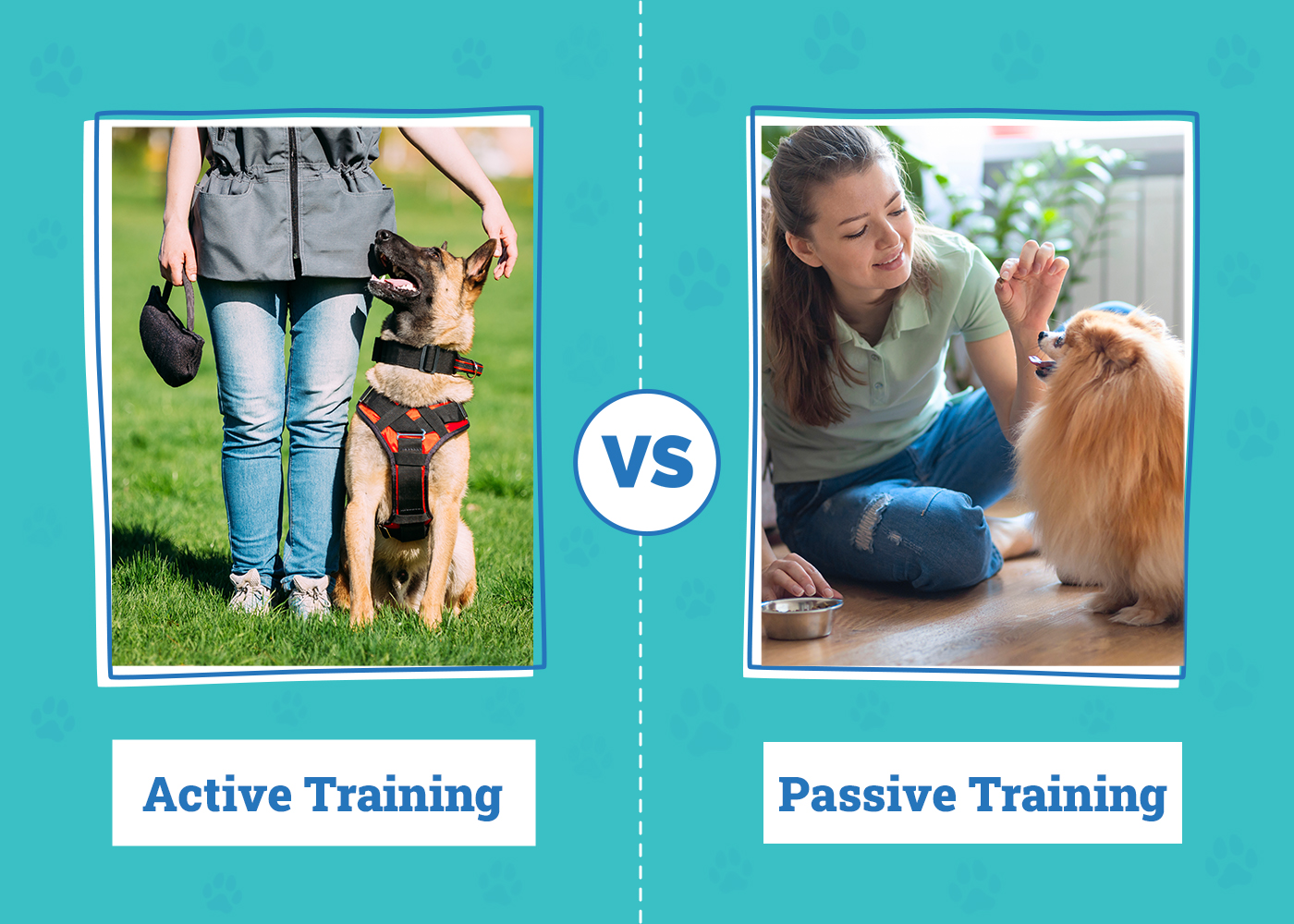
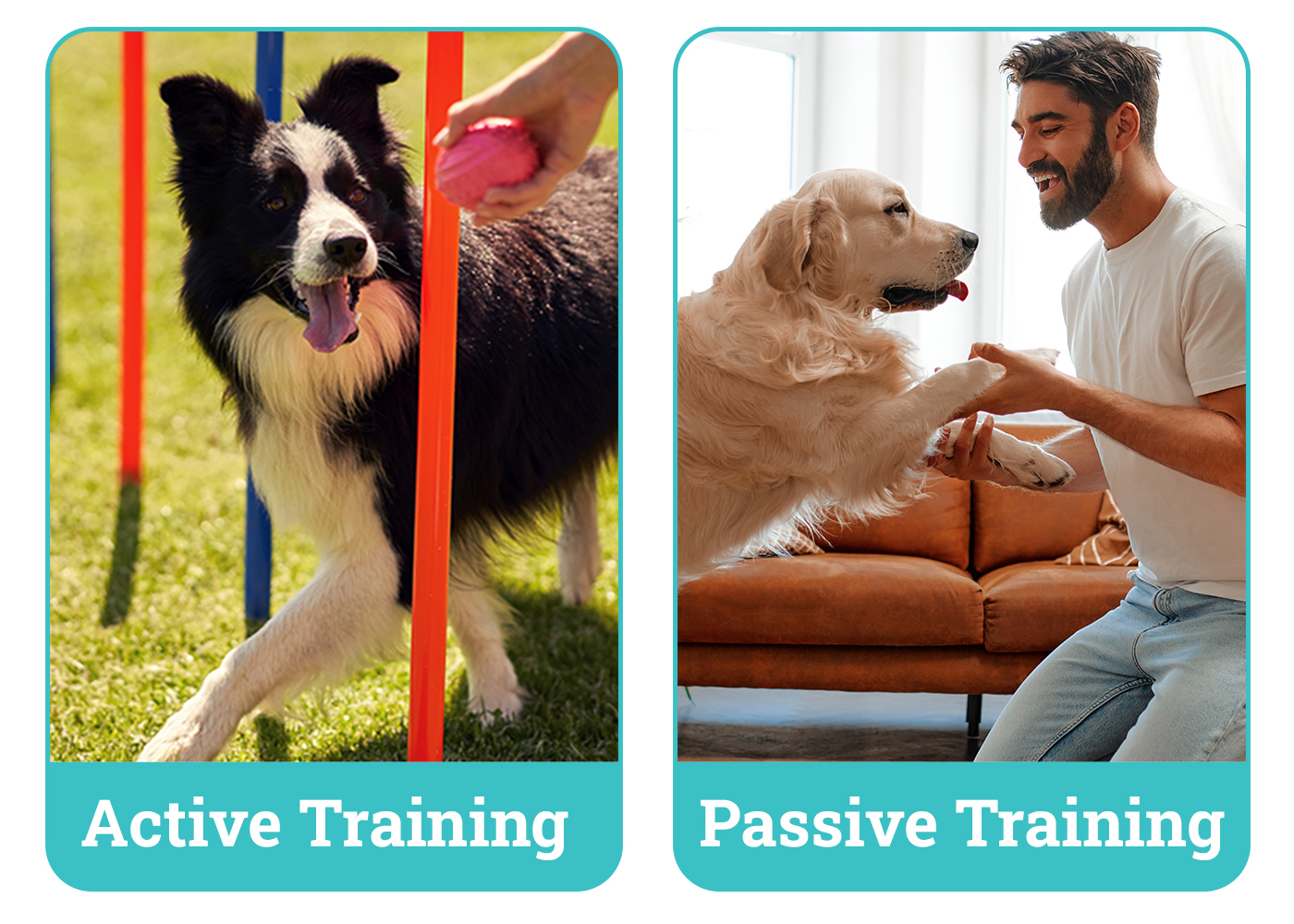
Alongside active training sessions, owners must commit to passive training to give their pets a complete education. Let’s discuss active versus passive dog training and how to use both to ensure a well-behaved, cooperative dog.

At a Glance
- Has a start and end point
- Can involve a professional trainer
- Works on specific desirable behaviors
- Occurs continuously throughout the day
- Minimizes chances to practice bad behavior
- Uses dog’s desires to reinforce habits
Overview of Active Dog Training
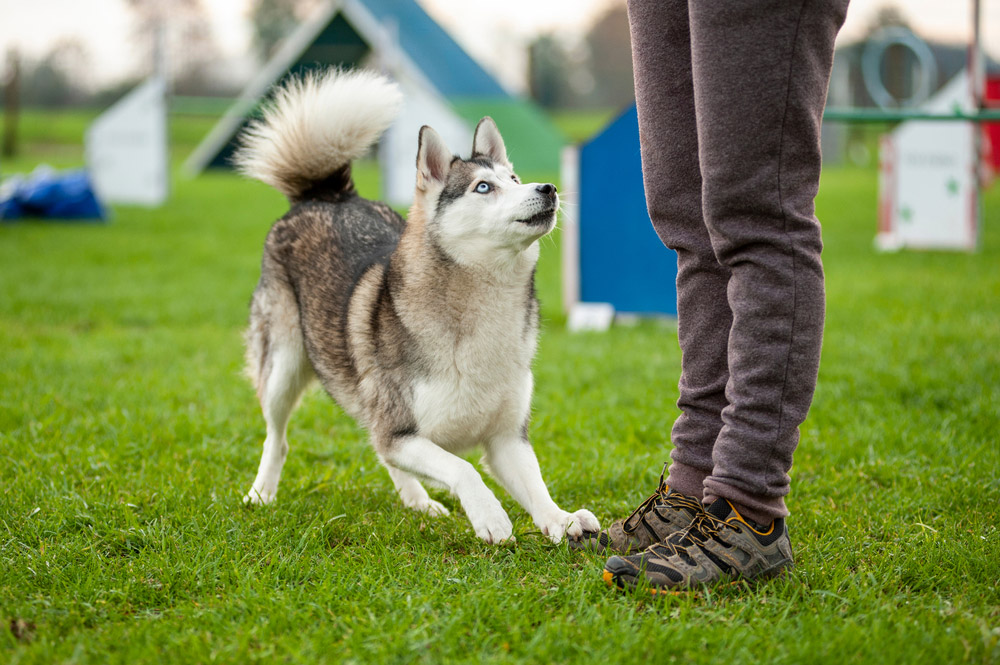
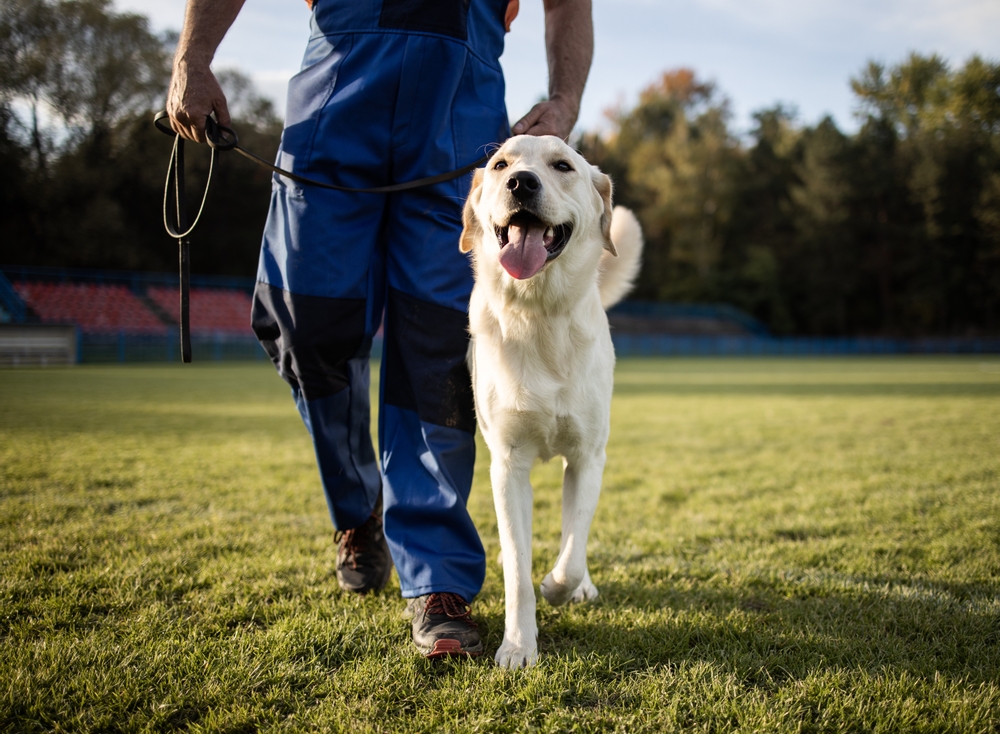
When most owners hear the phrase “dog training,” they think of active dog training. Professionals or owners manage the training regimen, working toward a particular goal in an individualized session.
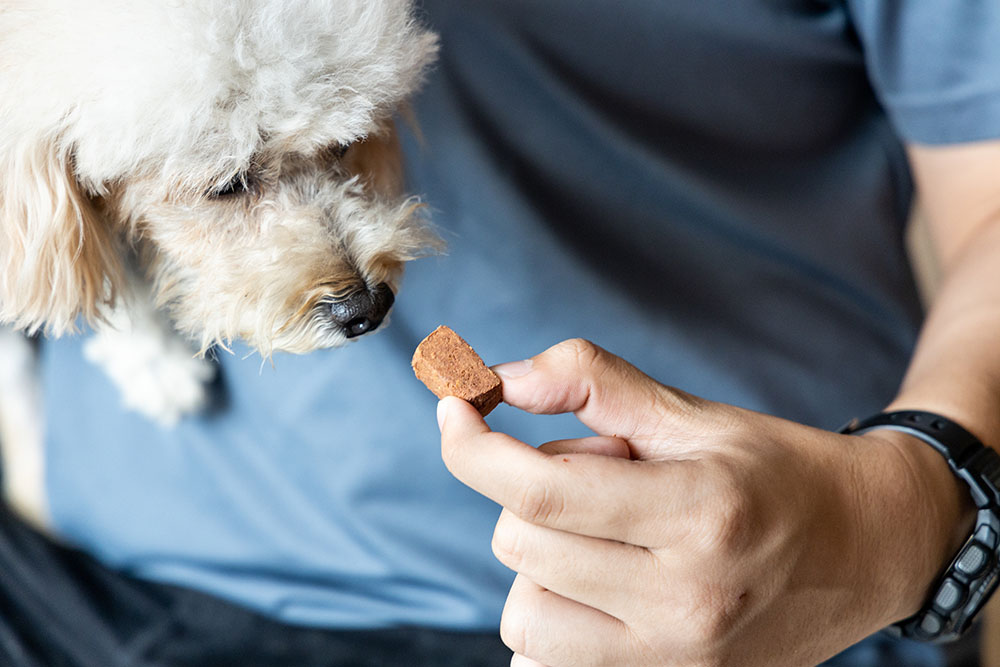
Trainers may work on a particular command, recall, heel work, or any other behavior they choose. They bring their dogs to class to work on a specific area. Treats and training tools come out, and the trainer practices desirable behaviors repeatedly, using markers and rewards to build mental connections quickly.
How Active Training Works
An active training session is usually short to align with the dog’s tolerance. It may last 10–20 minutes daily or can be separated into multiple shorter sessions.
Dogs have a limited attention span. Training sessions can’t be so long that they get bored and take their focus off the trainer. Consistent success is crucial in efficiently instilling positive associations with commands and behaviors. When dogs lose focus and can’t reliably be successful, continuing to attempt the training can become counterproductive.
Active dog training relies on various training principles, such as luring or shaping, to train behaviors. Assorted tools offer reinforcement, punishment, or a combination of both in sessions to help dogs learn what their trainers expect of them.
Generally, trainers control the environment, using increasing distance, distraction, and duration to solidify and generalize particular behaviors.
When to Choose Active Dog Training
Active dog training is crucial for every dog from a young age. While dogs have been by man’s side for tens of thousands of years, their nature still doesn’t mesh with what works best for us. They need training, and active sessions are the best way to quickly and effectively build and dial in desired actions.

Overview of Passive Dog Training
Passive dog training occurs every second you don’t engage in active dog training. Dogs are always learning, and you’re always teaching, whether you realize it or not.
There are two things dogs never stop doing:
- Building associations between stimuli, responses, and outcomes
- Making decisions that yield the most benefit
We see this in active training, for instance, when dogs learn that sitting down when they hear “sit” means they get a treat and praise. That drive for fulfillment or guaranteed survival is ever-present. If a particular action gets them what they want, they’ll continue doing that, even if it’s contrary to what is best for us.
In passive training, we must constantly consider how we reward or punish our dogs if we want to move them toward more appropriate responses.
How Passive Training Works
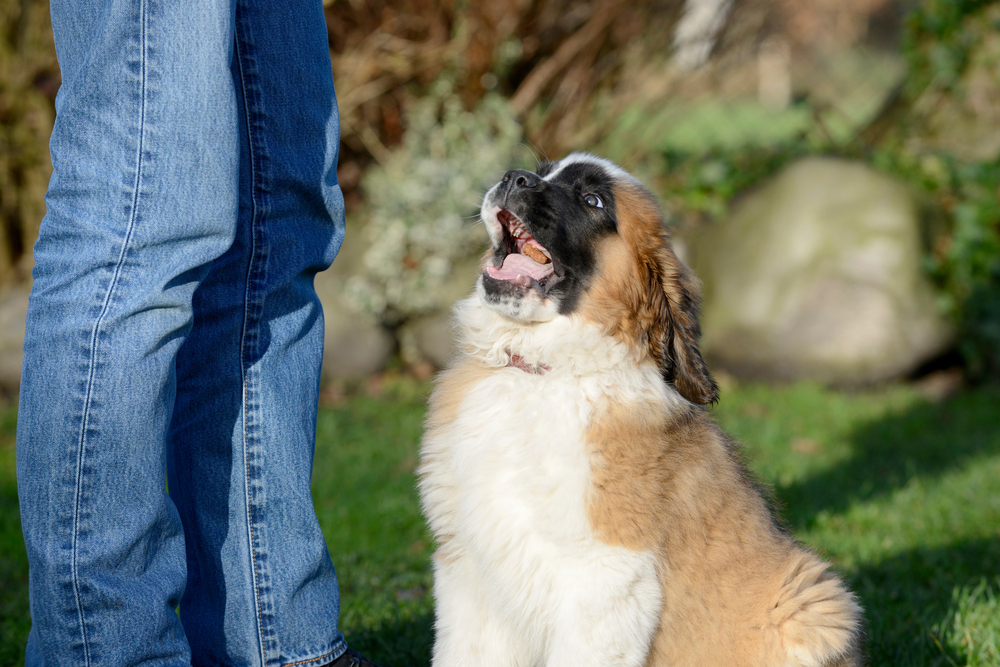
Passive training occurs throughout the day, where you reinforce good habits and prevent the chance to practice or benefit from unwanted behaviors. Treats and praise aren’t the only ways dogs feel rewarded. Attention, engagement with others, retreat from threats, or access to particular places can all reinforce whatever behavior a dog is doing at the moment.
A few common examples might occur when you come home or walk your dog. If you walk in the door, and your dog jumps up on you, are you petting and engaging them? You may not know it, but you’re giving your dog what they want, telling them, “Yes, jumping on me when I come in the door is the best way of getting my attention.”
On a walk, your dog may pull on the leash. If they’re allowed to drag you along, you’re encouraging the idea that pulling is the best way to go where you want. Passive training is all about not giving in, being mindful of what your dog is learning, and incentivizing the proper actions at the right moments. It shows dogs that they must earn what they receive by being well-mannered.
Types of Passive Training
Passive training is generally about behavior management. Some of this occurs when you reward your dog with the things they want at the moment. For example, passive training can teach your dog to only engage with visitors when they put their paws on the ground and calm down.
Another part is creating firm boundaries early and preventing undesirable behaviors from happening. You can make your dog less likely to try them by taking away the chance to realize the satisfaction of performing them.
If your dog likes to chew on furniture or socks, for example, you may have to install baby gates to block access to rooms or be more diligent in keeping your clothes away from your dog. Take away the practice opportunities, and you’ll encourage those habits to go extinct.
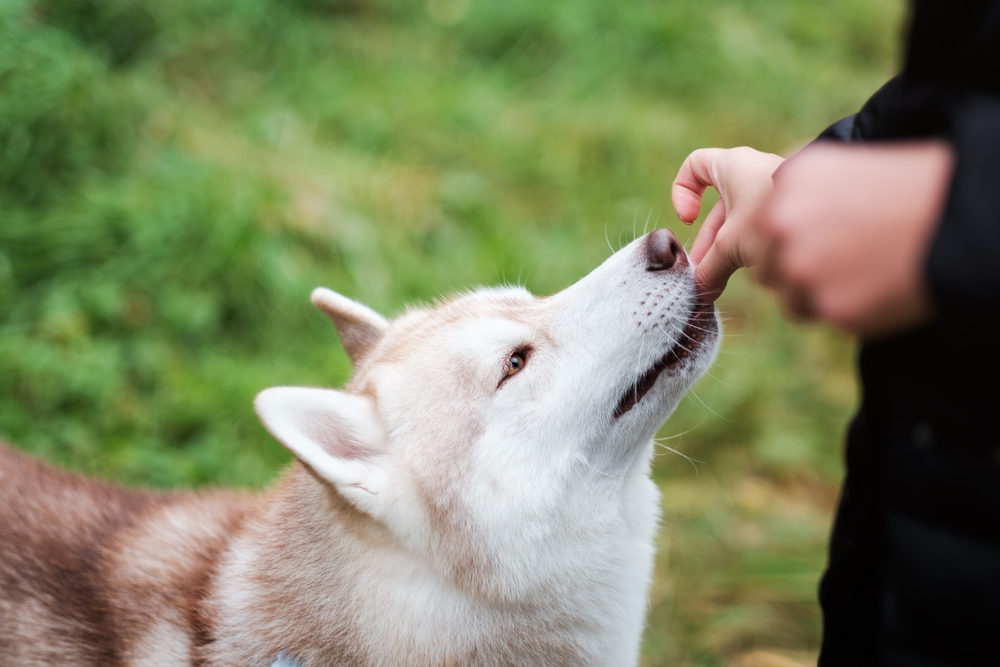
Passive training also involves capturing moments throughout the day, providing more reinforcement opportunities. If you notice your dog being calm when someone comes to the door, praise and a treat can go a long way in promoting that in the future. The small moments when you issue a stern correction or offer praise for desirable behavior add up, giving your dog more assurance in what is and isn’t the best decision.
When to Use Passive Training
The matching law tells us that the likelihood of a behavior to occur depends on how much reinforcement it receives. If the reward is highly desirable and appears consistently following a behavior, that behavior will only be more likely to happen.
For example, imagine you’re driving to work, and the shortest path on the highway has traffic jams in the morning. If there’s only a jam once every few days, you may risk it and take the highway route anyway. Yet, if there’s a traffic jam every day, you’ll be more likely to take the alternative back route.
Our dogs similarly remember moments like these. If they have enough experience with only being able to go outside when they sit and calm down, for instance, they’ll be more likely to offer that behavior in the future. As the ones controlling everything our dogs find rewarding, we are relentlessly pushing their decisions one way or the other.
Passive training refers to how owners constantly promote or work against desired decisions by developing their dogs’ associations between actions and access to what they want. Building awareness of all the points throughout the day where we bear influence can be challenging, but being mindful of the passive training concept will help you find more ways to improve your dog’s behavior.
Conclusion
Although we put more conscious effort into active training, passive training is arguably more critical to a dog’s overall personality. Owners must appreciate and integrate both training types to develop their pet’s character quickly and reliably. When you recognize how much the seemingly minor details matter, the behavior you want to see will become natural in no time.
Featured Image Credit: (L) George Trumpeter, Shutterstock | (R) ElenaYakimova, Shutterstock