CBC Blood Test for Dogs: Our Vet Explains Why It’s Done & the Process


In this article
Blood tests are used in dogs just as they are in people. They are performed to ensure dogs are well enough to undergo anesthesia, to check for causes of disease, and as part of wellness plans to monitor trends in certain parameters.
One of the most commonly performed canine blood tests is the CBC or Complete Blood Count. But what is a CBC, and how do vets use this test? Read on to find out!

What Is a CBC?
The CBC or Complete Blood Count is a test that measures many different parts of the blood, such as red blood cells, white blood cells, platelets, and hemoglobin. It is used to look at overall health, as well as diseases such as anemia, infection, inflammation, platelet disorders, dehydration, leukemia, and more.

How Is a CBC Performed?
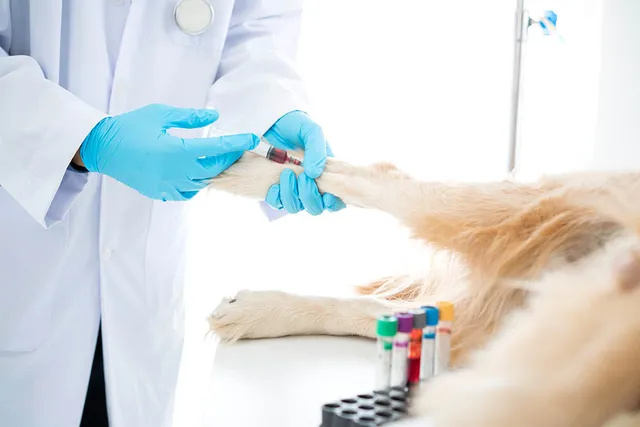
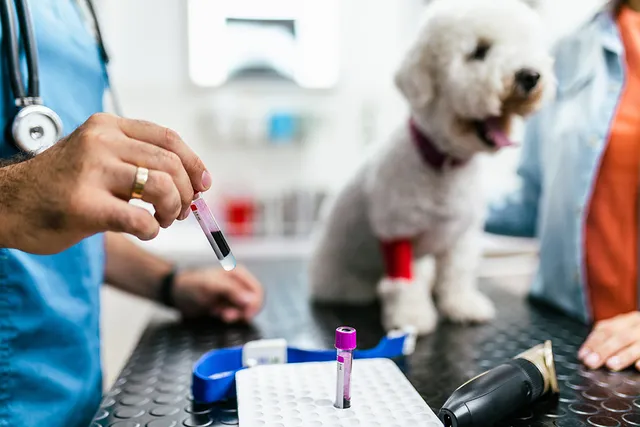
- Usually, one nurse will gently restrain your dog while another nurse (or a vet) collects a sample of blood. A small amount of hair may need to be clipped in order to do this.
- The blood is placed into a tube that prevents clotting.
- The tube is transferred to a machine called an automated blood analyzer, which performs the count and describes cell characteristics.
- In addition, a drop of blood is placed onto a glass microscope slide and spread across it into a single-cell layer. This slide is stained with special dyes, allowing the cells to be visualized under the microscope by the veterinary staff.
What Does a CBC Measure?
Below is a summary of the parameters measured in most CBC tests:
- Hematocrit (HCT): The HCT identifies the percentage of red blood cells in blood, in order to detect hydration or anemia.
- Hemoglobin (Hb): This is the important oxygen-carrying molecule, responsible (in conjunction with red blood cells) for distributing oxygen to the tissues of the body.
- White blood cell count (WBC): The white blood cells are also known as the cells of the immune system, sent out by the body during infection or inflammation. Certain diseases or infections can cause WBC counts to increase or decrease.
- Neutrophils, lymphocytes, and monocytes: These are specific types of white blood cells involved in clearing infections.
- Eosinophils: These are another type of white blood cell that can indicate health conditions due to allergies or parasites.
- Platelet count (PLT): This test measures cells that form blood clots, the body’s first line of defense to stop bleeding.
- Reticulocytes (RETICS): High levels of immature red blood cells can point to regenerative anemia, where the body is actively producing red blood cells in an effort to correct anemia.
More specifically, the CBC will measure the number, size, and appearance of cells in the blood. Vets and pathologists can determine significant information from these factors. For example, large red blood cells are seen with autoimmune anemia, and small red blood cells are seen with iron-deficiency anemia.
Similarly, the white blood cell appearance can tell us whether the body is overwhelmed by infection or handling the crisis appropriately. Sometimes the changes seen are not diagnostic by themselves but provide clues as to further diagnostic tests.

How Long Does It Take to Get CBC Results?
Many vet practices have in-house pathology machines, meaning blood results are available within a few hours of sample collection. Some blood tests will be sent to an external laboratory for analysis; depending on courier times and laboratories, this may take 1–3 days.
When Should Dogs Have a CBC Test?
There are numerous instances in which a CBC test is warranted:
- As a baseline pre-anesthetic test for routine surgeries like de-sexing.
- Routine or annual examinations as part of a wellness plan, enabling early detection of any abnormalities.
- During senior or geriatric checks, to screen for age-related diseases.
- Before starting certain medications, and after certain medications (to assess for response to treatment. This includes chemotherapy.
- If your dog is unwell or demonstrating odd behaviors.
- If your dog has a fever, pale gums, or dehydration when examined by a vet.
- To help assess your dog’s condition during an emergency visit.
Conclusion
The CBC is a useful and readily accessible blood test, commonly performed in both healthy and sick dogs. If you have any questions about the CBC test or your dog’s test results, they should be discussed with your veterinarian. If you would like your dog to have a CBC test, contact your trusted veterinary clinic.
Sources
Featured Image Credit: Studio Peace, Shutterstock
Expert dog care, straight to your inbox
Vet-reviewed advice, training tips, and the best of Dogster. Free, and you can unsubscribe anytime.
By signing up, you agree to our Terms & Conditions and Privacy & Cookies Policy.
Dr. Joe Mallat DVM (Veterinarian)
Joe is a veterinarian from Sydney, Australia. When he's not working, he enjoys cooking, exercising, and exploring the Australian wilderness. He has worked for 2 years at a mixed-species practice on the mid-north coast of New South Wales, treating animals of all sizes. His areas of particular interest include wound management, internal medicine, and oncology. Joe's love for the profession comes not only from helping dogs, but also from helping their parents and working with wonderful teams of people.
Joe completed his Bachelor of Veterinary Biology and Doctor of Veterinary Medicine at the University of Sydney in 2020.
Join the conversation
Ask a question, share your story, or send private feedback.