6 Signs Of Healthy Dog Play & How To Encourage It (Vet Approved)

In this article
It’s always fun to watch dogs play happily together. However, if you don’t know the signs of healthy dog play, it can be scary and may even prompt you to intervene. So, how can you tell if dogs are playing or fighting? And how do you know if the dogs should be separated?
Despite the actions being somewhat similar, there are distinct differences, and learning how to read a dog’s body language is crucial for your dog’s safety and everyone else who may be around at the time.
Join us in learning six signs of healthy dog play and how to encourage it.

The 6 Signs of Healthy Dog Play
1. The Play Bow
A play bow will look like the dog is leaning down on their elbows. The dog’s front end is leaned down, and the back end is in the air. Sometimes, the dog trying to entice play will stomp or slap the front legs repeatedly until they get a reaction out of the other. The chest will be low to the ground, and the dog may let out a faint bark.
2. An Open-Mouthed Grin

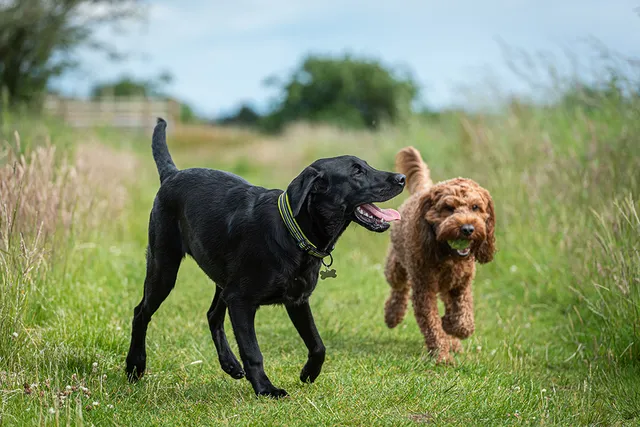
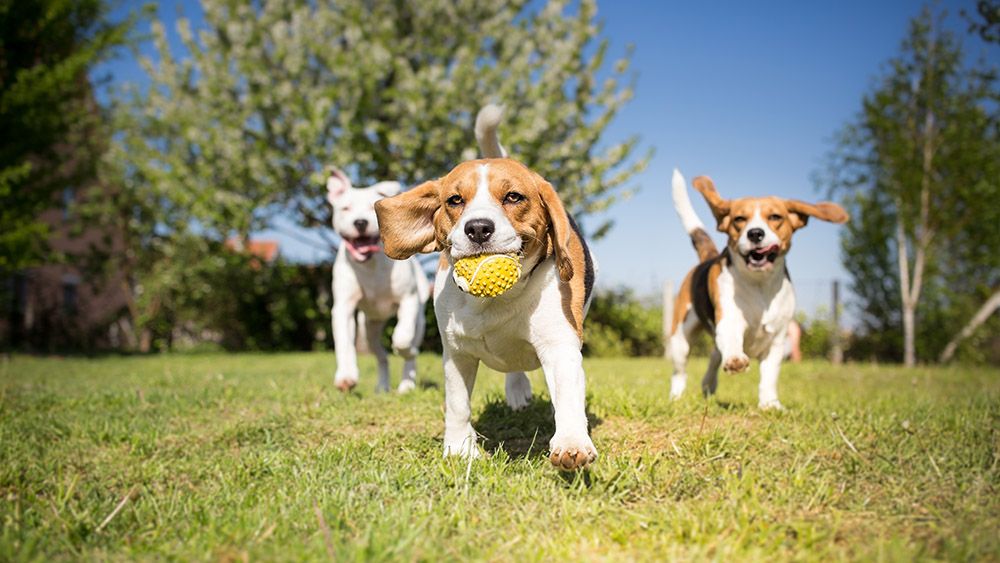
A dog trying to play with another will have a silly, happy, open-mouthed grin. The ears, eyes, and face will be relaxed, and the tongue will hang out. In short, the dog will look as though they are actually smiling.
3. Bouncy Movements
A dog wanting to play will have a bounce or wiggle in their step. The bouncy movement may be exaggerated to encourage the other dog to play-chase, and if the chase isn’t one-sided, that means the dogs are playing and having an excellent time.
4. Play-Growling

Anytime you hear a dog growl, it causes you to stop and observe what’s happening that is making the dog growl in the first place. Dogs playing may vocalize a low, soft play growl, but if you hear any growl, it’s important to observe the dog’s entire body language so that you can decipher if the growl is vicious or simply a play growl. Look for jolly movements, such as a play bow or wagging tail that moves freely. Seeing the dog wiggling their hips is a definite sign of play.
5. Sneezing
Believe it or not, dogs engaged in play will sneeze to communicate that everything going on is in good fun and that there's no need for alarm. Play sneezing is normal, and dogs will do this with other dogs and humans to show they are having a good time.
6. Showing Bellies

A dog who rolls over and exposes their belly voluntarily makes themself vulnerable by falling down, allowing the other dog to catch them in a chase. Two dogs having fun may take turns showing their bellies, adding to the fun. A dog who is rolled over on their back feels comfortable with the situation, as it’s also a display of trust.

What Does Aggressive Behavior Look Like?

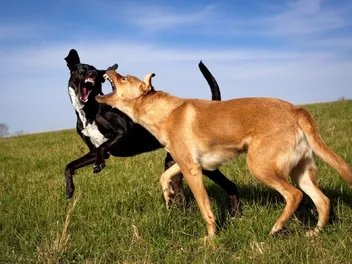
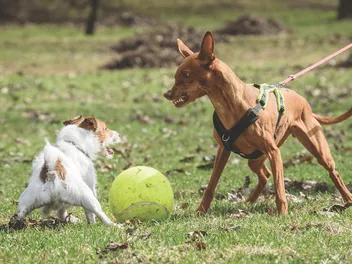
Now that we know what friendly dog play should look like, how do you know what aggressive behavior looks like? To better differentiate between play and fighting, take a look at the signs below that can indicate aggressive behavior.
- Raised hackles (the hair along the back)
- A stiff tail in the high position
- Stiff or rigid in the tail and torso
- Snarling or curled lip
- Showing teeth and snapping
- Lunging at the other dog
- Consistently chasing another dog who has no interest in play/dog is trying to get away
- Consistently placing a paw or the neck over the other dog
- Biting that goes beyond nipping
- Low warning growl
- Pinned ears/flat against the head
- Slow or rapidly “vibrating” tail wagging in the vertical position
If you're concerned about your dog's behavior, we suggest you speak to a vet to identify the root cause of their distress and take steps to prevent it from recurring.
What Does Scared Behavior Look Like?
If your dog is uncomfortable with another dog's behavior, even if it appears to be in play, they may react aggressively out of fear. Even if they don’t react badly, they are making their feelings about the situation clear and you should take steps to remove them from the situation if they show any of the signs of fear listed below.
- Tail between the legs
- Shaking
- “Whale eye” where the eyes are wide and looking from the side
- Low body posture
- Yawning
- Lip licking
- Furrowed brow
- Moving slowly, pacing or freezing
- Not interested in treats or water
How to Encourage Healthy Dog Play

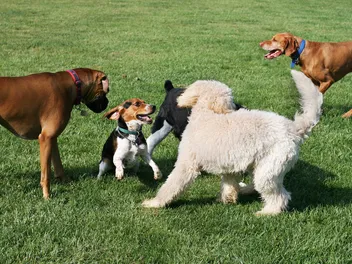
The first form of action should be allowing the dogs to meet each other, preferably in a neutral setting. This will allow the dogs to sniff and smell each other, which is perfectly normal because dogs can tell a lot from sniffing another dog, such as if the dog is ill, happy, male or female, or aggressive.
A word of caution: Not all dogs are suited for dog parks. A responsible owner should know if taking their dog to a dog park to interact with other canine pals is safe. However, you may run into irresponsible owners who take their dogs to dog parks despite their aggressive behaviors. Due to this potential problem, it's vital to know the difference between play and aggression. If a fight breaks out, you must stop it in a safe manner (more on this later).
Don’t allow other dogs to gain up on one dog. The experience can be frightening and traumatic for the dog being sized up, so to speak, and the dog may never overcome the fear.
It’s also important to keep favorite toys or foods out of the equation during play. Some dogs may be possessive of such items, which can lead to a fight.
How to Break Up a Dog Fight Safely
Witnessing a dog fight can be a traumatic experience for a human, and your first instinct may be to intervene and break up the dogs before one of them gets seriously injured. However, you can easily get injured if you don't know how to break up the fight safely. Here are some valuable tips to practice should you and your dog find yourselves in this situation.
- Stay calm.
- Implement a distraction by shouting, hosing them with water, or making loud noises (whistle or clap your hands). Using an air horn can also be effective if you have one handy.
- Never wedge yourself between two fighting dogs. Use a long object, like a broom or piece of plywood, to pry them apart.
- As a last resort, pull the dogs apart using the wheelbarrow method. One person gets behind one dog, and you get behind the other. Grab the hind legs and walk backward until the dogs are separated. Note that this is a last resort, and there’s no guarantee you won’t get bit.
- Observe your dog for injuries. If you don’t see injuries but the fight looks severe, it’s best to have your vet examine your dog to ensure they’re ok.

Final Thoughts
Learning a dog’s body language will go a long way in helping you differentiate between healthy play and aggressive play, which can easily lead to a fight. Of course, dogs cannot speak, so they use body language to communicate with other dogs and humans. Dog parks are fun, but know that you’re taking a risk if other dogs are there who have not been properly socialized.
Nonetheless, always keep a watchful eye on your dog and observe the behavior of all dogs in the area, whether at a dog park or some other gathering where other dogs are present.
See also: Why Does My Dog Bow to Me?
Sources
https://www.akc.org/expert-advice/training/are-they-playing-or-fighting/
https://vcahospitals.com/know-your-pet/interpreting-tail-wags-in-dogs
https://www.akc.org/expert-advice/advice/canine-communication-deciphering-different-dog-sounds/
https://www.akc.org/expert-advice/health/why-do-dogs-sneeze/
https://veterinarypartner.vin.com/default.aspx?pid=19239&id=8802960
https://www.preventivevet.com/dogs/how-to-break-up-a-dog-fight
Featured Image Credit: Lunja, Shutterstock
Expert dog care, straight to your inbox
Vet-reviewed advice, training tips, and the best of Dogster. Free, and you can unsubscribe anytime.
By signing up, you agree to our Terms & Conditions and Privacy & Cookies Policy.
Rachel Giordano is a writer and musician living in Pensacola, Florida, with her partner and their two dogs, Aero, a Border Collie/Sheltie mix and Sophie, a Boston Terrier. Rachel holds a Bachelor of Arts degree in communication and loves writing about animals of all types. When she’s not writing about pets, she loves to write suspense/thriller novels. A musician by night and writer by day, she enjoys educating the public about the needs and requirements of animals, big and small.
Join the conversation
Ask a question, share your story, or send private feedback.