5 Modern Dog Training Methods: Vet-Reviewed Facts & FAQ


In this article
For professional dog trainers, lifelong learning comes with the territory. Training techniques constantly evolve as science changes, and we learn more about what makes dogs tick. Old theories get laid to rest while new perspectives are put to the test as we strive for better relationships with our pets and their enhanced quality of life.
Is your training approach up to date? Discover how today’s experts use these modern dog training methods to improve life for dogs, owners, and society.

The 5 Modern Dog Training Methods
1. Positive Reinforcement

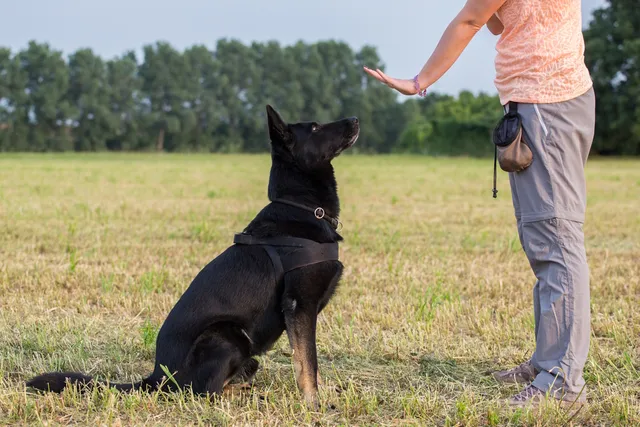
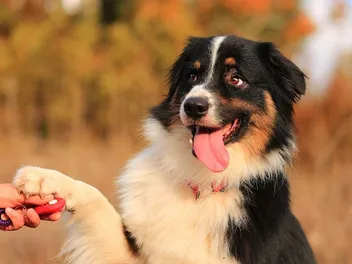
Positive reinforcement is the backbone of most modern dog training methods. In this reward-based approach, trainers motivate dogs to make better decisions by rewarding them with a treat, toy, or praise when they perform a desirable task. The dog associates the action with a positive outcome, and they are more likely to repeat that action in the future.
The training style contrasts the coercive or dominance-centered (Alpha dog) methods. Modern trainers instead focus on guiding dogs to favorable outcomes while stopping them from practicing unwanted behaviors.
Is Positive Reinforcement Better Than Punishment-Based Training?
The new training approach follows recent research promoting positive reinforcement. From the animal’s welfare to the effectiveness of the training, this method benefits nearly every aspect of a dog’s learning and social relationships.
Science has shown positive reinforcement is often more effective than aversive tools in developing behaviors. In a 2020 study, dogs getting rewards responded faster to “come” and “sit” commands in a short training time. A 2004 survey of dog owners further found reward-based and non-aversive techniques were as effective as punishment, if not more so, in various training tasks. It also showed a correlation between punishment and problematic behaviors.
Other studies also suggest that punishment-based training can cause stress-related problems. Researchers have found aversive methods can increase pessimism and anxious states in dogs. Meanwhile, a 2008 survey of dog owners showed positive punishment related to undesirable behaviors, such as attention-seeking and aggression.
Positive reinforcement boosts a dog’s confidence and motivation to try new tasks. At the same time, it ensures a stronger bond and trust between dogs and owners.
2. Do-As-I-Do Method

The Do-As-I-Do (DAID) dog training method is a novel yet simple approach based on a dog’s observation skills. Dogs are apt social learners capable of imitating others. Modern dog trainers use this talent to train behaviors quickly. They model an action and ask their dog to mimic it by issuing a “do it” command.
The technique can enhance memory and generalization of behaviors and cues. A 2015 study comparing Do-As-I-Do with shaping/clicker training showed it helped with training object-related actions. When using an object (e.g., opening a door), the DAID method results in faster responses and more consistency in following the command.
DAID training is fun for dogs and easy for trainers. It’s a game of “Simon Says” adapted for dogs. The positive reinforcement-based approach is kid-friendly, providing another opportunity to promote family bonds and teach unique dog tricks.
3. Clicker Training

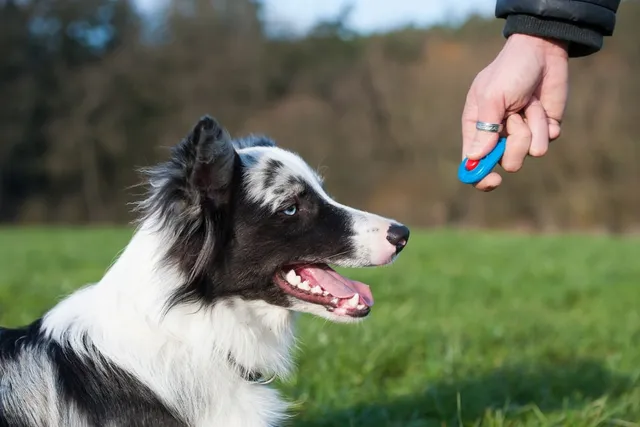
Gary Wilkes and Karen Pryor popularized clicker training during the 1990s. As an operant conditioning method, the technique uses rewards to reinforce behaviors. A positive association is first created between the sound of the clicker and receiving a reward. A clicker can then be used to mark desired behaviors, reducing the time interval between behavior and reward. The click itself then becomes rewarding, but must always be followed by a treat to remain effective.
Although studies haven’t shown significant benefits of clicker training over other secondary reinforcers, many swear by the method. There are a few logical benefits. Clickers are convenient to use and easy to time.
For novices using positive reinforcement, the click is more consistent than verbal markers like “yes” or “good.” The familiar sound can facilitate the dog’s understanding. Dogs benefit from its routine use, helping them build confidence and motivation to please their owners.
4. Relationship-Based Dog Training

Relationship-based dog training focuses on the dog-owner dynamic. In this approach, a trusting, mutually respectful relationship lays the groundwork for more effective training.
A relationship-based technique isn’t mutually exclusive to other methods. It overlaps heavily with positive reinforcement. As a general philosophy, relationship-based methods create an ethical framework to guide training choices.
Some of the essential principles include:
Relationship-based techniques demand conscientiousness. Many owners resort to harsh punishment when their pets don’t listen. Doing so adds stress, creates confusion, and damages their bond.
Relationship training examines why dogs act a certain way and how you can push them toward desirable behavior with rewards. Owners can get results while maintaining a positive attitude and secure attachment that benefits everyone in the household.
5. Negative Punishment

Despite the name, negative punishment is a humane and non-aversive training technique. In this case “negative” refers to taking something away and “punishment” refers to making a behavior less likely to occur. So in negative punishment, we take away something of value in response to the bad behavior we don’t want occurring.
For example, if you don’t want your dog to jump on you and your guests, the consequence of that action should be denying the motivation for that behavior. Most likely, your dog’s behavior is attention seeking so by putting your dog in time out or ignoring their behavior, you are using negative punishment. Your dog is unharmed but understands that the poor behavior will not get them what they want. Combine this with rewards for doing the right thing, and your dog will quickly learn the appropriate way to behave.
Which Dog Training Methods Are Falling Out of Popularity?
Today’s focus on building bonds and applying positivity doesn’t leave much room for certain traditional approaches.
Alpha Dog Training
Dominance approaches aren’t widely accepted nowadays. Most alpha dog theories centering on control and pack hierarchies were based on bad science debunked in recent years.
We now know that dogs don’t vie to be the leader through aggression and disobedience. As a result, harsh and intimidating training techniques like yelling, scruff shakes, or dog rolls aimed at submission instead foster fear and distrust.
Aversive Training
Operant conditioning styles of negative reinforcement and positive punishment are also losing advocates. While many still use aversive methods, more trainers are migrating to relationship-based methods that reward dogs and their handlers.
We see this shift even in areas that rely heavily on aversive techniques. Now, even experts in arenas like hunting and police dog training are making positive reinforcement the foundation of their processes.
Although they can get fast results, many are seeing that coercive methods can worsen aggression and harm dog-owner relationships. Positive reinforcement provides room for error and more user-friendliness. Whether you’re teaching a new action or working on “bad” behavior, identifying motivations to develop a positive training routine lends to a more productive experience.

Conclusion
Modern dog trainers are using science-based, force-free tactics as their primary approach. There’s a new appreciation for the power of positivity, allowing us to abandon misconceptions, assumptions, and rules that used to define the dog training world. Patience and reward are the new standards, giving owners and their dogs a less stressful path toward more fulfilling relationships.
See Also:
Sources
Featured Image Credit: mezzotint, Shutterstock
Expert dog care, straight to your inbox
News, insights, expert advice, and everything dog.

No spam — unsubscribe anytime.
By signing up, you agree to our Terms & Conditions and Privacy & Cookies Policy.
How useful was this post?
Click a star to rate. You can leave written feedback afterwards. (We read all feedback.)
Nicole has loved animals of all sizes her whole life so it's no wonder she has dedicated her career to helping them through what she loves best: learning, writing, and sharing knowledge with others. She’s the proud mom of two dogs, a cat, and a human. With a degree in Education and 15+ years of writing experience, Nicole wants to help pet parents and pets around the planet to live happy, safe, and healthy lives.