Are Grapes Toxic or Poisonous to Dogs? Vet-Reviewed Health Facts & FAQ



In this article
Grapes are one of the most popular fruits in the world. Grapes appear in a variety of places. People enjoy whole grapes, grape juice, wine, raisins, trail mix, and more. However, you may have heard that dogs shouldn’t eat grapes and are wondering “are grapes poisonous to dogs?” And why are grapes poisonous to dogs?
Unfortunately, grapes are poisonous and toxic to dogs, and they need to be avoided in all forms. Grapes are particularly dangerous for dogs, and they can be extremely potent. Here is everything you need to know about grape toxicity in dogs, including what grapes are dangerous, what grape products need to be avoided, signs of grape toxicity, and what to do if your dog accidentally ingests a grape.

Are Grapes Toxic to Dogs?
Yes. Grapes are toxic to dogs. Grapes contain dangerous natural compounds that can damage a dog’s kidneys. There is no known “safe” dose of grapes as there appears to be some variation between responses to grape ingestion 1. Ingesting even a single grape or raisin can be harmful for dogs of all sizes. On the other hand, a dog can ingest multiple grapes and be completely fine. At this stage, all grape ingestion is considered risky.

Why Are Grapes Toxic to Dogs?
The culprit for grape toxicity in dogs is thought to be tartaric acid 2. Tartaric acid can cause kidney damage, leading to vomiting, diarrhea, excessive thirst, and kidney failure/ death in some cases. Kidney failure is the most concerning result of ingesting tartaric acid, and it is the thing that makes grapes so dangerous.
Another thing that grapes have is potassium bitartrate. Potassium bitartrate could also be involved in the toxicity.
What Kind of Grapes Are Toxic?
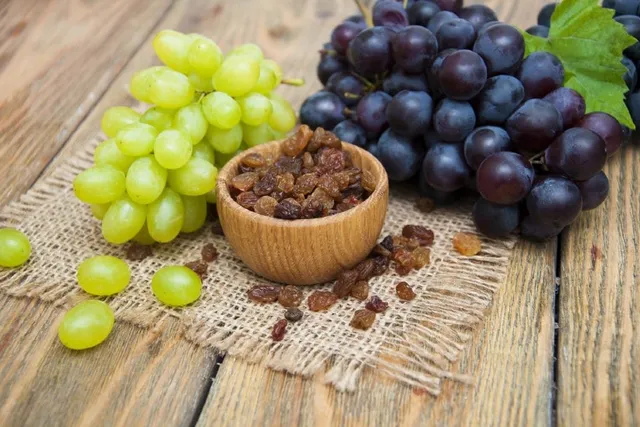
All kinds of grapes are potentially toxic to dogs. This includes all fruit of the genus Vitis, including Zante currants. It does not matter what species or color of grape, so all grapes should be avoided in equal measure. Green grapes, purple grapes, black grapes, seeded grapes, and seedless grapes are all dangerous for dogs.
Dried grapes (raisins and sultanas) are toxic to dogs, while true currants are not toxic to dogs, which confuses some people.


Signs of Grape Toxicity
If you don’t know if your dog has eaten a grape or not, there are some signs you can look out for. These signs are always concerning and can alert you to the fact that your dog has ingested something potentially harmful.
The signs of grape toxicity are:
Vomiting and diarrhea are two of the most common signs, and they will begin within 6 to 12 hours of ingestion. Most dogs will vomit or develop diarrhea after eating a grape.
What Is the Lethal Dose of Grapes for Dogs?
The scary thing about grapes is that there is no consistent lethal dose. Unlike something like chocolate, which has a very consistent toxicity curve, grapes act seemingly at random. A small dog might be able to eat a handful of grapes and recover after a minor bout of sickness, while a large dog might eat one raisin and die of kidney failure.
There is no rhyme or reason as to why this is. Theories range from genetic markers that dictate a dog’s individual kidney performance to concentrations of toxins within individual grapes. Grapes are known for having variable concentrations of things like tartaric acid, meaning one grape could be highly concentrated while another might not be.
The lack of a lethal dose for grapes and the lack of consistency for toxicity is why grapes are so dangerous. A single grape or raisin can be potentially harmful to any dog. Normally, larger dogs have higher tolerances for toxins than smaller dogs, but that is not the case with grapes. All grapes need to be treated as dangerous regardless of the size of the dog and the amount consumed.

Are Raisins Poisonous to Dogs?
Yes. Raisins are just as poisonous (and toxic) to dogs as grapes. Raisins are simply dried grapes, and their shriveled and diminished size does nothing to remove the dangers that grapes pose. Raisins should be treated just as carefully as grapes, as they are just as dangerous as grapes.
Is Grape Juice Toxic to Dogs?
Yes. Grape juice is also toxic to dogs. In some fruits, the skin or the pit is poisonous, which makes juice safer. That is not the case for grapes. Grape juice is just as dangerous as a whole grape. If you spill grape juice, keep your dog away from it and make sure that they do not lick up any amount of the juice.

What to Do If Your Dog Eats a Grape or Grape Product?
If you see or suspect that your dog has eaten a grape, raisin, grape juice, etc., you should call a poison control hotline or veterinarian immediately. They will give you direct instructions at a moment’s notice to help improve your dog’s prognosis. After you call the hotline, you should plan on bringing your dog to the veterinarian or an emergency veterinarian for further treatment.
- Pet Poison Helpline (855)-764-7661
- ASPCA Animal Poison Control (888) 426-4435
Be aware that, unlike human hotlines, pet poison control lines often require a fee upon completion of the advice. This fee varies, but it can range from $50 to $100. Be aware of the potential cost before calling, but if your dog eats a grape, you will need immediate information to better help your dog.
Conclusion
Grapes are highly dangerous to dogs, and they need to be avoided in all forms. A single grape can kill a dog, so they need to be handled with particular care. If you have a dog, it is recommended to keep all grape products, including grapes, raisins, and grape juice, put away where your dog can’t access them or leave them out of your home completely. Not all dogs will die after eating a grape, but all dogs have a risk of problems after eating a single grape. For that reason, all dogs need to be kept away from all grapes, no matter what.
Sources
Featured Image Credit: Pexels, Pixabay
Expert dog care, straight to your inbox
News, insights, expert advice, and everything dog.

No spam — unsubscribe anytime.
By signing up, you agree to our Terms & Conditions and Privacy & Cookies Policy.
How useful was this post?
Click a star to rate. You can leave written feedback afterwards. (We read all feedback.)