Dog Platform Training: Interesting Facts & Vet-Verified Tips


In this article
Dog owners are constantly adapting to new understandings of dog behavior and creating new tools to use to their advantage. One of these tools is dog platform training, a type of training where you train your dog with a certain elevated platform or dedicated mat. It’s often used for obedience, hunting, agility, and sometimes show dogs, but how exactly does it work? Can it be done at home? Let’s discuss everything you’ll ever need to know about dog platform training down below.

What Is Dog Platform Training and How Does It Work?
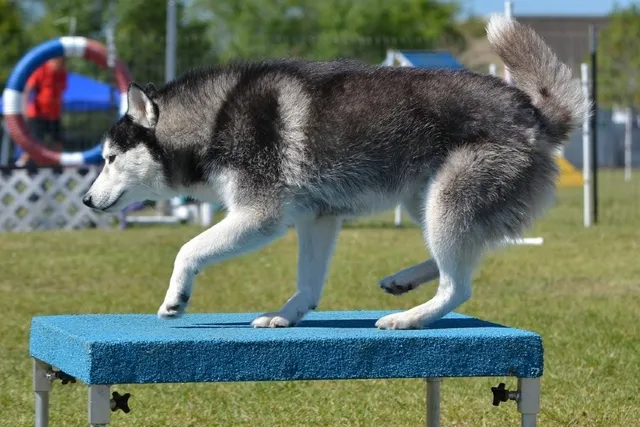
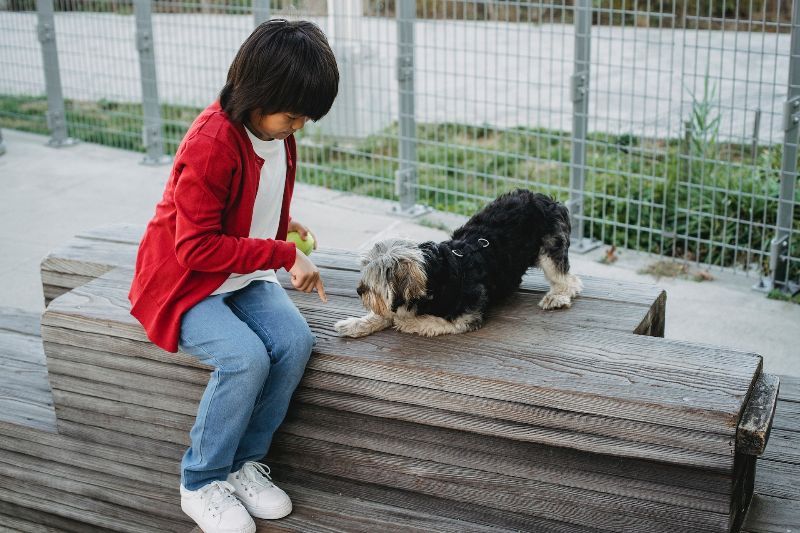
Platform training is a specialized type of training where you teach your dog to stay still on an elevated platform, placemat, or bed while waiting for commands. Also called place training, elevated platforms are preferred because they help your dog stay still. Training first involves rewarding your dog with treats and praise for getting onto the platform and staying on it. Lower platforms are preferred at first while your dog acclimates, and then you slowly increase the height over time.
At its core, platform training helps your dog know what’s expected of them during training and helps them enter a calmer, more trainable mindset. This is hugely beneficial for some hyperactive dogs that require focused guidance to “get it.” It’s also useful in weeding out undesirable problem behaviors like barking, chewing, or digging.
The elevated edge of the platform keeps your dog in place long enough for you to engage them with training, which starts with basic obedience like “sit” and “stay.” Once those foundations are laid, platform training can be used to teach more advanced techniques, like agility or directional commands.

What Are the Different Types of Dog Platform Training?
Platform training for dogs can be used in many different contexts, depending on what you’re trying to achieve. It can be used for basic obedience and to build focus, to modify bad behavior, to improve impulse control, or to teach advanced commands. Let’s review each in more detail below so you can determine which is most useful for your dog.
Obedience Training & Focus Building
Platform training is most used for teaching obedience and building a dog’s attention span in a controlled way. The elevated platform helps them stay in one place, while regular training may let your dog walk or slink away from the session. Your dog will learn much-needed patience with platform training.
The biggest initial hurdle is just keeping your dog on the platform, but after that, you’ll have little trouble teaching nearly any type of command you’d like. The “sit,” “stay,” and “place” commands to go to the platform are most likely the first commands you’ll teach your dog. Once your dog masters commands on the platform, they can gradually be recontextualized to other settings. Teaching your dog to calmly stay in one place outdoors rather than running around excitedly and barking at squirrels may still take some work. Commands learned on the platform can be applied to other scenarios and environments, but some dogs may need additional training and reinforcement outdoors due to higher distraction levels.

Behavior Modification & Conditioning
Dog platform training also helps reduce unwanted behaviors by giving your dog a safe space that they associate with calmness and security. Behaviors like jumping on guests can be redirected to a safe bed or mat, where they should feel more at ease. Conditioning is crucial here too. For instance, dogs that develop fears of ordinary objects can be desensitized with platforms and positive reinforcement techniques. Slowly but surely, you can reverse fear responses and even turn them into positive associations.
Impulse Control
Dogs with poor impulse control, such as overeaters and dogs with strong prey drives, can be mellowed with selective platform training. This process starts with the “wait” command. First, you tell your dog to wait and slowly move away from their platform.
Start with a couple of feet, and heavily reward your dog with treats and praise for a calm response. If they squirm or try to follow, ignore them, pause or start all over until you get the very slightest positive response. From there, you can increase how far you go and integrate a release command like “okay” or “come.”
If you require extra help in teaching your dog impulse control or have any questions, talk to one of our trained vets online.
Advanced Command Training
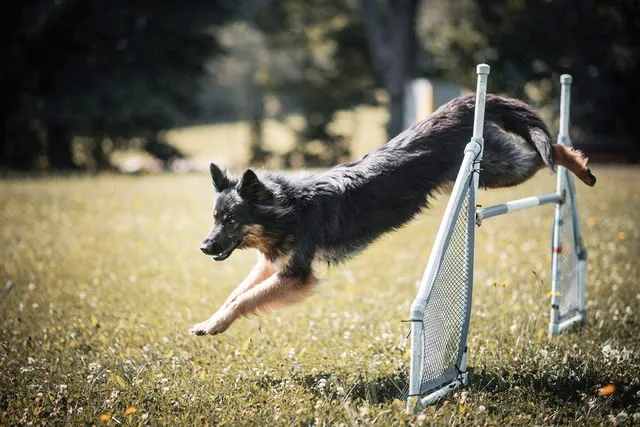
Dogs learning agility or hunting can easily graduate from basic obedience to their advanced disciplines using their training platform. “Come,” “go,” and “come back” are the most common commands you can use that are applicable to many situations. For example, agility trainers use ramps with platforms as targets.
From there, you can use the platform as a start/end point to teach directional cues such as “gee” for right turns and “haw” for left turns. More advanced tricks, like jumps and spins, are also a possibility.

Where Is It Used?
As you can see above, platform training is helpful in a lot of different situations. Whether you need to modify bad behavior, calm down a restless pup, or just teach basic commands, a platform can be of use to you. Professional trainers use them a lot to provide structure to training sessions, and many experienced trainers can help you use platforms to great success yourself at home.
The 3 Advantages of Dog Platform Training
Dog platform training has a number of impressive upsides that make them worth using for a lot of people. While often used for specific purposes, the results are all aimed at helping shape a more well-rounded and capable dog. Let’s discuss some of the specific pros you can gain from platform training your dog below.
1. Teaches Obedience & Boundaries
By teaching your dog to sit still and look at you for instruction, you’re laying the groundwork for obedience and setting firm boundaries. Rewards incentivize your dog to sit still and wait for a command, and we recommend buying a big bag of treats when platform training. Once they catch on, you can apply the same concept of boundaries to other circumstances. For example, use the “stay” command to make your dog calmly ignore a houseguest rather than leaping to greet them with drooly kisses.

2. Builds Focus
Over time, regular platform training helps your dog build their focus and attention span. Initially, your dog won’t be able to concentrate on training for very long at a time, which makes short but frequent sessions important. You slowly ramp up the training when you notice your dog’s capacity for listening for longer periods increases. Focus works hand in hand with patience to help your dog behave when not training.
3. Promotes Patience
Dogs aren’t naturally inclined to stay still for long, which is where platform training helps. To teach patience, you reward your dog for holding eye contact with you for incrementally higher periods of time. Even a few seconds should be rewarded in the beginning to help establish a pattern for how the training works. Over time, you’ll notice this helps your dog delay their gratification in other pursuits, such as mealtime. This is very useful for highly food-motivated dogs that scarf down their food too fast!
The 3 Disadvantages of Dog Platform Training
Despite its convincing pros, dog platform training isn’t universally useful for all dogs, and it has some notable downsides. To help give you a more balanced view of dog platform training and why it’s not always your best option, let’s look at some drawbacks you should know about.
1. Limited Applications
A main criticism of platform training is that it teaches your dog to mainly or exclusively perform commands while on the platform. This doesn’t translate perfectly for every dog to every situation, so your dog may not obey all your commands off the platform even if they’re obedient angels while on it. Slow generalization training usually helps this, but not always.
2. Can Be Boring for the Dog
Some dogs simply don’t tolerate platform training well because the trainers fail to make it exciting. This is a pitfall many first-time platform trainers face: they use the platform exactly according to instructions and fall into a repetitive, monotone cycle. Avoid this downside by mixing in some fun games to engage your dog’s creative side.
3. Requires a Specific & Experienced Approach
There’s no one-size-fits-all solution to platform training, and seasoned trainers know how to tailor the process to fit a dog’s unique personality and quirks. That makes platform training very tricky for first-timers at home, especially first-time dog owners. The silver lining here is that you can hire a dog trainer to help you with the process, but it’s not cheap.

Frequently Asked Questions (FAQ)
Is Platform Training Like Clicker Training?
Clicker and platform training are distinct training techniques that can be used together to improve communication during your training sessions. Clicker training uses the clicker to mark the exact moment your dog does something correctly and tells them to expect a reward. You can combine this with platform training to make things a little clearer for your pooch with an obvious auditory stimulus via the clicker. It is very successful when used correctly, but easy to muddle up if you’re new to dog training too.
What Tools or Techniques Can I Use in Addition to Platform Training?
With positive reinforcement as the bedrock technique for platform training, you can integrate many specific techniques and tools to produce specific results. We talked about clickers, which are great, but you may also use target sticks if you want for a roughly similar effect. You should include leashes in your training routine as well, which helps translate your training to outdoor leashed situations.
Techniques you can use include repetition, practicing commands in different places/situations (AKA proofing), and chaining commands with other commands for multi-step commands. Examples include “roll over” and “play dead.”

Conclusion
Dog platform training is a spectacular tool when used in a very deliberate, measured manner and with lots of positive reinforcement. With the proper approach, platform training can help your dog not only learn commands but also build focus, patience, and impulse control, and even modify unwanted behavior. However, it’s not always the best tool for every dog because it can inadvertently teach overreliance on the platform.
Sources
Featured Image Credit: Sam Lion, Pexels
Expert dog care, straight to your inbox
News, insights, expert advice, and everything dog.

No spam — unsubscribe anytime.
By signing up, you agree to our Terms & Conditions and Privacy & Cookies Policy.
How useful was this post?
Click a star to rate. You can leave written feedback afterwards. (We read all feedback.)
Codee Chessher is a freelance writer whose motto is: there is nothing a well-worded sentence can't accomplish! He loves to write about pets, travel, DIY, and more. Codee's experience is varied, but the written word has always been his strongest and biggest passion.