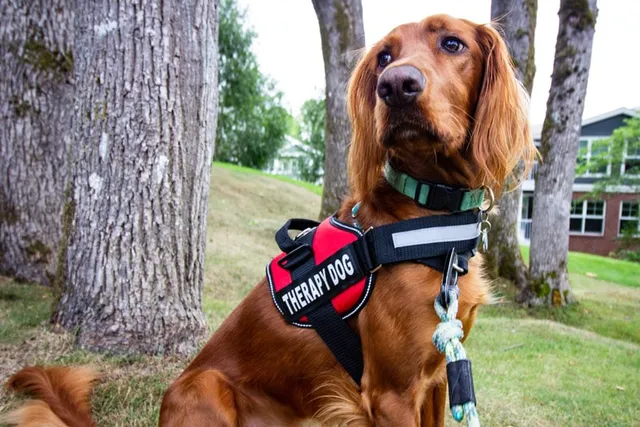
What Does a Therapy Dog Do? Facts & FAQ

In this article
Every dog owner recognizes the positive impact their pet has on their lives. When they promote them to being therapy dogs, they give their four-legged friend a chance to bring those same benefits to community members in need.
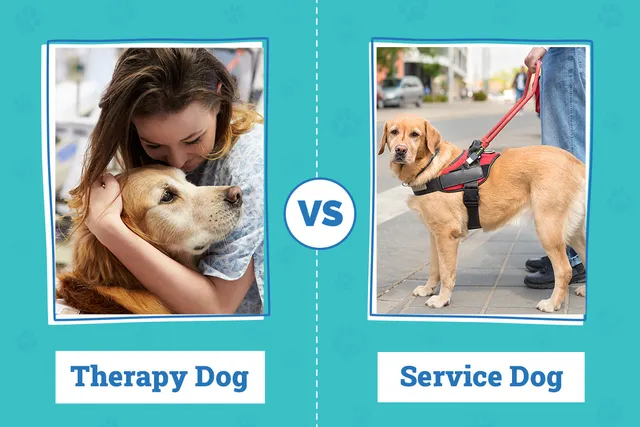
Unlike service dogs or emotional support animals that stick with one person, therapy dogs volunteer with their owners to provide comfort and affection to others. They help almost anywhere, from providing confidence to children in schools to offering companionship to seniors in hospice care.
Although therapy dogs do not enjoy many of the same privileges as service dogs, they can play a crucial role for a wider group of people. Let’s explore what therapy dogs do, where we need them, and how they can make a positive difference for you and those in your community.

What Does a Therapy Dog Do?
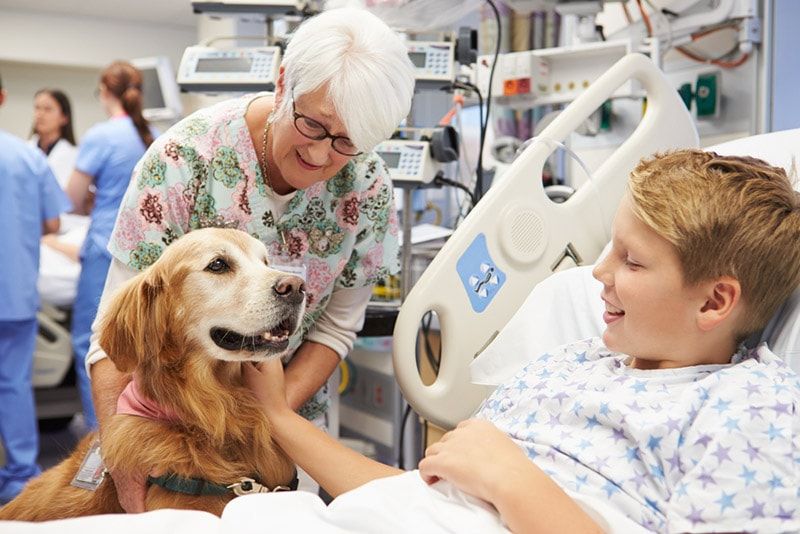
A therapy dog is a dog that volunteers with its handler (often its owner) to visit various settings where it can supply valuable comfort and support. With only their presence and attention, therapy dogs can help people reduce stress and anxiety, improve their mood, and increase their energy and productivity.
Popular places where therapy dogs may offer assistance include:
Therapy dogs are distinct from service, emotional support, or working animals. They do not fill a critical need for a disabled owner or receive special access to restricted areas and establishments like service dogs. Their job is to help a variety of groups in general ways with a mild temperament and warm personality, often allowing anyone to engage and pet them.

What Role Do Therapy Dogs Fill?
Therapy dogs play a flexible role. They don’t need to perform a specific job for a particular individual, and unlike service or emotional support animals, they are not necessarily on the job at all times. The following are only a few situations where therapy dogs can offer assistance:
A therapy dog may only work in specific settings, or you may make yours generally available to anyone in the community. You might notice your therapy dog is especially effective in helping a particular group or an individual and wish to organize recurring visits.
While the owner is often the therapy dog’s handler, this is not the only arrangement. Many therapy dogs have professional handlers, particularly in Animal Assisted Therapy. In this situation, a therapy dog takes a goal-oriented role in a patient’s mental or physical treatment.

What Skills Do Therapy Dogs Need?
Therapy dogs receive training either from a professional or their owner. Outside of basic obedience, they don’t typically require specialized skills. Temperament is fundamental. Therapy dogs often operate in high-stress situations to help manage intense emotions.
They must be calm under pressure. Some environments may subject them to heavy-handed petting, loud noises, or otherwise startling or uncomfortable interactions, and staying in control and non-reactive is critical.

Training Certifications
There is no national standard or registration requirement for therapy dogs. But several national therapy dog associations offer certifications for teams. Membership in these organizations facilitates visitations with hospitals; local groups, schools, and other institutions will need some assurance that any therapy dog is physically, mentally, and socially fit to work with them.
Although the specific criteria for dogs and handlers may differ between organizations, the American Kennel Club’s Canine Good Citizen test is a sound starting point for understanding the basic requirements. Many therapy dog groups use the CGC to guide their testing.
The program outlines the 10 essential traits and skills a dog must display:
What Kinds of Dogs Can Be Therapy Dogs?
There are no limits to which breeds can be effective as therapy dogs. Any animal, large or small, can offer mental and emotional benefits if they have an outgoing, relaxed nature around others and can follow directions. Most organizations only ask that the dog be at least one year old and pass their certification test.

What Makes a Good Therapy Dog?
Beyond their personality, certain physical traits make some breeds more appropriate as therapy dogs for different places. For example, a hypoallergenic coat can be essential when taking a dog into medical settings, and smaller breeds can sit on or with people on furniture and in beds.
Popular therapy dog breeds include:
Regardless of the breed, therapy dogs must have a history of positive and compliant behavior in social situations. Aggression or bite histories will disqualify a dog. Shots must be up-to-date, and you’ll typically need a vet screening to ensure the dog and people they work around will be safe.
Likewise, the handler must also be able to work in each setting. Disabilities that affect their ability to control the dog may be limiting. Many organizations, including therapy dog certification programs and the various locations that use them, also often do background checks.

Do Therapy Dogs Work?
Dogs can have life-changing benefits for owners, such as improving their mood and energy. And as therapy dogs, they bring those perks to a diverse range of people who could use the boost. Healthcare figures throughout history, including Sigmund Freud, have noted the value of therapy dogs, and their everyday use has gone on for decades.
Several studies have pointed to the efficacy of therapy dogs. One recent study showed that after only a 10-minute therapy dog team visit, emergency department patients showed significant differences in anxiety, depression, well-being, and reported pain levels. Other research found similar effects on college students. Therapy sessions helped students shed stress and homesickness while increasing happiness and socialization.
Conclusion
Therapy dogs are a low-risk, low-cost way to provide meaningful care in countless areas. As needs arise, they can lend invaluable help to nearly any group, from small children to the elderly and disabled.
Most importantly, everyone benefits from therapy dogs. Those receiving therapy get the mental, physical, social, and emotional support they need to succeed, while the institutions and their staff enjoy critical aid and relief during times of need. And for owners, it’s a chance to let their pets offer their limitless love to those who truly need it the most.
Related Reads:
Featured Image Credit: Ruben PH, Shutterstock
Expert dog care, straight to your inbox
Vet-reviewed advice, training tips, and the best of Dogster. Free, and you can unsubscribe anytime.
By signing up, you agree to our Terms & Conditions and Privacy & Cookies Policy.
Nicole has loved animals of all sizes her whole life so it's no wonder she has dedicated her career to helping them through what she loves best: learning, writing, and sharing knowledge with others. She’s the proud mom of two dogs, a cat, and a human. With a degree in Education and 15+ years of writing experience, Nicole wants to help pet parents and pets around the planet to live happy, safe, and healthy lives.
Join the conversation
Ask a question, share your story, or send private feedback.