Dog Harness vs Collar: Which Is Better? (Pros & Cons)

In this article
Review Summary
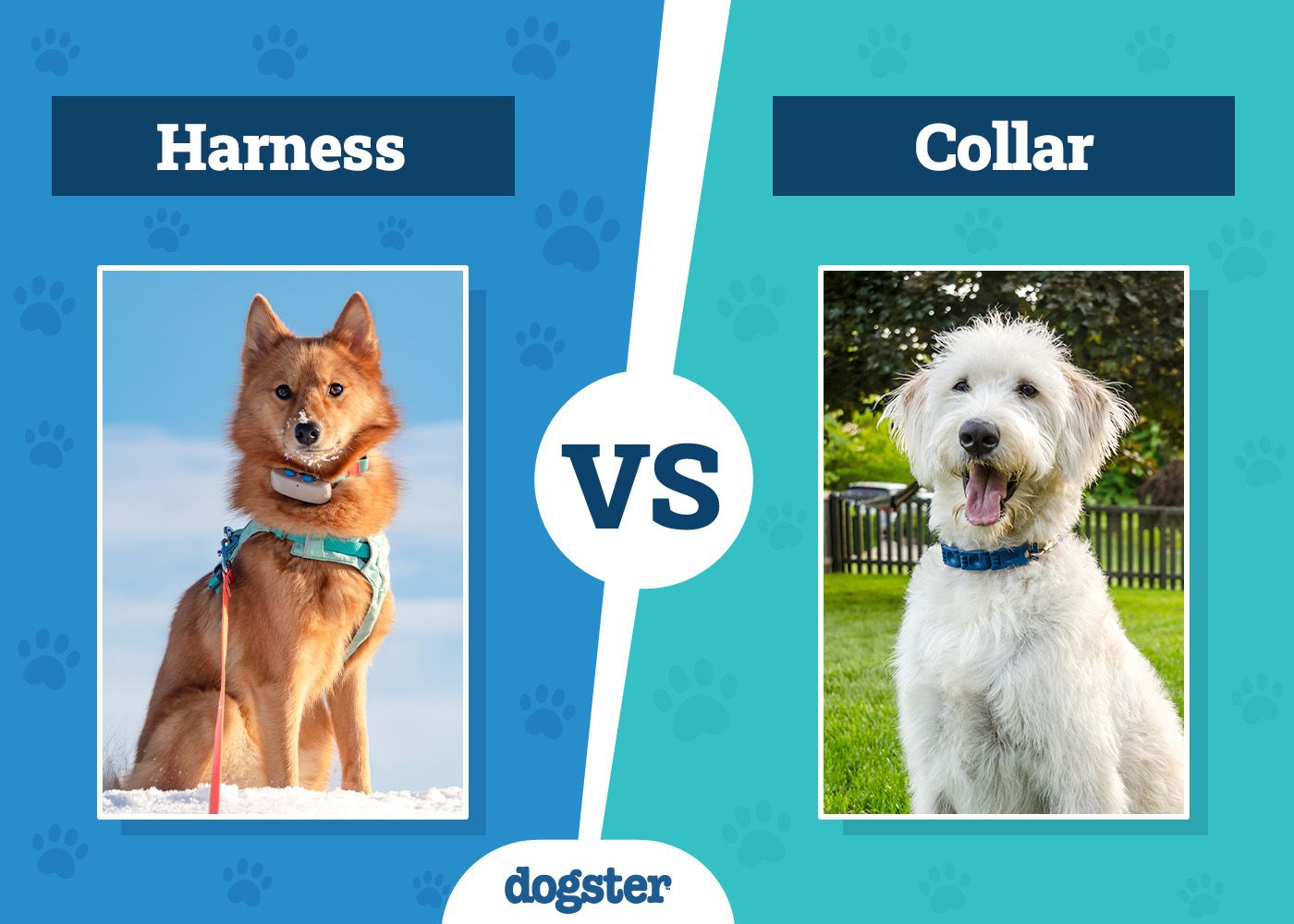
Dog collars and dog harnesses are both popular choices for pet owners. While dog collars have been a staple for dog training for many years, some people prefer using a harness for better control, less pulling, and assistance lifting dogs lying down or sitting. Harnesses are also good for dogs that are magicians at slipping their collars and taking off.
Still, both collars and harnesses have their pros and cons, and choosing between them is an individual decision. Check out the differences, advantages and disadvantages, and types of dog collars and harnesses to see which is better for your dog.

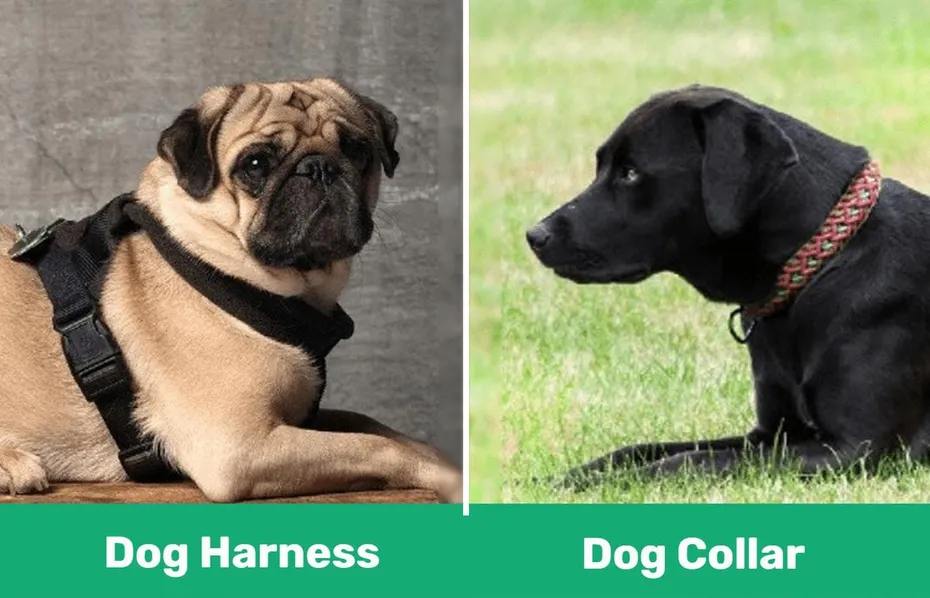
Visual Differences
At a Glance
Let’s look at the key points of each product.
Overview of Dog Harness
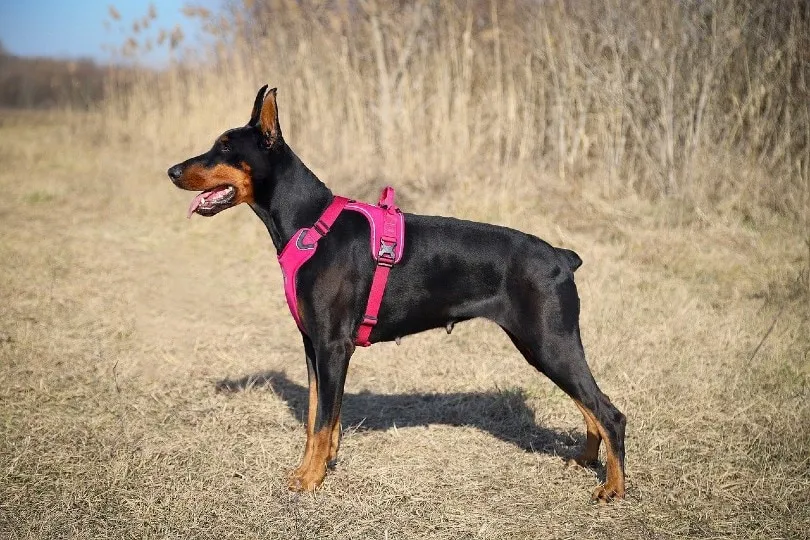
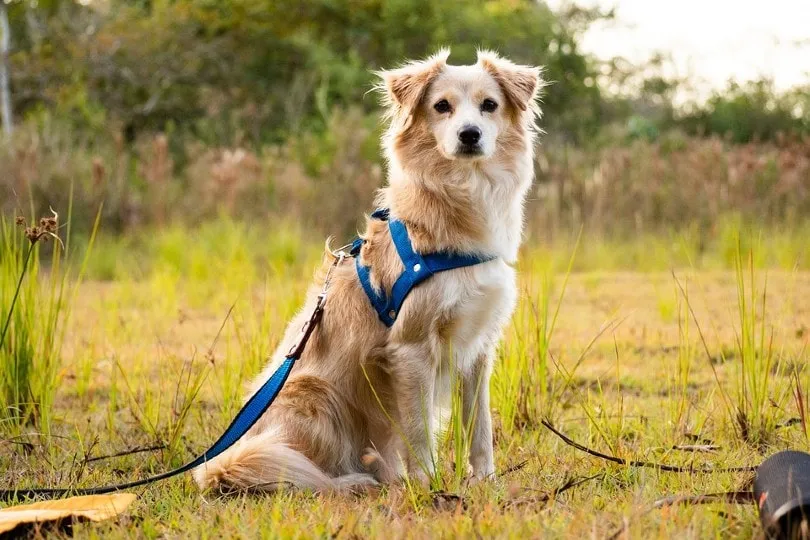
Harnesses come in many styles and types, but their main purpose is to distribute the leash's force across a larger body area. Unlike collars, which distribute leash pressure across the throat, a harness covers the upper and lower chest and wraps across the neck and back. When you pull on the leash with a harness, the dog feels the pressure across these areas.
A harness is a good choice if you have a large dog that pulls or a puppy that’s still learning leash manners. Dogs that pull on a collar consistently over time can strain their neck and throat, possibly causing damage. A harness prevents this problem by giving you better leverage and dispersing pressure across a larger area.
However, remember that an ill-fitting harness can be just as damaging as a collar with too much pressure. The harness must be fitted enough to stay on the dog but not so tight that it hinders natural movement or circulation.
Another benefit of a harness is that it’s not slipped easily. Some dogs are escape artists with their collars and manage to slip them, no matter how tight they are. Harnesses cover more of the body, and dogs can’t escape them with a simple head movement.
Harnesses do have drawbacks. Dogs with long or wiry fur can end up with tangles and mats, especially if the harness is worn for extended periods. Harnesses are also more likely to cause itching or rub the hair if left on too long.
Finally, harnesses require a little more work to put on, so they may be intimidating to nervous dogs. You may find that your dog doesn’t want to put its head through or doesn’t sit still, but this can be corrected with consistent training and patience.
Pros
- Good for training
- Good for dogs that pull
- Distributes pressure evenly
- Provides more control
- Hard to slip
Cons
- Intimidating for nervous dogs
- Can cause itching and rubbing
- May tangle long-haired coats
Overview of Dog Collar
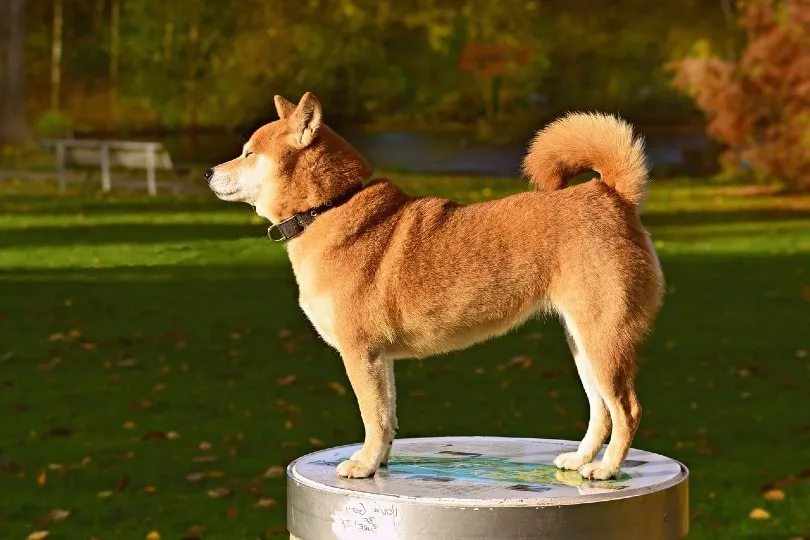
Like harnesses, dog collars come in various materials, styles, and colors. Dog collars are a go-to for most dog owners. They’re simple to put on, can be left on the dog for long periods, and offer D rings for tags with owner information if your dog should get lost. Collars also allow more personalization with colors, designs, and adornments like metal spikes or rhinestones.
For older or well-trained dogs, a collar may be all you need. Dogs with leash manners and who don’t try to pull or slip a collar may not need the added control and pressure of a harness. If your dog has sensitive skin or is prone to itching, a collar can be left on longer than a harness without irritating the dog’s skin.
Collars have plenty of disadvantages, however. Collars exert pressure on the throat, which can potentially cause excessive coughing or choking. Over time, this can damage a dog’s trachea. Some small breeds, such as French Bulldogs and Pugs, suffer from tracheal collapse or are predisposed to it.
Puppies tend to pull, slip collars, and fight leashes while they’re learning their manners. A collar may not be ideal for puppy training since it provides little control and allows the puppy to misbehave or escape.
Pros
- Simple
- Comes in a variety of materials, styles, and colors
- Good choice for well-trained, adult dogs
- Can be worn for long periods
- Can be used with identification tags
Cons
- Exerts pressure on the throat
- May cause tracheal collapse in some breeds
- Easy to slip
- Not ideal for leash training
How Do They Compare?
Performance
- Edge: Harnesses
Harnesses are better for training puppies, large dogs, and dogs prone to pulling. You’ll find plenty of variety with harnesses as well, such as harnesses with different features to help lift your dog and harnesses with saddlebags for outdoor adventures. Collars have less practical versatility, but more options for materials, colors, and embellishments.
Price
- Edge: Collars
Though the prices for collars and harnesses can vary according to the material, style, and brand, collars are generally less expensive than harnesses. Typically, more expensive collars and harnesses offer advantages like better materials, better durability, and better features, so price shouldn’t be the only determining factor in your decision.

Durability
- Edge: Varies
The durability of a collar or harness depends on its material more than anything. Cheap, thin nylon isn’t as durable as double-stitched neoprene, heavy-duty nylon, denier, or leather. Both products may be prone to breakage at stress points from wear and tear, however.
If you take your dog hiking, hunting, or on high-intensity runs, durability matters. You may prefer materials designed for sport, like neoprene, and reinforced stitching at stress points, particularly for harnesses. For collars, leather is a good choice because it will break if your dog gets stuck on something like a fence or furniture when you’re not around. Nylon won’t break if your dog pulls against it, which could result in injuries.
Design
- Edge: Harness
The design edge also depends on the material and features like a metal buckle closure or a plastic, locking buckle closure. Some harnesses have an ergonomic design for better control and comfort for dogs or extra features like a strap for lifting the dog. Service dogs need harnesses with bright colors, reflective safety patches, and space for text.
You can also find harnesses that are designed for dogs with mobility issues. These harnesses are larger and provide support around the chest and hind legs and include two lifting straps for dogs with significant joint problems and paralysis or for dogs recovering from major surgeries. These are intended as temporary equipment and not for everyday use, however.
Collars are simple in their design and typically only have a strip of material with a buckle closure and rings for the leash and identification tags. Collars do offer more aesthetic features than harnesses, such as embellishments, designs, and a range of colors.
What the Users Say
Choosing between a collar and a harness comes down to your individual needs and what benefits your dog. To help with your decision, we’ve scoured reviews from users to see what people are saying about their favorite harnesses and collars.
Some of the top-rated harnesses have rave reviews from owners of escape-artist dogs or owners who tie their dogs outside when they work outside. Additions like extra belly straps, soft padding to prevent chafing, and thick handles for lifting are especially helpful for owners to control their dogs. These harnesses are also popular for owners of service dogs, amputee dogs, and working dogs that need assistance on rough terrain.
Conclusion
Harnesses have many advantages over collars for dogs that need extra support, training, and control. You can find numerous options for harnesses that suit the needs of the dog, such as support harnesses for outdoor activities, bright, reflective harnesses for service dogs, lifting harnesses for dogs with mobility issues, and harnesses with ergonomic designs and straps to prevent slipping. If you have a dog with good leash manners, however, a harness may be overly complicated. Collars are perfectly suitable for the average, well-trained dog on a daily walk.
Related Read: 7 Best Slip Lead for Dogs – Reviews & Top Picks
Featured Image Credit: Left - Yama Zsuzsanna Márkus, Pixabay; Right - MabelAmber, Pixabay
Expert dog care, straight to your inbox
News, insights, expert advice, and everything dog.

No spam — unsubscribe anytime.
By signing up, you agree to our Terms & Conditions and Privacy & Cookies Policy.
How useful was this post?
Click a star to rate. You can leave written feedback afterwards. (We read all feedback.)
Nicole has loved animals of all sizes her whole life so it's no wonder she has dedicated her career to helping them through what she loves best: learning, writing, and sharing knowledge with others. She’s the proud mom of two dogs, a cat, and a human. With a degree in Education and 15+ years of writing experience, Nicole wants to help pet parents and pets around the planet to live happy, safe, and healthy lives.