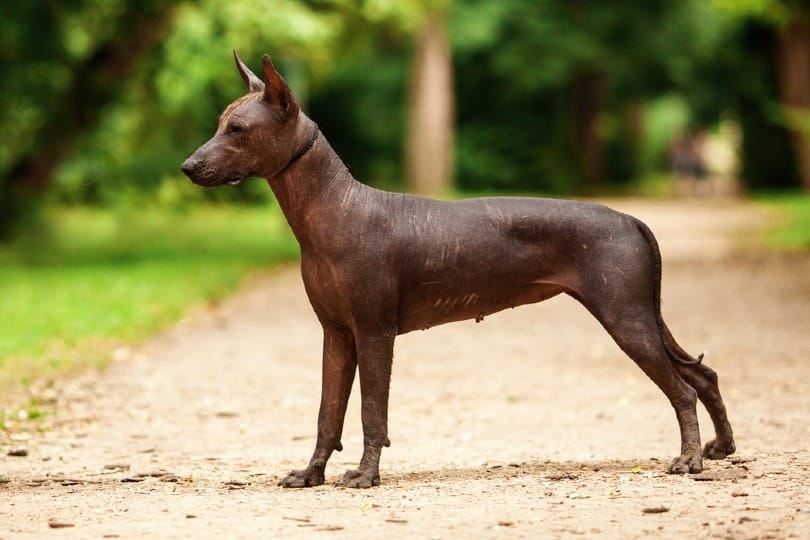
Hairless dog breeds are fairly rare, but one of the most well-known is the Mexican Xolo dog, also called the Xoloitzcuintli. Many people look at these dogs and only see their odd lack of fur, but they’re more than meets the eye. Xolos are a striking, loyal, and active breed with a very rich history that goes back a lot farther than you’d think.
Learn a bit more about the Xolo down below as we dig into some of that history, a bit about the breed specifically, and anything else you might want to know about them.

The 10 Facts About the Xoloitzcuintli
1. Xolos Were Considered Sacred by the Aztecs
Ceramic depictions of dogs that look like the Xoloitzcuintli in West Mexico are just one piece of evidence of how the dogs were regarded by the Aztecs. Xolos were closely associated with the underworld, with their name derived from Xolotl, the god of death, and “itzcuintli,” the Aztec word for “dog.” Aztec legend states the Xolo dog was created from the Bone of Life, which was given to humans as a promise that the dogs would safely guide them from life to beyond the veil.
Xolos have been found buried with human skeletons in Aztec tombs, where they served as guides to the underworld for the deceased. Xolo dogs were widespread wanderers, and their skeletons have been discovered in both Mayan and Toltec burial sites.
2. They’re One of America’s Oldest Dog Breeds
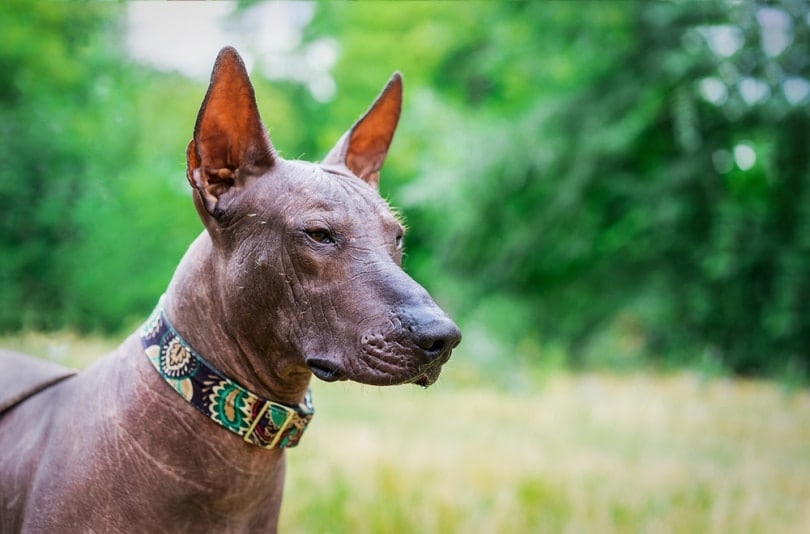
Xolos are thought to be one of North America’s oldest dog breeds, going back over 3,000 years. Their ancestors are believed to have crossed the Bering Strait land bridge from Asia over 15,000 years ago, which split off into many spitz breeds, like the Husky, and landrace breeds, such as Native American dogs.
Famously, explorer Christopher Columbus wrote in his diary about the Xolo, calling them a “strange hairless dog.”
3. Xolos Almost Went Extinct
Infamously, Xoloitzcuintlin were domesticated and at least partly bred as a food source by the Aztecs. At the time, turkey and dog meat were known to be high in protein and thus desirable. Notes from conquistadors mentioned dog meat was often served at banquets with turkey meat, and the Spanish themselves were such fans of Xolo meat that they nearly drove the breed to total extinction.
Later discoveries contradicted this when they found that despite records from the Spanish, the Aztecs mostly ate deer and seldom ate dogs. Only time will tell which proves to be true, but there’s compelling evidence on both sides.
4. Some Have Hair
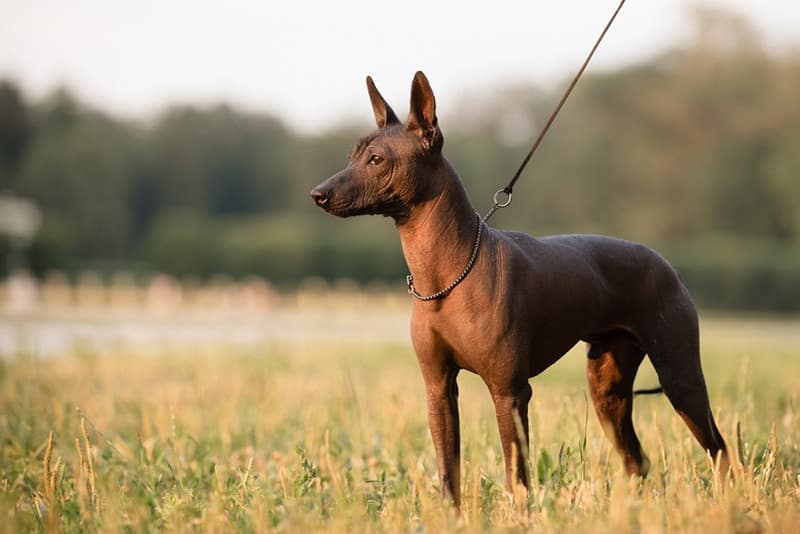
Yes, even “hairless” dogs like the Xolo sometimes have hair. Whether they do or not primarily depends on their genes. A Xolo whose parents both had fur is more likely to have fur, for instance. The most common places a Xolo might grow hair are on the neck, feet, and head.
Many lack fur altogether, but even the American Kennel Club says it’s normal for a purebred Xolo to have fur in those areas. Xolos with hair usually have very short and coarse fur.
5. Xolos Have Skin Problems
Like all hairless breeds, the Xoloitzcuintli is sensitive to strong direct sunlight and gets sunburned easily. Have dog-safe sunscreen handy for long outings. Skin oils are also known to accumulate on the Xolo’s skin, so they get acne a lot.
You can help prevent this by regularly wiping them down with a clean, damp cloth or pet wipes, but avoid frequent baths with shampoo that might be detrimental by wiping out too much natural oil on the skin.
6. The Breed Isn’t 100% Hypoallergenic
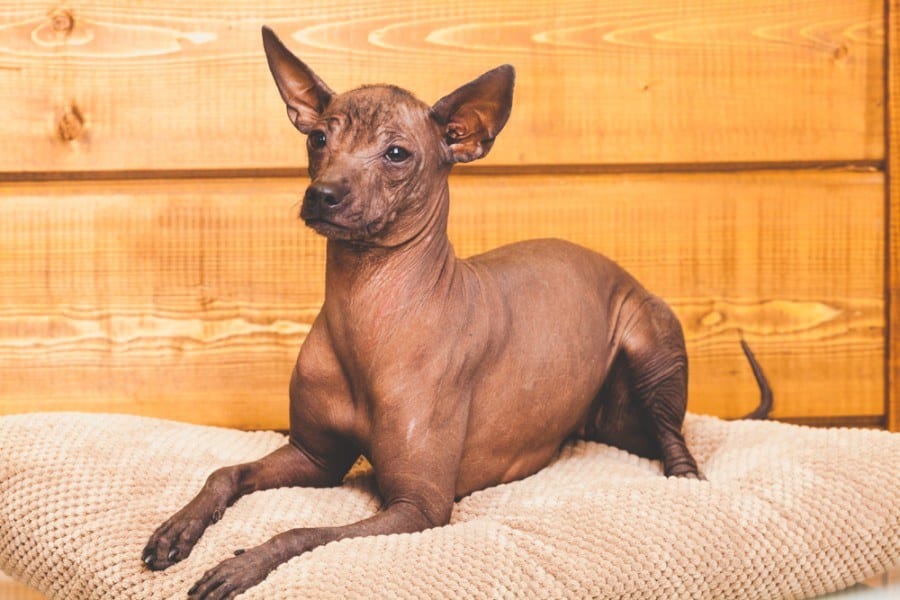
Most Xolos don’t have hair but can still trigger sensitive pet allergies with the dander or dead skin cells they produce. You can help keep the volume down by wiping them down regularly, but slight amounts will linger. All that said, Xolos seem to trigger allergies less than breeds with hair, so they’re a good pick if you love dogs but someone in the home is allergic.
However, keep in mind that no dog is truly hypoallergenic, and you should spend time with a dog before committing to bringing them home.
7. Xolos Are a Highly Social Breed
Like many wilder dog breeds, the Xolo is inclined to be a pack animal and will naturally carve out a little niche for themselves in your home after figuring out a loose hierarchy. They bond with the whole family, love to give affection, and their wariness toward strangers makes them fine watchdogs who aren’t afraid to bark at intruders. Xolos have a serious nature, but they’re softies at heart.
8. They Come in Three Sizes
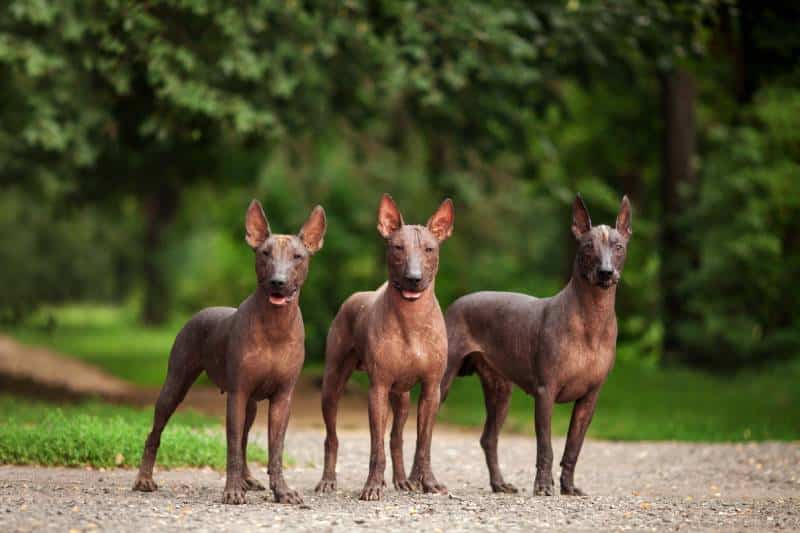
Yes, like the Poodle, Xolos come in toy, miniature, and standard sizes to suit nearly any household. Respectively, they measure 12 to 14 inches tall for the toy, 14 to 18 inches for the miniature, and 18 to 23 inches tall for the standard.
Solid-colored Xolos are the most desirable across the sizes, with the AKC recognizing solid black, with some white markings acceptable. Bicolor Xolos are also known but thought to have a mixed heritage.
9. The Xolo Is a Healthy Breed
The Xolo hasn’t been overbred for decades like a lot of other purebred dogs, so major health conditions aren’t as common in them. Getting an Xolo from a reputable, ethical breeder that screens their puppies for health problems helps lessen the odds of major problems cropping up. They’re still prone to luxating patellas and joint conditions like any active breed, however.
10. Xoloitzcuintli Were Believed to Have Healing Powers
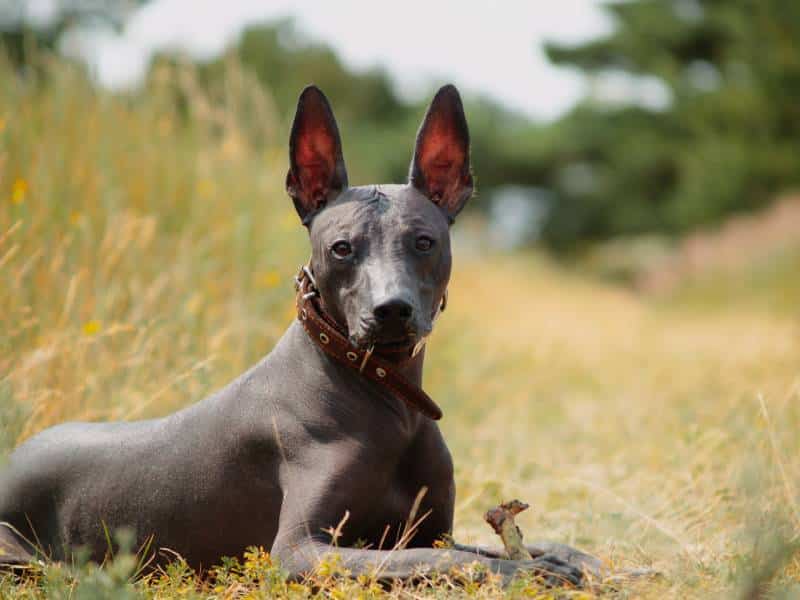
Along with their association with the god of death, Xolos were believed to be infused with a healing energy they could pass to humans. Popular speculation posits this is because hairless dogs like Xolos emit more body heat than dogs with fur, and this warmth could seem like magic on a very cold night. This is also why Xolos and other hairless dogs are known as great space heaters.
Conclusion
The Xoloitzcuintli is a rare hairless dog with strong, deep roots in Mexico among native civilizations—mainly the Aztecs. On a personal level, the Xolo is a reserved but loving and active dog. They love nothing more than hanging out with you, throwing a frisbee around, or accompanying you on a strenuous hike.
The Xolo also makes a great family companion if you need a little extra warmth in your blankets at night as well. However, as with all dogs, do your research before bringing one home to ensure they’re a good fit.
See also:
- Hairless Dog Breeds: Pictures, Facts & History
- Mexican Dog Breeds: Chihuahua, Xolo & More (With Pictures)
Featured Image Credit: TatyanaPanova, Shutterstock
 The 10 Facts About the Xoloitzcuintli