Japanese Spitz Dog Breed Info, Pictures, Facts & Traits

In this article
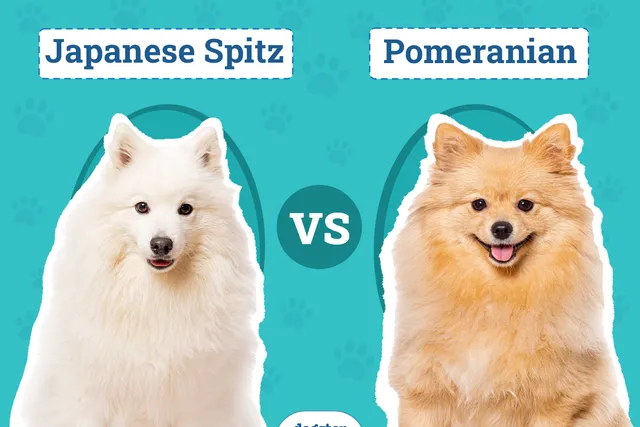
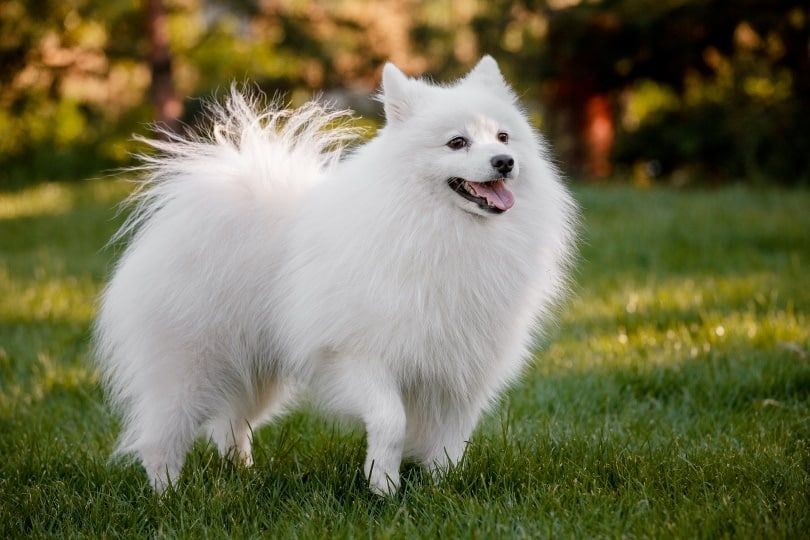
The Japanese Spitz is a smaller dog breed that originated in the 1920s. As the name suggests, this breed hails from Japan. They’re known mostly for their very thick, white coat that makes them look a bit like a Pomeranian (which they are sometimes mistaken for). They are exceptionally playful and intelligent despite their smaller size.
Japanese Spitz dogs are surprisingly loyal to their families and very good with children. However, early socialization and supervision are still required.
Breed Overview
Height:
Weight:
Lifespan:
Colors:
Suitable for:
Temperament:
While they are small, Japanese Spitz are very active. They require plenty of daily exercise, and they won’t spend most of their time in your lap. Therefore, they’re best for those looking for an active, smaller dog, not someone looking for a cuddly companion.
They also require plenty of grooming, including some professional trimming. These dogs shouldn’t be considered low-maintenance due to their high energy and grooming needs. Luckily, they are very healthy dogs.
Japanese Spitz Characteristics

Japanese Spitz Puppies

Japanese Spitz puppies are very energetic and curious, like most puppies. They require plenty of playtime and naptime. When they aren’t napping, you can expect these dogs to be running around. Be sure to invest in plenty of toys.
While these puppies are energetic, don’t force them to exercise much when they are growing. Too much exercise can harm their joints, so always listen to your puppy when determining how much exercise they need.
Start socialization early. These dogs are very intelligent and often easier to train than most, but your focus during the early weeks should be on socializing them. Introduce them to as many people and pets as possible so that they have a clear understanding of what “normal” is. You want them to feel confident around all sorts of people and other dogs.
While this breed is social, they aren’t necessarily innately friendly. Socialization is required, or they can be surprisingly guarded.
Because this breed is still relatively rare, you’ll likely need to go through a breeder. These dogs don’t often show up at rescues or shelters. Plan on waiting for a puppy to become available, as most quality breeders have waitlists. Expect a screening process, too. Most breeders care about where their puppies end up, and they’ll want to ensure that you’ll be a good choice for this breed.
Temperament & Intelligence of the Japanese Spitz 🧠
Japanese Spitz dogs are often playful and energetic. They enjoy playing and walking with their people more so than they enjoy cuddling. That said, they are still affectionate and loyal. They will follow their humans around the house and crave companionship.
Like many spitz breeds, the Japanese Spitz also has natural watchdog instincts. If something seems off, they will bark at it. While you can train them to limit their barking, you aren’t going to eliminate it completely. They aren’t a quiet dog breed, so they should only be adopted by those who don’t mind a little barking. While they are intelligent, they can become independent, especially as juveniles. Consistency is vital. Otherwise, they will learn how to exploit the rules.
Are These Dogs Good for Families? 👪
Japanese Spitz were bred as family companion dogs. Therefore, they work well in most families. Their high activity needs can make them unsuitable for those just looking for a lapdog, though. They aren’t high-energy by any means, but they still require daily walks and some movement each day.
They’re also prone to barking, which some families won’t be able to deal with. Boredom can trigger excessive barking, so it’s important to keep them entertained—even when you aren’t home.
These dogs adore their families and love to play. They’re a great fit for families with many children who are looking for an active, smaller dog. They also work well for singles and couples who want a dog that is able to partake in walks and hikes without an issue.
With proper socialization, these dogs are great with children. They form strong bonds with the whole family, allowing them to thrive in most households.

Does This Breed Get Along With Other Pets? 🐶 😽
For the most part, the Japanese Spitz gets along well with other pets. However, socialization and careful introductions are important. They’re naturally friendly, so they often enjoy being with other dogs. However, that doesn’t mean that they’ll automatically love any other canine.
Get your dog around other dogs early in a positive manner. Puppy training classes are a great place to accomplish this, as they provide plenty of socialization in a safe, controlled environment. Even when well-socialized, these dogs should be supervised when with others, especially strangers. Match them with similarly sized, playful dogs to avoid potential conflicts.
Some Japanese Spitz do well with cats, too. However, this hinges a lot on the dog’s socialization and temperament. Some will chase cats, while others won’t. Most do well with cats that they grow up with, but they may chase other cats.
If you want your dog to get along well with other pets, tons of socialization as a puppy is necessary.

Things to Know When Owning a Japanese Spitz
Food & Diet Requirements 🦴
Japanese Spitz dogs don’t have any special dietary needs. They do well on any quality dog food designed for smaller dogs. Some larger Japanese Spitz dogs do well on regular dog food, but smaller ones will probably have too small of a mouth to eat normally-sized kibble. Observe how your dog eats and make your own judgment on the size of food they need.
Your dog needs puppy food when growing, as growing puppies require different nutrition than adults. Be sure to feed a quality puppy food, or your dog may be at a higher risk of health issues later on. However, once your puppy is done growing, switch them to an adult food. If left on the puppy food for too long, your Japanese Spitz may be at a higher risk of gaining weight.
Overfeeding can lead to obesity, so carefully measure out your dog’s food always. Follow the feeding directions on the food packaging, but feel free to adjust this according to your dog’s needs. If your dog is gaining weight on the suggested feeding amount, you may need to decrease it.
These dogs are smaller, so they require more frequent feeding. Puppies need to be fed around 3 to 4 times a day. More is typically better, as it helps their blood sugar remain stable. You can adjust them to two meals a day as adults.
If your Spitz is particularly active, they may need more food or a formula specifically for active dogs. Keep an eye on your dog’s body condition and adjust their diet as necessary. When in doubt, speak to your vet.
Exercise 🐕
Japanese Spitz are both energetic and small. Therefore, they need moderate exercise each day. They may act as energetic as a larger, active dog, but their small stature means that you can exercise them much more easily.
Two brisk, 30-minute walks are enough to keep them happy and fit. Try to stay moving during these walks, but allow time for sniffing and exploring to help fight boredom, too. You can exchange one of these walks for playtime, such as fetch and agility training. If possible, this provides some extra stimulation and prevents boredom.
Puppies require less exercise than adults. Because their bones and joints are still developing, you should be cautious not to overexercise them, as this may lead to health issues later on. Always let your puppy rest when they are tired.
Training 🎾
The Japanese Spitz is considered an easy-to-train breed. They’re both intelligent and eager to please. In other words, they’re able to figure out what you’re asking and tend to want to make you happy. Both of these traits create a dog that tends to follow commands pretty easily.
You can train them just like you train any other dog—with lots of consistency and positive reinforcement. Any time your dog behaves properly, reward them with treats and praise. Be sure to use the same command each time and have everyone in the household lay down the same boundaries.
Keep sessions very short. 10–15 minutes is plenty for most canines. End the playing session before your dog gets bored or tired. You don’t want to end the session on a frustrating note. You want it to be fun!
Don’t forget about socializing, too. These dogs behave best when they are introduced to as many people and other dogs as possible. Otherwise, they may be fearful and anxious later in life.
Grooming ✂️
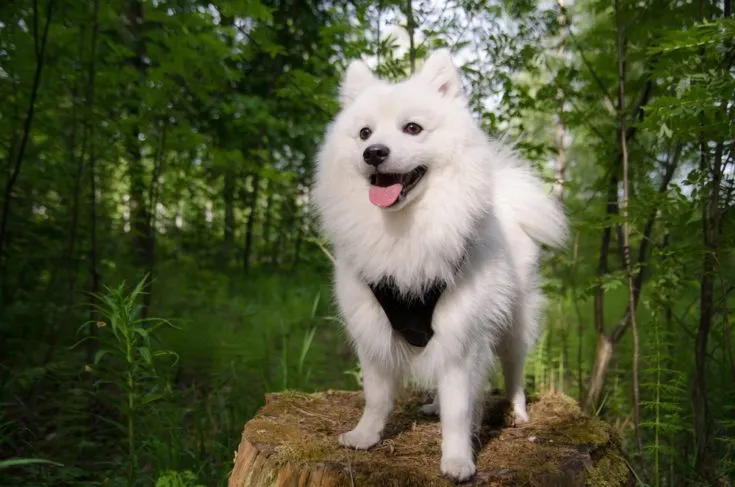
Your Japanese Spitz will require plenty of grooming. Their white coat may be fluffy and magnificent, but it takes a lot of work to keep it that way.
Plan on brushing them daily, removing loose fur, and preventing mats. Brushing also helps distribute natural oils through their coat, keeping them healthy and encouraging a natural shine. A pin brush works best to get into the undercoat, where the majority of the loose fur will be. You can also use a slicker brush for the top portion of the coat. Don’t forget to brush behind the dog’s ears and under their tail. These areas are extra-prone to matting. You may want a metal comb to make brushing these areas easier.
You don’t need to bathe your Japanese Spitz all that much, though. Over-bathing can strip the coat of its natural oils and lead to skin irritation. Avoid bathing them more than once a month, but the average dog shouldn’t need this many baths, either. Generally, we recommend bathing them whenever they seem dirty or smelly.
You can bathe them at home or schedule them for regular professional grooming. While these dogs don’t need their whole body trimmed, they do benefit from trimming around their face and paws. These areas tend to get dirty and matted, so trimming is often recommended. You’ll also need to trim their nails regularly. Long nails are both uncomfortable and dangerous. They’re more likely to split, which can be painful and lead to infections.
Keep an eye on their ears, too. Luckily, they aren’t prone to ear infections, but that doesn’t mean they can’t get them. Dirt and debris can increase the odds of infections, so clean the outside of their ear with a wet cotton ball whenever it seems dirty. Don’t shove anything into their ear canal, as this can cause damage to their eardrum.
While puppies don’t need regular grooming, you should start brushing at a relatively young age. This process helps your dog get used to regular brushing, making it much easier later on.

Health and Conditions 🏥
Japanese Spitz dogs are pretty healthy. Still, they may develop some health issues. Most of these affect many small breeds, though, so they aren’t anything specific to the Japanese Spitz.
For instance, they may develop patellar luxation, which involves the dislocation of the kneecap. This may range from very mild to severe. In serious cases, it can cause lameness. Weight management and physical therapy help control this condition, but surgery may be required in some instances.
Japanese Spitz dogs may also develop eye conditions. Cataracts, glaucoma, and dry eye are all potential problems. These conditions are treatable by a vet, and early treatment helps avoid potentially nasty side effects.
Like all dogs, Japanese Spitz dogs are also prone to dental problems. Around 80% of all adult dogs have gum disease, which can snowball into more serious conditions later in life. The best way to prevent dental issues is to brush your dog’s teeth a few times a week. Use a toothpaste formulated for dogs, as human toothpaste isn’t always safe.
Tracheal collapse is common for smaller dogs. It is basically the collapsing of the trachea, though it is usually not a complete collapse. In many cases, it can be very minor. While this condition is rarely deadly, it still calls for a trip to the vet. In severe cases, surgery may be required.
Male vs. Female
There is no significant difference between the males and females of this breed. They are too small for significant size differences to be obvious, though very small differences may exist. Some may claim that there are temperament differences between males and females, but this isn’t scientifically proven.
If you do not spay or neuter your dog, they may exhibit hormonal differences for their gender. Males may be more prone to marking, while females may have temperament shifts when they go into heat.
However, spaying and neutering both limit these differences, as they eliminate the hormonal differences that cause them.
3 Little-Known Facts About the Japanese Spitz
1. This breed is relatively young.
While it may look like an ancient breed, the Japanese Spitz only came about in the 1920s and 1930s. They were developed by crossbreeding several white Spitz dogs from Europe and America. Eventually, this led to a companion dog with a pure white coat.
2. They aren’t technically Japanese.
Despite their name, these dogs aren’t genetically Japanese. That’s just where they were developed. The dogs used to create them largely came from other areas of the world.

3. Despite not being a working dog, they are good at agility competitions.
Thanks to their intelligence and agility, these dogs can perform very well in agility competitions. They aren’t your average companion dog that spends most of their time napping.

Final Thoughts
The Japanese Spitz is a relatively new breed that was developed as a companion animal. Unlike many small companion dogs, they are pretty active and require about an hour of exercise each day. They’ll be very playful and do well in homes with many children. They also work well for more active individuals who want a small dog that can keep up with them.
All that said, this breed requires quite a bit of work. They need plenty of socialization, daily exercise, and plenty of brushing to grow into confident dogs. All of this means that they require a lot of time, so make sure you have it before you decide to adopt a puppy.
Sources
Featured Image Credit: Alexander Seluyanov, Shutterstock
Expert dog care, straight to your inbox
Vet-reviewed advice, training tips, and the best of Dogster. Free, and you can unsubscribe anytime.
By signing up, you agree to our Terms & Conditions and Privacy & Cookies Policy.
Kristin loves to help pet parents create a fulfilling life for their pets by informing them on the latest scientific discoveries and helping them choose the best products for their pets. She currently resides in Tennessee with three cats, four dogs, two fish, and a lizard, though she has dreams of owning chickens one day!
Join the conversation
Ask a question, share your story, or send private feedback.