Why Do Dogs Pee on Trees? And How to Stop Them (Vet-Reviewed)


In this article
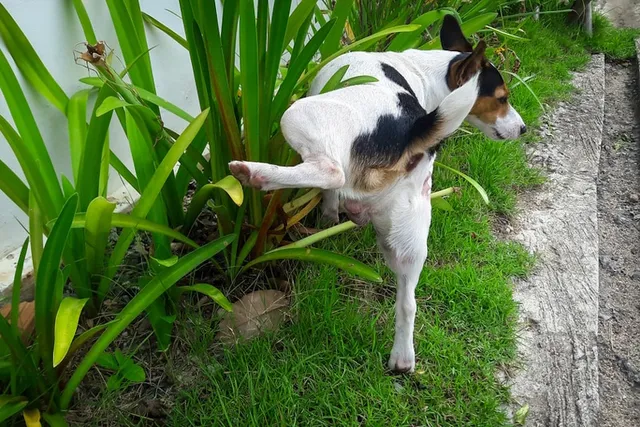
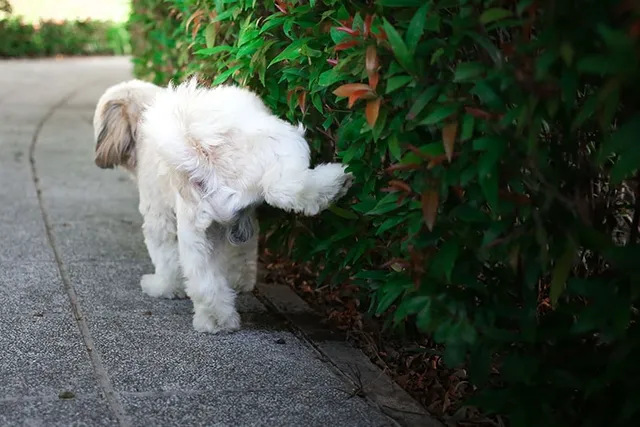
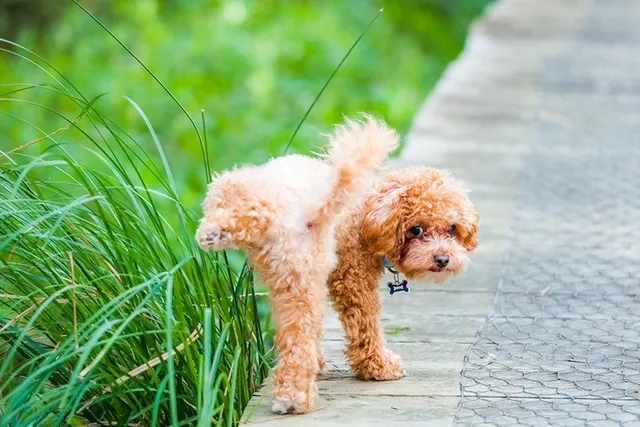
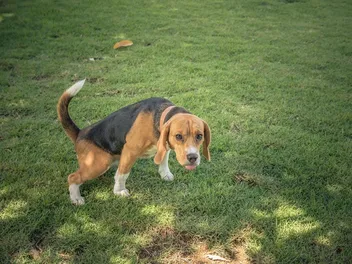
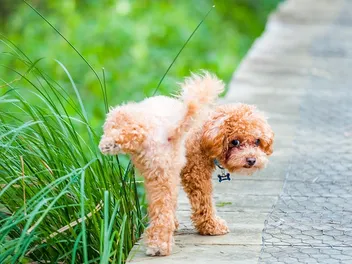
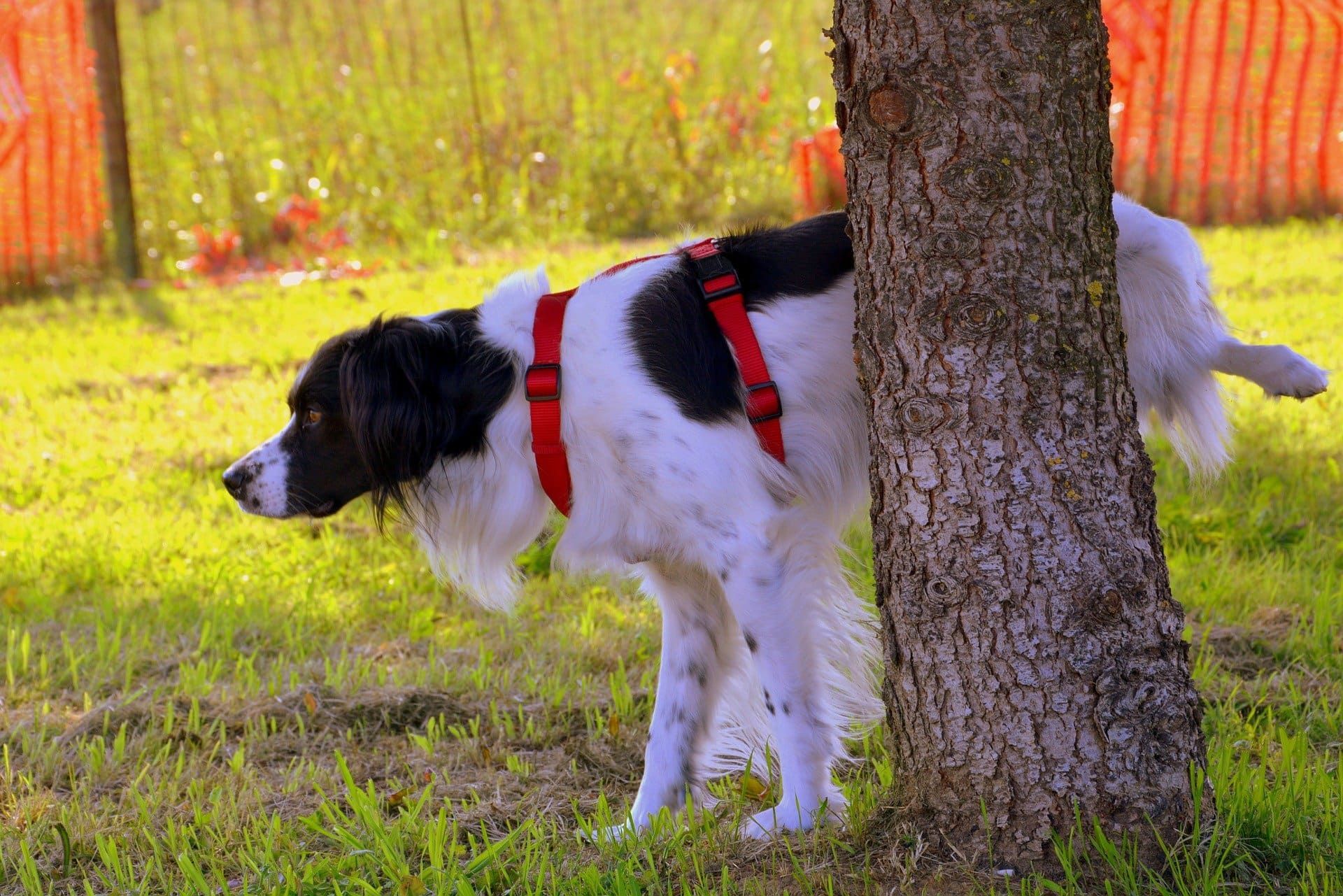
Dogs have an evolutionary urge to mark things in their territory. In the modern world, dogs don’t exactly have a set territory, though. They spend much of their time in our yard and homes. On walks, it’s common to see them peeing on trees, poles, or other vertical surfaces. This behavior is a form of scent marking. Dogs use urine to communicate with other dogs, signaling their presence, identity, and social information.
So what is the reason for this behavior? When your dog pees on a tree, they’re not literally claiming it, but rather sending a message to other dogs that they were there.

Why Do Dogs Mark?
Some dogs are more prone to peeing on trees than others. Males are particularly likely to mark on a tree if they smell a female in heat. The two dogs don’t need to be near each other in the least. If the male smells that the female walked by at some point, he will likely feel the need to mark.
Both males and females that have not been neutered or spayed can mark, which usually involves peeing on a tree or two, although this is more pronounced in males.
Age is also an essential factor. Puppies usually don’t mark trees. This behavior often doesn’t come to fruition until the animal hits adulthood. It’s the hormones around puberty that give them the urge to mark and claim their space.

Overmarking
Overmarking is a common occurrence, especially when trees are around. This occurs when one dog smells the urine of another dog on a tree.
Often, the second dog will mark over the scent of the first one. They’re covering up the scent, though other dogs will still likely be able to smell the scent of the first one.
If all the dogs in the neighborhood like to pee on a particular tree, this is likely what’s happening.
Of course, it isn’t always so good for the tree or the grass surrounding it. Dog urine contains urea, which breaks down into ammonia, and is high in nitrogen. Over time, this can damage grass, sensitive plants, and even the bark of some trees.
Therefore, we don’t recommend letting your dog continuously pee in the same spot every day. Occasional marking on a tree isn’t enough to hurt it, though.
How Do You Keep Dogs From Peeing on Trees?
There are many reasons you may need to prevent your dog from peeing on trees. As we previously stated, dog urine can cause problems with grass and soil composition. It can also hurt the tree (though this is rarer since it is much more durable than grass).
The easiest solution is to take your dog somewhere else to urinate. If you know they like to pee on a specific tree, don’t take them around that particular tree!
However, this isn’t always possible. If the tree is in your backyard, you likely don’t want to restrict your dog’s access to the whole backyard, for instance.
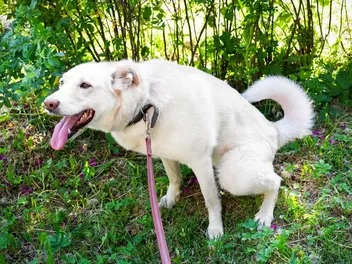
Training your dog to pee somewhere, in particular, is possible. Offer them a treat when they pee on a particular spot—not when they pee on the tree. Eventually, they’ll learn to pee at an alternative location.
We recommend adding a layer of mulch underneath the tree while you’re training. If your dog ends up accidentally going on the tree despite your best efforts, the mulch will help soak up some of the extra nitrogen and may help save the soil underneath. However, this won’t help protect the bark—and you obviously can’t grow grass under the tree if mulch is there.
There are cage-like devices that you can purchase to go around the tree. These prevent your canine from getting close enough to urinate on the tree. However, they can be an eyesore and aren’t the best long-term solution. They are a straightforward solution, though. We recommend them while training or for trees that are in dire shape and need some help now.

Use Water
You can help reduce damage from dog urine by diluting the affected area with plenty of water. This will help wash away excess nitrogen and prevent yellow spots from forming on your grass. If your lawn already has yellow patches, watering the area regularly can help the grass recover over time.
It’s important to combine this with training your dog to pee in a different spot, because no treatment will work if they continue marking the same area. Mulch or protective barriers around trees can also help prevent soil and bark damage while your dog learns a new bathroom routine.
Why Does Dog Pee Kill Trees?
It is essential to understand that dog pee doesn’t always kill trees. Typically, it’s the volume that matters the most.
A small dog isn’t going to injure most trees. Their urine output is too small. They don’t add enough ammonia and nitrogen to the soil for it to matter.
However, larger dogs produce a lot more and can potentially be troublesome for smaller trees. They can also kill grass and other vegetation if they constantly use the bathroom in the same spot.
Then, you have to consider the number of dogs marking in the same area. If a tree is in a fenced-in yard, it’s probably only going to be your dogs that are using it. However, if the tree is near a walking path, every dog that walks by may mark it on the tree!
This amount of marking can add up quite quickly! Often, these trees need protection from one of the methods we described above. You can’t train every dog walking past not to urinate on the tree, after all, however, you can reach out to a veterinarian and ask them for some training tips.
Should You Let Your Dog Pee on a Tree?
Letting a dog pee on a tree once or twice isn’t necessarily a bad thing. It probably won’t hurt the tree if they urinate once or twice. However, you don’t want them to do it over and over again, or they will eventually hurt your tree.
Many trees may become disfigured over time if dogs continuously urinate on them. Usually, this results in the tree bark becoming disfigured or the tree growing strangely. We highly recommend not letting your dogs urinate on trees as much as you are able. Otherwise, they can easily become damaged by the continuous addition of ammonia.
Placing your tree in a cage may be a suitable option if many different dogs are passing by. However, it is often best to train your dog to urinate elsewhere.
If you’re walking your dog, letting them pee on a tree isn’t recommended. While your dog peeing on the tree once won’t hurt it, you don’t know how many other dogs have urinated on that same tree. If every dog that comes by urinates “just one time”, the tree will become damaged.
Unless you know the tree and how often dogs pee on it, it is best to make your dog pee somewhere else.

What Trees Are Most Susceptible to Dog Urine?
Younger and smaller trees are often more sensitive to dog urine than older trees. A larger percentage of their surface area will be exposed to the urine, which will lead to a heavier burn effect.
Larger trees are more likely to withstand improper soil conditions and other issues. However, the urine also hits a smaller percentage of their bark, allowing them to withstand the onslaught a bit better.
If you have a younger tree, you should likely protect it from the urine for some time. Just a little bit of dog urine can affect the growth of the tree. It may not directly kill the tree, but it can lead to unsuitable soil conditions and make it grow asymmetrically.
For new trees that you’ve planted, consider installing a box and placing mulch if it is in a heavily trafficked area. These measures will become less important as your dog ages. However, they may be essential for protecting young and vulnerable trees.
Slow-growing and smaller trees will continue to remain susceptible for years to come. You may have to pay particular attention to these trees if you have dogs, as they may die more easily than others.
Some plants are naturally more sensitive to higher nitrogen levels than others. Cages often won’t help these plants, as the nitrogen will soak into the soil around them. Mulch can also be helpful to a degree, as it can absorb some of the urine and prevent it from reaching the soil, to begin with.
While many commercial products may protect your tree from dog urine, the best option is nearly always to prevent your dog from urinating over there, to begin with.

Final Words
Dogs pee on trees as part of a complicated series of social interactions. This is instinctual behaviour used to signal territory and presence.
Today, it also functions as a social interaction among dogs. They use it to communicate that they were there, as well as other parts of their identity. For instance, in-heat females will communicate their breeding status by urinating on trees. Dogs often use trees as “community bulletin boards”.
However, the urine can hurt the tree if it is constantly used as a marking post. Dog urine contains urea, which breaks down into ammonia, and it is also high in nitrogen and salts. Over time, these substances can damage surrounding vegetation, alter soil conditions, and irritate the bark at the base of the tree. Smaller and younger trees are often more susceptible to this kind of damage.
See Also:
Featured Image Credit: pcdazero, Pixabay
Expert dog care, straight to your inbox
News, insights, expert advice, and everything dog.

No spam — unsubscribe anytime.
By signing up, you agree to our Terms & Conditions and Privacy & Cookies Policy.
How useful was this post?
Click a star to rate. You can leave written feedback afterwards. (We read all feedback.)
Kristin loves to help pet parents create a fulfilling life for their pets by informing them on the latest scientific discoveries and helping them choose the best products for their pets. She currently resides in Tennessee with three cats, four dogs, two fish, and a lizard, though she has dreams of owning chickens one day!