How Often Should You Walk Your Dog? Vet-Reviewed Health Facts & FAQ


In this article
View 4 More +Taking care of your dog involves making sure they receive adequate exercise, which can be helpful when you want to stay in shape yourself! However, exercising your pup does more than give them the physical exercise that they need; it also contributes to their mental well-being.
Now you might be wondering if your dog is getting enough exercise. How can you be sure your pet goes on enough walks?
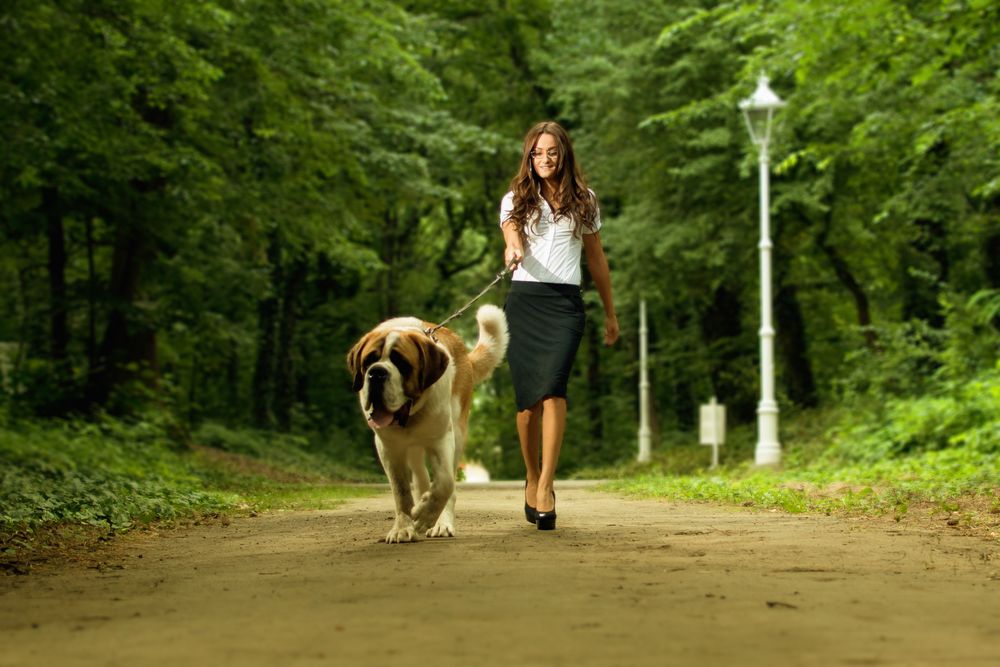
Several factors determine how much walking a dog requires, including their breed, energy level, and age, though all dogs should be walked at least once a day, preferably twice.

How Often Do You Walk Your Dog?
The frequency and duration of walks for your dog depend on various factors, such as their breed, age, and health and the activities that they do. As a general rule, most dogs require at least one or two walks a day, for around 30 to 60 minutes (unless otherwise specified by your vet). However, energetic and active dogs will need more frequent walks for longer amounts of time to keep them healthy and happy.
Keep in mind that each dog has their own unique needs and preferences.

Factors That Affect How Often You Should Walk Your Dog
Breed
Various breeds have different energy levels and therefore, different exercise needs.
High-Energy Dogs
High-energy breeds that require more exercise include:
Working and herding dogs naturally have a large amount of energy to burn.
Low-Energy Dogs
Examples of low-energy breeds that don’t need as much exercise are:
A few of the low-key dogs are quite large, but size doesn’t always matter for exercise needs. Small pups, like Chihuahuas, while energetic, don’t need as much walking as big ones.
You should also keep in mind that brachycephalic breeds, or flat-faced dogs, such as Bulldogs, Pugs, and Boxers, can overheat quite easily, so they can’t be overexerted. On hot days, watch out for heatstroke and signs that your dog is having trouble breathing.

Age
Age is a significant factor in the amount of exercise that a dog needs. Young pups require more exercise than seniors, but this also depends on their health.
Puppies
Puppies are full of energy but need short walks focusing on socialization and training rather than strenuous exercise. A puppy can get a lot of their exercise through play, and taking your young dog for long walks will likely overtire them. High-intensity exercise should also be avoided to help protect maturing bones and joints.
Adults
Healthy adult dogs need the most exercise, but this is still quite dependent on their energy level. For example, a Chihuahua needs 30 to 60 minutes of daily exercise, which can be achieved through play and short walks. A healthy Australian Shepherd generally needs about 2 hours of exercise every day. While walking is a significant aspect, they also require opportunities to run and engage in fast-paced activities.
Seniors
As dogs age, they tend to slow down and may experience age-related conditions, such as arthritis. Some seniors might still be raring to go mentally, but their physical bodies may not be able to keep up. Nevertheless, older dogs still need to be walked and exercised, albeit at a slower pace. Besides helping keep them in shape, walks are essential for their mental well-being. Consult your veterinarian to determine how to meet your senior dog's exercise requirements.
The 6 Reasons to Walk Your Dog
Walking is more than allowing your dog to go to the bathroom, though that’s definitely part of the process!
1. Weight Control
Walking can help keep your dog’s weight under control. Obesity in dogs is a common issue, but helping your pup get plenty of exercise can help prevent it.

2. Joint Health
Dogs need exercise to get their joints moving, which helps keep them in better health.
3. Overall Health
Regular walks help improve cardiovascular health, lower blood pressure, and build stronger bones and muscles.
4. Mental Health
Walking gives dogs variety in their usual routine. It’s also important to take them on different routes from time to time so they don’t get bored. Even if your dog has access to a large yard, walks give your dog a chance to smell new things and explore new places. A bored dog that isn’t getting enough physical and mental stimulation can become stressed and destructive.

5. Socialization
Socializing dogs is a critical aspect of canine ownership, especially for puppies. It also helps with their mental health because it gives them the chance to interact with new people and other dogs and discover new environments.
6. Bonding Time
Walking your dog gives both of you ample quality time and can help strengthen your bond.
Signs That Your Dog Needs More Exercise
If your dog is showing any of the following signs, you should consult with your veterinarian to rule out any medical issues and discuss whether it is time to increase your pet's exercise routine.
- Your dog is overweight.
- They are exhibiting destructive behaviors, such as digging in the yard and destroying furniture and belongings.
- They start urinating inside without a medical reason.
- They seem full of energy and not able to settle down for a nap after a walk.

Signs That Your Dog Might Need Shorter Walks
- If your dog is walking with an uneven gait and seems to be stiff, it could be a sign of pain and soreness.
- If your dog appears lethargic, lacks energy, and is reluctant to go outside, it might indicate a health issue or too much exercise.
After a walk, your dog should be tired but happy, not fatigued for an extended period. If your dog appears exhausted most of the day, consider reducing the duration or intensity of the walks, and consult with your veterinarian.
Frequently Asked Questions (FAQ)
Do I Have to Walk My Dog Every Day?
Yes. A small breed might be fine with extra playtime indoors if the weather is bad, but you should expect to take your dog for at least one long walk every day.
What If I Don’t Have Time to Walk My Dog Every Day?
If you can’t walk your pet yourself, ask a friend or family member to help you out, or consider hiring a professional dog walker. This is crucial if your pup is a high-energy breed. Ideally, you should aim to take your dog out for a walk in the morning and have someone else walk them in the afternoon. Then, after work, your dog should be taken for a nice, long walk in the evening.

Is It Okay to Just Walk My Dog Once a Day?
This might work if you have a low-energy or small breed, but it won’t be enough for a high-energy breed. That said, you can sometimes substitute a walk with active playtime, such as throwing a frisbee or ball. Aim to have at least 10 to 15 minutes of continuous play and activity a few times a day to help keep your dog both physically and mentally healthy.
Conclusion
Walking your dog is a critical aspect of being a responsible pet owner. If your dog's health is not optimal, consult with your vet to find ways to ensure that they still get exercise. How long and how often you walk your dog depends on their age, health, and breed. Exercise is an essential form of preventive care because it can reduce the risk of a variety of ailments and improve your dog's overall health and well-being. Also see:
Sources
Featured Image Credit: Fnsy, Shutterstock
Expert dog care, straight to your inbox
News, insights, expert advice, and everything dog.

No spam — unsubscribe anytime.
By signing up, you agree to our Terms & Conditions and Privacy & Cookies Policy.
How useful was this post?
Click a star to rate. You can leave written feedback afterwards. (We read all feedback.)

Kathryn was a librarian in a previous lifetime and is currently a writer about all things pets. When she was a kid, she hoped to work in a zoo or with wildlife in some way, thanks to her love for animals. Unfortunately, she's not strong in the sciences, so she fills her days with researching and writing about all kinds of animals and spends time playing with her adorable but terribly naughty tabby cat, Bella. Kathryn is hoping to add to her family in the near future – maybe another cat or two and a dog.