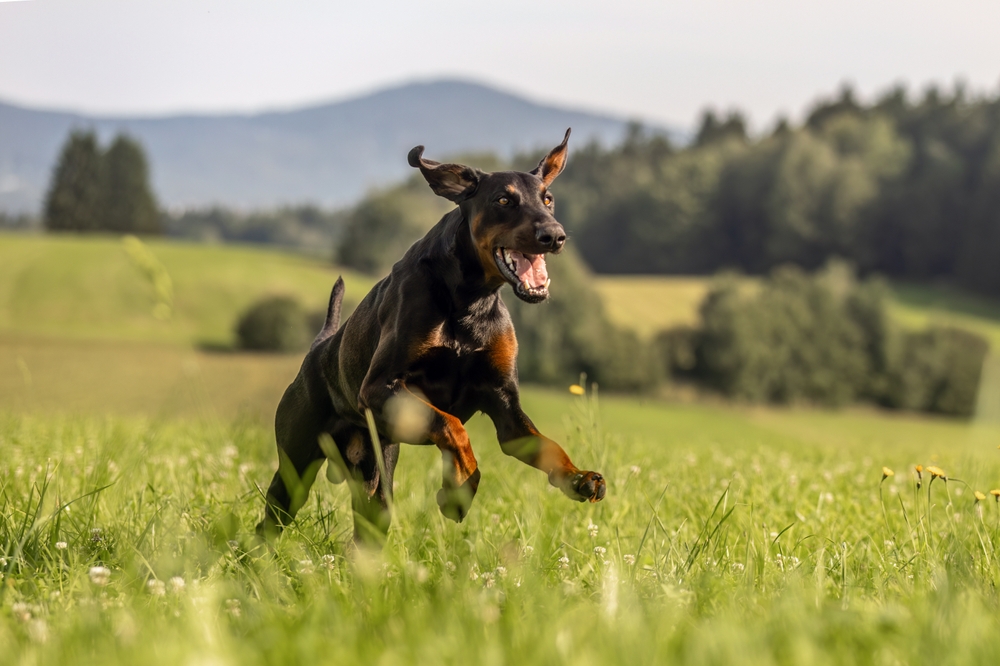
Even though most owners know it’s there, a dog’s prey drive can still surprise and overwhelm them. Maybe your dog yanks on the leash during a walk or bolts into the bushes while playing in the yard. If they can get loose, it often seems that no amount of training will overcome the urge to stalk, chase, and catch anything moving in their line of vision.
As you can imagine (if you don’t already know first-hand), the prey drive can get you and your dog in a fair amount of trouble if they get the chance to act on it at the wrong time. While training is essential, prevention is more critical than anything. Keep your dog, neighbors, and other animals safe by knowing the signs of a prey drive in dogs and how you can manage it.

How Does It Work?
The prey drive is a dog’s innate urge to pursue and kill prey. Dogs and wolves evolved from a common ancestor tens of thousands of years ago but retain many of their mental, physical, and social traits. Although domestication has eliminated the need for dogs to fend for themselves, their prey drive remains intact as predatory behavior that they may direct toward wild animals, other pets, or even vulnerable people.
- Orient
- Eye
- Stalk
- Chase
- Grab-bite
- Kill-bite
- Dissect
- Consume
Variations to this process include changes to terminology or added and subtracted steps. Recently, one paper suggested adding the “hunt” and “possess” stages, referring to phases before the “orient” and “kill-bite” steps, respectively.
Dogs do not always perform every step of the predatory sequence but often do certain parts depending on their experience and the situation.

What Are the Signs of Prey Drive in Dogs?
We often see these predatory behaviors in our pets to various extents.
- Stalking squirrels in the backyard
- Digging through holes to reach burrowing animals
- Sniffing and tracking a scent
- Fixated gazing at small rodents, cats, or birds
- Chasing cars or bikes
- Pursuing smaller pets
- Shaking toys violently from side to side
If you’re concerned about your dog’s behavior, we suggest you speak to a vet.
If you need to speak with a vet but can't get to one, head over to PangoVet. It's our online service where you can talk to a vet online and get the advice you need for your dog — all at an affordable price!
Where Is It Used?
A high prey drive is rarely beneficial for dog owners, but for working dogs, it can spell the difference in their success. Handlers determine the best candidates for search and rescue work and military and police duty by their level of prey drive. With a higher prey drive, these dogs show the tenacity and urgency needed to excel in these demanding jobs.
Though many purebred and mixed-breed dogs can fill these roles, herding, hunting, and other working breeds are the most popular due to their physical abilities and increased prey drive. As they developed various breeds over the ages, breeders selectively enhanced and diminished aspects of the predatory sequence for dogs to efficiently do their jobs.

Hunting Dogs
Hunters have used their dogs’ prey drive to their advantage for centuries, refining certain predatory traits and inhibiting others to make them perform specific tasks. Hounds work away from the hunter, doing everything up to and including killing their prey. Pointers orient toward and eye their prey before engaging in a chase when signaled by their handler, while Retrievers carry but don’t kill, dissect, or consume their quarry after picking it up.
By contrast, farmers didn’t have to tweak their ratters’ prey drives much when they used the dogs to control rodents around their property. As long as they knew which animals were off limits, small yet hardy Terriers, Schnauzers, and Pinschers worked independently to protect crops and farm buildings by catching and killing vermin.
Herding Dogs
Herders like Australian Shepherds and Corgis adapt their predatory habits to move livestock. As arguably the most efficient herding breed, Border Collies use a combination of the predator’s stare (the “eye”). They stalk and chase to work the flock, engaging in their natural hunting behaviors short of attacking and killing their targets.

How Do I Help My Dog’s Prey Drive?
Managing your dog’s prey drive is crucial for protecting them, those around you, and yourself. A dog with a strong drive can have trouble making safe decisions, often letting instinct overwhelm their judgment. They may chase something into traffic, attack a dangerous animal, or pursue and harm a person running or riding on a bike. Keeping them in control requires redirecting their attention and removing chances to use predatory behaviors in unwanted ways.

Prevention
Managing your dog’s prey drive entails preventing them from engaging in the predatory motor sequence.
- Putting up a high-walled fence to keep your dog contained within your yard
- Keeping your dog on a leash and harness when walking them
- Using a muzzle to prevent grab or kill-biting
- Training them to have a great recall and to drop things on command
By keeping your dog from practicing predatory behaviors, you make the reward of predation less palpable, salient, and compelling. Paired with positive reinforcement training to make other responses more rewarding, prevention can help dogs make better decisions when they have the option to engage their prey drive.
Redirection
Prevention can keep a dog’s arousal in check, but there will be plenty of moments when they’ll have the chance to engage in predation. Neighborhood walks are a familiar example, like when your dog spots a squirrel and tries to run after it. Stopping your dog from practicing and reinforcing the behavior is crucial to protect them and others nearby while helping to subdue the urge in the future.
Handlers should learn to recognize objects that might engage their dog’s prey drive and redirect them as needed. You must pay attention to stimuli around you, know the signs that your dog’s prey drive is activated (like a fixed stare and perked-up ears), and the threshold at which they will act on it.
How close can you be to a stimulus before your dog orients, eyes, and tries to chase? How much stimulation can your dog handle before they succumb to their prey drive? Knowing what causes your dog’s prey drive to engage will help you determine when it’s time to move away and how to minimize their arousal.
If you get close to a stimulus, calmly tell your dog, “This way!” and turn around to walk the other way before they can react. Should you go beyond their reactive threshold, distract your dog with excited body language and treats to get them to focus on you until the stimulus passes.
Another way to redirect and train your dog to control their prey drive is by using a flirt pole or a teaser toy. These often come on an actual pole and are used to teach your dog when to stand down and wait before engaging, when to engage with the toy, and when to drop it. It can be a way to bond with your dog as well as exercise them physically and stimulate them mentally, with a positive reward at the end, letting them get the toy.

Training
As you prevent your dog from practicing actions you don’t want, you must train the behaviors you do want. Consistent obedience and recall training from a young age and dialing in essential cues will lessen the chances of your dog initiating the predatory sequence and give you tools to pull them out of it when they’re in a situation that might engage their prey drive.
Training commands like “drop it,” “leave it,” and “wait” can prevent your dog from investigating a hazardous object or animal. The most crucial behavior is recall. A solid recall command will interrupt your dog’s predatory sequence, allowing them to stop what they’re doing and return to you.
If you enjoy outdoor activities where your dog is at a high risk of engaging in their prey drive, you should go as far as training an emergency recall. It’s more potent than the typical “come” command; the emergency recall earns high-value rewards every time, almost guaranteeing that your dog will follow it.
Enrichment and Positive Training
The prey drive influences a dog’s actions by releasing dopamine and creating positive emotional responses. Dogs love the feeling predatory behavior provides. In many instances, the reward of predation exceeds even the highest-value treats and toys you can offer, making it practically impossible to stop without restraining your dog.
Since the prey drive significantly impacts a dog’s affective state, many believe that eliminating the ability to act on it can negatively affect their welfare. Instead, owners should find safe ways to let dogs engage in parts of the predatory sequence through controlled daily enrichment.
Backyard and indoor games, flirt poles, toys, and activities can positively harness your dog’s prey drive. Different breeds prefer different parts of the predatory sequence based on their background. Hounds will enjoy tracking games to find rewards, Terriers like digging to unearth their prey, and Retrievers like an old-fashioned game of fetch. Many dogs enjoy training with a flirt pole to reinforce the wait, leave it, and drop it commands.
Finding activities your dog loves will keep them in shape, build your bond, and encourage more obedient behavior.
Conclusion
Understanding your dog’s predatory intensity, triggers, and behaviors will help you direct their prey drive toward more positive outlets and avoid situations that might ignite it. A dog’s prey drive is instinctual. By knowing the signs and how to manage them, you can help your dog exercise in a safe environment without endangering themselves, a wild animal, or any other spectator.
Featured Image Credit: yasphoto, Shutterstock