9 Irish Dog Breeds: Info, Pictures, History & Overview

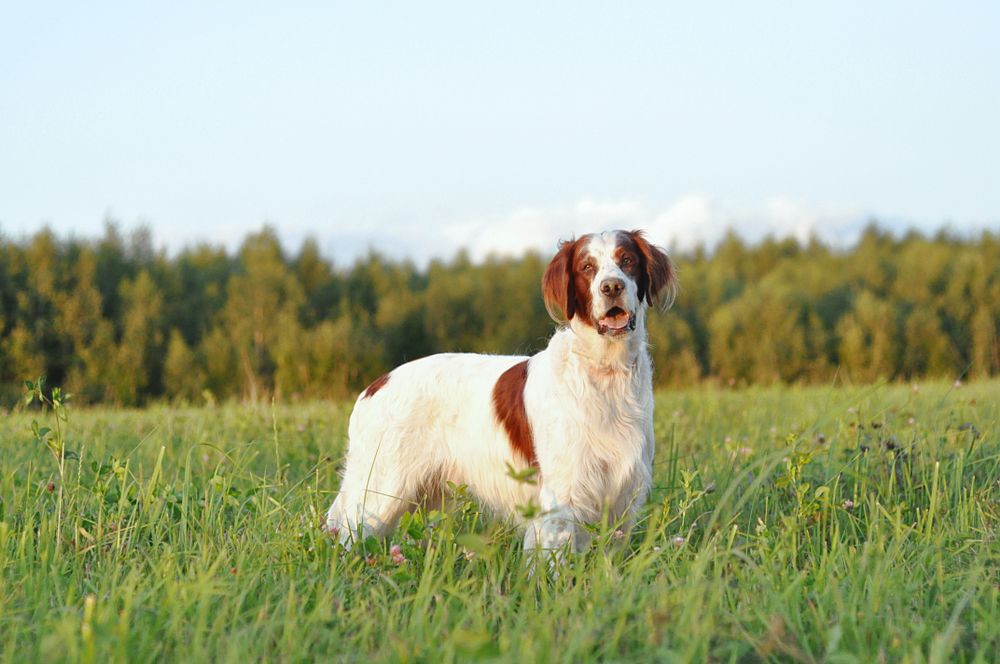
Ireland has an abundant history and is known for St. Patrick's Day, Guinness beer, Irish pubs, diverse landscapes, literature, food, music, and, of course, several Irish dog breeds. The Emerald Isle has been the birthplace of many special breeds that served valuable purposes for farmers and landowners. Today, many Irish breeds are still used as working dogs; however, many have evolved into wonderful family companions across the globe.
In this guide, we’ll examine these nine Irish dog breeds in-depth to discover each one’s interesting background. From terriers to spaniels to setters to hounds, let’s unlock the history of these magnificent dogs.

How Are Irish Dog Breeds Classified?
Irish dog breeds are classified by a proven lineage that traces back to dogs that originated in the country. Ireland has nine Irish dog breeds, most of which are recognized by the American Kennel Club and the Irish Kennel Club. All Irish breeds have a deep, rich history, with some well-known and others shrouded in mystery. If you have a mixed breed with suspected Irish ancestry, you can always do a DNA test to determine the lineage.
The 9 Irish Dog Breeds
1. Irish Setter

Breed Overview
Origin:
Lifespan:
Height:
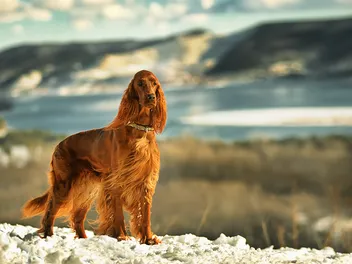
The Irish Setter’s existence dates back to the 19th century. Known for being one of the most beautiful dogs in the world, the Irish Setter is an exceptional hunter who uses a keen sense of smell to track down game birds. Their hunting style predates firearms; however, the breed is perfectly capable of accompanying hunters with guns, classifying them as gun dogs. Speaking of hunting style, the Irish Setter shows the hunter where a game bird is located by lying on their belly.
These dogs have long and flowing red coats, and they are affectionate and eager to please. These outgoing and sensitive dogs do well with other pets and make exceptional family companions.
2. Irish Terrier

Breed Overview
Origin:
Lifespan:
Height:
The Irish Terrier is known as the “daredevil of the Emerald Isle” for their bold, dashing, and gallant temperament while carrying a tender-hearted character. The fiery red coat matches their daring personality, and they are considered a long-legged terrier. They are a lively and outgoing breed with boundless energy and are excellent athletes.
Owners of their breed can enjoy enrolling their dogs in agility, flyball, obedience, and rally events, as this is an excellent way to unleash all that energy. These dogs are intelligent and willing to please, making training relatively easy with positive reinforcement and consistency.
3. Irish Water Spaniel

Breed Overview
Origin:
Lifespan:
Height:
The Irish Water Spaniel's thick and curly reddish-brown coat makes the breed capable of handling the harsh, cold waters of the North Sea. They love to swim, hence the name, and in the 1860s, they quickly became popular among sportsmen for their retrieving abilities and gentle disposition. Hardworking and brave in the field, these dogs are playful and affectionate at home.
They have a smooth, ground-covering gait and can work in the field for hours. As a pet, they make excellent family companions, as they will gladly accompany you on hikes, runs, walks, and especially swimming. They have high energy and do best with active families with the time to keep them adequately exercised.
4. Irish Wolfhound

Breed Overview
Origin:
Lifespan:
Height:
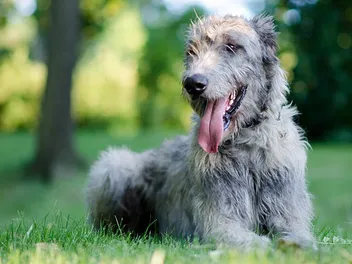
The Irish Wolfhound is among the oldest breeds in history and goes beyond the Middle Ages. They are the tallest dog breed in the world, averaging 30 to 32 inches in height and weighing a whopping average of 105 to 120 pounds, with some getting up to 180 pounds. They have a similar build to Greyhounds, with a muscular physique built for ample speed, but their coats are vastly different, with medium-length wiry hair. They are calm, dignified, and courageous dogs with a kind and affectionate temperament.
Irish Wolfhounds have been mentioned in literature as far back as 5th-century Ireland; however, their factual history is difficult to differentiate between fact and folklore. It's believed they were created by breeding Britain's indigenous large barge dogs with Middle Eastern coursing hounds. The breed hunted big game, such as the now-extinct Irish Elk, which stood 6 feet tall.
Almost Went Extinct
In 15th-century Ireland, they hunted wolves that were overrunning the countryside. The breed began to specialize in wolves, and in the 17th century, the Irish Wolfhound hunted wolves and big game to extinction, which almost made the Irish Wolfhound go extinct, as well—a tale of doing their job so well that it almost caused their demise. Thankfully, they were revived in the 1860s and recognized by the American Kennel Club (AKC) in 1897.
5. Irish Red and White Setter

Breed Overview
Origin:
Lifespan:
Height:
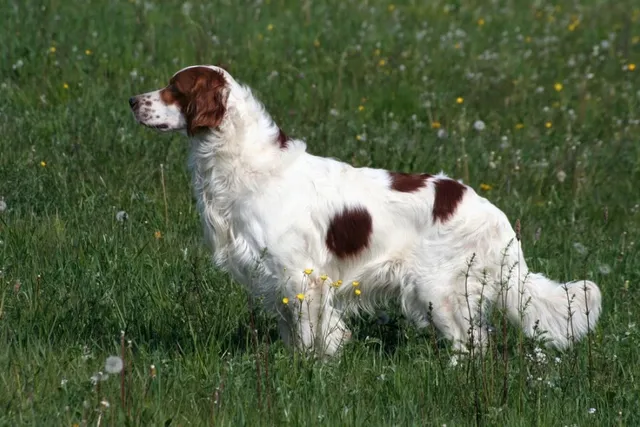
The Irish Red and White Setter is considered the original Irish Setter. These medium-sized bird dogs were bred for hunting. In the early days, their hunting style involved sneaking up on game birds by crawling on their bellies, then freezing in a setting position with their tail to alert the hunter, who would then throw nets over the birds. When guns were invented, the Irish Red and White Setter adapted quickly and continued their excellent hunting skills.
These dogs are intelligent, high-spirited, fun-loving, and friendly. They have abundant energy, and an adult Irish Red and White Setter will gladly accompany you on walks, bike rides, or hiking.
6. Soft-Coated Wheaten Terrier

Breed Overview
Origin:
Lifespan:
Height:
The Soft-Coated Wheaten Terrier was bred over 200 years ago in Ireland as an all-purpose farm dog and family companion. Initially, the breed was known as the “poor man’s dog,” as only wealthy landowners could own hunting dogs, such as Beagles, hounds, and spaniels under the “laws of the forest.” Docking was done to these terriers to prove they were “within the bounds of the law,” and the Soft-Wheaten Terrier was born.
The versatility of the breed’s farm dog duties was undeniable, as they excelled in keeping down vermin, protecting people, property, and livestock, working cattle, hunting foxes and badgers, and even becoming gun dogs.
The Soft-Coated Wheaten Terrier arrived in the U.S. in the 1940s, but it wasn’t until the 1950s that the breed took off. As the name suggests, the coat of a Soft-Coated Wheaten Terrier is soft and silky rather than wiry like most terriers, and it requires quite a bit of maintenance to keep it from matting.
7. Glen of Imaal Terrier

Breed Overview
Origin:
Lifespan:
Height:
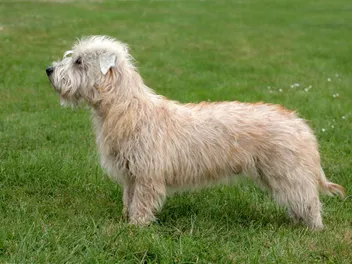
The Glen of Imaal Terrier was developed in the 1500s and is one of four native Irish Terrier breeds, including the Irish Terrier, the Soft-Coated Wheaten Terrier, and the Kerry Blue Terrier. Historically, the Glen of Imaal Terrier had the unique role of helping their owners cook by running in a contraption similar to a hamster wheel to roast meat over an open fire.
This breed was unknown for years due to its remote location in the Wicklow Mountains. In the 16th century, Flemish and Lowland soldiers settled in the remote area, and their low-slung French dogs mated with existing terries in the area, ending with the creation of the Glen of Imaal Terrier.
This breed has short legs and a muscular body and takes its duties as a working dog seriously. They are gentle, courageous, and loyal companions; however, they have an independent streak and can be stubborn when it comes to training.
8. Kerry Blue Terrier

Breed Overview
Origin:
Lifespan:
Height:
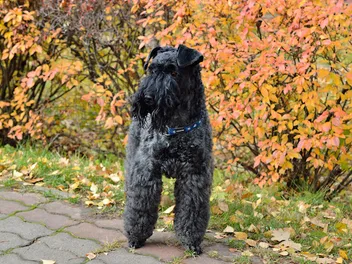
The Kerry Blue Terrier is a close relative of the Soft-Coated Wheaten Terrier and possibly the Irish Wolfhound. These dogs are named after the area they’re from, County Kerry in the south of Ireland. Their history is masked in myth and legend, and it is unclear, but legend has it that their roots trace back to the Spanish Armada, a 130-ship fleet that set out to invade England in 1588. The ships were badly damaged, and many were lost, except for one. This surviving ship had a dog aboard, a lone survivor of the battle. Once on dry land, this wavy, thick-coated dog mated with the Soft Wheaten Terrier, resulting in the Kerry Blue Terrier.
The breed excelled in herding sheep and cattle, controlling vermin, and hunting game on both land and water, proving their worth as working dogs.
The show-stopping blue coat is an undeniable trait of this breed. They are also outgoing, playful, and people-oriented. They are even the official dog of Ireland.
9. Kerry Beagle

Breed Overview
Origin:
Lifespan:
Height:
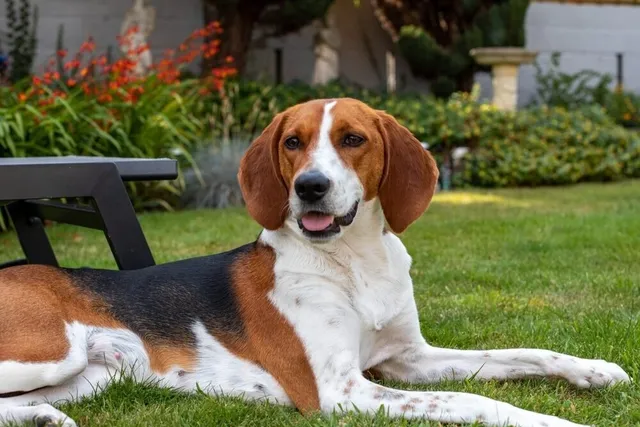
The Kerry Beagle is one of the oldest Irish breeds and is thought to have descended from the “old southern hound” or Celtic hound. It’s believed their origins date back to the 16th century; however, the exact origins are unknown. In the breed’s beginning, they were used to track deer and other large game, as their scent and tracking abilities are outstanding. Today, the breed is rather rare but is used to hunt foxes and hares in its native land.
These dogs are friendly and good-natured. They have an even temperament and get along very well with people and children. They are also obedient and loyal and love to play with their humans and other dogs.
Conclusion
Ireland is an extremely old country with a rich history that has produced some outstanding canines. Some Irish dog breeds are very well-known globally, thanks to dog shows, in which many are frequent participants. While most were bred for hunting and taking the role of working dogs, many have settled down into family life as fantastic canine companions.
See Also:
Sources
https://www.akc.org/expert-advice/lifestyle/irish-dog-breeds/
https://www.ikc.ie/dog-ownership/types-of-dog/breeds/native-breeds-of-ireland/
https://www.webmd.com/pets/dogs/what-to-know-about-irish-water-spaniels
https://www.akc.org/expert-advice/dog-breeds/irish-wolfhound-history-behind-the-breed/
https://www.akc.org/expert-advice/lifestyle/fun-facts-glen-of-imaal-terrier/
https://www.akc.org/expert-advice/dog-breeds/kerry-blue-terrier-history/
Featured Image Credit: Dinotopia, Shutterstock
Expert dog care, straight to your inbox
News, insights, expert advice, and everything dog.

No spam — unsubscribe anytime.
By signing up, you agree to our Terms & Conditions and Privacy & Cookies Policy.
How useful was this post?
Click a star to rate. You can leave written feedback afterwards. (We read all feedback.)
Rachel Giordano is a writer and musician living in Pensacola, Florida, with her partner and their two dogs, Aero, a Border Collie/Sheltie mix and Sophie, a Boston Terrier. Rachel holds a Bachelor of Arts degree in communication and loves writing about animals of all types. When she’s not writing about pets, she loves to write suspense/thriller novels. A musician by night and writer by day, she enjoys educating the public about the needs and requirements of animals, big and small.