Get

In Your Inbox

Dogster is reader-supported. When you buy via links on our site, we may earn an affiliate commission at no cost to you. Learn more.

How to Help a Dog With Leash Manners: 10 Vet-Verified Tips

Share

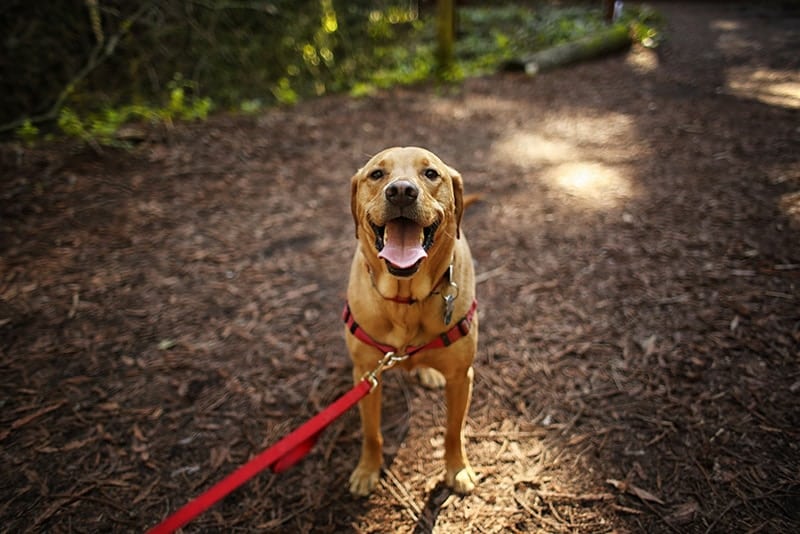
dog on a leash hiking with owner

When you take your dog out for a walk, are you constantly pulling them back on the leash or apologizing for their behavior? With proper training using positive reinforcement and consistency, you can significantly improve leash manners. But simply saying you can train them and learning how to train them are two completely different things, which is why we came up with this guide that breaks down everything you need to know about leash training your pet. From the supplies you need to the dos and don’ts, we’ve highlighted all the basics for you below.

Dogster divider_v2_NEW_MAY_24_

What You Need

The last thing you want is to try to leash train your dog with the wrong supplies and run into problem after problem. Start by getting a high-quality dog harness that properly fits your pet.

You don’t want to go for a collar that puts pressure directly on the neck (such as slip, choke, or prong collars), as these can be unpleasant for your dog and may increase discomfort, stress, or the risk of neck injury. Instead, a harness is probably your best bet. Next, get a quality 6-foot leash. Don’t get a retractable leash or one that’s longer than 6 feet, or else it can encourage your pup to wander further away from you than you’d like and make you lose control.

Finally, get some great training treats and some waste bags to clean up while on your walks. When selecting treats, find something your dog enjoys and only give it to them during these training sessions.

Dogster divider_v2_NEW_MAY_24_

The 10 Tips for Leash Training a Dog

1. Start in a Quiet Space

When you’re first trying to leash train your dog, you want to keep things as simple as possible for them, and you can start by limiting the number of distractions. Don’t start leash training them outside. Instead, put them on a leash in a quiet room or space and give them time to calm down with the leash on.

This is especially true if your dog already associates the leash with walks and becomes overly excited or aroused when they see it. Let them calm down with the leash on before you even take a step outside, and reward calm behavior to help create a relaxed association.
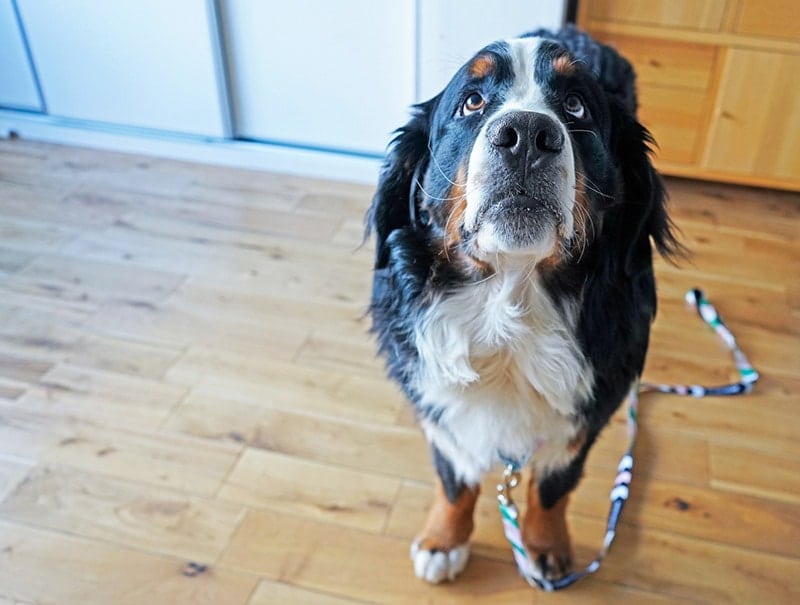
bernese-mountain-dog-on-a-leash
Image Credit: Kristesoro, Shutterstock

2. Use Treats

Dogs love attention, but when you’re trying to get them to listen, having a little extra motivation is always a good idea. Find some of their absolute favorite treats and then only give them these treats during leash training to help keep them motivated. Any time they do something you like, reward them immediately to let them clearly associate the reward with the desired behavior.


3. Stay Still

When you’re trying to leash train your dog, start by putting them on a leash and staying still! You want your dog to understand that they move when you move, and that starts with teaching them that when you’re not moving, they should remain calmly near you.
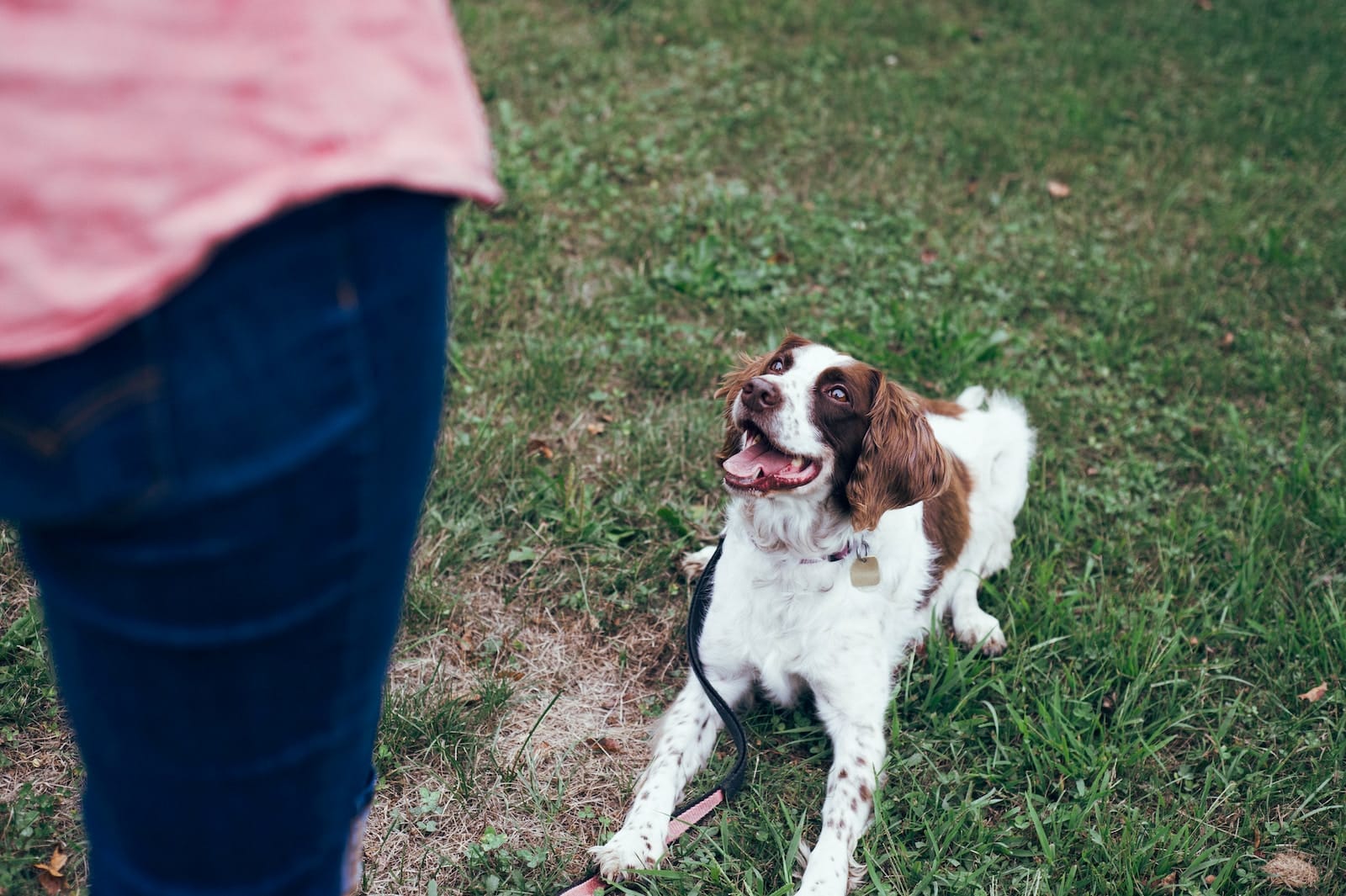
white and brown short coat medium dog on green grass field during daytime
Image Credit: Destiny Wiens, Unsplash

4. Slowly Extend the Time Spent Walking

You can’t go from a quiet room to a long walk overnight. Start with a short walk, perhaps to the end of the road and back, and slowly extend the distance or duration if your dog is listening. If they’re not listening, pause, reduce distractions, or shorten the session rather than continuing when they are overwhelmed. You can try again tomorrow.


5. Stop Walking When They Pull

If at any point your dog starts to pull on the leash during the walk, stop moving. Don’t pull at the leash and yank them back, and don’t engage with them until they settle back down and stop pulling. It can be a bit frustrating, but it’s by far the most effective method. They need to learn that loose-leash walking allows forward movement, while pulling pauses the walk.
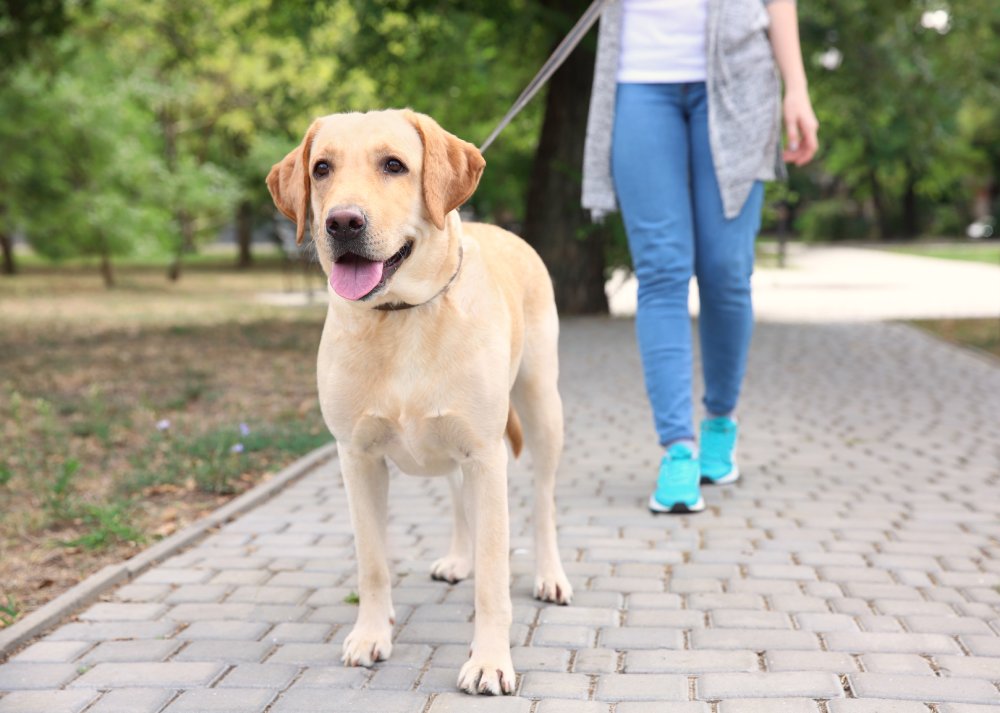
woman and labrador retriever going for a walk
Image Credit: Africa Studio, Shutterstock

6. Don’t Be Afraid to End Walks

If your dog simply isn’t able to focus or is becoming overly aroused or stressed throughout the walk, don’t be afraid to take them back home! Your pet enjoys their walks, and ending the walk early helps prevent rehearsal of pulling or overexcited behavior and supports better learning during future sessions.


7. Mix Up When You Offer Treats

While treats are a great motivator, you want to move away from them once they start to learn what to do. Start offering treats less and less so your pup doesn’t come to expect them all the time, and begin using intermittent reinforcement along with praise, movement, or other rewards. Before long, they’ll start to listen with expectation of a surprise because occasional primary reinforcement helps maintain reliable behavior.
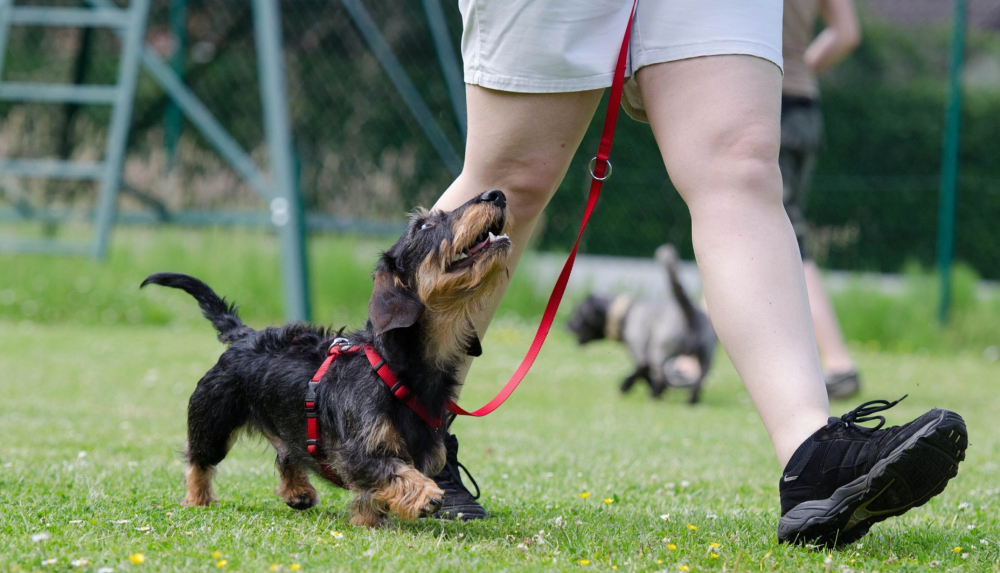
Dachshund dog walking doing a dog training outdoors
Image Credit: Subhasish Bose, Shutterstock

8. Don’t Use Retractable Leashes

Retractable leashes are common, but they’re not recommended for leash training. They keep the leash under constant tension, which can encourage pulling and make consistent loose-leash training more difficult. They can also be dangerous because once a dog reaches the end of the length, the sudden stop may increase the risk of neck injury or soft tissue strain, and the thin cord can cause injuries to people or pets if it wraps around skin or limbs.


9. Find New Places to Go

Your dog gets comfortable with routine, but if you really want them to behave well in new and unique situations, you need to introduce them to unfamiliar terrain and smells. Find new places to walk to and allow them to show off their new skills.

If you keep things too simple, then they won’t know what to do when new situations arise, so introduce new places progressively while keeping the experience positive and manageable.
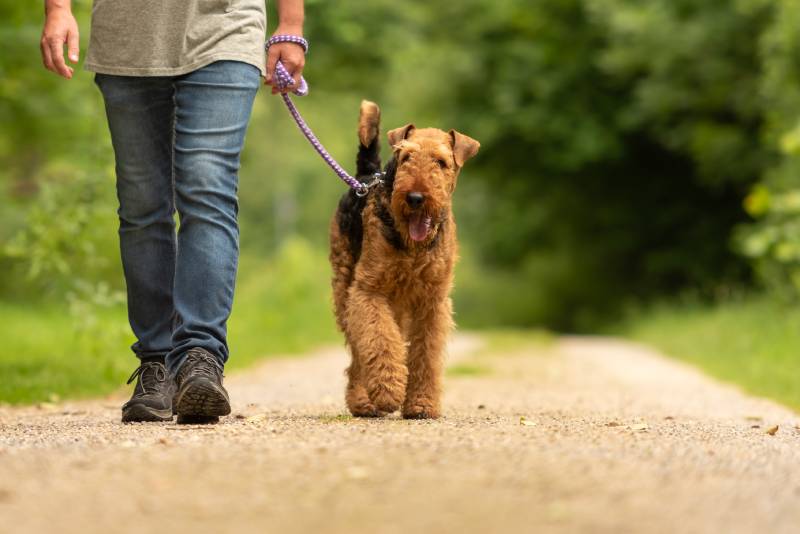
Dog handler is walking with his obedient airedale terrier dog on the road in a forest
Image Credit: thka, Shutterstock

10. Avoid Routes That Could Cause Commotion

If you’re on a new route and one of the houses has a dog outside without a leash, then it could lead to a potentially dangerous situation. If you can avoid these situations, it’s best for both you and your dog, especially while they are still learning and building confidence with leash skills.

Dogster divider_v2_NEW_MAY_24_

Final Thoughts

While your pup might embarrass you in public when they’re on a leash now, if you follow the tips we’ve highlighted, you’ll have a well-behaved pooch over time. It’s a bit of work for sure, but when they’re finally getting the hang of things, you’ll feel a sense of pride and know that all the hard work was worth it.


Featured Image Credit: N K, Shutterstock

Want content like this delivered to you?

Sign Up For Our Newsletter

News, insights, expert advice, and everything dog

* By submitting, you agree to our Terms & Conditions and Privacy & Cookies Policy.


How useful was this post?

Click on a star to rate (you can leave written feedback after clicking submit)

Help us improve Dogster for pet parents!

Your feedback really matters.

What did you like about this post? Also how can we improve it?

Join the conversation

Leave a Reply

You’re very welcome to leave a comment or question. Please know that all comments must meet our community guidelines, and your email address will NOT be published. Let’s have a positive and constructive conversation.


Talk With A Vet Online

Peace of mind,
anywhere, anytime

Affordable vet advice

Ask Dr. Paola- Help! My Dog’s Sleeping Habits Have Changed! (May 18, 2026)

Welcome to our “Ask Dr. Paola” series, where every Monday we bring expert advice straight from Dr. Paola Cuevas (MVZ) to help our...

The Crate Setup Most Dog Owners Get Wrong (And How To Fix It!)

Most people assume that if their dog hates the crate, the crate is the problem. So they try a bigger one, a different...

1,500 Beagles Rescued from Wisconsin Lab Farm – Here’s Where They’re Going

You may remember that a few weeks ago, we reported on a tense situation at Ridglan Farms, Wisconsin, a facility infamous for housing...

Dogster’s Weekly Photo Contest Winners: Window Watchers (May 11, 2026)

Every week our team gets the privilege of sorting through our readers photos to choose what dogs will win this weeks contest! See...

More related

How Fast Can a Weimaraner Run? Facts & FAQ

The Weimaraner, also known as the “Silver Ghost,” is a large dog breed that is well-known for its exceptional speed, agility, and endurance....

Can Maltipoos Be Left Alone? Vet-Approved Tips to Help Separation Anxiety

As much as you would rather spend all your time with your furry best friend, there will be times when you can’t physically...

Poochin (Japanese Chin Poodle Mix): Info, Pictures, Care & More

The Poochin is an uncommon mixed breed of a Japanese Chin and Poodle. This toy-sized dog is typically kept as a companion animal,...

10 Best Dog Foods for Yeast Infections in 2026 – Reviews & Top Picks

Dogs can suffer from yeast infections similar to humans. Dogs, regardless of their gender, breed, or age can develop a yeast infection at...

Keep reading

10 Foods With Potassium for Dogs: Vet-Verified Nutrition Facts

If your dog has hypokalemia or a low concentration of potassium in their bloodstream, your veterinarian may have recommended that you supplement your pet’s regular meals with high-potassium treats. Potassium is vital to the function of the muscles, nerves, and...

cute beagle puppy eating at a living room

8 Best Dog Foods for Weight Loss Made in the USA in 2026 – Reviews & Top Picks

Just like humans, dogs may struggle with excess weight. However, it’s more than just an aesthetic problem. Weight gain in dogs can contribute to a variety of health conditions that can shorten their lifespan and diminish their quality of life....

boston terrier dog eating from white bowl

5 Safe Chews for Dogs: How to Choose the Right Dog Chews (Vet Approved)

No one would argue that dogs love to chew! It seems to be one of their favorite daily activities. Since it’s something that they do so frequently, you may think that they have an iron stomach and can chew up...

Golden Retriever holding a chew

Nutro Dog Food Review 2026: Pros, Cons & Expert’s Opinion

Review Summary Finding high-quality, tasty, and affordable meals for our dogs is something we’re all searching for in dog food, and Nutro dog food is a great option. It provides a premium formula that won’t break your budget. The brand...

Dogster_Nutro Dog Food Review

Can Dogs Eat Sherbet? Vet-Reviewed Health & Safety Guide

Eating a cold and refreshing bowl of sherbet on a hot summer day sounds incredibly appealing, and it’s quite likely that your dog is watching every spoonful going into your mouth. This is the point when you wonder if it...

Can Dogs Eat Sherbet

Rachael Ray Nutrish Puppy Food Review 2026: Recalls, Pros & Cons

Review Summary Rachael Ray Nutrish is a dog food brand founded by celebrity chef Rachael Ray in 2008. The first recipes were developed for her own dogs as she wanted to feed them nutritious, clean meals. Today, you can find...

Dogster_Rachael Ray Nutrish Puppy Food Review

10 Best Wet Dog Foods for Chihuahuas in 2026 – Reviews & Top Picks

Chihuahuas are feisty and charming little dogs, and when it’s time to find new food, you want to ensure that your pup is getting only the best. There is a definite advantage to feeding wet or canned food to your...

Two chihuahuas eating together

Can Dogs Eat Saffron Rice? Vet-Verified Facts & Safety Guide

Saffron rice is a tasty and savory dish, and dogs may be tempted to eat it. Many dogs enjoy the taste of rice and may see no problem with eating saffron rice. However, the issue with saffron rice is that...

Can Dogs Eat Saffron Rice

Love Dogs? So Do We! Join the Dogster Community

Stay informed with expert pet care insights delivered straight to your inbox! Discover professional guidance on animal behavior, feeding tips, trusted product picks, and much more.


Sign up for the Dogster Email Newsletter