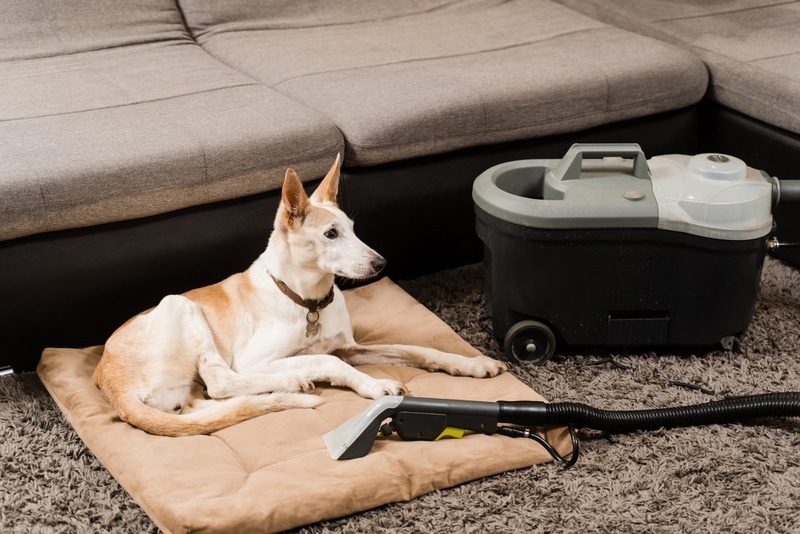
If your dog loves their bed just as much as you love yours, hygiene is an important factor to consider. We change and wash our bed linens regularly, and our linen is not nearly as dirty and soiled as our dog’s bed and blankets. You should wash your dog’s bed once every 2-4 weeks.
In this article, we’ll discuss why it’s important to wash your dog’s bed, how often you wash it, and some tips on how to wash it so your dog can rest in a bed that is clean and fresh.

Why You Should Wash Your Dog’s Bed
It is extremely important to regularly wash your dog’s bed for a couple of reasons. First, your dog’s bed is one of the dirtiest items in your home and can be a breeding ground for bacteria. Even though you are not the one sleeping in it, you probably come into contact with your dog’s bed several times per day. Secondly, washing your dog’s bed can prevent a serious build-up of hair, which is very important for dog owners who suffer from allergies.
Our pets can carry organisms such as parasites and bacteria, which, unfortunately, can survive for varying lengths of time on blankets and beds. These organisms can be passed from your dog’s bed and dog and then to people. Fleas in particular can make a bed their home. With most of the flea life cycle occurring in the environment and not on your dog.
Keeping your dog’s bed clean by regularly washing it keeps everyone in the home healthy.

How Often to Wash Your Dog’s Bed
If your dog is a small house dog that doesn’t venture outdoors much, it will be a lot cleaner than a larger active dog that spends most of its time outdoors. Dogs that spend more time outside typically carry more ticks and fleas, as well as muddy paws and dusty fur. It will also depend on how much your dog sheds and how severely you may react to your dog’s fur and dander if you suffer from allergies.
Your dog’s bed and bedding will need to be washed more during the peak tick and flea season, allergy season, and during seasons of high shedding.
Generally, we recommend washing your dog’s bed in hot water and drying it in high heat (or as recommended on the care label) once a week to keep your pet as clean and comfortable as possible. If your dog’s bed is covered with blankets, the blankets will need frequent washing, but the bed can be washed once every 2-4 weeks.
How to Wash Your Dog’s Bed
Washing your dog’s bed may sound pretty straightforward, but how you wash it is important to ensure it is properly cleaned.
Before You Start
Before cleaning your dog’s bed, you should vacuum it thoroughly using the upholstery attachment to remove loose hairs and debris. This is important because pet fur sticks to the wet fabric, which will make it hard to remove afterward. Vacuuming your dog’s bed should also be done between washes to minimize hair buildup, especially if you suffer from allergies.
For tougher, set-in stains or odors, we recommend using an enzyme cleaner to help lift them before you wash.
Our Favorite Cleaner
Hepper Advanced Bio-Enzyme Pet Stain & Odor Eliminator Spray is our favorite all-purpose cleaner for pet messes. It permanently lifts the very worst stains and odors, making clean-up and accident prevention a breeze. Hepper offers a 100% guarantee, which is a great bonus! Learn more about it here.
| Rating | Image | Product | Details | |
|---|---|---|---|---|
Best Enzymatic Cleaner

|

|
Hepper Advanced Bio-Enzyme Pet Stain & Odor Eliminator Spray |
|
Check Price |
At Dogster, we’ve admired Hepper for many years, and decided to take a controlling ownership interest so that we could benefit from the outstanding products of this cool pet company!
Hand Wash or Machine Wash?
Most dog beds are machine washable, but some are only suitable for handwashing. If you need to handwash your dog’s bed, let the bed sit in a solution of hot water and pet-safe detergent for 20 minutes and repeatedly rinse until all the soap is gone.
If you can machine wash your dog’s bed and blankets, throw them into your washing machine and use the hot setting to ensure any parasites or bacteria are killed. It should be washed separately from other household items at a minimum temperature of 140˚F if possible.
Which Detergent Should You Use?
Make sure to choose a pet-safe detergent when washing your dog’s bed. Commercial products with harsh chemicals can irritate your dog’s skin, especially if its skin is sensitive. Products containing bleach, petroleum, phenols, phthalates, distillates, and formaldehyde should be avoided.
It is helpful to add vinegar to your wash cycle. Add 1/4 or 1/2 cup of white vinegar or apple cider vinegar with detergent to help loosen hair and deodorize.
Dry Your Dog’s Bed
If you have hand-washed your dog’s bed, squeeze out any excess moisture. Removable covers or blankets can be thrown in the dryer, but beds that are padded or have filling should be hung out to dry. Hanging your dog’s bed in direct sunlight is the best way to get rid of germs and any lingering odors.
In Between Washes
You can clean your dog’s bed between washes by using a vacuum cleaner or wiping it down with a damp cloth. Doing this will help prevent the dirt and bacteria from building up, making it easier to wash. Enzyme sprays are also useful to have for pet stains.
Clean Bed, Happy Dog
As a pet owner, it is your responsibility to keep your dog happy and healthy, and providing a clean bed is one way you can contribute to your dog’s happiness, as well as its health and safety.
- Bathing too regularly will strip natural oils, but if your dog has run through mud, clean its paws to make sure its bed doesn’t get soiled.
- A dog bed with a removable cover is ideal for maintaining good hygiene. Try keeping two removable covers so you can circulate them and always have a clean one available.
- Consider bed throws or blankets, especially if your dog is a heavy shedder. It is easy to remove and replace the throws to maintain hygiene and cleanliness.
- Use deodorizers and pet safe disinfecting sprays to keep your dog’s bed fresh.
- Vacuum your dog’s bed between washes to pick up loose dirt and debris.
- Use alternative deodorizers and disinfecting sprays to reduce your dog’s exposure to chemicals.

Final Thoughts
How often you wash your dog’s bed will depend on a few factors, such as your dog’s lifestyle, how much it sheds, and how often it uses its bed. If your dog is more outdoors and adventurous, their bed will likely need to be cleaned more often. Your dog bed should be washed at least once every two to four weeks in hot water with a pet-friendly detergent and dried in the sun or dryer. To keep your dog happy and healthy, as well as all members of the household, it is vital to keep your dog’s bed clean.
Featured Image Credit: Rabizo Anatolii, Shutterstock