How to Train a Fearful Dog: 10 Vet-Approved Tips


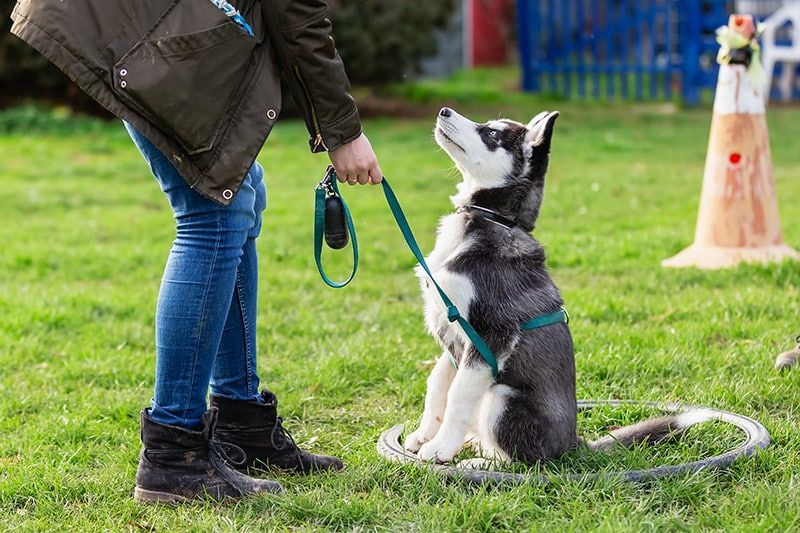
Dogs bring so much joy to our lives, with unconditional love and faithful companionship. However, pet ownership is a commitment and responsibility. Teaching your dog proper canine manners requires time and effort, not unlike directing a toddler's behavior. After all, canines have the emotional capabilities of a 2.5-year-old child. Remember that when your pooch does something naughty.
Training is challenging enough. It’s even more so with a fearful pet. Some dogs are naturally shy. Others develop this trait because of environmental factors. That’s particularly true with some rescues. The most important qualities you must embrace are patience and compassion when you start the training process with an anxious dog. So, how do you do that? Let’s find out.

Before You Start
Understanding a dog’s mental capabilities can help you with training. Canines can experience the basic emotions of excitement and joy. They are also capable of suspicion, and fear. Understand that you are essentially working with a child when training your pup.
Many factors can influence fearfulness. The breed may dictate the development of some unwanted behaviors. For example, research has shown degrees of fearfulness in various breeds. Knowing the animal’s history can provide valuable insights. Puppies separated from their littermates and mothers before 8 weeks old are more likely to be fearful.
Socialization is another significant factor. Pups not exposed to novel experiences before 14 weeks of age are more likely to be timid. Adverse events during a Fear Period can also interfere with training. The takeaway is that your pet may have some emotional baggage you need to understand and respect to make the process go smoother with fewer hiccups.
The 10 Tips for Training a Fearful Dog
1. Have a Positive Attitude
Dogs can read human emotions.1 Therefore, your approach to training matters. You should adopt a positive attitude so your dog can glean it from you. Your confidence is also vital. These traits will lay a solid groundwork for training. They’ll keep your head in the game if things hit a snag. Your fearful pet isn’t going to change overnight. Your positivity will keep you both on track.
Tip: Remember that your pup can discern your emotions from the tone and volume of your voice and can scent your stress.

2. Build Trust Between You and Your Dog
Your biggest hurdle is building trust between you and your dog. Your pet is fearful for a reason. You must convince your dog that your home is a safe place. You are a patient and trustworthy caregiver. Don’t punish your pet if they misbehave. It’s better to redirect or even ignore unwanted behavior in the early stages. Remember that you’re starting with a clean slate. Learn to recognize fearfulness in your dog. Other signs of fear include panting, pacing, yawning, and turning away from you.
3. Create a Routine
There’s a lot to be said for having a routine. Knowing what to expect can be an excellent stress reliever for a fearful pet. It’s also a building block for trust. Dogs are quick to associate actions and events. Simple things, such as saying “Time to eat!” or “Outside!” can help a new pet learn the household schedule. A high-pitched, loud voice conveys cheerfulness.

4. Let Your Pup Set the Pace
Letting your dog set the pace is essential. If your dog won’t take a treat from your hand, toss it on the floor next to them. Likewise, if they don’t rush to the food bowl, leave the room and let them approach it when they’re ready. A fearful pet has to learn that nothing bad is going to happen to them if they make themselves vulnerable, such as when they’re eating.
If you're concerned about your dog not eating, we recommend you speak with a vet.
5. Start With the Basics
Training a dog to follow commands such as “Stay!” and “No!” can be a lifesaver. However, actions like “Sit!” are also helpful. The goal is to foster a positive connection between the word and the outcome, i.e., a treat. Behaviorists call this process classic conditioning. Your voice is a vital factor because it will reinforce the favorable aspect.

6. Match a More Complex Command With a Reward
Once your pet has the basics down, it’s time to move on to more complex tasks. The early training has taught your pet that they get a reward when they do what you want. They know the positive association. It’s also a time to nurture your dog’s confidence with new experiences, such as riding in the car or meeting a new friend at the doggie park.
Be patient as your pooch graduates to the next level. Make sure to use your happy voice when giving your pet a treat to create a positive association between the two.
7. Practice Nose Targeting
Nose targeting or touching is an excellent technique you can use to manage your dog’s focus. The object is to teach your pet to tap your open palm with their nose with a command word, followed by a treat. It’s also an effective way to curb unwanted behaviors, like barking or jumping on people. You can use it to keep your pup’s attention on you and the reward instead of an unfamiliar experience.

8. Build Confidence With Counterconditioning and Desensitization
Training a fearful dog often entails counterconditioning and desensitization. Sometimes, pets have already made negative associations with various stimuli you may need to undo. It begins with finding the animal’s tolerance level for the stimulus to use as a baseline for making the positive link. For example, playing a thunder sound softly accompanied by a treat can make a dog less sensitive to the noise.
9. Practice Positive Reinforcement
The crux of all training with a fearful dog must be positive reinforcement. Bad behavior isn’t rewarded. Instead, appropriate responses get the treat. For very nervous dogs, that even includes your tone of voice. For example, if your dog is pulling their leash, say “Heel!” instead of “Stop it!” Ensure that your language is positive if a harsh tone causes your dog excessive fear. When your pup starts walking by your side, praise them.

10. Widen Your Pet's Circle
Your pet may not become as outgoing as your neighbor’s happy-go-lucky dog, but you can make strides with them. We recommend repetition and consistency even with things that your pooch already knows. You can then widen their circle of experiences fueled with the positive groundwork you’ve laid. That includes treats and your positive and confident voice.
Final Thoughts
Training a fearful dog can be challenging. However, it’s also rewarding. The trust you build in your pet will make the experience priceless. Living in fear is stressful and unpleasant. Your work and training can improve your pet’s quality of life, both physically and mentally. Visualize a happy dog walking alongside you to keep your eyes fixed on the goal.
Sources
Featured Image Credit: Christian Mueller, Shutterstock
Expert dog care, straight to your inbox
News, insights, expert advice, and everything dog.

No spam — unsubscribe anytime.
By signing up, you agree to our Terms & Conditions and Privacy & Cookies Policy.
How useful was this post?
Click a star to rate. You can leave written feedback afterwards. (We read all feedback.)
Since 2009, Chris has written on a variety of topics. Her motto with all of her writing is “science-based writing nurtured by education and critical thinking.” She specializes in scientific topics, with a special love for health and environmental topics, and of course, pets of all shapes and sizes.
Chris lives happily with her husband and three cats in the land of 10,000 lakes, writing, wining, and boating as much as she can. She and her husband, Norm, were awarded the State of Kentucky Colonel Honor for their restoration work at Mammoth Cave National Park.