In this article
The Canadian Kennel Club registry has a total of 187 dog breeds. All of them were initially bred in different parts of the world, save for five. And of course, we’re referring to the Nova Scotia Duck Tolling Retriever, the Landseer, the Labrador Retriever, the Canadian Eskimo Dog, and our fan favorite, the Newfoundland.
Back in the day, this breed primarily served our communities as a companion dog to fishermen or as a draft animal. They were bred and trained to pull heavy loads because they were massive with a strong build. People quickly came to realize that the Newfoundland breed has a high affinity to water, with a unique ability to swim more efficiently. This made them the perfect water rescue dog.
Newfies are still known as strong swimmers today. They’ve even been recruited by the Marine Corps and several wildlife conservationists who work with sea animals.

How Fast Can a Newfie Swim?
The Newfoundland breed can swim as fast as an average human. In other words, they can comfortably cover close to 3 miles per hour. Needless to say, there are many influencing factors involved in this equation, such as age and experience.
Also, don’t forget the fact that dogs normally have a reduced lung capacity, as well as limb range, in comparison to humans. So naturally, they are expected to swim slower than us. But then again, slow swimmers aren’t necessarily terrible swimmers.

What Makes the Newfie Such a Good Swimmer?
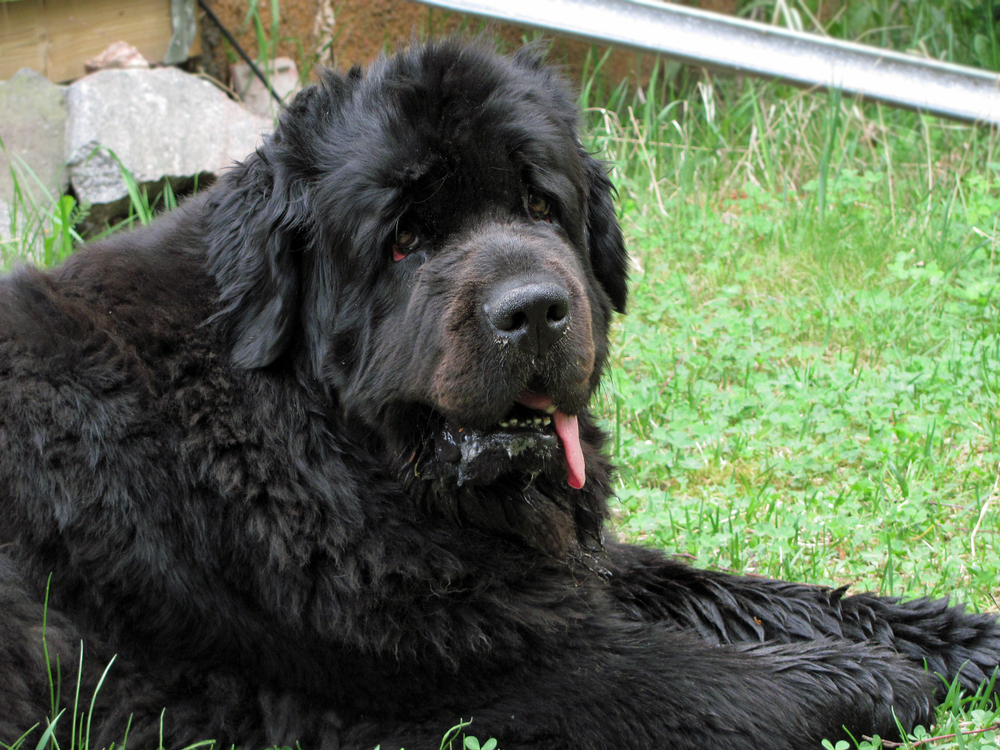
The Newfie breed has both physical and behavioral features that make it a remarkable swimmer. The more notable ones are the webbed feet, double coat, and their instincts.
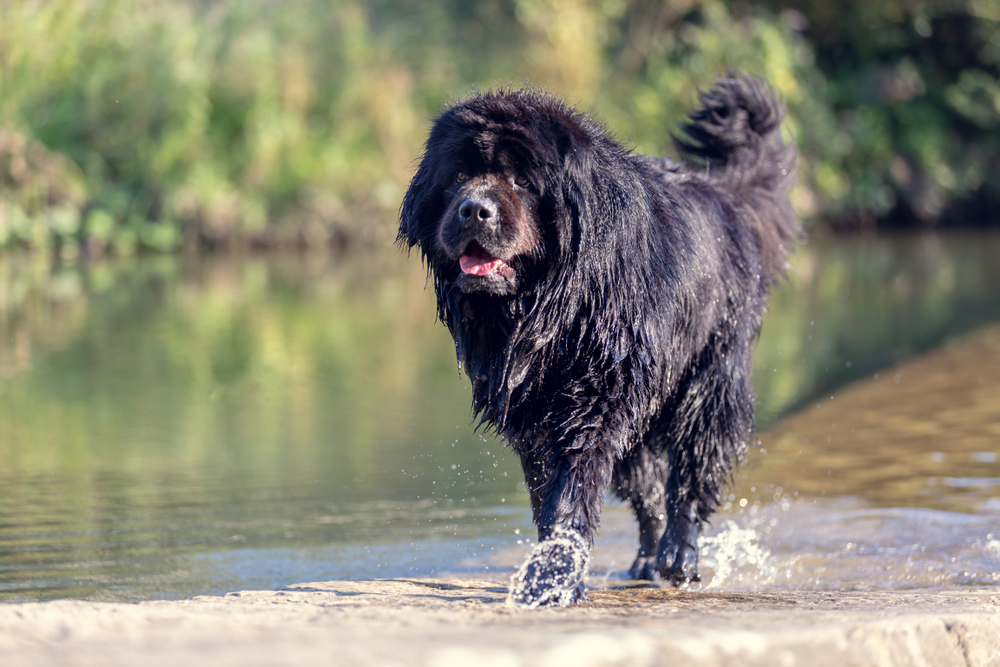
The outer layer of their coat is oily and long, to not only keep the moisture out but also ensure that they stay warm in the water. The coat is highly effective at repelling water, thus guaranteeing that the dog retains its buoyancy while swimming.
The webbed feet are meant to help them paddle more efficiently in water. And they are often aided by the dog’s strong tail to ensure it propels forward smoothly, with minimum effort. Their instinct largely defines their behavioral trait. This dog will always jump into the water to save a life, even if they sense a predator lurking underneath.
What Age Should You Introduce a Newfie to Swimming?
Ideally, your Newfie should be able to start learning how to swim at around 8 weeks. But dogs are like humans in that they grow at different rates. You’ll probably have to also reach out to a vet first, to ensure that they are in the best condition health-wise.
Of course, you want to give them the required vaccinations if you’re thinking of using the local ponds for your swimming lessons.
If you need to speak with a vet but can't get to one, head over to PangoVet. It's our online service where you can talk to a vet online and get the advice you need for your dog — all at an affordable price!
How Do You Train a Newfie to Swim?
First off, you’ll have to make sure that they are old enough and healthy. Then when they get to the water, don’t throw them into the deep end. You must start slowly, and that means starting the lessons in shallow waters.
Progress requires patience. Without it, you’ll never be able to progress to the next stage. For the pups that are old enough to swim, you should walk with them in those shallow waters for a couple of minutes, before getting out. Go back in for a few more minutes, and then get out, so that your pup can understand that it’s okay to get out should they feel overwhelmed in any way.
It’s not accurate to assume that your Newfie pup will be excited whenever they see water. Dogs do have different tastes and preferences. So just because most Newfies love swimming doesn’t mean that yours will automatically be drawn to water.
If you sense some hesitation any time you get in, explore a different technique. Preferably, one that has some elements of positive reinforcement. We prefer using treats, but you could still use a positive tone or verbal praise. Anything that would make them feel comfortable and supported. Instinctively, they’ll start paddling while in there. They might not even realize that they are paddling towards deeper waters if you let them do their thing. Just don’t let them wander off on their own, though.
Swim alongside them while using your arms to provide extra support. The more they swim, the more they’ll feel comfortable in the pool.
During your first lessons, you’ll likely notice that they are only using their front limbs. That’s completely normal, as most inexperienced dogs don’t know that all four legs can be used to complete a stroke cycle. If you’d like them to quickly learn how to use the rear limbs, physically move them while they are still floating.
Are Dog Floatation Devices Effective?
Dog floatation devices have been designed to provide extra buoyancy while guaranteeing safety in the water. They are not just reserved for inexperienced pups, as well-trained dogs may need them too—even water-loving pooches like Newfies.
Before investing in a floatation device, check the material used in construction and its waterproofing abilities. It should also come with an adjustability feature that allows users to make a snug fit.
A reflective trim feature will only be essential if you’re the type of person who loves to swim with your dog in the evening. Or alternatively, you could go for one that’s made using some bright-colored fabric to facilitate visibility. Some will have an extra floatation piece on the design that goes under the dog’s chin. It’s meant to help the dog keep its head above water.
Is a handle necessary? Absolutely. It’s there to give the pet’s parents something to grab onto, in case of an emergency. If the device doesn’t have a handle, pulling the dog out of the water will be a tall order, taking into consideration its weight.

Conclusion
The Newfoundland is a working breed that loves spending time in the water. Their body features are adapted to cold and wet environments, thus the reason why they are excellent swimmers. This breed can swim as fast as humans, given they can easily clock close to 3 miles per hour. They must, however, be trained from an early age to do so.
Featured Image Credit: JRJfin, Shutterstock