

In this article
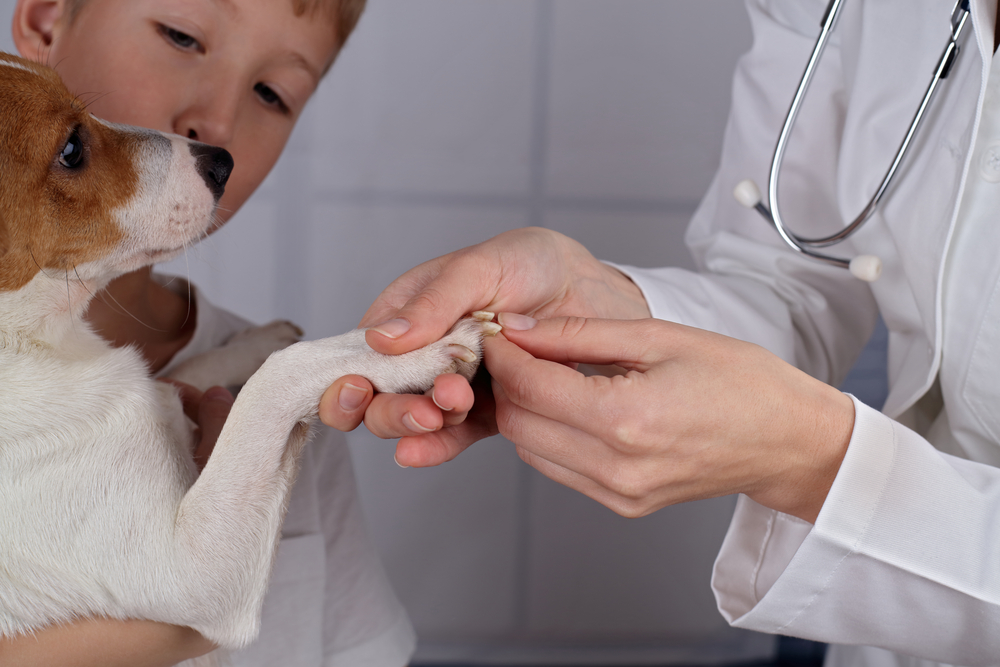
Dogs are active animals, and they get around by walking—typically without any shoes. Their paws are designed to provide protection from most things on the ground, but accidents and injuries can still happen. Due to the wear and tear that dogs put on their feet, it’s possible for a toenail to crack or break. Certain health conditions can also make toenails seemingly just fall off.
However, while there are circumstances that can result in a dog’s toenail falling off, healthy and unharmed canine toenails should never fall off naturally. It’s a good idea to monitor your pet’s paws for signs of toenail damage and impending breakage so preventive steps can be taken, if possible. Here’s more information that can help you better understand your dog’s toenails, how and why they might fall off, and how to keep them nice and healthy as time goes on.

Why Do Dogs’ Toenails Fall Off, Break, and Split?
There are various reasons that a dog’s toenails might break and fall off. One common reason for damage and breakage is snagging. Sometimes, a pup will snag their toenail on a rug in the house, on roots in the grass, or on anything else that a claw can get caught on.
A dog jumping off furniture, porches, or other elevated things and landing on one of their nails with too much pressure can cause it to bend the wrong way. Some dogs also develop brittle nails when they get older, which makes it easier for them to get damaged.
- Immune-Mediated Disease — Symmetric lupoid onychodystrophy is the most common immune-mediated condition that affects a dog’s nails. Affected nails become brittle and misshapen, and can fall off. All four feet may be affected and it is usually a painful condition. While considered an uncommon disease that mostly affects young and middle-aged canines, it’s still something that all owners should be aware of, particularly if multiple nails are falling off.
- Infections — Both fungal and bacterial infections can embed in the nails and cause problems, making the nails unhealthy, brittle, and susceptible to breaking and/or falling off.
- Nutrient Deficiencies — If a dog is not getting all the nutrients that they need, the growth and health of their toenails, along with other aspects of their livelihood, can be affected. Nutritional problems, such as a zinc deficiency, can cause nails to break down and become weak so they are more susceptible to breakage, splitting, and even falling off.
Why a Broken Toenail Is a Problem
A broken toenail or one that falls off can be painful. A group of blood vessels and nerves referred to as the “quick” is located inside each claw. The quick is protected by a material called keratin and is embedded in the toenail. If the claw becomes broken or otherwise gets split open, those nerves get exposed, and pain will result. Since the inner nail is attached to the bone, a damaged quick can also lead to bone infections.
What to Do If Your Dog’s Toenail Breaks, Splits, or Falls Off
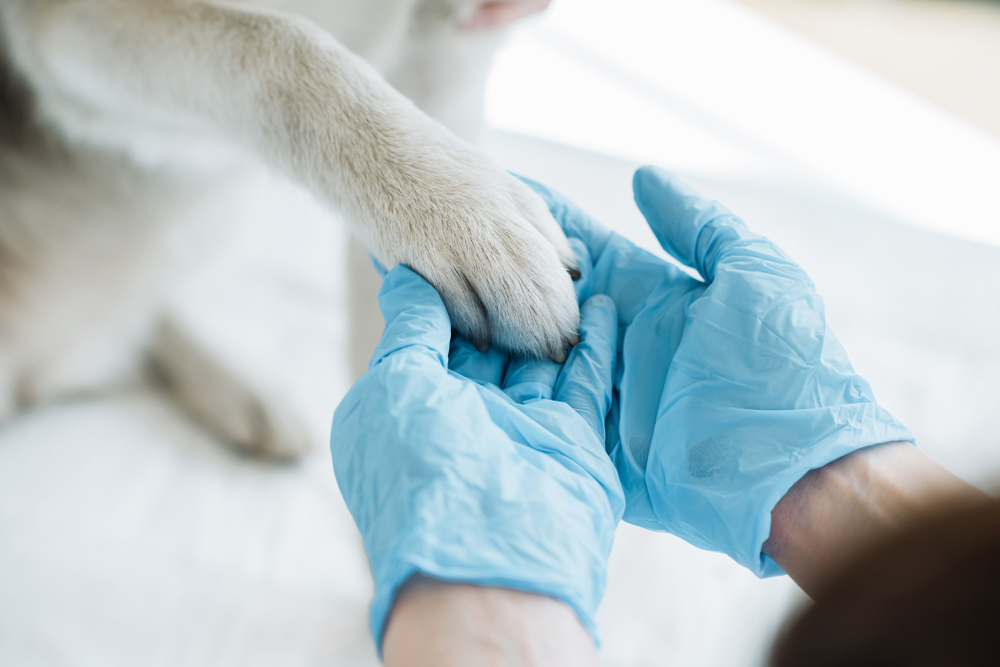
The first thing to do is figure out if the toenail’s quick has been damaged. Usually, it will bleed if it is cut or split open or if the nail falls off and tears part of it in the process. Your dog will likely show signs of pain if their quick has been affected.
Pain might also be present even if the quick is safe and intact, as the act of the nail being torn or breaking off can be painful in itself.
- Restrain — First of all you will need to safely restrain your pup while you assess the injury. Remember that animals in pain can bite as a reaction to discomfort and stress, so a muzzle can be used to avoid unintentional injury. However, if your dog is in a lot of pain and distress it is best to consult with a vet as soon as possible so they can receive appropriate pain relief.
- Control bleeding — If the claw is bleeding at all, apply gentle pressure using a clean cloth or gauze. If the bleeding has not stopped within 5 to 10 minutes then styptic powder can be applied. If you don’t have this product at home, you can try cornstarch instead. Contact a vet if there is excessive bleeding or it is not stopping after following this advice.
- Remove — If the damaged section of the toenail is loose or hanging and about to fall off, you may be able to remove the damaged part as gently as possible with the help of clippers if necessary. This can be very painful though and is generally best left to a veterinarian. Keep the area lightly wrapped while you consult with a vet.
- Protect from infection— You will need to follow the vet’s advice to keep the injury clean and protected while it heals to prevent contamination and infection. This may also involve an E-collar to prevent your dog from licking the broken nail. Antibiotics and pain relief may be prescribed, and the paw may be bandaged. The vet will likely want to make a follow up appointment to check and remove or change the bandage.
- Monitor— If your dog develops swelling, redness or discharge like pus around their nail bed then contact a vet straight away. It is also a good idea to keep your dog from walking on the toenail as much as possible while it heals. This might mean spending more time indoors, so plan for a long outdoor excursion once all is said and done. In the meantime the vet may recommend a boot to protect the paw when they are outside.
Do Dogs’ Toenails Grow Back?
You might be asking yourself, “Do dogs’ nails grow back after they’ve been broken off?” The answer is yes! It’s not an overnight process but it does happen. How long it takes depends on how much of the nail has fallen off as well as the cause of the nail loss. Follow the vet’s treatment advice and prioritize protecting the claw while it heals and regrows.
How to Keep Your Dog’s Nails Healthy and Strong
To reduce the risk of your dog’s toenails breaking, splitting, or falling off, take steps to keep their nails strong and healthy as time goes on. One important thing to do is to trim their claws regularly so they are less likely to get caught on things like carpeting and then break or tear. If you’re worried about cutting the quick, ask a vet for a demonstration of the process in their office, or consider hiring a professional dog groomer to take care of the job.
It’s also important to make sure your dog is getting the right nutrition. They should eat a well-balanced commercial or vet-approved homemade diet. For certain conditions the vet may recommend supplements such as those containing biotin, omega-3 fatty acids, or zinc. You should also check your dog’s nails at least once a week and trim them when necessary.
If you need to speak with a vet but can't get to one, head over to PangoVet. It's our online service where you can talk to a vet online and get the personalized advice you need for your pet — all at an affordable price!

Conclusion
While a dog’s toenails are not supposed to fall off, it can happen and is actually quite common due to all the activities that canines tend to participate in throughout their lives. A broken toenail is not the end of the world for your dog, but pain and discomfort do typically accompany the incident. Loving care and guidance from a veterinarian can help make the healing process more effective and efficient.
Featured Image Credit: Albina Gavrilovic, Shutterstock































3 Responses
Thank you very much, JOE.
My dog is doing very well. It must be the outer layer that fell off. He has no injuries or pain.
THANK YOU VERY MUCH. (Translated to English)
Hello. Do dogs shed their nails? I found nails on the floor. I checked their paws and none of the nails are missing. How is this possible? Is it possible that they develop some kind of cap or covering, and that’s what is falling off? (Translated to English)
Hi Pablo, thank you for your comment! Dogs don't typically shed their nails in the way that they shed hair. However, it’s possible that what you found on the floor could be a broken or worn-down nail, or even part of a nail that has naturally shed or been removed due to injury. Sometimes, the outer layer of the nail can become loose or cracked and fall off, especially if the dog has been active on hard surfaces.
If your dog’s paws seem fine, and no nails are missing, it’s probably not something to worry about. But if this continues or if you notice signs of discomfort, you might want to have the vet check their paws to be sure everything is healthy. 🙂