8 Exercises to Do While Walking the Dog: How to Turn Your Dog Walk Into a Workout

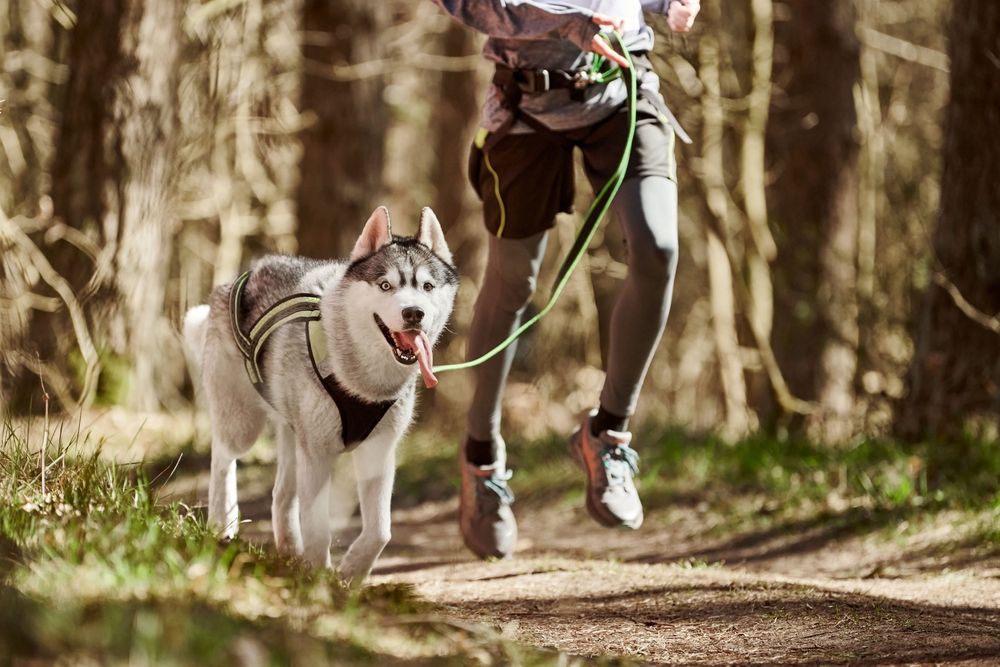
If you're taking your dog out to get exercise, you might as well take advantage of this time too. A 15-minute walk might not inherently do much for you as a human, but it can do much more if you're willing to put in the extra work.
In this article, we provide a few ideas on how to incorporate more of a workout into your walking routine.

The 8 Exercises to Do While Walking the Dog
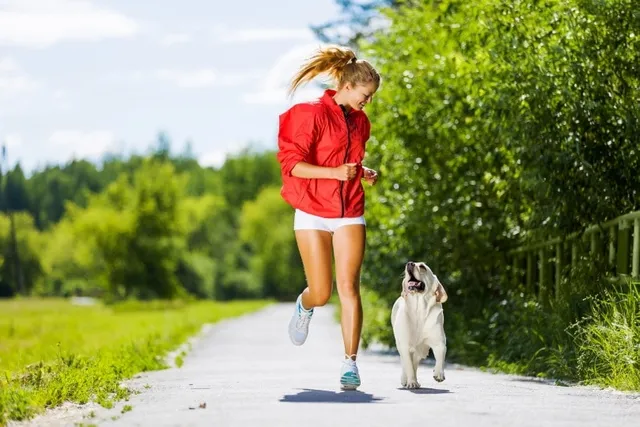
1. Jogging
You could go for the old classic: jogging. Jogging can be a good habit to form and an exceptional way to burn off energy with your pup. Most dogs are perfectly fine candidates for a light jog—and many need it.
Jogging is a great way to keep your heart rate up without overexerting yourself. Plus, a jog tends to be easier on the knees than a full-on run. Even if you only jog with your dog for 15 minutes a day, you're still burning roughly 170 calories—give or take, depending on your body. So, if you devote two jogs a day to your exercise regimen, you'll burn somewhere in the ballpark of 340 extra calories per day!

2. Lunging While You Walk
You don't have to change up your whole routine at all! Just lunge to get to your destination. Your legs will be sure to feel the burn just a few steps in. It's a great way to challenge yourself and test your limitations.
You might look silly lunging down the street in front of all your neighbors, but it is a surefire way to get those glutes burning. On average, you will burn 6 calories per minute, which can fluctuate slightly based on weight and intensity.
So, you can see that it's a nifty workout to add to your daily walks.
3. Hiking
Hiking can be a great way to challenge you and your dog! They can experience all sorts of terrains, smells, and sights. You can really get your steps in where it counts. Try to go to areas that will challenge you and get your heart pumping!
If you're new to hiking, you might wonder where to go. There are numerous state parks in every state, and there is surely one around your neighborhood. There are tons of free trails; some are pet-friendly and others are not, so you have to make sure to do your research before hiking with your dog.
There's no one-size-fits-all when it comes to hiking. Some trails are mostly uphill climbs, others are miscellaneous terrain, and still others offer flat, easy-to-maneuver walking trails. Always remember to bring poop bags and other supplies to clean up after your dog.
It will be your responsibility and your responsibility alone to make sure you keep the park clean.

4. Changing Terrains
Try to take the road less traveled once in a while. Walking through the grass, rocks, or other unlevel terrain can actually be good if you and your dog are in good health. This will enable your body to balance and train you to use muscles that you might not use otherwise when you're walking normally.
So, you could try to walk a normal paved path, and then maybe try off-road adventures, like leisurely strolling through a grassy park or up the gravel road near your house—you likely know all the good spots. You just have to get creative.
Be careful when you're walking with your dog to avoid any path that might cause injury to their paws. A gravel road can be sharp and hurt your pup's paw pads. While many large or physically athletic dogs won't mind a little gravel, little dogs can be sensitive to terrain changes.
5. Doing Uphill Routes
Instead of taking an easy walking route, try taking uphill turns. This will raise your heart rate and help you burn calories. Plus, your dog will enjoy the extra exertion. You can wipe them out faster in shorter bursts.
Uphill walks are a great way to burn some calories while your dog expels a bundle of energy. These intense, short workouts can alleviate your dog's pent-up energy and help you with your workout routine too.
The number of calories your body will burn on an incline will depend on how long you're walking, your body type, and sex. On average, a person will burn between 200 and 700 calories per hour when walking on an incline.

6. Adding a Backpack
Try getting a backpack if you want to add a little weight to your journey. You can carry all your and your dog's things so you can be prepared on the go. The extra weight will help you burn calories, so it's beneficial in more ways than one.
You can get a regular backpack that will hold all your dog's supplies and make them easy to access. But there is an alternative: If you have a small to medium-sized dog that gets tuckered out on long walks, get them a doggy backpack! This can be a terrific way to keep them going while adding a little extra weight to your own journey.
You can get a doggy backpack online or in-store, but we highly recommend shopping around before deciding.
7. Going on Scavenger Hunts
Scavenger hunts can be a good way for you and your dog to add extra movement to a walk. First, they can give you a goal, which can make things a lot more fun overall. Second, you can get into it with your dog, motivating them to find new things.
This can encourage you to bend, squat, and make a whole slew of other movements that will help you burn calories. Your dog will enjoy using the thing they love most—their nose!

8. Tracking/Timing Your Adventures
You can track or time your adventures to help motivate you to be more active during your walks. Try setting a goal to complete the walk in a certain amount of time, then walking more briskly to get to your destination in that time. This can help you ramp up your heart rate, enabling your body to burn more energy. You might get to the point where you want to add more length to your daily journey or speed the walk up more and more.
Having a smart watch can help you keep track, but you can use other devices, like your phone, to keep a log of your activity.

Other Things to Consider
Your Dog’s Activity Level
Your dog's overall activity level says a lot about how you can exercise with them. For example, a Belgian Malinois will take all the exercise that you can give them. They will be right there waiting by the door when you grab the leash and keys.
However, smaller dogs naturally have less stamina because of their size difference. Some of them can also tucker out quite quickly or even have breathing problems due to the overall structure of their face. For example, brachycephalic dogs, such as Pugs, Boxers, Pekingese, Shih Tzu, and English Bulldogs, all have the adorable pushed-in faces and droopy jowls that we love so much. However, their overall facial structure can make it difficult for them to breathe, which can impact overall exercise. So, it is important to ensure you have the correct breed for the job before you start exercising with your dog.
Also, it might be a little bit difficult to exercise while you're first starting out walking and training your dog. Untrained dogs are not aware of how to properly walk on a leash, which means they will be tugging, pulling, jumping, and doing a whole bunch of other things that will make it quite challenging for you. It might be best to wait until your dog is fully trained and equipped for well-behaved walks before you start trying additional exercises.

Appropriate Gear
If you were going to exercise with your dog, you're going to want a few things. Having a tote or a backpack full of goodies will definitely be a must.
If you're doing any high-intensity workouts, you're going to want to have water for both you and your dog on hand to give yourselves a little refresher. Staying hydrated during workouts is essential. You can get collapsible water bowls for your dog so you can fill them up on the go and flatten them out again to stow away.
Having the appropriate harness is also essential. Collars are not sufficient for walks since they pull on the neck and sometimes make it easy for dogs to slip out. Harnesses are better because they evenly distribute the weight throughout the body.
That doesn't necessarily mean all harnesses are made alike. Some are flimsy with cheaply made straps, raising questions about safety during walks. We highly recommend buying a quality, well-made harness to prevent any mishaps or incorrect sizing.

Conclusion
Exercising with your dog can be a terrific way to burn more calories and get a workout when you wouldn't have one otherwise. Daily walks can be extremely great to keep up with, but they don't necessarily have the physical impact we want when we're serious about getting fit.
Luckily, there are many ways to incorporate changes in your routine to really make you feel like you're exercising appropriately. Keep in mind that your dog should be compatible with whatever exercises you choose. If you have an overweight, unhealthy, brachycephalic, or otherwise unsuitable candidate, you might have to exercise without your pup.
Featured Image Credit: travelarium.ph, Shutterstock
Expert dog care, straight to your inbox
Vet-reviewed advice, training tips, and the best of Dogster. Free, and you can unsubscribe anytime.
By signing up, you agree to our Terms & Conditions and Privacy & Cookies Policy.
Ashley Bates is a freelance dog writer and pet enthusiast who is currently studying the art of animal therapy. A mother to four human children— and 23 furry and feathery kids, too – Ashley volunteers at local shelters, advocates for animal well-being, and rescues every creature in need. Her mission is to create awareness, education, and entertainment about pets to prevent homelessness. Her specialties are dogs and cats.
Join the conversation
Ask a question, share your story, or send private feedback.