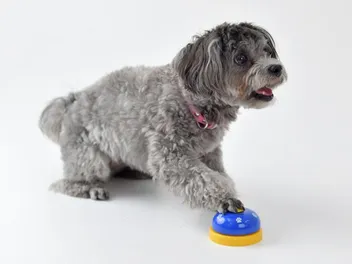
How to Train a Deaf Dog: 9 Vet-Approved Tips for Success



Training a dog that cannot hear may seem like a daunting task, but it can be done quite successfully. Rather than relying on verbal commands, you can use hand signals or sign language to communicate with your dog.
However, before you begin training, you should consider several factors, including the various ways that you can get your dog’s attention, all of which we discuss here.

The 9 Tips on How to Train a Deaf Dog
1. Get Your Dog’s Attention
The most important step is to find the right way to get your dog’s attention. You can try:
- Flashlight: Start by flashing a flashlight, and when your dog looks at you, reward them with a treat. They will learn the flash of light means they should look at you.
- Vibration: You can try a vibrating collar (not a shock collar), which vibrates at the touch of a button. Just like with the flashlight, when your dog looks at you while the vibration is occurring, give them a treat. You can also try stomping the floor with your foot, but you won’t always be able to do this.
- Laser pointer: A laser pointer can also work, but be sure not to flash it in their eyes, and know that they might get distracted and want to chase it instead.
- Touch: Touching your dog gently will gain their attention, but they won’t always be within arm’s reach.
- Focus: In this case, you give your dog a treat every time they look at you. You can also team this up with a hand signal.

2. Desensitize to Touch
It’s crucial to desensitize your deaf dog so they don’t jump or otherwise negatively react when you touch them. This is even more critical for dogs that lose their hearing as adults or seniors.
This training should only occur when your dog is awake. Start by gently touching them on the same spot of their body, and follow up with a treat. Repeat this process, and over time, gradually move away until you are almost out of your dog's sight. Continue touching them in the same spot and following up with a treat.
Desensitization is important in all dogs, but more so for deaf dogs because it will help your dog stay calm and comfortable when you or others touch them.
3. Use Positive Reinforcement
All dogs should be trained using positive reinforcement, but remember that in this case, you can’t rely on verbal praise. You’ll need to focus on pets and treats. Since you might use more treats in the early days of training your deaf dog, be sure to feed them less at mealtimes to compensate for the extra calories.
You should also find out what alternative reinforcers you can offer your dog, perhaps the opportunity to play with their favorite toy or to go out for a walk. These positive consequences can help you shape their behavior, as they are likely to repeat whatever behavior they were performing right before being rewarded.

4. Offer Treats Following a Marker
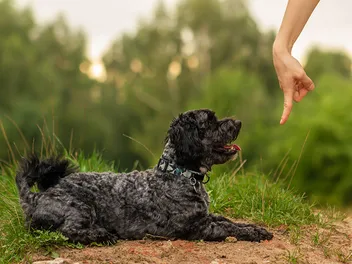
This is expanding on the use of hand signals and gaining your dog's attention. Many owners choose a simple hand signal, such as a thumbs up or pointing a finger at them. For example, when you have your dog's complete attention, give them a thumbs up, and then reward them with a treat. Over time, your dog will become more responsive to the thumbs-up or pointing signal. This signal will work similarly to a clicker to let your deaf dog know exactly when they performed a desired behavior and that they can anticipate a reinforcer coming their way. Once you have established this marker or bridge cue, and this is when you can begin to train them with other cues.
5. Use Hand Signals
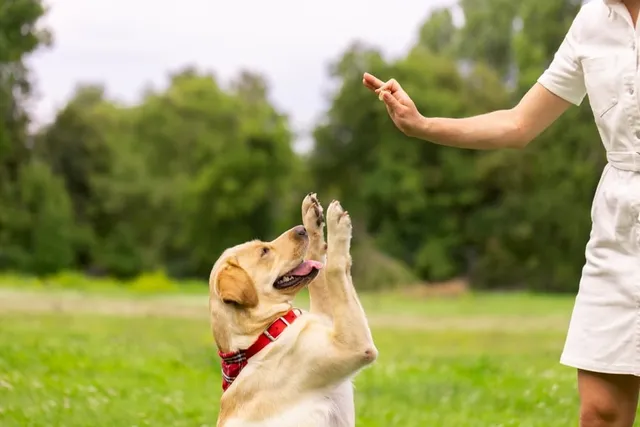
You can learn the standard hand signals that many dog trainers already use, or you can create your own. Ensure that your dog is paying attention, give the hand signal, and then train the command. The hand signal is essentially replacing the verbal command.
You can even try learning American Sign Language, which goes beyond hand signals. You can learn a few simple words and use them in your daily life. You can also make up your own signs for different words, but the most important thing is that you can communicate with your dog, and to successfully achieve this, your signals and their meanings should always be consistent.

6. Train Using the Luring Technique
Luring is when you take a treat and use a hand gesture to lure your dog to learn a trick. For instance, you can teach your dog to sit by holding a treat in front of their nose and slowly raising it over their head. Your dog will follow the treat, raise their head, and sit naturally. Once your dog sits, you should mark it by giving them a thumbs up or point and a treat.
This example is just one of the techniques to teach the "sit" command, but it can be used for many other commands.
7. Train Using the Capturing Technique
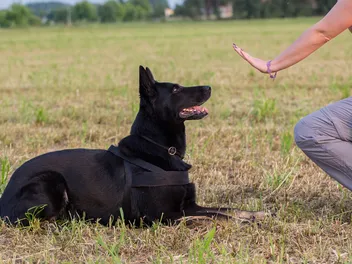
Think of the capturing technique as capturing a moment, just like in a photograph. You catch your dog doing something that you want to train and reward them for. For instance, if you want to teach your dog the "down" command, you should choose a signal for it, such as lowering your open hand, palm down, toward the floor. When your dog is lying down, present the signal immediately followed by the thumbs-up marker, and then reward them with a treat.
After repeating this a few times, your dog will learn the association. Remember to reward them every time your dog initiates the lying down movement when given the hand signal.
This technique requires patience, and you must pay close attention to your dog's behavior so you can catch them in the act of whatever it is you want to teach them.

8. Check in With Your Dog
It’s crucial to startle train your deaf dog so they don’t jump or otherwise negatively react when you touch them. This is even more critical for dogs that lose their hearing as adults or seniors.
This training should only occur when your dog is awake. Start by gently touching them on the same spot of their body, and follow up with a treat. Repeat this process, and over time, gradually move away until you are almost out of your dog's sight. Continue touching them in the same spot and following up with a treat.
Once your dog becomes comfortable with you touching them, you can continue the training while they are asleep. Begin by placing your hand in front of their nose so they can smell your scent when they wake up, followed by a treat. Next, use a gentle touch to wake your dog, followed by a treat. Gradually increase the firmness of your touch over time.
This process is a form of desensitization and will help your dog stay calm and comfortable when you touch them.
9. Additional Tips
When training a deaf dog, you will probably train yourself as well. It might help if you not only give visual cues but also say the commands out loud. This will help keep your body language natural, so don’t hesitate to speak aloud even though your dog can't hear you.
It is essential to be patient, understanding, and loving while training a hard-of-hearing dog. With the right approach, your deaf dog will undoubtedly surprise you with their capacity to learn.

Conclusion
While it requires a few modifications, it is definitely possible to train a deaf dog. One of the most important takeaways is to focus on reinforcing your dog’s attention because you will need them to see your signals. Introduce a marker signal that will be used similarly to a clicker to point out to your dog the exact moment they performed a desired behavior and to know a reinforcer is on the way. Stay consistent with your signals, and remember to desensitize your dog to touch and prioritize reinforcing your dog for their eye contact and visual attention since this is basic for a deaf dog. Consider tactile signals as another alternative to letting your deaf dog know what is expected from them.
Sources
https://www.akc.org/expert-advice/advice/how-to-train-a-deaf-dog/
https://www.thesprucepets.com/training-tips-for-deaf-dogs-1118210
https://www.dailypaws.com/dogs-puppies/dog-training/basic/how-to-train-a-deaf-dog
https://vcacanada.com/know-your-pet/introduction-to-desensitization-and-counterconditioning
Featured Image Credit: Mary Swift, Shutterstock
Expert dog care, straight to your inbox
News, insights, expert advice, and everything dog.

No spam — unsubscribe anytime.
By signing up, you agree to our Terms & Conditions and Privacy & Cookies Policy.
How useful was this post?
Click a star to rate. You can leave written feedback afterwards. (We read all feedback.)
Kathryn was a librarian in a previous lifetime and is currently a writer about all things pets. When she was a kid, she hoped to work in a zoo or with wildlife in some way, thanks to her love for animals. Unfortunately, she's not strong in the sciences, so she fills her days with researching and writing about all kinds of animals and spends time playing with her adorable but terribly naughty tabby cat, Bella. Kathryn is hoping to add to her family in the near future – maybe another cat or two and a dog.