Get

In Your Inbox

Dogster is reader-supported. When you buy via links on our site, we may earn an affiliate commission at no cost to you. Learn more.

How to Train Your Dog or Puppy to Walk on a Leash: Vet-Approved Tips

Share

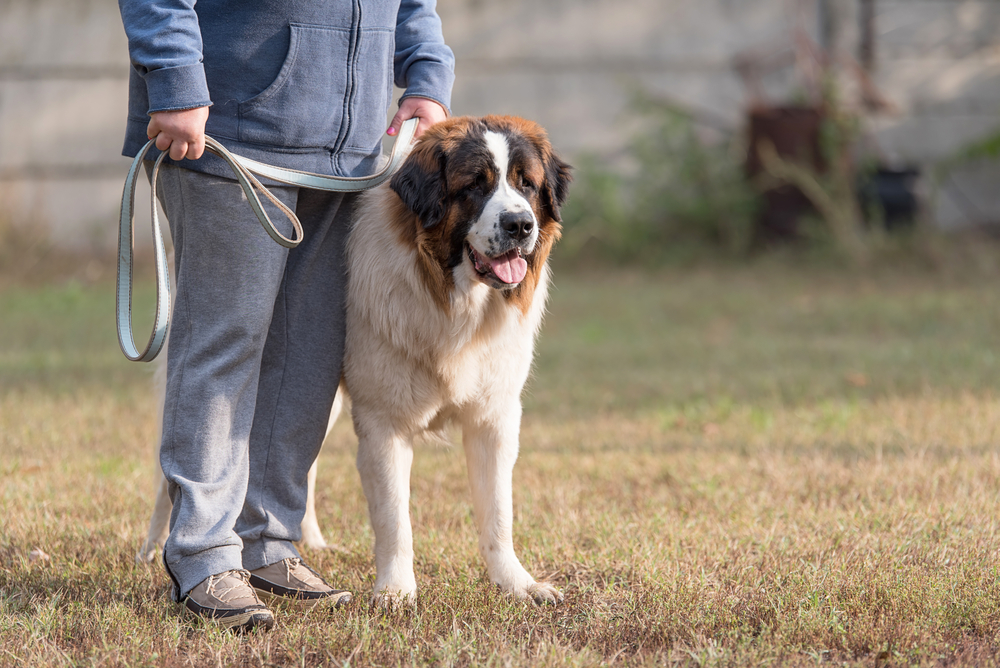
Woman holding a Saint Bernard on a leash

Learning to walk on a leash is one of the most crucial training steps for any dog or puppy. Leash behavior can be the difference between a relaxed, enjoyable walk with your dog and a stressful, potentially dangerous one.

In this guide, we’ll walk you through the steps for how to teach your dog or puppy to walk nicely on the leash and share some extra tips for making leash training a success.

dogster face divider

The 5 Tips on How to Train Your Dog to Walk on a Leash

Puppyhood is the best time to train a dog as they’re still in the developmental stage, and this can help curb unwanted ingrained behaviors later on. If your dog is a rescued adult, don’t worry; adult dogs are still perfectly capable of learning new things, and it just takes more time and patience.

Here are the steps for teaching your dog to walk like a true lady or gentleman on the leash!

What You'll Need:

1. Getting Used to the Leash

Let your dog wear their harness and/or collar around the house for short spells to help them get used to how it feels. Make the time they wear it exciting by playing with them and offering treats, so they form positive associations.

pembroke welsh corgi dog walking with owner
Image Credit: Jus_Ol, Shutterstock

2. Teaching Your Dog to Pay Attention

Put your dog’s leash on and simply stand there quietly. Your dog will likely sniff about or get excited because something’s happening. Don’t react—continue to stand still, and don’t speak to your dog.

Wait for them to look at you, then praise them abundantly and reward them with a treat. This teaches the dog to pay attention to you when the leash is on. Avoid starting the walk before your dog has paid attention to you.


3. Walking on a Loose Leash

Now that your dog has paid attention to you and has been rewarded for doing so, it’s time to start practicing walking on a loose leash. As you go, use a verbal cue like “with me” as well as treats and praise to get your dog to walk close to your side. The leash should be loose rather than taut.
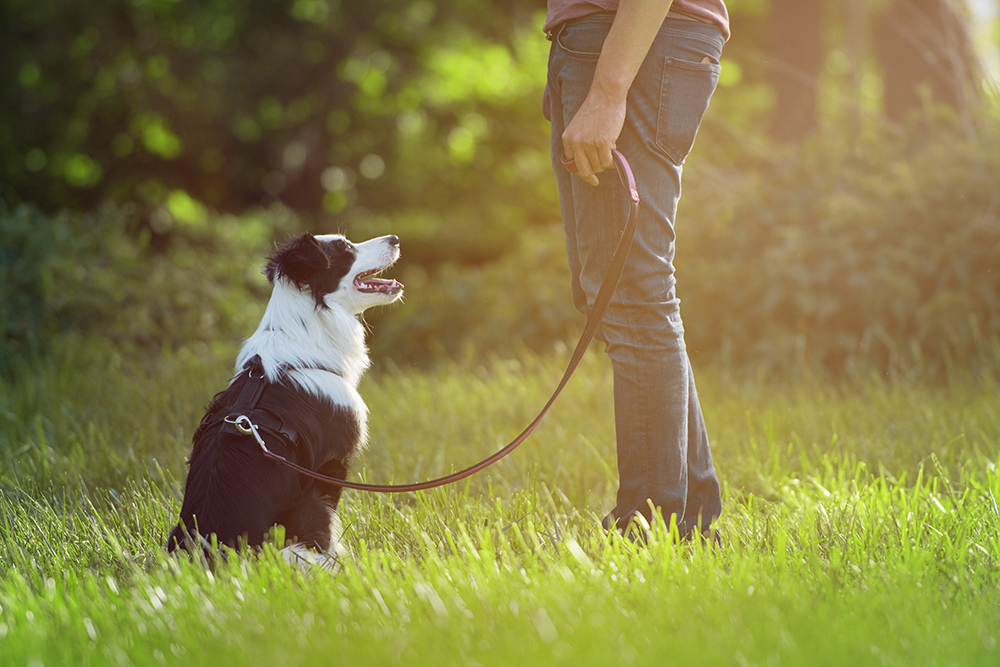
man training a leashed border collie dog
Image Credit: Dora Zett, Shutterstock

4. Discouraging Pulling

If your dog starts to pull on the leash or you feel it getting taut, stop and stand still. Only move forward again when your dog has turned to look at you and the leash loosens. It’s essential to do this each time any pulling occurs.


5. Practicing

You need to be consistent when it comes to training your dog to walk nicely on a leash. That means consistently stopping when they pull and dedicating time to practicing every single day. Inconsistency can unravel the work you’ve put in, so keep practicing as normal, even if your dog is getting good at walking nicely, to reinforce what they’ve learned.
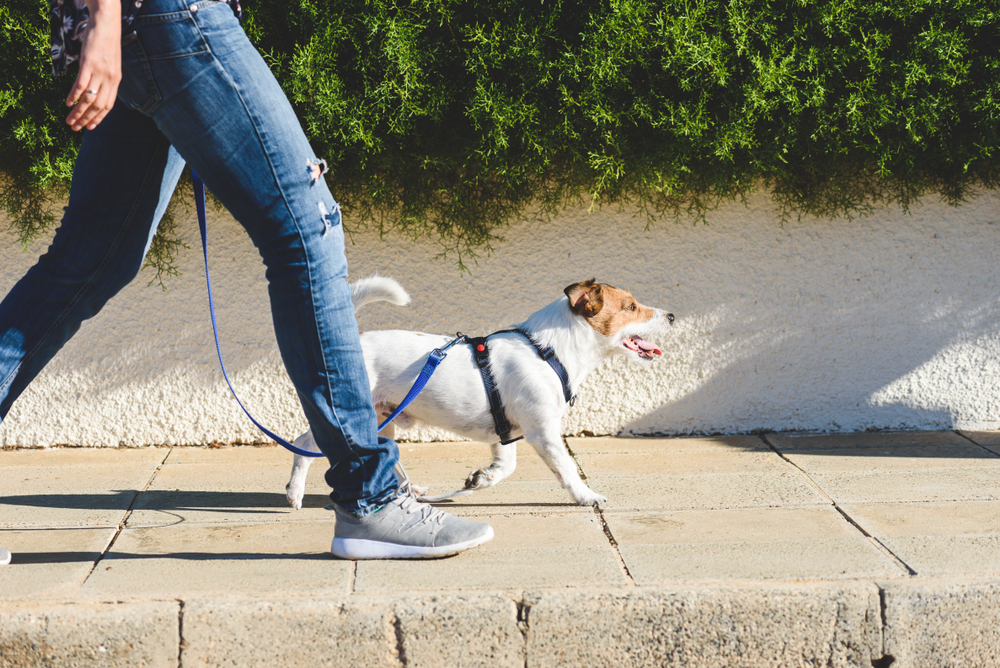

Dog walker strides with his pet on leash while walking at street pavement
Image Credit: alexei_tm, Shutterstock

dogster paw divider

Training a Dog to Walk on a Leash: Extra Tips

  • Make sure your dog has a harness or collar that’s comfortable for them.
  • Practice leash walking in a quiet area of your home to minimize distractions.
  • Avoid using retractable leashes for training—stick to a standard, 4–6-inch leash. This keeps your dog closer to you and gives you more control.
  • Don’t yank on the leash to try and gain control.
  • Make training sessions short, consistent, and fun.
  • If your dog lunges at passersby, other dogs, or objects on walks, keep an eye out for when they’re about to do it and distract them with a treat before they can. Move away from the person, dog, or thing to prevent them from being lunged at. Take care not to reward the lunging accidentally.
  • Never underestimate the power of praise and treats!

dogster paw divider

Final Thoughts

The main goal of teaching your dog to walk nicely on a leash is to instill that good behavior means you move forward, whereas unwanted behavior, like pulling, means you stop. Dogs love walks and want to keep moving forward to explore, so it will soon start to sink in that positive behavior reaps the rewards as long as you’re consistent.


Featured Image Credit: SasaStock, Shutterstock

Want content like this delivered to you?

Sign Up For Our Newsletter

News, insights, expert advice, and everything dog

* By submitting, you agree to our Terms & Conditions and Privacy & Cookies Policy.


How useful was this post?

Click on a star to rate (you can leave written feedback after clicking submit)

Help us improve Dogster for pet parents!

Your feedback really matters.

What did you like about this post? Also how can we improve it?

Join the conversation

Leave a Reply

You’re very welcome to leave a comment or question. Please know that all comments must meet our community guidelines, and your email address will NOT be published. Let’s have a positive and constructive conversation.


Talk With A Vet Online

Peace of mind,
anywhere, anytime

Affordable vet advice

21 Vet-Verified Plants That Are Safe for Dogs: Pictures & Info

We love our pets and plants, but sadly some of our favorite plants may be toxic for our companions. If you want to...

Dog Breeding Stands: Definition, Ethics & Considerations (Vet Reviewed)

There is plenty of controversy surrounding dog breeding, including the prevalence of puppy mills and the methods used by breeders. Though they have...

Can Dogs Eat Mac and Cheese? Vet-Reviewed Nutrition Facts & Safety Guide

When you’re sitting at the kitchen table, it’s a common sight to have your dog giving you puppy eyes, begging for food. But...

Sheepadoodle vs Goldendoodle: The Differences (With Pictures)

Choosing the perfect canine companion for your family can be an exciting yet challenging decision. In the trend of designer dog breeds, the...

More related

My Dog Ate Something On a Walk: What to Do (Vet-Approved Tips)

Taking your dog on a walk is supposed to be fun and relaxing, but things can quickly become concerning if they eat something...

Pugs in the 1800s: Surprising Historical Facts

You can’t help but love Pugs. They are sweet-natured and sometimes naughty, and they have a big bark for a dog that weighs...

10 Best Dog Breeds for Kids & Families: With Info & Pictures

What’s the best family dog breed? There are a lot of breeds that come to mind when you consider what makes a good...

Can Dog Hair Pierce Human Skin? Info, Treatment & Prevention

Thanks to the amazing diversity of the canine species, dog hair comes in various textures, from rough to curly to smooth. Running your...

Keep reading

Can Dogs Eat Olives? Vet-Approved Nutrition Facts & FAQ

If you’re one of those people who love eating olives, whether on a pizza or in a salad, you may wonder if your dog can eat olives too. Generally, dogs can eat olives in moderation, as they are not toxic;...

Can Dogs Eat Sprinkles? Vet-Verified Nutrition Facts, Risks & Alternatives

Having parties and celebrations for dogs has become more common in recent years. While there’s absolutely no problem with planning parties for your dog, it’s important to provide dog-safe food and snacks. A common treat present at parties is sprinkles....

Dogster-Can-Dogs-Eat-Sprinkles

Can Dogs Eat Hot Dogs? Vet-Reviewed Facts & Safety Guide

If you find yourself at a barbeque party and notice your dog begging you for a little bite of your hot dog, you may be wondering if it’s safe for them. It is estimated that 150 million hot dogs are...

Can Dogs Eat Hot Dogs

Is Food Coloring Safe for Dogs? Health Facts & FAQ

Food coloring, or color additive, is any dye, pigment, or substance that imparts color when it is added to food or drink. Food coloring has always played a role in the food industry for multiple reasons. It makes processed food...

Dogster_Is Food Coloring Safe for Dogs

10 Best Dog Foods for Great Pyrenees in 2026 – Reviews & Top Picks

Great Pyrenees are wonderful and gentle dogs that quickly become beloved family members. These unique dogs also require a special diet to promote their well-being and prolong their lifespan. The first and most obvious factor to consider is their size....

great pyrenees in the mountain

Can Dogs Eat Mussels? Vet-Approved Benefits & Safety Tips

Dogs can eat mussels in moderation. Mussels are high in protein and other nutrients that may benefit your dog; however, they don’t provide everything your dog needs, so they should only be considered an occasional treat. It’s best to steam...

Can Dogs Eat_Mussels

Can Dogs Eat Goat Cheese? Vet-Verified Nutrition Facts & FAQ

Goat cheese might not be among America’s top 15 most consumed cheeses, but it certainly has its fans. You probably won’t have any problem getting your dog to eat it, but does that mean you should? The answer raises more...

Can Dogs Eat Goat Cheese

Can Dogs Eat Tater Tots? Vet-Approved Facts & FAQ

Chances are that you didn’t feed your dog tater tots on purpose, but if they got into a few that were left out, what should you do? Are tater tots toxic for dogs, and if you do have a few...

Can Dogs Eat_Tater Tots

Love Dogs? So Do We! Join the Dogster Community

Stay informed with expert pet care insights delivered straight to your inbox! Discover professional guidance on animal behavior, feeding tips, trusted product picks, and much more.


Sign up for the Dogster Email Newsletter