Dogster is reader-supported. When you buy via links on our site, we may earn a commission at no cost to you. Learn more.

Dog Nutrition

Can Dogs Eat Bay Leaves? Vet Approved Facts & FAQ

Nicole Cosgrove
By Nicole Cosgrove · Reviewed & fact-checked by Dr. Lorna WhittemoreVet Approved
Dr. Lorna Whittemore
Reviewed & Fact-Checked byDr. Lorna WhittemoreMRCVS (Veterinarian)
Lorna is a veterinarian based in Cape Town, South Africa. originally from Scotland. Lorna loves to travel and has lived, studied, and worked on three different continents. Lorna has over two decades of experience in small animal medicine and surgery, both in the charity and private sector, plus a further qualification in feline medicine.View authorThe information is current and up-to-date in accordance with the latest veterinarian research. Learn more
Updated on June 29, 2026
Share
Can Dogs Eat_bay leaves

Dogs often have a way of charming their way to eating their humans’ table food. While many of us find them irresistible and often give in, feeding them scraps of our own food, it's important to know if the food you’re eating is also safe for dogs to eat.

Bay leaves are an ingredient in many recipes, and you may wonder if they are safe to feed your dog. Unfortunately, no, you cannot give dogs bay leaves. Bay leaves are toxic for dogs and cannot be ingested by them safely.

Below, we'll discuss what makes bay leaves dangerous for dogs, and what to do if they accidentally eat them!

divider dog paws 4 oct 2024

Why Are Bay Leaves Dangerous for Dogs?

The bay leaf is an aromatic leaf commonly used as a seasoning for cooking. It is used in a variety of cuisines around the world, from Indian and Filipino food in Asia to French and Greek cuisines in Europe. Bay leaves are used in soups, brines, meats, seafood, vegetable dishes, and sauces. The leaves are eventually discarded after cooking and are not consumed by humans.

Bay leaves contain various essential oils that are toxic to dogs, including eugenol.1 These essential oils are why they are not safe for dogs. Canines do not have the necessary enzymes in their digestive system that allow them to properly digest them. Ingestion of bay leaves can cause various symptoms, such as diarrhea, vomiting, and lethargy, which may require prompt medical attention.

Aside from eugenol and the other essential oils in bay leaves, the physical properties of the bay leaves can cause complications for your dog. Since they cannot properly digest the leaf, it can cause blockages in the digestive tract. The sharp edges of the leaf can also cause scratches and abrasions along the digestive tract, leading to internal damage.

What Do I Do If My Dog Ate Bay Leaves?

If you discover that your dog consumed a bay leaf (or leaves), ensure that all other bay leaves are no longer within reach of your dog. Monitor your dog for signs of diarrhea, vomiting, lethargy, and any other changes in behavior or visible signs of discomfort. The signs may vary depending on different factors, such as age, size, and the amount of bay leaves consumed by your dog.

If your dog consumes only a small piece of bay leaf, chances are you will see little to no signs of discomfort. But if your dog consumed several leaves, they may be at risk of digestive distress. Regardless of the amount, it is always best to consult your veterinarian for recommendations and medical care.

Can Dogs Eat Leaves?

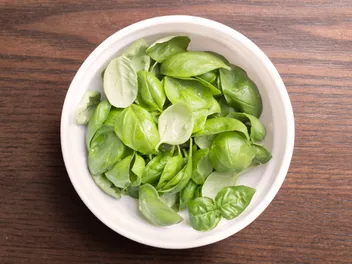
Dogs are, in fact, omnivores who can consume meat and plant-based sources. Leaves and grass are not generally harmful, and you may find your dog consuming a few, especially if you live in an area with trees. Dogs are also curious creatures and may use their mouths to explore their surroundings, which may occasionally lead them to consume leaves off the ground.

While technically safe, keeping them from eating large quantities of leaves is still best. Not only will they not receive much nutritional value from leaves, but they may also experience a blockage or accidentally consume a toxic plant.

Image By: chendongshan, Shutterstock
divider dog paws 4 oct 2024

Conclusion

Bay leaves are dangerous for dogs due to their chemical and physical properties. They contain numerous essential oils that are toxic to dogs, especially eugenol. Dogs cannot break down these essential oils because they lack the necessary enzymes to digest them. Bay leaves in sufficient quantities can also cause blockages and internal damage in the digestive tract.

It is best to keep a close eye on the food your dog eats, as humans and dogs have different digestive systems. What is safe for humans to eat is not always safe for dogs, so it is best to be careful what you feed your dog!

See also:

The Dogster Newsletter

Expert dog care, straight to your inbox

News, insights, expert advice, and everything dog.

No spam — unsubscribe anytime.

By signing up, you agree to our Terms & Conditions and Privacy & Cookies Policy.

Click a star to rate. You can leave written feedback afterwards. (We read all feedback.)

Nicole Cosgrove
Authored by

Nicole Cosgrove

Leave a Reply

You're very welcome to leave a comment or question. Please know that all comments must meet our community guidelines, and your email address will NOT be published. Let's have a positive and constructive conversation.

Can Dogs Eat Cloves? Vet-Reviewed Health & Nutrition Facts

Can Dogs Eat Cloves? Vet-Reviewed Health & Nutrition Facts

Cloves add a warm, rich, almost sharp flavor to food and drinks. It's packed full of inflammation-fighting nutrients that may help ease joint and arthritis pai…

Lorre Luther
By Lorre Luther · 1 month ago
The Spice Cabinet Dangers Most Dog Owners Don't Think About

The Spice Cabinet Dangers Most Dog Owners Don't Think About

Most people know chocolate is off-limits for dogs. Fewer realize that some of the most common herbs and spices sitting in a kitchen cabinet right now are just…

Dan Seymour
By Dan Seymour · 1 month ago
What Seasonings Can Dogs Have Safely? 6 Vet-Approved Options

What Seasonings Can Dogs Have Safely? 6 Vet-Approved Options

We all know that seasonings can be extremely dangerous to dogs if they get a hold of the wrong ones. Knowing what's in your spice cabinet can really help you p…

Ashley Bates
By Ashley Bates · 2 months ago
My Dog Ate Lavender Plant! What Should I Do? (Vet Answer)

My Dog Ate Lavender Plant! What Should I Do? (Vet Answer)

Why is it that some dogs just cannot resist the urge to eat things they shouldn’t? A lot of the time, you don’t even realize that certain things could be consi…

Dr. Karyn Kanowski
By Dr. Karyn Kanowski · 1 month ago

5 Herbs That Are Good for Dogs: Vet-Verified Safety & Benefits

Adding herbs and spices to our meals not only enhances the flavor, but many of them also have various health advantages. So, if we can benefit from specific he…

Kathryn Copeland
By Kathryn Copeland · July 4, 2026
5 Herbs That Are Good for Dogs: Vet-Verified Safety & Benefits

What Foods Are Dangerous for Dogs? Vet-Reviewed Fruits, Veggies & More

Fruits and vegetables are a necessary part of a human's diet, but did you know that they can play a role in your dog's diet too? Unfortunately, not all fruits…

Chantelle Fowler
By Chantelle Fowler · June 29, 2026
What Foods Are Dangerous for Dogs? Vet-Reviewed Fruits, Veggies & More

Can Dogs Have Cinnamon? Vet-Approved Facts & FAQ

We have to be very careful as pet owners when it comes to our spice cabinets. Some are perfectly harmless to pets while others can cause reactions, or even tox…

Ashley Bates
By Ashley Bates · June 17, 2026
Can Dogs Have Cinnamon? Vet-Approved Facts & FAQ

Thyme for Dogs: Our Vet Explains Potential Benefits, Uses & Risks

Thyme (Thymus vulgaris) is a popular spice that many people keep in their homes. You can even grow it in the garden or indoors to have a fresh herb to use in y…

Dr. Luqman Javed
By Dr. Luqman Javed · July 10, 2026
Thyme for Dogs: Our Vet Explains Potential Benefits, Uses & Risks

Can Dogs Eat Sage? Vet Approved Facts & FAQ

Sage is a commonly used herb in the kitchen that flavors foods and is also used in essential oils, creams, ointments, and medicines. If you cook with sage or h…

Nicole Cosgrove
By Nicole Cosgrove · June 17, 2026
Can Dogs Eat Sage? Vet Approved Facts & FAQ

Can Dogs Eat Saffron Rice? Vet-Verified Facts & Safety Guide

Saffron rice is a tasty and savory dish, and dogs may be tempted to eat it. Many dogs enjoy the taste of rice and may see no problem with eating saffron rice.…

Jessica Kim
By Jessica Kim · June 29, 2026
Can Dogs Eat Saffron Rice? Vet-Verified Facts & Safety Guide

Can Dogs Eat Garlic? Vet Reviewed Risks & Nutrition Advice

Garlic has more of an impact on humans than just causing bad breath. It has medicinal properties, boosts the immune system, lowers blood pressure, and detoxes…

Keri-Beth Clur
By Keri-Beth Clur · June 29, 2026
Can Dogs Eat Garlic? Vet Reviewed Risks & Nutrition Advice

Can Dogs Eat Cardamom? Is It Safe? Vet Reviewed Dietary Guidance

If you're a dog owner and a fan of flavorful spices, you might be wondering whether it's safe to share your love for cardamom with your furry friend. Cardamom…

Nicole Cosgrove
By Nicole Cosgrove · June 29, 2026
Can Dogs Eat Cardamom? Is It Safe? Vet Reviewed Dietary Guidance

Love Dogs? So Do We! Join the Dogster Community

Stay informed with expert pet care insights delivered straight to your inbox! Discover professional guidance on animal behavior, feeding tips, trusted product picks, and much more.

You may opt-out at any time. View our Privacy Policy for more information.

The Dogster app on a phone