In this article
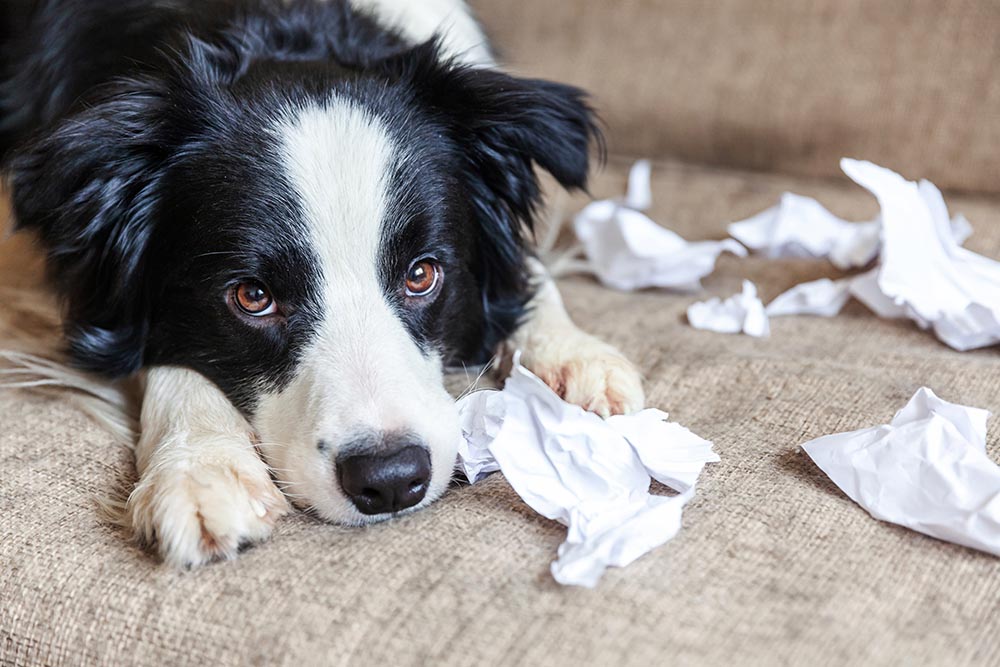
View 3 More +We’ve all caught our dogs chowing down on something they shouldn’t, and paper is a common target for chewing urges—something that no doubt baffles owners everywhere. It’s not like paper tastes good or anything, so what is it about the stuff that makes it irresistible to some canines?
There are more potential reasons for paper eating and shredding than you might think, and different dogs do it for different reasons, so check out the possible causes for dogs eating paper in this guide to find out which one makes the most sense in your pet’s case.

The 8 Reasons Why Dogs Eat Paper
1. Pica
Pica causes dogs to consistently eat non-edible, non-nutritious items, such as paper, rocks, wood, string, plastic, and rubber. It is a sign of an underlying condition or problem rather than a condition in itself.
The main difference between pica and regular chewing is that the dog eats the non-edible item. Naturally, pica can be dangerous because it can cause intestinal blockages, toxicity, and problems with the teeth.
2. Anxiety
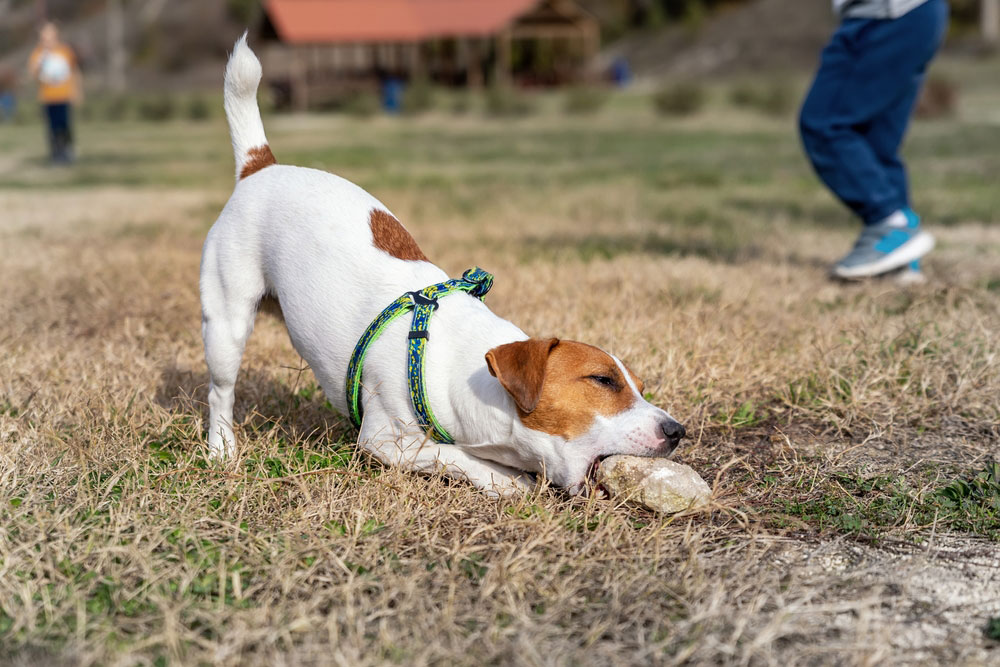
Anxious, stressed dogs often engage in destructive behaviors, one of which is chewing on or eating things they shouldn’t. Separation anxiety; fear of certain people, animals, objects, or sounds; and past trauma are a few of the potential causes of the anxiety that leads to this behavior, but there are others.
In addition to destructive chewing, signs of anxiety include going to the bathroom inside the house, panting, drooling, pacing, excessive vocalization, restlessness, and compulsive behaviors. If you suspect that your dog has canine anxiety, please speak to a vet to work together on an action plan for helping your dog feel more at ease.
If you need to speak with a vet but can't get to one, head over to PangoVet. It's our online service where you can talk to a vet online and get the advice you need for your pet — all at an affordable price!
3. Boredom
Boredom is another common cause of paper eating and chewing. Similar to anxious dogs, bored dogs’ pent-up energy needs an outlet, and if they don’t have enough appropriate mental stimulation (play, interactive toys, chew toys, walks, etc.) and exercise, they’ll find that outlet in destructive behaviors.
If your dog is a paper muncher, consider whether they have enough daily entertainment and exercise. Incorporating a few play sessions and providing mentally stimulating toys in addition to taking them for walks can go a long way in terms of preventing destructive behavior caused by boredom. Chew toys, in particular, are great for giving your dog something to focus on other than paper, but be cautious if your dog tends to swallow their toys, and only offer them under supervision.
4. Nutritional Deficiencies
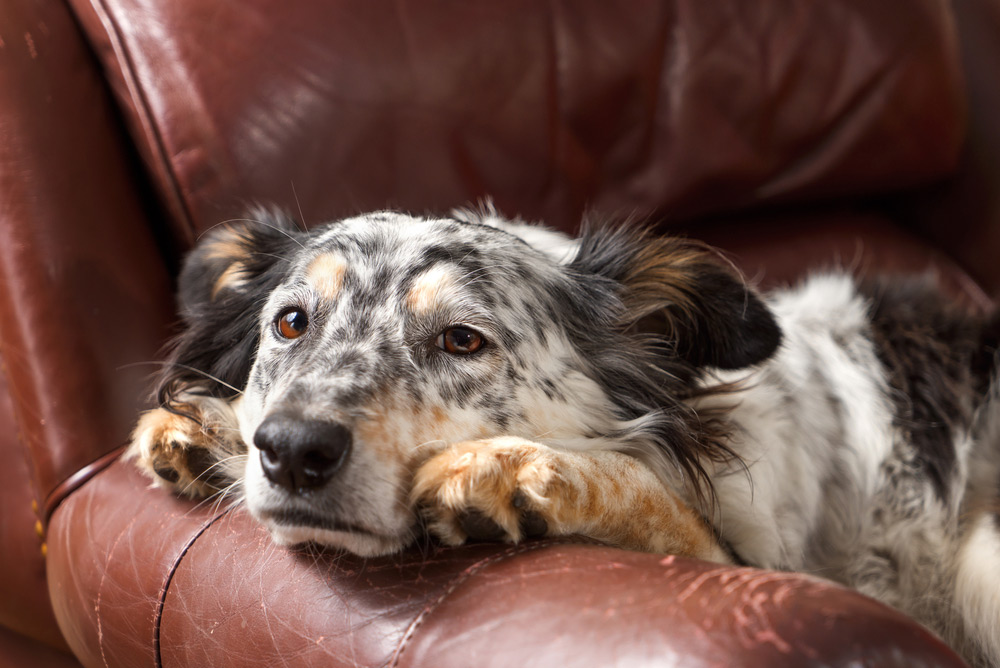
Dogs lacking minerals like zinc, iron, and fiber sometimes resort to eating non-food items because they’re trying to provide a substitute for the missing nutrients. Canines are omnivores and need to consume a complete and balanced food formula that’s the right quantity for their weight and that’s suitable for their age range.
Nutritional deficiencies can also result from gastrointestinal diseases, such as parasites, chronic diarrhea, and intestinal cancers. Your dog may be consuming the nutrients but not absorbing them properly. Additionally, diseases can impact their appetite, so a vet check is always a must if the behavior is ongoing.
5. Natural Chewing Urges
Chewing is a natural behavior for dogs and something they need to engage in. As we touched on earlier, natural chewing behavior is not the same as pica, which involves the dog actually ingesting the object.
You can provide chew toys to allow your dog to act out their natural urges. Without these, your dog may chew on inappropriate objects instead. Opt for chew toys that are suited to how heavy a chewer your dog is, as this can vary greatly. Some dogs can chew on something for a long time and barely make a dent, whereas others will chomp through the same toy in less than half an hour! These toys should only be given under supervision.
6. Teething
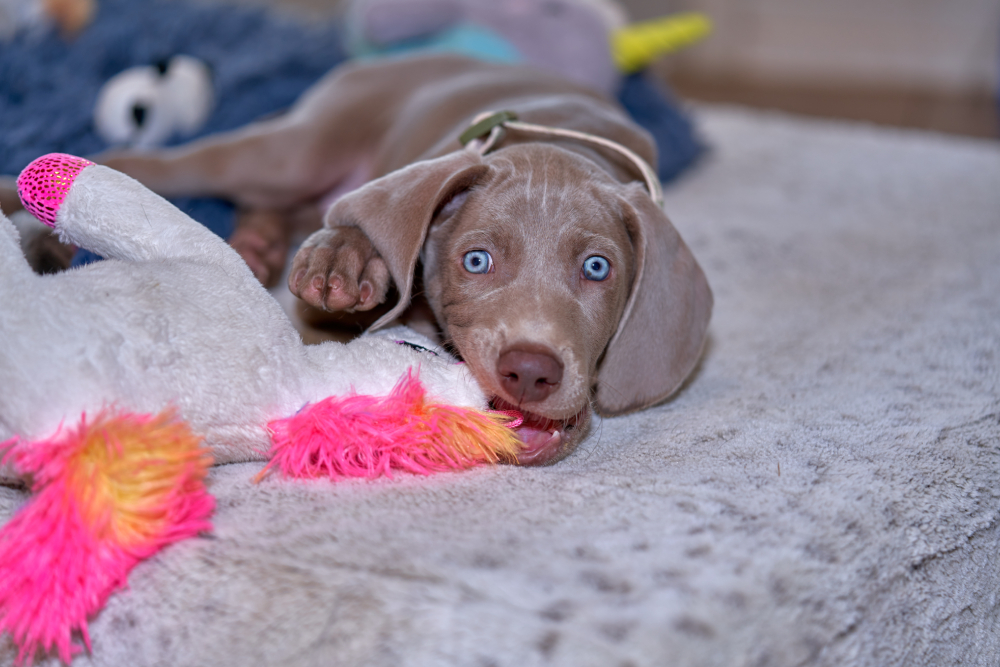
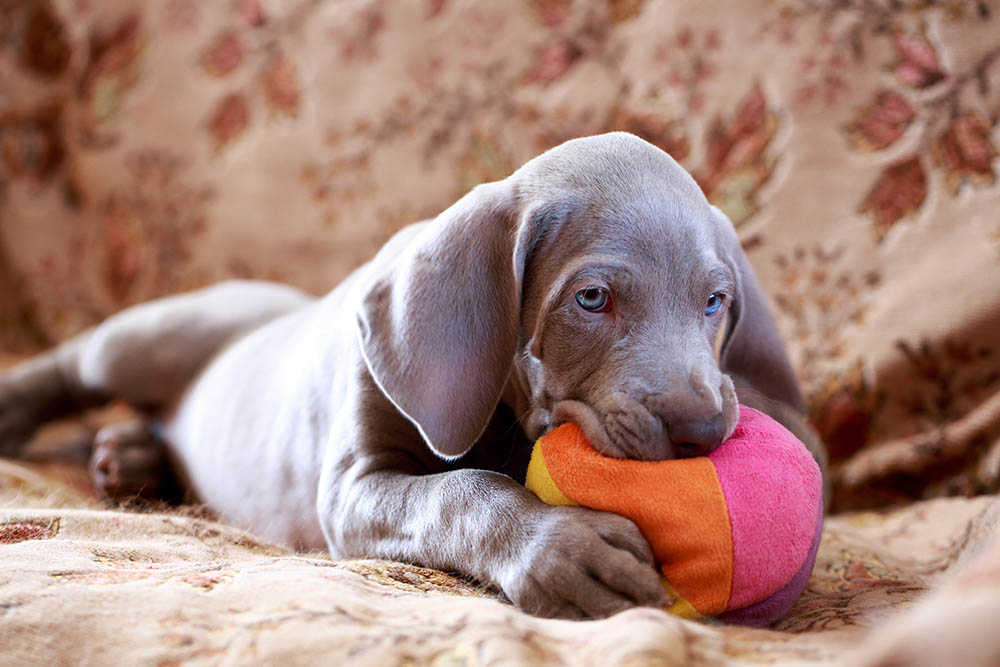
Just like human babies, puppies have the urge to chew on things when their teeth are coming in because this process is uncomfortable. The chewing is an attempt to massage the gums and ease discomfort, and it’s completely natural, but your puppy needs a chew toy suitable for their age to prevent them from resorting to chewing other items. You can also try offering puppy teething sticks.
7. Puppy Curiosity
In addition to trying to ease teething discomfort, puppies chew on things out of curiosity because they use their mouths and noses to explore and navigate the world. While it’s just paper to you, to your puppy, it’s something new and exciting to be shredded, tossed, and chased. You can offer an age-appropriate chew toy and other fun toys so they can explore safely.
8. Compulsive Disorder
Canine compulsive disorder causes dogs to persistently engage in certain behaviors. These include (but are not limited to) chewing on things (including humans and themselves), fly snapping, chasing things that aren’t there, chasing shadows, spinning, air licking, surface licking, pacing, and persistent barking.
This behavior could have a genetic basis, as certain compulsive behaviors have been linked to certain breeds and types of dogs. For example, Bull Terriers have been linked to compulsive spinning. If you suspect compulsive disorder, it’s essential to consult with a vet to get to the root of the behavior and come up with a management plan.
Why Do Dogs Eat Toilet Paper?
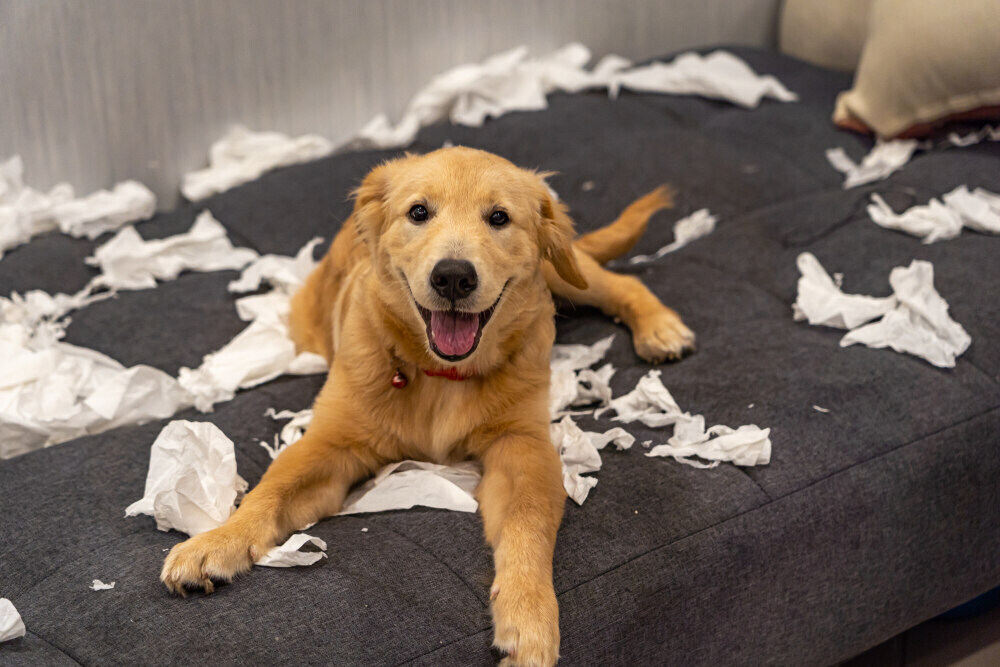
Dogs may eat toilet paper for many of the same reasons that they eat regular paper. Some dogs are enticed by the way that it unrolls and simply view it as something fun to play with, shred, and toss about. In some cases, there’s an underlying issue, especially if the behavior is compulsive or occurs when your dog is anxious or stressed out.
Is Toilet Paper Dangerous for Dogs?
It can be. If your dog only eats a small amount of toilet paper, it’s unlikely to cause any complications. However, if they eat a lot, it could cause an intestinal blockage, signs of which include vomiting, abdominal pain, weight loss, bloating, not eating or reduced appetite, and constipation. If you suspect that your dog has eaten a lot of toilet paper or other kinds of paper, please contact a vet at once.
Tips for Preventing Dogs from Eating Paper
- If this is more than just a one-time thing, see a vet to rule out any underlying medical issues.
- Be proactive in keeping all kinds of paper out of your dog’s reach. Avoid leaving paper lying around and keep bathroom doors closed.
- Some dogs will tip over trash cans to rifle through the contents, so invest in a trash can with a lid that locks or is too hard for your dog to open. Automatic-close trash cans are good options.
- Train your dog to be able to “leave it” or “drop it”.
- If your dog heads for some paper, redirect them by offering something like a chew toy instead.
- Get toys you can freeze for teething puppies to help ease discomfort. Don’t leave them unsupervised with any toys, though.
- Don’t chase your dog if they have a piece of paper in their mouth because this sends the signal that you’re playing a game with them. However, if they are actually eating the paper or the paper is covered in something toxic, it’s necessary to take it off them calmly.
- Work on behavioral issues like separation anxiety and other phobias. Discuss them with a vet or professional behaviorist to come up with solutions.
Final Thoughts
Dogs eating paper isn’t always a sign that something’s going on behind the scenes—it’s often just a case of a dog being playful or exploring something new. Furthermore, swallowing a small amount, though not something that dogs should do, is not usually dangerous.
However, if it’s more of a persistent thing or your dog eats paper regularly or in large amounts, there is likely an underlying issue at play that needs to be treated or managed for your pet’s safety. Ingesting large amounts of paper and other non-food items can be dangerous, so don’t hesitate to see a vet about this behavior.
Featured Image Credit: Julia Zavalishina, Shutterstock