Behavioral problems are one of the leading reasons behind dogs being surrendered to animal shelters, and this doesn’t need to be the case. When we research a breed, and ensure we have enough time and energy to dedicate to the level of training, enrichment, and socialization our dog requires, most behavioral issues can be managed or avoided. However, we do not live in a perfect world. Sometimes, despite our best efforts, we come up against an obstacle that no amount of training, discipline, or reinforcement can overcome, and it may be time to think about medicinal help.
When it comes to human psychological challenges and mental health disorders, talking therapy and lifestyle changes can have a huge impact, but often, medication is needed to allow those tools to be effective—a collaborative approach. The same can apply to canine behavioral issues.
If you have a dog that is anxious, aggressive, reactive, or completely unmanageable, find a vet who is comfortable with animal behavior, and ask for help. They can assess your dog, your home environment, and routine, and recommend changes that you may not have already thought of. They may even recommend adding medication to the plan, and one of those medications is Trazodone.

What Is Trazodone?
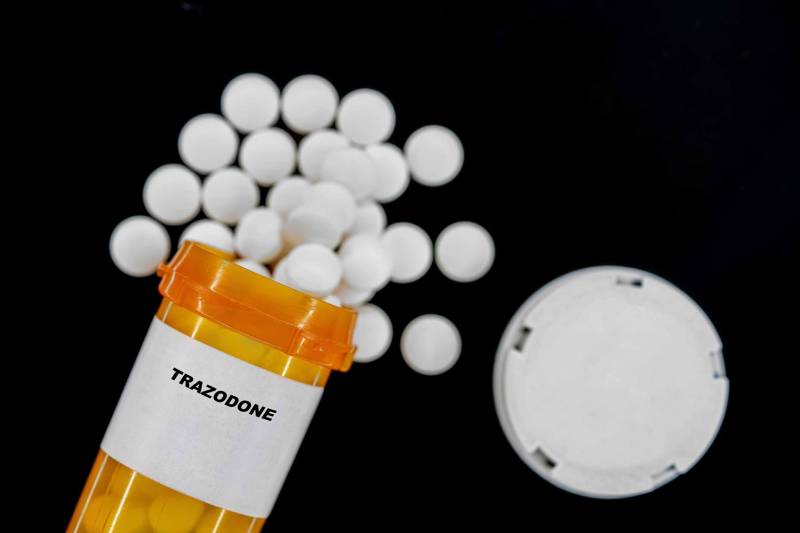
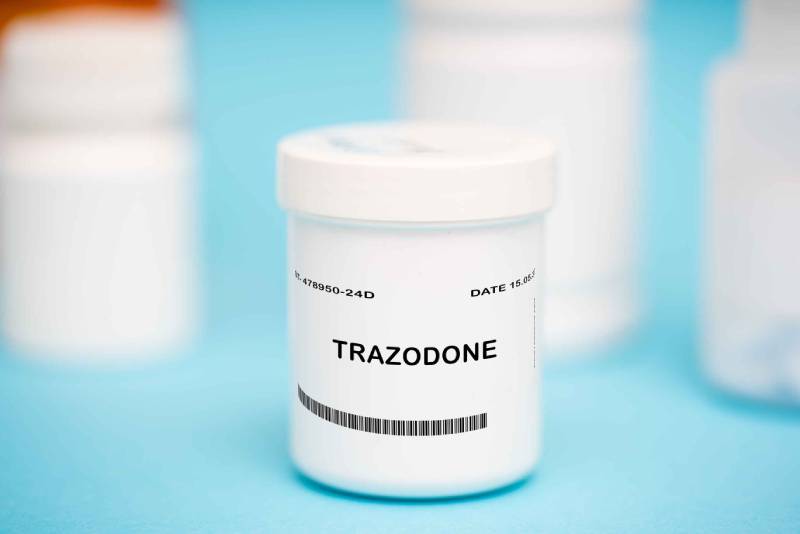
Trazodone is a prescription medication, belonging to a class of drugs known as serotonin-antagonist-and-reuptake-inhibitors. It is a human medication prescribed to treat major depressive disorders and insomnia. Because there is no animal equivalent to this drug, veterinarians can prescribe this medication “off-label” to treat a range of behavioral problems in dogs (and cats).
It is also occasionally used as a mild sedative, particularly for dogs that are anxious or aggressive at the vet. It is an oral medication, in tablet or capsule form, given once or twice a day.
At the time of writing, there is only one veterinary-specific behavioral medication available, which has been most effective in treating separation anxiety-type issues. However, its efficacy in managing other behavioral problems is limited. One of the reasons Trazodone is favored by vets is that, compared to other antidepressant or sedative-type medications, it has relatively few potential side effects, most notably drowsiness, sedation, nausea, vomiting, and diarrhea.
What Is Trazodone Used For?
Trazodone has a few different uses in dogs, the most common being to help train dogs with behavioral problems, treat anxiety, and sedation.
1. Training
We all know that the best and most effective dog training method is positive reinforcement, but how do you teach a dog to feel calm? You can tell a dog to sit, stay, or roll over, but the command “relax” is not usually so effective. You can offer praise and rewards at times when they are being calm, but it might take weeks or even months to see any improvement from this type of passive training.
If your dog is often in a heightened state of anxiety, excitement, fear, or aggression, it can be virtually impossible to get them to focus, let alone follow commands; this is where Trazodone comes in. The problem with using sedatives or tranquilizers to calm a hyperactive or stressed dog is that they only mask the problem by slowing the mind and body, making our dogs feel sleepy; this is not conducive to training. Antidepressant medication like Trazodone helps “teach” the brain what calm feels like, which then allows us to reinforce that feeling and engage in other training.
When used in this way, it often takes 4–6 weeks to really see the effects, though many owners notice a difference much sooner—do not despair if you do not see an immediate response. If there is a positive reaction to the Trazodone, we would usually want to stay on the treatment for at least 6 months to ensure that both the feeling of calm and the newly acquired training are solidly reinforced. Depending on the severity of the behavioral problem, some dogs can gradually be weaned off Trazodone after about 6 months, while others will stay on the medication indefinitely.
Some owners, and some vets, are reluctant to use medication to help tackle behavioral issues, but Trazodone can be an extremely effective tool in helping to boost happiness and calm, whilst reducing frustration, anxiety, and stress, for you and your dog.

2. Treating Anxiety
The use of Trazodone to treat canine anxiety is very similar to the principles of using it for training; you cannot teach a dog to feel calm. For problems like separation anxiety, using Trazodone alongside methods such as pheromone or stress relief therapy, crate training, thundershirts, and modifying your routine, can enhance and accelerate your dog’s ability to feel settled in your absence.
When used in this way, your vet may start with a slightly higher dose than the one we would use for long-term training, then gradually decrease the dose over time. Again, some dogs will eventually be weaned off Trazodone, while others may need long-term treatment.
3. Sedation
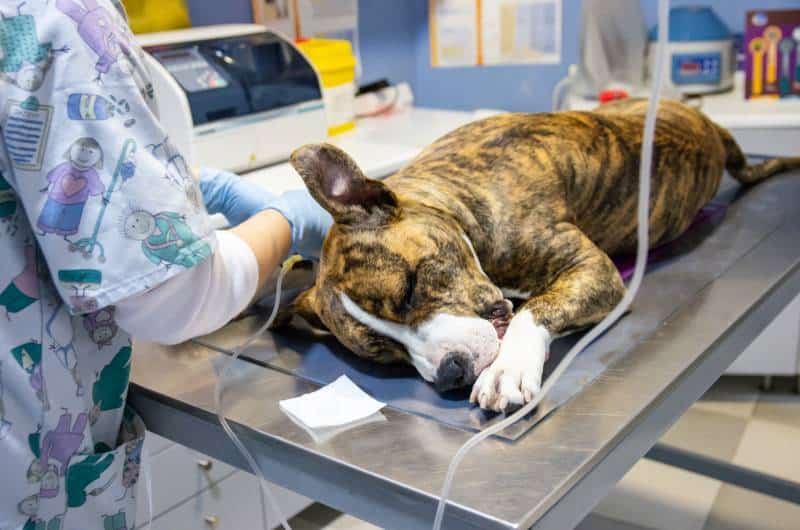
Trazodone is not a sedative or tranquilizer, but when used at higher doses, it can produce a sedative effect. When used in this way, it is for single or short-term use, such as a nail clip or vet visit.
It is safe, and the dog will remember feeling calm during the procedure which can help in the future, however, it’s often not strong enough to tackle highly stressed or aggressive dogs.

How Safe Is Trazodone?
We mentioned earlier that vets favor Trazodone for its minimal side effects, but as is the case with any medication, there are risks and potential side effects to this drug.
- Drowsiness
- Lethargy
- Vomiting/nausea
- Diarrhea
- Dilated pupils
- Increased appetite
- Priapism (persistent erection)
- Paradoxical effects (increased anxiety or aggression)
Most of these effects can be rectified by adjusting the dose. Trazodone can be given on a full or empty stomach, but if your dog shows signs of nausea when taking the tablet on an empty stomach, try giving it with food next time.
If your dog has too much Trazodone, or it is combined with other serotonin-enhancing medications, they can suffer from serotonin syndrome, which is a serious, potentially fatal condition.
- Seizures
- Hyperthermia (high body temperature)
- Skin sensitivity
- Vocalization/distress
- Blindness
- Drooling
- Breathing difficulties
- Loss of motor control
- Weakness, paralysis
- Confusion
- Coma
- Death
If your dog has ingested more than their prescribed dose of Trazodone or is showing any worrying signs, contact your vet immediately.
If you need to speak with a vet but can't get to one, head over to PangoVet. It's our online service where you can talk to a vet online and get the advice you need for your dog — all at an affordable price!
Are There Any Other Concerns with Trazodone?
Dogs with heart, liver, and kidney disease can be given Trazodone, but it must be used with caution and closely monitored, as these conditions will affect how the drug is metabolized by the body, which could lead to more intense side effects.
There are a number of drugs and herbal remedies that should not be given to a dog on Trazodone, so always mention any medications or supplements to your vet, even if they should be on their medical history—a double check can prevent a single mistake.
What Happens If You Miss a Dose?
Don’t panic; if your dog is taking Trazodone long-term, missing a single dose won’t disrupt things too much. Just start back as normal from the next prescribed dose, but don’t double up.


Final Thoughts
Trazodone can be an extremely useful tool in managing some severe behavioral problems in dogs and make training—and life in general—much happier for you and your pet. Behavioral medication is not a substitute for exercise, training, and enrichment, but it can help calm an anxious or hyperactive mind and allow these components to be more effective.
If you are having trouble with a difficult dog, do not suffer in silence; there are so many resources available to help. If your vet suggests Trazodone, you can feel confident that this medication is not just a way to sedate the problem away, but a relatively safe drug that can help your dog feel calm, confident, and receptive to training.
See Also:
- How to Get a Dog to Take a Pill: 7 Vet-Approved Tips to Consider
- Acepromazine for Dogs: Usage, Dosage, Safety & FAQ (Vet Answer)
Featured Image Credit: luchschenF, Shutterstock
 What Is Trazodone?