Get

In Your Inbox

Dogster is reader-supported. When you buy via links on our site, we may earn an affiliate commission at no cost to you. Learn more.

The Hidden Risk in Tall Grass That Most Dog Owners Ignore

Share

red irish setter standing on grass

Finding a tick on your dog can look like a lot of things, depending on when you catch it. Some are engorged and clearly alive. Others are small, dry, and brittle, easy to mistake for a scab or a bit of debris caught in the fur. A dead tick can feel like a relief compared to a live one, and many dog owners ignore it, but it’s important to note that even dead ticks on your dog still need your attention. Understanding what it means, why it’s there, and how to handle it correctly will save you some stress and protect your dog.

Dead ticks can’t actively transmit bloodborne disease to your dog, so the immediate risk is lower than with a live one. But that doesn’t mean you can ignore it. Here’s everything you need to know.

divider dog paws 2 oct 2024

How do you know if a tick is actually dead?
tick on a leaf
Image Credit: JerzyGorecki, Pixabay

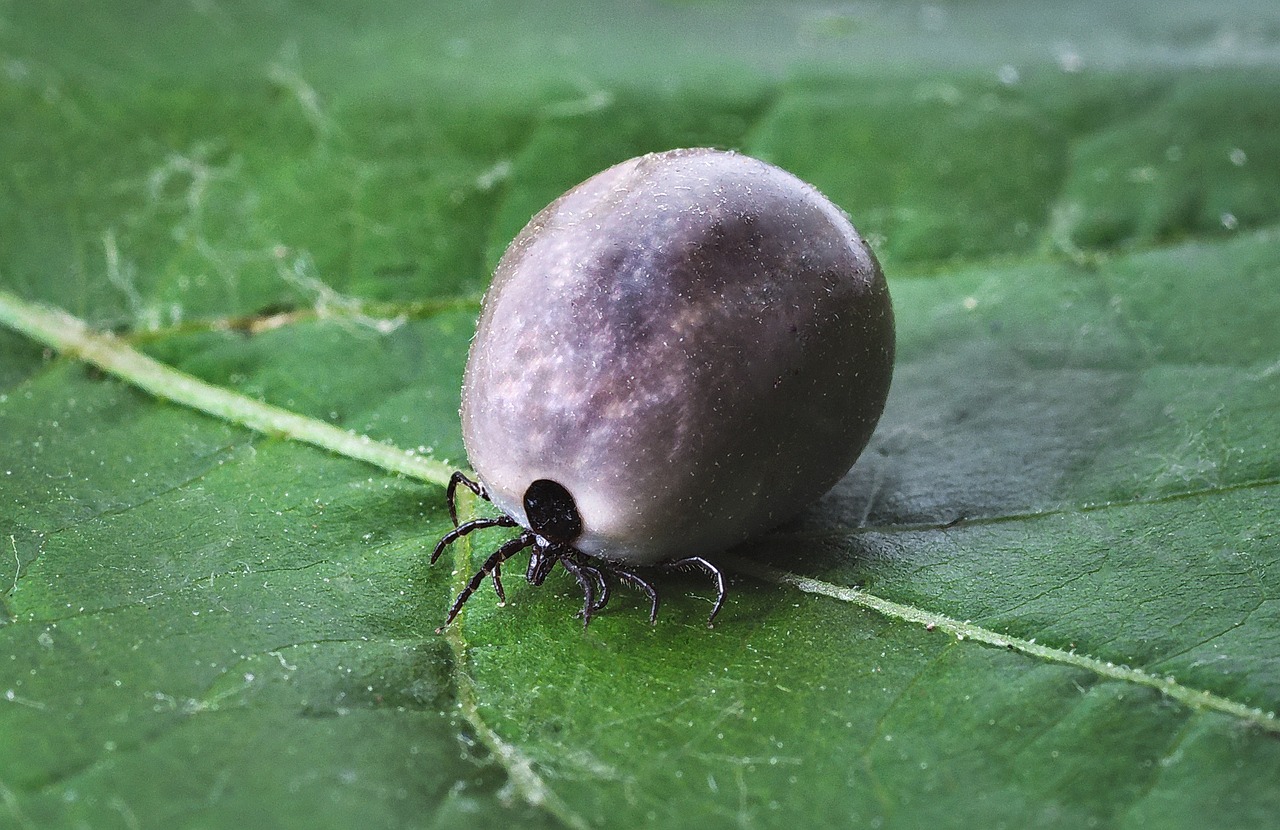
It’s trickier than it sounds. Dead ticks have a silvery white, dry, and brittle appearance rather than the darker coloring of a live one. Their legs curl up toward the body, which is the most reliable sign. A living tick, by contrast, will have its legs stretched outward and may move occasionally, even while feeding. Color alone isn’t enough to go on since ticks can appear grey and still be very much alive.

Size varies considerably, too. An unfed tick is roughly the size of an apple seed, while a fully engorged one can grow to the size of a pumpkin seed or larger.

Why is the tick dead in the first place?

In most cases, it’s your flea and tick prevention doing its job. Medications like Seresto work by entering the dog’s upper skin layer and killing ticks after they bite. So a dead tick on a dog that’s current on prevention is often a sign the treatment is working, not a sign something went wrong.

The other common cause is trauma. Dogs that scratch or bite at a tick can crush and kill it. Most dead ticks fall off naturally, but the mouthparts are designed to anchor firmly into the skin, which is why some stay attached even after death.

So why does a dead tick still need to be removed?

Because the mouthparts are still embedded in your dog’s skin. A tick can remain lodged in place for weeks, and the longer it stays, the greater the risk of irritation and infection at the bite site. There’s also another consideration worth knowing: a dead tick can still release residual blood from its body back into your dog during removal if you squeeze or crush it, which is why technique matters.

Close-up view of tick on human finger against dog lying in grass
Image Credit: Jaromir Chalabala, Shutterstock

How to remove a dried, dead tick correctly

The process is the same as removing a live tick, just with a little extra care to keep it intact:

  1. Confirm the tick is dead and part your dog’s fur to get a clear view.
  2. Use fine-tipped tweezers or a tick removal tool, positioning as close to the skin as possible.
  3. Pull slowly and steadily upward without twisting, spinning, or squeezing the body.
  4. Continue pulling at a consistent pressure until the head and mouthparts are fully out.
  5. If you plan to visit the vet, save the tick in a sealed plastic bag for identification.
  6. Clean the bite area with 70% isopropyl alcohol or 3% hydrogen peroxide.

divider dog paws 2 oct 2024

Check the rest of your dog’s body

Finding one tick usually means there are more. Do a thorough check from nose to tail, concentrating on areas with long fur, between the toes, on the face, and inside the ear folds. Ticks favor hidden, warm spots where they’re less likely to be disturbed.
owner applying flea and tick treatment to the dog
Image Credit: Nick Alias, Shutterstock

Which diseases can ticks transmit to dogs?

The risk depends on the type of tick and how long it was attached. The main diseases to know:

Lyme disease (carried by deer ticks) is found primarily on the West Coast, the Northeast, and the upper Midwest. A tick needs to stay attached for 36 to 48 hours before Lyme-causing bacteria can be transmitted. Signs appear 2 to 5 months after the bite and include fever, lameness, joint pain and swelling, and in rare cases, fatal kidney disease. Treatment is typically a 28 to 30-day course of antibiotics.

Ehrlichiosis (brown dog tick, lone star tick, American dog tick) presents within 1 to 3 weeks of a bite with fever and low blood platelets, which can show up as bruising and nosebleeds. Anaplasmosis shares the same common symptoms.

Other tick-borne diseases include Rocky Mountain Spotted Fever, Babesiosis, and Bartonellosis, all carried primarily by deer ticks or American dog ticks, depending on the condition.

How ticks find your dog in the first place

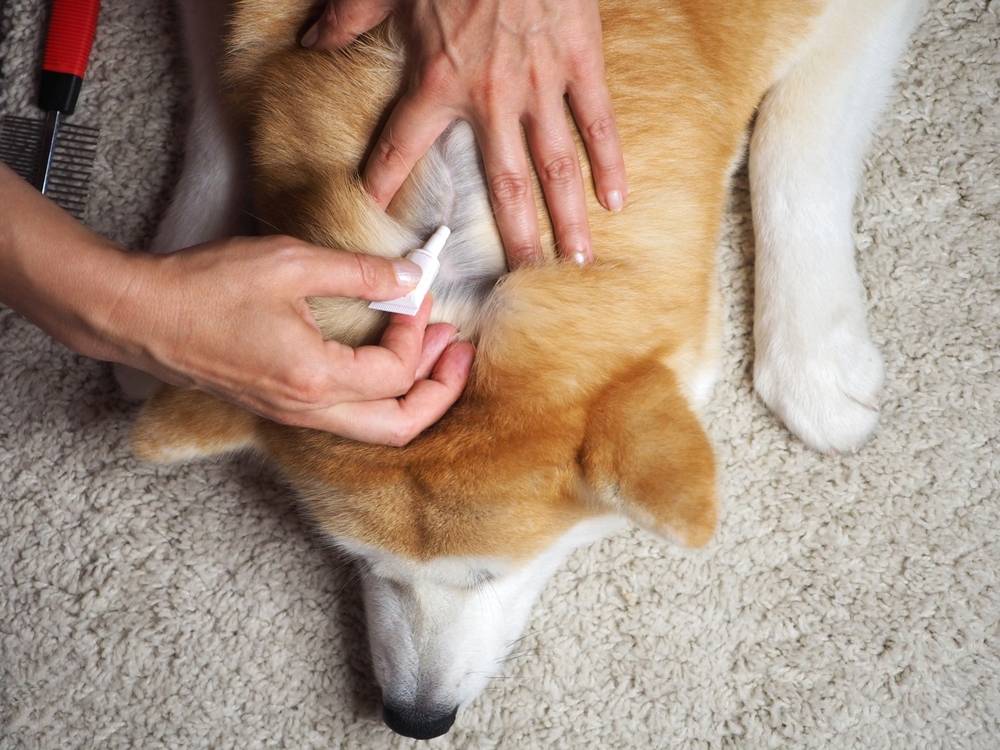
Ticks don’t jump or fly. They use a behavior called questing, where they position themselves on the ends of grass blades along frequently traveled paths and wait for a host to brush past. Prevention comes down to consistent use of approved medications, including sprays, spot-on treatments, or medicated collars. Most of these work by repelling or killing ticks after contact, so staying current on your dog’s prevention schedule is the most reliable defense.

divider dog paws 2 oct 2024

When to call your vet

If you notice any signs of illness after finding a tick on your dog, or after your dog has been in an area known for ticks, contact your vet promptly. Symptoms to watch for include fever, unusual lethargy, limping, swollen joints, changes in appetite, bruising, or nosebleeds. Early treatment makes a significant difference in outcome for all tick-borne diseases, so don’t take a wait-and-see approach if something seems off.

Feature Image Credit: Irina Nedikova, Shutterstock


Did You Know? 

  • Our brand-new posts are rounded up and included in our weekly emails. Don’t miss out on the latest – sign up for our newsletter below!

Want content like this delivered to you?

Sign Up For Our Newsletter

News, insights, expert advice, and everything dog

* By submitting, you agree to our Terms & Conditions and Privacy & Cookies Policy.


How useful was this post?

Click on a star to rate (you can leave written feedback after clicking submit)

Help us improve Dogster for pet parents!

Your feedback really matters.

What did you like about this post? Also how can we improve it?

Join the conversation

Leave a Reply

You’re very welcome to leave a comment or question. Please know that all comments must meet our community guidelines, and your email address will NOT be published. Let’s have a positive and constructive conversation.


Talk With A Vet Online

Peace of mind,
anywhere, anytime

Affordable vet advice

We Didn’t Just Add a Dog to Our Life – We Built a Life With Him

“We didn’t just bring a dog home—we built a life together.” Most people are quietly taught a version of pet ownership that looks...

What Most Airlines Won’t Let You Do With Your Dog (Even If You Pay Extra)

Airline pet policies are notoriously hard to navigate. The information is scattered across different pages, buried in FAQ sections, and often contradicts what...

Designer Breeds: Best of Both? New Study Says No

“I’ll take a highly trainable, low-shedding lapdog, hold the heart disease and anxiety!” Something I always found amusing was when people would point...

Ask Dr. Paola- Help! My Dogs Erection Gets Stuck! (April 6, 2026)

Welcome to our “Ask Dr. Paola” series, where every Monday we bring expert advice straight from Dr. Paola Cuevas (MVZ) to help our...

More related

Why Does My Dog’s Breath Smell Metallic? 3 Possible Reasons

There is nothing pleasant about the way a dog’s breath smells. No matter how many dental chews you feed your dog and how...

Should Dogs Wear Dog Boots While Hiking? Why or Why Not?

When you’re planning a trip with your dog, the planning is usually as important as the trip itself. Food, water, and shelter are...

10 Shiba Inu Colors: Including Rare Coats (With Pictures)

Are you captivated by the enchanting allure of Shiba Inus? With their foxlike appearance and spirited personalities, these compact Japanese dogs have captured...

How to Cook Pumpkin for Dogs: Recipes & What to Know

Pumpkin is a staple vegetable, especially during autumn, when it even becomes a symbol for the season and we all proudly sport our...

Keep reading

Can Dogs Eat Corn Flakes? Vet-Approved Advice & Precautions

You wake up in the morning and enjoy a bowl of corn flakes for breakfast. While enjoying your breakfast, you notice your dog looking at you intently, begging to have a bite of whatever delicious food you’re eating. As a...

Can Dogs Eat_Corn Flakes

Purina Pro Plan vs Hill’s Science Diet Dog Food: 2026 Comparison, Pros & Cons

Purina and Hill are both large pet food companies that have been around for decades. They’ve grown in popularity over the years and offer many more types of dog food than most other pet food brands. Both companies have rolled...

Dogster_Dog Food Purina Pro Plan VS Hill_s Science Diet

8 Best Dog Foods for Maltese in 2026 – Reviews & Top Picks

Maltese are affectionate, curious, and fearful companions. As one of the oldest breeds in the world, this toy dog is relatively easy to care for. They’re people-pleasers at heart, but they’re also spunky little pups that aren’t afraid of a...

little dog maltese eating food from a bowl at home

10 Best Dog Foods for French Bulldogs in 2026 – Reviews & Top Picks

As dog owners, we all want what’s best for our canine babies, and that includes feeding them high-quality food for their overall health. However, when it comes to food, one size does not fit all. Take the French Bulldog, for...

French bulldog eating from bowl

Your Dog Thinks French Fries Are Fine. Your Dog Is Wrong.

Has your dog ever given you that look? The one where their eyes follow every movement of your hand from plate to mouth. If it’s when you’re eating French fries, and they’re convinced with absolute certainty that fries are meant...

fork on french fries

8 Best Dog Foods for Mini Aussies in 2026 – Reviews & Top Picks

A smaller, apartment-friendly version of the Australian Shepherd, Mini Aussies have spiked in popularity over the past few years thanks to their adorable teddy bear faces, intelligence, and energetic personalities. If you’re considering getting one of these fluffy balls of...

mini australian shepherd eating from a bowl

10 Best Eco-Friendly & Sustainable Dog Foods in 2026 – Reviews & Top Picks

Many people are implementing more eco-friendly lifestyles to help take care of our environment and those around us. There is no doubt supporting sustainable practices in the pet food industry has some all-encompassing benefits. For eco-friendly pet parents, finding food...

pouring dog food

What Berries Can Dogs Eat? Vet-Verified Nutrition Facts & FAQ

Can dogs eat berries? Well, there’s no simple answer to this seemingly simple question. There are over 400 different types of known berries, and some are safe for dogs to eat, while others are only safe for human consumption. Some...

cluster of elderberry fruit

Love Dogs? So Do We! Join the Dogster Community

Stay informed with expert pet care insights delivered straight to your inbox! Discover professional guidance on animal behavior, feeding tips, trusted product picks, and much more.


Sign up for the Dogster Email Newsletter